
If you've ever pulled a grainy cake out of the oven or wondered why your meringue feels gritty, the culprit might be your choice of sweetener. While granulated sugar is the versatile staple found in most pantries, caster sugar features a much finer crystal size that makes it a favorite among professional pastry chefs. The main difference lies in how quickly these crystals dissolve and integrate into fats like butter; caster sugar excels at creating a light, airy crumb in delicate sponges, whereas the larger grains of granulated sugar are perfect for adding crunch to cookies or sweetening hot beverages. Choosing the right one is less about the level of sweetness and more about mastering the structural integrity and mouthfeel of your final bake.
| Feature | Caster Sugar | Granulated Sugar |
|---|---|---|
| Grain Size | Superfine / Micro-crystals | Coarse / Large crystals |
| Best For | Sponges, meringues, soufflés | Cookies, muffins, tea/coffee |
| Solubility | Dissolves rapidly in cold/room temp | Requires heat or long mixing to dissolve |
| Aeration | High; creates tiny, uniform air bubbles | Moderate; can lead to uneven textures |
| Baking Result | Light, fluffy, and refined crumb | Crispy edges and a denser structure |
| Availability | Specialty baking aisle (more expensive) | Everywhere (highly affordable) |
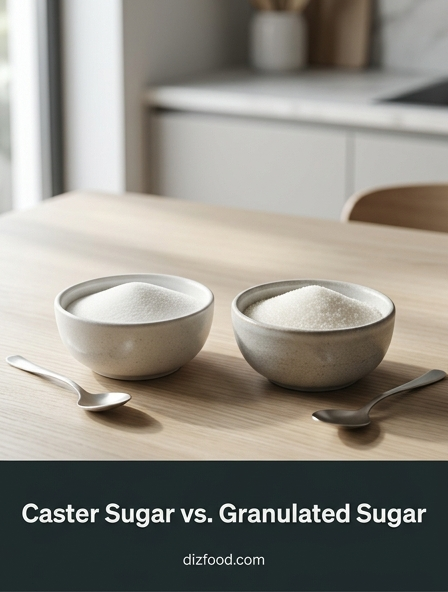
What is the Difference Between Caster Sugar and Granulated Sugar
The primary distinction between caster sugar and granulated sugar lies in the physical size of the individual crystals. Granulated sugar is the standard white sugar found in almost every household, characterized by its relatively large, coarse grains that feel distinct to the touch. It is processed to be versatile and shelf-stable, making it the workhorse of the pantry. In contrast, caster sugar, often referred to as superfine sugar in North America, occupies a middle ground between granulated sugar and powdered or confectioners' sugar. Its grains are significantly smaller than those of granulated sugar, resulting in a texture that feels more like fine sand.
Chemically, both sugars are typically derived from the same source: sucrose extracted from either sugar beets or sugarcane. The refining process remains largely identical until the final grinding and sieving stages. Granulated sugar is sieved to a specific consistency that prevents clumping and allows for easy pouring. Caster sugar undergoes further processing to achieve a finer grit, which allows it to behave differently when introduced to heat or moisture. This physical difference affects how the sugar interacts with other ingredients, particularly in how it incorporates air and dissolves into fats or liquids during the cooking and baking process.
Understanding Sugar Grain Size and Its Impact on Texture
In the world of professional baking, the granulometry of sugar is a critical factor that determines the final crumb and mouthfeel of a product. Smaller sugar crystals, such as those found in caster sugar, have a higher surface-area-to-volume ratio than larger granulated crystals. This characteristic allows them to distribute more evenly throughout a batter. When fine sugar is used, it creates a tighter, more uniform cell structure in cakes, leading to a velvety and delicate texture. Coarser grains, on the other hand, can create larger air pockets, which might result in a more open or rustic crumb, suitable for specific types of bread or chunky muffins.
The impact of grain size extends beyond the internal structure to the exterior finish of baked goods. Consider the following effects of grain size on various kitchen applications:
- Crust Formation: Granulated sugar stays intact longer, often creating a crisp, crackly top on cookies and brownies.
- Aeration: Fine grains are more efficient at cutting through fat molecules to create micro-bubbles, which is essential for "light" textures.
- Solubility: Coarse grains may remain undissolved in low-moisture doughs, resulting in a gritty texture if the baking time is short.
- Weight Density: Because caster sugar is finer, it packs more tightly than granulated sugar, which can lead to measurement discrepancies if using volume instead of weight.
When to Use Caster Sugar for Superior Baking Results
Caster sugar is the preferred choice for recipes where a light, airy, and refined texture is the goal. Its ability to dissolve rapidly makes it indispensable for delicate sponges, such as Genoise or Angel Food cake, where the structural integrity depends on the sugar incorporating perfectly without weighing down the whipped egg whites. Because the grains are so fine, they do not require as much heat or agitation to melt, which prevents the "speckling" effect that can occur when larger sugar crystals fail to dissolve and instead caramelize into dark spots on the surface of a light-colored cake.
Beyond cakes, caster sugar is the gold standard for puddings, custards, and mousses. When making a stovetop custard, the quick-dissolving nature of caster sugar ensures a smooth consistency without the risk of overcooking the eggs while waiting for sugar granules to disappear. It is also the ideal sweetener for cold preparations. If you are macerating berries or sweetening a cold whipped cream, caster sugar will integrate almost instantly, whereas granulated sugar might leave an unpleasant crunch. For any recipe where the sugar must be beaten into butter or eggs to create a stable foam, caster sugar provides the most reliable and professional-grade results.
The Best Applications for Granulated Sugar in Your Kitchen
While caster sugar excels in delicacy, granulated sugar is the superior choice for structural stability and general-purpose cooking. Its larger crystals are more robust, making it the ideal candidate for recipes that require a bit of "crunch" or a caramelized exterior. In the production of classic American-style cookies, such as chocolate chip or oatmeal raisins, granulated sugar provides the necessary body and contributes to the signature spread of the cookie. The slower melting rate of the larger crystals helps the dough hold its shape briefly before spreading, which affects the final diameter and thickness of the treat.
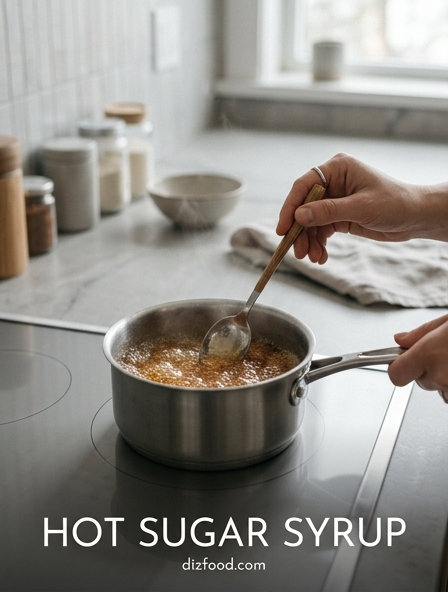
Granulated sugar is also the preferred medium for creating syrups and preserves. When making a simple syrup for cocktails or a heavy syrup for canning fruit, the high heat used in the boiling process easily overcomes the larger grain size, making the refinement of caster sugar unnecessary and uneconomical. Additionally, granulated sugar is visually appealing as a decorative element. Its reflective facets catch the light, making it the perfect topping for muffins, scones, or sugar cookies. In savory applications, such as dry rubs for barbecued meats or balances for tomato sauces, granulated sugar is the standard because it provides consistent sweetness and bulk without the higher cost of specialized superfine varieties.
Substituting Caster Sugar for Granulated Sugar Effectively
Substituting one sugar for the other is a common necessity in the kitchen, but it requires an understanding of how the change will affect the recipe's chemistry. In most general baking recipes, such as muffins, pancakes, or quick breads, you can substitute granulated sugar for caster sugar on a 1:1 basis by weight without a significant loss in quality. However, if you are measuring by volume (cups or spoons), you must be cautious. Because caster sugar is finer, more of it fits into a measuring cup than granulated sugar, which could lead to an overly sweet or structurally weak cake if not adjusted.
| Recipe Type | Substitution Direction | Resulting Adjustment |
|---|---|---|
| Sponge Cakes | Granulated to Caster | Better rise and finer crumb. |
| Cookies | Caster to Granulated | Slightly more spread and crunch. |
| Meringues | Granulated to Caster | Essential for stability; do not swap back. |
| Beverages | Either | Granulated requires more stirring in cold drinks. |
If a recipe specifically calls for caster sugar and you only have granulated, the best course of action is to process the granulated sugar to reduce its grain size. Using coarse granulated sugar in a recipe designed for caster sugar-like a delicate souffle-can result in a grainy texture and a failure to rise properly, as the heavy crystals can pop the delicate air bubbles in the batter.
How to Make DIY Caster Sugar with a Food Processor
If a recipe calls for caster sugar and none is available in your local pantry or grocery store, you can easily manufacture a substitute at home using standard granulated sugar and a common kitchen appliance. The goal is to fracture the large granulated crystals into smaller, jagged fragments that mimic the properties of commercially refined superfine sugar. A food processor or a high-powered blender is the most effective tool for this task, as they provide the necessary centrifugal force to impact the grains evenly.
- Measure slightly more granulated sugar than the recipe requires, as some volume may be lost as "dust."
- Place the sugar into the bowl of a clean, completely dry food processor or blender. Moisture is the enemy of this process and will cause the sugar to clump.
- Pulse the sugar in short bursts of 30 seconds. Over-processing can turn the sugar into a fine powder (confectioners' sugar), which contains too much air and may include unwanted cornstarch if using store-bought powdered sugar as a base.
- Stop when the sugar feels like fine sand between your fingers but still retains a crystalline shimmer.
- Allow the dust to settle for a minute before opening the lid to avoid inhaling fine sugar particles.
Once processed, this DIY caster sugar can be used immediately in any recipe. Note that while this is an excellent substitute for baking, it may contain more irregular shapes than commercially milled caster sugar, which is sieved for perfect uniformity.
Caster vs Granulated Sugar for Meringues and Delicate Desserts
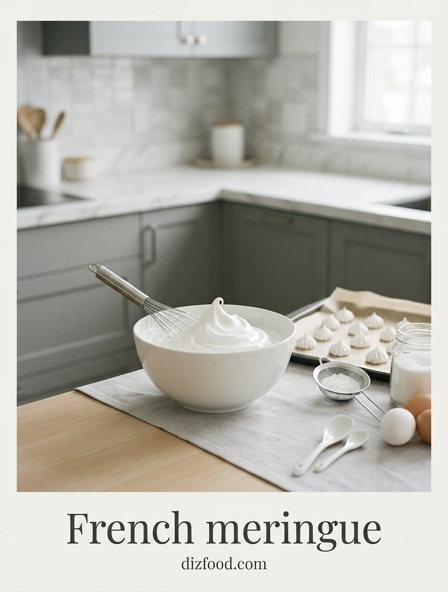
The success of a meringue is entirely dependent on the successful stabilization of egg white proteins, and the choice of sugar plays a pivotal role in this process. When egg whites are whipped, they form a network of protein around air bubbles. Sugar is added to strengthen this network. Caster sugar is the undisputed champion for this application because it dissolves almost instantly into the water content of the egg whites. This rapid dissolution creates a smooth, syrupy film that coats the air bubbles, preventing them from collapsing or leaking water (weeping) during the baking process.
Using granulated sugar in a meringue often leads to a "gritty" final product. Because the crystals are larger, they may not fully dissolve before the egg whites reach stiff peaks. During baking, these undissolved crystals can melt and form pockets of syrup that seep out of the meringue, creating a sticky mess on the parchment paper. For delicate desserts like macarons, pavlovas, and soufflés, the refined nature of caster sugar ensures a glossy finish and a structural integrity that granulated sugar simply cannot provide. In these contexts, the sugar is not just a sweetener but a structural component that must be perfectly integrated to ensure the dessert's signature lightness.
The Role of Sugar Crystals in Creaming Butter and Sugar
The "creaming method" is a foundational technique in baking where softened butter and sugar are beaten together until light and fluffy. This process is not merely about mixing; it is a mechanical action where the sugar crystals act as tiny knives, cutting through the solid fat to create thousands of microscopic air pockets. The size of the sugar crystals dictates the size and number of these air pockets. Caster sugar, with its smaller and more numerous crystals, creates a higher volume of smaller air bubbles. This results in a cake with a very fine, tight crumb and a soft, uniform rise.
Granulated sugar, having larger crystals, creates larger air pockets. While this can lead to a good rise, the resulting texture is coarser. If the creaming process is not done long enough with granulated sugar, the crystals may not fully dissolve into the fat and moisture of the batter, leading to a grainy mouthfeel. Interestingly, if the sugar is too fine-such as powdered sugar-it lacks the sharp edges necessary to cut into the butter, resulting in a dense, greasy paste rather than an aerated foam. Therefore, caster sugar is often considered the "Goldilocks" of creaming; it is fine enough to dissolve during baking but sharp enough to aerate the butter effectively during the initial mixing stage.
Dissolving Properties of Fine Versus Coarse Sugar Grains
The rate at which sugar dissolves is a function of its surface area exposure to liquid. This is a fundamental principle of kitchen science that dictates when each sugar should be used. Caster sugar's superfine grains provide a massive surface area relative to their weight, allowing solvent molecules (like water or milk) to surround and break down the sucrose bonds much faster than they could with a large granulated crystal. This makes caster sugar the ideal choice for cold liquids, such as iced tea or cocktails, where heat is not available to assist in the kinetic energy required for dissolution.
Granulated sugar requires more energy-usually in the form of heat or prolonged agitation-to dissolve completely. In a hot cup of coffee, the difference is negligible because the thermal energy rapidly breaks down the larger crystals. However, in recipes with low liquid content, such as shortbread or certain pastry crusts, granulated sugar may never fully dissolve. This can result in a speckled appearance or a crunchy texture that may or may not be desirable depending on the chef's intent. In professional candy making, the dissolving rate is even more critical; using a finer sugar can help prevent the premature crystallization of a sugar syrup, as there are fewer "seed" crystals remaining if the sugar dissolves quickly and uniformly at the start of the boiling process.
Final Verdict on Choosing the Right Sugar for Every Recipe
Deciding between caster and granulated sugar ultimately comes down to the desired texture and the specific requirements of the recipe. While they are chemically identical, their physical behavior under heat and mechanical mixing creates distinct outcomes. For the vast majority of daily kitchen tasks-sweetening tea, baking muffins, or making simple cookies-granulated sugar is perfectly adequate and more cost-effective. It provides the necessary bulk and sweetness with a familiar, slightly rustic finish. However, for the serious baker aiming for professional-quality cakes and pastries, caster sugar is a non-negotiable ingredient.
The following summary table provides a quick reference guide for making the right choice in the kitchen:
| Sugar Type | Best Used For | Key Advantage |
|---|---|---|
| Granulated | Coffee, tea, cookies, muffins, syrups, bulk cooking. | Inexpensive, adds crunch, creates structural spread in cookies. |
| Caster | Sponge cakes, meringues, custards, cold drinks, delicate bakes. | Dissolves instantly, creates a fine crumb, stabilizes egg foams. |
In summary, keep granulated sugar as your primary staple, but always have a stash of caster sugar (or a food processor ready) for those moments when texture and airiness are the priorities. Understanding these subtle differences allows for greater control over the final sensory experience of your culinary creations.

Comments