
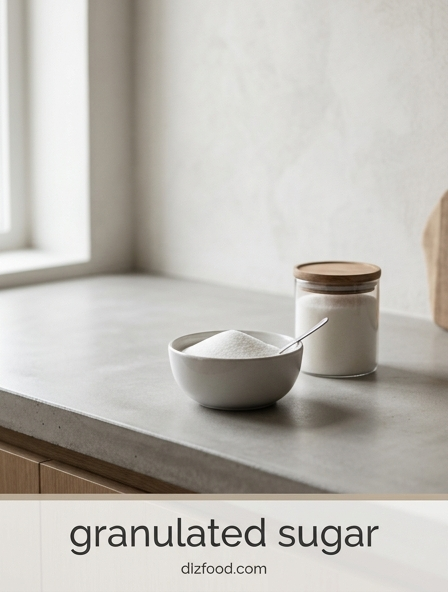
The Science of Granular Structure
Granulated sugar, primarily composed of sucrose, is characterized by its distinct crystalline lattice. Each individual grain is a complex geometric solid formed through a controlled crystallization process, usually derived from sugar cane or sugar beets. At a molecular level, these crystals are held together by hydrogen bonds, creating a stable and predictable ingredient for kitchen use. The uniformity of the grain size is paramount for consistent culinary results, as it dictates how the sugar will interact with other dry and wet ingredients in a recipe.
Beyond simple sweetness, the granular structure serves a physical purpose. The sharp, multi-angled edges of the crystals act as mechanical abrasive agents. When sugar is stored properly, it remains free-flowing, allowing for precise measurement by volume or weight. Its low moisture content ensures that the crystals do not clump, preserving the integrity of the surface area available for chemical reactions. Understanding this structural foundation is essential for mastering advanced techniques, as the physical presence of these crystals influences everything from the viscosity of a batter to the final stability of a delicate meringue.
Aeration and the Creaming Method
In the world of baking, the creaming method is perhaps the most critical application of granulated sugar's physical properties. When sugar is beaten together with a solid fat, such as butter or shortening, the sharp edges of the crystals carve microscopic channels into the fat. These channels trap air, creating a stable foam that expands during the baking process. Without the specific jagged edges of granulated sugar, the fat would remain dense, resulting in a heavy and unappealing final product.
- Mechanical Leavening: The air pockets created during creaming provide the primary "lift" before chemical leaveners like baking soda even activate.
- Temperature Control: Using room-temperature fat ensures the sugar can effectively cut through the lipid structure without melting.
- Texture Development: Consistent creaming leads to a uniform distribution of air, which translates to a light, velvety mouthfeel.
If a finer sugar or a liquid sweetener were used in place of granulated sugar, the mechanical aeration would be significantly diminished. This section of the baking process highlights that sugar is not just a flavoring agent but a functional structural component that determines the volume and lightness of cakes and cookies.
Achieving Signature Surface Crunch
One of the most desirable traits in artisanal baking is the contrast between a soft interior and a crisp, sugary exterior. Granulated sugar is the primary driver behind this "surface crunch." Because granulated sugar has a relatively large crystal size compared to powdered varieties, it does not dissolve instantly when it comes into contact with the moisture on the surface of a dough or batter. As the oven heat rises, moisture evaporates from the surface, causing the sugar to concentrate and eventually recrystallize into a hard, brittle shell.
This phenomenon is particularly evident in products like muffins, sugar cookies, and certain types of pound cakes. When a baker sprinkles extra granulated sugar on top of a raw loaf, they are intentionally creating a localized area of low moisture and high sugar concentration. This results in a sparkling, translucent crust that provides a rhythmic snap when bitten. This textural interplay is a hallmark of professional pastry work, where the tactile experience of the food is considered just as important as the flavor profile itself. The persistence of the crystal through the initial stages of baking is what makes this specific texture possible.
How Crystal Size Impacts Crumb
The internal "crumb" of a baked good-referring to the pattern of holes and the general texture of the soft interior-is directly influenced by the size of the sugar crystals used in the initial mix. Larger crystals take longer to dissolve, which can lead to a coarser, more open crumb. Conversely, smaller crystals dissolve quickly and integrate more thoroughly with the flour proteins and fats, leading to a tighter, finer, and more uniform interior. The following table illustrates how different sugar types affect the final crumb structure:
| Sugar Type | Crystal Size | Impact on Crumb |
|---|---|---|
| Sanding Sugar | Extra Large | Coarse, pebbled texture; often used for decorative crunch. |
| Granulated Sugar | Standard | Balanced crumb; ideal for standard cakes and cookies. |
| Superfine (Caster) | Small | Very delicate, tight crumb; perfect for sponges and meringues. |
Choosing the correct crystal size allows the baker to manipulate the density of the product. Granulated sugar serves as the versatile middle ground, providing enough aeration for a light lift while maintaining enough structural presence to keep the crumb from becoming overly fragile or disintegrating.
The Role of Moisture Migration
Granulated sugar is a highly hygroscopic substance, meaning it has a natural affinity for water. In the kitchen environment, this property is vital for moisture migration management. Within a batter, sugar competes with flour proteins (gluten) and starches for available water. By binding with the water molecules, sugar limits the amount of hydration available to the flour, which effectively inhibits the development of long gluten strands. This results in a more tender and moist finished product that remains soft for a longer period.
Furthermore, sugar's ability to hold onto moisture extends the shelf life of baked goods. As the product cools and ages, the sugar prevents the water from evaporating too quickly, which would otherwise lead to staling. This moisture retention is why low-sugar "healthy" alternatives often feel dry or crumbly. The granular sugar acts as a humectant, ensuring that the interior of a cake or the center of a cookie remains hydrated and supple, even as the exterior may firm up. This internal migration of moisture is a delicate balance that defines the longevity and quality of the food.
Caramelization for Golden Texture
The visual appeal of golden-brown baked goods is primarily the result of caramelization, a non-enzymatic browning reaction that occurs when granulated sugar is heated. Unlike the Maillard reaction, which involves proteins, caramelization is the thermal decomposition of sucrose. As the temperature reaches approximately 320°F (160°C), the sugar molecules break down into new compounds, creating a complex array of flavors and a deep amber color. This process follows a specific progression:
- Melting: The solid crystals transition into a clear, viscous liquid.
- Foaming: As water vapor is released, the sugar begins to bubble and expand.
- Color Transition: The liquid shifts from pale gold to deep brown as new carbon compounds form.
- Flavor Development: The sweetness diminishes, replaced by nutty, bitter, and toasted notes.
In the oven, the granulated sugar on the surface of a pastry undergoes this process, creating a thin, flavorful, and colorful layer. This not only enhances the aesthetic but also adds a sophisticated depth of flavor that balances the inherent sweetness of the dough. Proper caramelization is the difference between a pale, doughy biscuit and a professionally finished, golden-brown treat.
Promoting Optimal Cookie Spread
The diameter and thickness of a cookie are significantly determined by the behavior of granulated sugar during the first few minutes of baking. As the oven temperature rises, the sugar crystals begin to melt into a liquid state before the flour and egg proteins have a chance to set the structure. This melting sugar reduces the viscosity of the dough, allowing it to "flow" or spread across the baking sheet. A higher ratio of granulated sugar typically results in a thinner, wider cookie with a more pronounced "snap."
This spread is essential for achieving the classic cookie shape. If the sugar content is too low, the dough will remain in a mound-like shape, leading to a cakey and dense texture. Granulated sugar is particularly effective for spread compared to brown sugar, because brown sugar contains molasses and more moisture, which can actually speed up the setting of the structure. By manipulating the amount and type of granulated sugar, a baker can precisely control the geometry of their cookies, ensuring they reach the perfect balance between circumference and thickness for the desired eating experience.
Structural Integrity in Baked Goods
While often viewed merely as a sweetener, granulated sugar is a fundamental structural building block in the kitchen. In the absence of sugar, baked goods would rely entirely on flour and eggs for their shape, often resulting in a rubbery or tough texture. Sugar acts as a tenderizer by interfering with the coagulation of proteins. In cakes, it raises the temperature at which the batter "sets," giving the air bubbles more time to expand before the structure becomes rigid. This results in a higher rise and a more delicate framework.
In meringues and egg-white foams, granulated sugar provides the necessary stability to prevent the foam from collapsing. As the sugar dissolves into the water film surrounding the air bubbles, it increases the viscosity of the liquid, making the bubble walls stronger and more elastic. This structural support is what allows a souffle to hold its height or a macaron to maintain its smooth, domed shape. Without the bracing effect of the sugar crystals, these delicate structures would succumb to gravity and the heat of the oven almost instantly, proving that sugar is as much an architectural tool as it is a culinary one.
Granulated Sugar vs Fine Powders
In the kitchen, the choice between granulated sugar and fine powders (like confectioners' or icing sugar) is rarely about flavor and almost always about texture and solubility. Granulated sugar is pure sucrose with no additives, whereas powdered sugar usually contains about 3% cornstarch to prevent clumping. This difference is vital when considering the clarity of a syrup or the "shortness" of a pastry. The absence of starch in granulated sugar makes it the preferred choice for making clear simple syrups or hard candies where transparency is required.
- Solubility: Fine powders dissolve instantly in cold liquids, while granulated sugar requires agitation or heat.
- Aeration: Powdered sugar lacks the sharp edges necessary for the creaming method, making it unsuitable for light sponges.
- Mouthfeel: Granulated sugar provides a distinct "bite" or graininess that is often desirable in shortbreads and rustic tarts.
Using the wrong format can lead to drastic failures; for instance, substituting powdered sugar in a recipe designed for the creaming method will result in a flat, dense, and greasy cake. Understanding the specific physical advantages of the granulated form ensures the baker can choose the right tool for the specific textural outcome they wish to achieve.
Building the Perfect Snap and Bite
The "snap" of a ginger nut or a biscotti is a prized textural attribute that relies heavily on the crystallization of granulated sugar. When a high-sugar dough is baked, the sugar melts and integrates with the other ingredients. As the product cools, the sugar doesn't just return to its original state; it forms a glassy, non-crystalline or micro-crystalline structure that binds the flour particles together in a rigid matrix. This brittle state is what creates the audible "snap" when the biscuit is broken or bitten into.
Achieving this bite requires a specific ratio of sugar to moisture. If the moisture content remains too high, the sugar stays in a syrupy state, resulting in a soft or chewy texture. However, when granulated sugar is allowed to fully dehydrate during the baking process, it hardens into a firm support system. This provides the "bite"-a resistance followed by a clean break-that defines high-quality dry pastries. The interplay between the granulated crystals and the heat of the oven is the final step in engineering a product that is not only sweet but also structurally satisfying to the palate.

Comments