
When you're aiming for that perfect melt-in-your-mouth texture, the sugar you choose does more than just sweeten-it defines the soul of your bake. While standard brown sugar and muscovado might look similar, they offer distinct experiences: brown sugar is the reliable workhorse, typically made by mixing refined white sugar with a controlled amount of molasses for a consistent, mellow caramel punch. On the other hand, muscovado is the unrefined, artisanal choice that retains its natural molasses, resulting in a damp, sticky texture and a bold, smoky flavor profile. Choosing between them is the key to mastering moisture and depth, whether you want a subtle golden chew or a dark, fudge-like intensity in your desserts.
| Feature | Brown Sugar | Muscovado Sugar |
|---|---|---|
| Production | Refined white sugar + added molasses | Unrefined; juice evaporated naturally |
| Flavor Profile | Sweet, mild caramel notes | Deep, complex, smoky toffee |
| Texture | Soft, uniform, sandy grains | Very moist, sticky, "wet" sand feel |
| Molasses Content | 3.5% (Light) to 6.5% (Dark) | High; retains all natural minerals |
| Best Applications | Cookies, brownies, everyday baking | Fruitcakes, BBQ sauces, rich glazes |
| Substitution | Easy to find; standard pantry staple | Specialty item; adds more moisture |
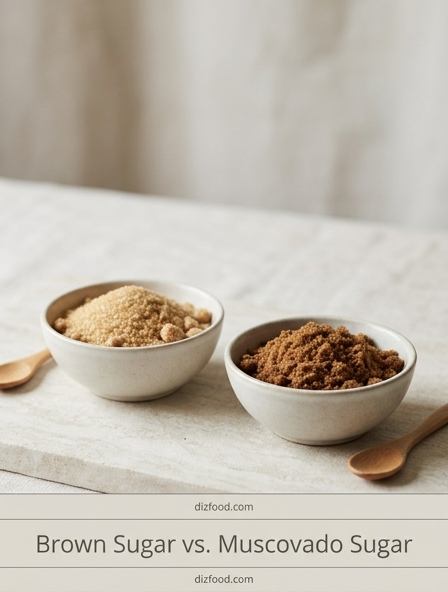
Brown Sugar vs Muscovado Key Differences
At a glance, brown sugar and muscovado sugar may appear interchangeable due to their shared mahogany hues and moist textures. However, the fundamental difference lies in their processing and origin. Commercial brown sugar is essentially a refined product. It is created by taking fully refined white granulated sugar and mixing it with a precise amount of molasses. This results in a consistent, predictable sweetener used in most high-volume commercial baking. Because the molasses is added as a coating, the flavor is often lighter and more uniform.
In contrast, muscovado sugar is an unrefined or "partially refined" cane sugar. It is an artisanal product where the molasses is never removed in the first place. This allows the sugar to retain the natural impurities and minerals found in the sugar cane plant. While brown sugar is defined by its industrial efficiency, muscovado is defined by its traditional, labor-intensive production. The following list highlights the primary points of divergence:
- Refinement: Brown sugar is centrifugal sugar (spun to remove molasses), while muscovado is non-centrifugal.
- Consistency: Brown sugar has uniform crystals; muscovado has varied, irregular grains.
- Flavor Origin: Brown sugar flavor comes from added molasses; muscovado flavor comes from the original cane juice.
- Origin: Most muscovado is produced in Mauritius or the Philippines, whereas brown sugar is produced globally in massive refineries.
Understanding these differences is crucial for any chef because the chemical behavior of these sugars-how they react with heat and fats-differs significantly despite their similar appearances.
The Production Process Refined vs Unrefined
The journey from sugar cane to the pantry follows two distinct paths for these sweeteners. To produce standard brown sugar, manufacturers first create white sugar by boiling cane juice and spinning it in a centrifuge to separate the sugar crystals from the syrupy molasses. Once the white sugar is dried, a measured amount of molasses is sprayed back onto the crystals. This "painted-on" molasses approach ensures that the "light" or "dark" variations of brown sugar remain perfectly consistent from bag to bag.
The production of muscovado sugar is far more primitive and natural. The process follows these specific steps:
- Sugar cane is crushed to extract the raw juice.
- The juice is filtered and placed in large pans over an open flame or high-heat source.
- The liquid is boiled down slowly until the water evaporates, leaving behind a thick, concentrated syrup.
- As the syrup cools, it is stirred or beaten to encourage the formation of crystals while the natural molasses remains trapped within the grains.
- The resulting damp mass is dried slightly but never centrifuged.
Because muscovado relies on slow evaporation rather than high-speed spinning, it retains much of the "soul" of the sugar cane. This lack of high-level refinement means that muscovado can vary in color and moisture depending on the specific crop and the humidity of the region where it was processed, making it a more volatile but rewarding ingredient for the home cook.
Comparing Flavor Profiles and Sweetness
While both sugars provide sweetness, the complexity of their flavor profiles varies drastically. Standard brown sugar offers a clean, straightforward sweetness with mild hints of caramel and toffee. Light brown sugar is particularly subtle, making it ideal for recipes where you want a soft sweetness without overpowering other delicate ingredients like vanilla or light fruits. Dark brown sugar provides a more robust punch, but it still maintains a predictable "processed" profile that focuses on the sugar itself rather than the plant it came from.
Muscovado sugar, on the other hand, is a sensory experience. It is often described as having "funky" or "earthy" notes. Because the natural minerals are preserved, you will often taste hints of licorice, smoke, and even a slight bitterness that balances the intense sweetness. This depth makes it a preferred choice for savory-sweet combinations. Below is a comparison of their dominant flavor characteristics:
| Feature | Brown Sugar | Muscovado Sugar |
|---|---|---|
| Primary Taste | Sweet, clean caramel | Deep toffee, bitter molasses |
| Aroma | Mildly sweet | Strong, earthy, spicy |
| Complexity | Low (Uniform) | High (Multi-layered) |
| Aftertaste | Sugar-forward | Faintly salty or smoky |
When using muscovado, you are not just adding sweetness; you are adding a seasoning that can alter the entire aromatic profile of a dish. Brown sugar is a background player, while muscovado demands to be noticed.
Texture and Moisture Content Explained
Texture is perhaps the most immediate physical difference one notices when handling these sugars. Brown sugar has a soft, sandy texture. Because the molasses is a surface coating, the crystals remain relatively distinct and free-flowing compared to muscovado, even though it is still considered a "moist" sugar. It packs easily into a measuring cup, which is the standard method for measuring it in Western recipes, and it dissolves quickly in liquids or when creamed with butter.
Muscovado sugar is significantly more humid and dense. It often feels like "wet sand" and has a tendency to form stubborn clumps. This is due to the high concentration of natural molasses and the presence of various organic compounds that hold onto water molecules. If you squeeze a handful of muscovado, it will retain its shape perfectly, almost like clay. This high moisture content can affect the structure of baked goods; it provides a much fudgier, denser crumb than standard brown sugar.
In the kitchen, this texture requires extra attention. If muscovado has sat in the pantry for a while, it can become incredibly hard-almost stone-like-as the moisture evaporates. While brown sugar also hardens, muscovado's high molasses content makes the resulting "brick" much denser. When using muscovado in delicate batters, it is often necessary to sift it or break up the clumps manually to ensure you don't end up with "sugar pockets" in your finished cake or cookie.
Nutritional Breakdown and Mineral Content
From a strictly caloric standpoint, brown sugar and muscovado sugar are very similar, both consisting primarily of sucrose. However, because muscovado is unrefined, it retains a small but measurable amount of the minerals found in sugar cane juice. Standard white and brown sugars are stripped of these elements during the industrial refining process. While neither should be considered a "health food," muscovado does offer a slightly higher nutritional value than its refined counterparts.
The molasses that stays within the muscovado crystal is a source of several trace minerals. These include:
- Potassium: Helpful for electrolyte balance.
- Magnesium: Important for enzyme function.
- Calcium: Essential for bone health.
- Iron: Present in small quantities due to the concentrated cane juice.
- Antioxidants: Studies have shown that unrefined sugars contain polyphenols that are absent in white sugar.
In contrast, the nutritional profile of brown sugar is nearly identical to white sugar, save for the negligible amounts of minerals found in the small percentage of molasses added back. It is important to note that you would have to consume a dangerously high amount of sugar to meet your daily mineral requirements from muscovado alone. Therefore, the choice to use muscovado should be based on flavor and culinary performance rather than health benefits. Nevertheless, for those seeking to reduce their intake of highly processed industrial foods, muscovado is the more "whole" option in the sugar category.
Best Culinary Uses for Brown Sugar
Brown sugar is the workhorse of the modern kitchen, valued for its reliability and its ability to provide a moist, chewy texture to baked goods. Its most famous application is the classic chocolate chip cookie. The molasses in the brown sugar reacts with baking soda to create carbon dioxide, which helps the cookies rise while ensuring the center remains soft and the edges become crisp. Its uniform crystal size also makes it perfect for creaming with butter, creating a stable emulsion that serves as the base for many cakes and muffins.
Beyond the baking sheet, brown sugar is an essential component in savory cooking, particularly in American barbecue and glazing. Its uses include:
- Dry Rubs: It caramelizes quickly over high heat, creating a sweet crust on ribs or brisket.
- Glazes: When melted with mustard or vinegar, it creates a thick, glossy coating for hams and roasted carrots.
- Marinades: It helps balance the acidity in soy-based or citrus-based marinades.
- Oatmeal and Porridge: It dissolves instantly into hot cereals, providing a gentle caramel flavor.
Because brown sugar is inexpensive and widely available, it is the best choice for large-batch cooking or recipes where the sugar is meant to play a supporting role. Its predictability ensures that a recipe made in New York will taste exactly like the same recipe made in London, which is why it remains the gold standard for commercial and home baking instructions.
When to Choose Muscovado for Baking
Muscovado sugar should be reserved for recipes where the sugar is a primary flavor component. If a recipe calls for a "dark" or "deep" flavor profile, muscovado is the superior choice. Its high acidity and intense molasses content make it particularly effective in spice-heavy recipes. The flavors of ginger, cloves, cinnamon, and nutmeg are amplified by the smoky, complex notes of muscovado. This makes it the traditional choice for gingerbread, molasses cookies, and dark fruitcakes.
Professional bakers often reach for muscovado when they want to achieve a specific textural outcome. Because it is more hygroscopic (it attracts water) than brown sugar, it creates an exceptionally moist and "tacky" crumb. Consider using muscovado in these specific scenarios:
- Sticky Toffee Pudding: The sugar creates a rich, dark sauce that has a more sophisticated flavor than standard caramel.
- Rich Chocolate Cakes: The bitter notes in muscovado complement the bitterness of high-quality cocoa powder.
- Brownies: Using muscovado results in an ultra-fudgy, dense brownie that stays moist for days.
- Ice Cream Bases: It lends a "burnt sugar" or toffee-like depth to homemade dairy bases.
When using muscovado in baking, be aware that its acidity can cause cakes to rise more quickly if baking soda is present. It is often best used in recipes that are already designed to be dense and moist rather than light and airy sponges.
How to Substitute Muscovado for Brown Sugar
Substituting muscovado for brown sugar is generally possible at a 1:1 ratio by weight, but there are several technical adjustments you must keep in mind to avoid ruining the texture of your dish. Because muscovado is so much more moist and clumpy, measuring it by volume (using cups) can be wildly inaccurate. A "packed cup" of muscovado will likely contain significantly more sugar than a packed cup of brown sugar. For the best results, always use a kitchen scale to ensure you are adding the correct mass of sweetener.
If you decide to make the switch, follow these steps to ensure a successful substitution:
- Check for Clumps: Pass the muscovado through a fine-mesh sieve or pulse it briefly in a food processor to break up hard nuggets.
- Adjust Liquid: If the recipe is very sensitive to moisture, you may need to slightly reduce the other liquids (like milk or water) by a teaspoon or two.
- Consider the Color: Be prepared for your finished product to be much darker. A vanilla cake will turn a deep tan if you use muscovado.
- Watch the Salt: Because muscovado has a more complex mineral profile, it can sometimes taste "saltier." You might want to reduce the added salt in your recipe slightly.
Note that while you can easily swap muscovado into a brown sugar recipe, swapping brown sugar into a recipe specifically designed for muscovado may result in a lack of depth and a drier finished product. In those cases, adding a teaspoon of extra molasses to the brown sugar can help bridge the gap.
Shelf Life and Storage Best Practices
Both brown sugar and muscovado are notorious for turning into "rocks" if not stored correctly. This hardening happens when the moisture in the molasses evaporates, causing the sugar crystals to cement together. Because muscovado has a higher moisture content and more natural impurities, it can actually be more prone to extreme hardening if left in a poorly sealed bag. Proper storage is essential to maintain the pliable, sandy texture required for easy measuring and mixing.
To maximize the shelf life of these sugars, follow these storage guidelines:
- Airtight Containers: Transfer the sugar from its original paper or plastic bag into a glass or heavy-duty plastic container with a rubber seal.
- Terracotta Discs: Soak a small piece of unglazed terracotta (often sold as "sugar savers") in water for 15 minutes, pat dry, and place it in the container. This slowly releases moisture into the air inside.
- Marshmallow Trick: Placing a few large marshmallows in the container can help maintain humidity as they slowly release their own moisture.
- Cool, Dark Place: Avoid storing sugar near the stove or dishwasher, as fluctuating temperatures can cause moisture to migrate and crystals to harden.
If your sugar has already hardened, do not throw it away. You can soften it by placing it in a bowl covered with a damp paper towel and microwaving it in 20-second bursts, or by leaving a slice of fresh bread in the container overnight. The sugar will absorb the moisture from the bread, returning to its original soft state.
Final Verdict Which Sugar Should You Use
Choosing between brown sugar and muscovado sugar ultimately depends on the goals of your culinary project. Brown sugar is the "safety first" option. It is cost-effective, consistent, and performs exactly as expected in 90% of standard recipes. If you are baking a quick batch of cookies for a school bake sale or making a simple marinade for a weeknight dinner, brown sugar is your best friend. It provides the necessary sweetness and moisture without complicating the flavor profile or requiring special handling.
Muscovado sugar is a "gourmet" ingredient that should be treated with the same respect as high-quality chocolate or aged balsamic vinegar. It is the better choice when you want the sweetener to be a star performer rather than a background extra. While it is more expensive and requires more care in storage and measurement, the payoff in flavor-a deep, smoky, toffee-like complexity-is something that refined brown sugar simply cannot replicate. For the serious baker or the adventurous cook, keeping a bag of dark muscovado on hand opens up a new world of depth for desserts and savory sauces alike. In short: use brown sugar for consistency and muscovado for character.



Comments