
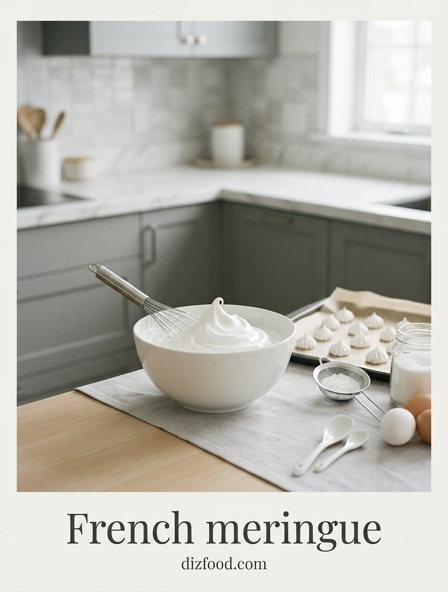
Understanding French Meringue Basics
French meringue is often celebrated as the most fundamental variation of the classic egg-white foam, prized for its sheer simplicity and ease of preparation in a home kitchen. Unlike its cooked counterparts, this method involves whipping raw egg whites at room temperature until they reach a foamy state, at which point granulated sugar is slowly introduced. The friction of the sugar against the proteins helps to stabilize the air bubbles, resulting in a glossy, voluminous mixture that can reach soft, medium, or stiff peaks depending on the duration of whipping.
Because the egg whites remain technically raw throughout the mixing process, this meringue is structurally fragile and susceptible to collapsing if not handled with care. It is almost exclusively used as a base that requires subsequent baking to set the proteins and ensure food safety. When baked at low temperatures, the French style transforms into a light, crisp, and airy treat that melts on the tongue, making it a foundational technique for amateur bakers and professional pastry chefs alike who value a delicate mouthfeel and an uncomplicated ingredient list consisting only of eggs, sugar, and occasionally a stabilizer like cream of tartar.
The Italian Meringue Method Explained
The Italian meringue method is widely considered the most stable and technically demanding version of the three main meringue types. This process begins by creating a sugar syrup, which is heated on the stove until it reaches the "soft-ball" stage, typically between 235°F and 240°F (113°C to 115°C). While the syrup boils, egg whites are whipped to soft peaks. The boiling syrup is then slowly drizzled in a thin, steady stream into the whites while the mixer continues to run at a high speed. This technique effectively cooks the egg whites during the whipping process, resulting in a dense, satiny, and exceptionally stable foam.
Because the heat from the syrup pasteurizes the eggs, Italian meringue is safe to consume without further baking. It maintains its volume remarkably well and does not weep as easily as the French variety. The result is a marshmallow-like consistency that is both versatile and resilient, serving as a sophisticated component in high-end pastry work. Mastering the timing between the sugar reaching the correct temperature and the egg whites achieving the right volume is the primary challenge for chefs using this method.
Comparing Structural Stability and Texture
When choosing between French and Italian meringues, the primary considerations are the desired structural integrity and the final texture of the dessert. French meringue is characterized by its light, porous, and brittle nature once baked, but it is notorious for losing volume if it sits too long before entering the oven. In contrast, Italian meringue is dense and structural, holding its shape for hours or even days when used as a topping or incorporated into other mixtures. The following table highlights the key differences between these two popular styles.
| Feature | French Meringue | Italian Meringue |
|---|---|---|
| Stability | Low; prone to collapsing | High; very stable |
| Texture | Light, airy, and crisp | Dense, creamy, and smooth |
| Preparation | Cold whisking of sugar | Hot sugar syrup addition |
| Safety | Must be baked | Safe to eat raw |
The Role of Temperature in Meringue Preparation
Temperature plays a critical role in the successful formation of a meringue, affecting everything from the volume of the foam to the safety of the final product. For French meringue, it is widely recommended to use egg whites at room temperature. Cold eggs are easier to separate, but room-temperature proteins have less surface tension, allowing them to expand more easily and reach maximum volume during whipping. Conversely, the environment must be kept cool and dry; high humidity is the enemy of meringue, as the sugar naturally absorbs moisture from the air, which can lead to a sticky, weeping mess that refuses to crisp up.
In the Italian method, temperature management shifts to the sugar syrup. Precise thermal control is mandatory; if the syrup is too cool, the meringue will be runny and lack structure. If it is too hot, the sugar may thread or turn into hard candy bits upon contact with the cool whisk. Using a calibrated candy thermometer is essential to ensure the syrup hits the narrow window required to cook the proteins without compromising the smooth, glossy texture of the finished foam.
Sugar Incorporation Techniques for Optimal Peaks
The way sugar is introduced to egg whites determines the final stability and graininess of the meringue. In French meringue, the timing is everything. If sugar is added too early, it can weigh down the proteins and prevent them from expanding; if added too late, the meringue may become over-beaten and dry. To achieve the best results, bakers should follow specific steps for incorporation:
- Wait until the egg whites reach soft peaks and look like clouds before adding the first spoonful of sugar.
- Add sugar gradually, one tablespoon at a time, to ensure every crystal has the opportunity to dissolve.
- Use superfine or caster sugar, as the smaller crystals dissolve much faster than standard granulated sugar.
- Rub a small amount of the foam between your fingers; if it feels gritty, continue whisking until smooth.
For Italian meringue, the sugar is pre-dissolved in water and heated, eliminating the risk of grittiness. However, the speed of the pour must be controlled to prevent the syrup from hitting the beaters and splashing against the sides of the bowl, where it will instantly harden.
Best Uses for French Meringue in Baking
French meringue is the traditional choice for recipes where a delicate, crunchy texture is the goal. Because it is essentially an unstable foam until baked, its applications are limited to items that undergo heat treatment. One of its most famous uses is in the creation of meringue cookies or "kisses," which are piped into small shapes and dried out in a low-temperature oven for several hours. This method results in a treat that is crisp on the outside and occasionally chewy in the center. It is also the backbone of the Pavlova, a large meringue cake topped with whipped cream and fresh fruit.
Beyond standalone cookies, French meringue is frequently folded into heavier cake batters, such as sponge cakes or soufflés, to provide lift and aeration. In these contexts, the air trapped in the meringue expands in the heat of the oven, causing the dessert to rise significantly. It is also the preferred choice for Vacherins and certain types of dacquoise, where thin layers of baked meringue provide a structural and textural contrast to rich creams and nut flours.
Ideal Applications for Italian Meringue Recipes
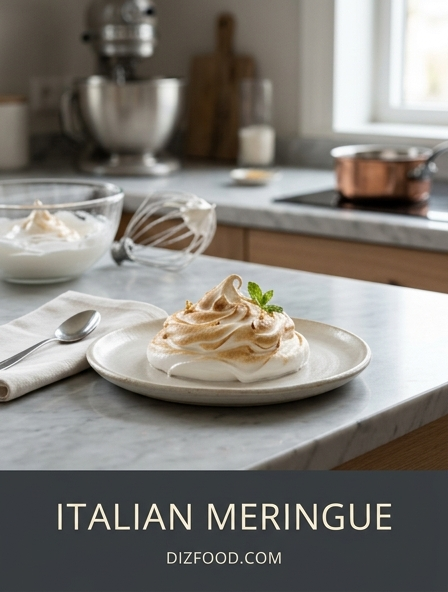
The inherent stability and cooked nature of Italian meringue make it the gold standard for professional pastry applications that require longevity and safety. One of its primary uses is as a base for Italian Meringue Buttercream (IMBC). By folding softened butter into the cooled meringue, chefs create a silky, stable frosting that does not melt as easily as American buttercream and is far less sweet. It is also the preferred topping for Lemon Meringue Pie, as it can be torched for a beautiful toasted effect without losing its shape or weeping liquid onto the lemon curd.
Additionally, Italian meringue is used to lighten mousses, semifreddos, and sorbets. Its ability to hold air while being mixed with denser ingredients makes it invaluable for frozen desserts, ensuring they remain scoopable rather than freezing into a solid block. Many pastry chefs also prefer the Italian method for making macarons, as the cooked meringue provides a more consistent and sturdy batter that is less prone to the fluctuations caused by environmental humidity or slight over-mixing during the "macaronage" stage.
Food Safety and Raw Egg Considerations
Food safety is a primary differentiator between meringue styles, largely centered on the risk of Salmonella associated with raw eggs. French meringue consists of raw egg whites and sugar, meaning it is not safe to consume in its whipped state. It must be baked until it reaches an internal temperature that kills potential bacteria. This limitation makes it unsuitable for desserts like mousses or frostings that are not cooked after assembly. For those who wish to use the French method for "raw" applications, using pasteurized egg whites from a carton is an option, though they often require more whipping time and stabilizers to achieve volume.
Italian meringue addresses these safety concerns through its preparation method. The addition of boiling sugar syrup raises the temperature of the egg whites to a level that effectively pasteurizes them. This makes the resulting foam safe for consumption immediately after whipping. Consequently, Italian meringue is the responsible choice for any dish where the meringue remains soft and unbaked, such as Baked Alaska or various cream-based fillings. Understanding these risks is essential for any cook serving vulnerable populations, such as children or the elderly.
Troubleshooting Common Meringue Failures
Meringue can be temperamental, and several common issues can ruin the texture of the final product. Understanding why these failures occur is the first step toward fixing them. Most problems stem from either fat contamination, improper sugar dissolution, or over-whipping. If a meringue fails to gain volume, it is almost always due to a trace of fat-either from a speck of egg yolk or a bowl that wasn't perfectly clean. The following list outlines frequent problems and their causes:
- Weeping or Syneresis: This is when liquid pools at the bottom. It usually happens if the sugar wasn't fully dissolved or if the meringue was baked too quickly.
- Beading: Small amber droplets on the surface are caused by over-baking or high humidity.
- Grit: A grainy texture indicates that the sugar was added too quickly in a French meringue.
- Collapse: This occurs when the foam is over-beaten, causing the protein bonds to break and expel the air they were holding.
To avoid these, always use a stainless steel or glass bowl and wipe it with lemon juice or vinegar before starting to remove any residual grease.
Choosing the Right Meringue for Your Dessert
Selecting the appropriate meringue depends on the specific requirements of the recipe, including texture, stability, and whether the dish will be cooked. If you are looking for a simple, crisp cookie or a light leavening agent for a cake that will be baked immediately, the French method is the most efficient and effective choice. Its airy quality is unmatched for traditional baked goods. However, if the project involves intricate piping, long-term display, or a topping that needs to remain soft and safe without further cooking, the Italian method is the superior option despite the extra effort of boiling sugar.
Bakers must also consider their equipment and skill level. French meringue requires only a whisk and a bowl, making it accessible for beginners. Italian meringue requires a thermometer and careful multitasking to manage the hot syrup. By evaluating the desired outcome-crisp and fragile versus soft and resilient-and considering the safety requirements of the final dish, you can confidently choose the technique that will yield the best results for your specific kitchen project. Both methods are essential tools in the pastry arts, offering different solutions for the versatile egg white.

Comments