
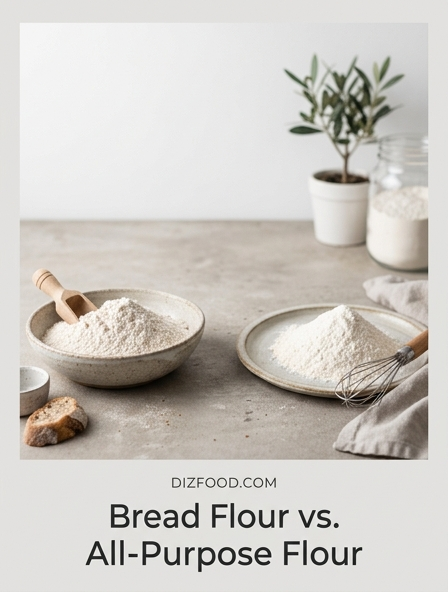
If you've ever wondered why your homemade loaves lack that bakery-standard height, the secret often lies in the protein structure of your flour. While All-Purpose flour is the reliable "jack-of-all-trades" perfect for a tender crumb in cookies and cakes, Bread Flour is the high-protein powerhouse specifically engineered for structural integrity. By choosing a flour with a higher protein content, you enable a stronger gluten network that effectively traps fermentation gases, ensuring your yeast breads achieve a magnificent rise and that signature chewy texture. Understanding the nuances between these two kitchen staples is the quickest way to elevate your baking from flat and dense to airy and professional.
| Feature | Bread Flour | All-Purpose Flour |
|---|---|---|
| Protein Content | 12% - 15% (High) | 10% - 12% (Moderate) |
| Best Used For | Sourdough, bagels, pizza crust | Cookies, muffins, pancakes |
| Gluten Strength | Strong, elastic network | Moderate, softer bond |
| Finished Texture | Chewy, sturdy, and airy | Tender, crumbly, and light |
| Liquid Absorption | High (absorbs more water) | Standard (lower absorption) |
| Rise Potential | Maximum volume and "spring" | Moderate, consistent rise |
Understanding Protein Content Differences
The primary distinction between bread flour and all-purpose flour lies in their protein content, which is derived from the variety of wheat used during the milling process. Bread flour is typically milled from "hard" wheat, which naturally contains a higher concentration of proteins. In contrast, all-purpose flour is a blend of both hard and soft wheats, designed to strike a balance that suits a wider range of culinary applications. When you look at the nutritional label, these protein levels dictate how the flour will behave when mixed with liquid and manipulated in the kitchen.
Generally, the protein ranges are categorized as follows:
- All-Purpose Flour: Contains approximately 10% to 12% protein.
- Bread Flour: Contains approximately 12% to 14% protein.
- Pastry and Cake Flours: Contain lower levels, usually between 7% and 9%.
This seemingly small difference of 2% to 4% protein has a massive impact on the final product. Higher protein levels mean more potential for gluten formation. Because protein absorbs water, bread flour also requires a higher hydration level than all-purpose flour. If you were to use the same amount of water for both, the bread flour dough would feel much stiffer and drier, while the all-purpose dough would feel slack and sticky. Understanding this ratio is the first step in mastering the chemistry of the kitchen.
The Science of Gluten Development
Gluten is not a substance found directly in the flour bag; rather, it is formed when two specific proteins-glutenin and gliadin-are hydrated and agitated. In the context of bread flour, the abundance of these proteins allows for the creation of a dense, interconnected web. Glutenin provides the strength and elasticity (the ability of the dough to spring back), while gliadin provides extensibility (the ability of the dough to be stretched without tearing). When you knead dough made with bread flour, you are physically aligning these protein strands into a structured matrix.
The development process follows a specific mechanical path:
- Hydration: Water molecules surround the protein particles, allowing them to unfurl.
- Agitation: Stirring or kneading brings these proteins into contact with one another.
- Cross-linking: Chemical bonds form between the strands, creating a mesh that can trap gases.
- Fermentation: As yeast produces carbon dioxide, the gluten network expands like a balloon.
Because all-purpose flour has fewer proteins, the resulting gluten network is significantly weaker. This is ideal for textures where you want a "short" crumb-one that breaks easily rather than stretching. In bread making, however, a weak gluten network will lead to a collapsed loaf because the structure cannot withstand the internal pressure of the expanding gases. Therefore, the science of gluten is essentially the science of structural integrity in baking.
When to Choose Bread Flour
Choosing bread flour is essential when the desired outcome of your recipe is a chewy, toothsome texture and a significant rise. Because of its high protein content and strong gluten potential, it is the standard choice for yeast-leavened products that require a sturdy framework to hold their shape. When a dough needs to undergo a long fermentation period, such as with sourdough or artisan boules, bread flour provides the stamina necessary to prevent the dough from over-proofing or becoming "soupy" over time.
You should specifically reach for the bread flour when making the following items:
- Bagels and Pretzels: These require a dense, very chewy interior that only high protein can provide.
- Pizza Dough: Specifically for thin, New York-style crusts that need to be stretched thin without breaking.
- Sourdough: The long acidic environment of sourdough can break down weaker flours; bread flour holds up better.
- Cinnamon Rolls: For a soft but substantial bite that holds heavy fillings and frosting.
In these applications, the flour's ability to absorb more water and create a "strong" dough is paramount. If you were to use all-purpose flour for a bagel, the result would be more akin to a circular dinner roll-soft and pleasant, but lacking the iconic resistance and "tug" that defines a true bagel. Whenever the recipe calls for "strength," bread flour is the answer.
Versatility of All Purpose Flour
All-purpose flour is the "jack-of-all-trades" in the kitchen pantry. Its protein content is intentionally calibrated to be high enough to provide structure for bread, yet low enough to maintain tenderness in delicate pastries. This middle-ground profile makes it the most widely used flour in household kitchens. While it may not produce the absolute highest volume in a loaf of bread, it is more than capable of producing a high-quality sandwich loaf or a batch of dinner rolls.
The versatility of all-purpose flour is best showcased in recipes where you want a balance of different textures:
- Chocolate Chip Cookies: It provides enough structure to keep the cookie from spreading into a puddle, but remains tender enough to chew.
- Muffins and Quick Breads: These rely on a soft crumb that would be ruined by the toughness of bread flour.
- Pie Crusts: A lower protein count ensures the crust remains flaky and "short" rather than bread-like.
- Pancakes and Waffles: For a light, airy texture that doesn't feel heavy or elastic.
One of the greatest advantages of all-purpose flour is its predictability. Because it is a blend, manufacturers work hard to ensure the protein levels remain consistent across different batches. This reliability is why most general recipes are written specifically with all-purpose flour in mind. It is the safe, reliable baseline for almost any kitchen project that doesn't require extreme elasticity.
Structural Impact on Baked Goods
The structural impact of flour choice is most visible in the height and density of the finished product. When dough is baked, the proteins in the flour coagulate, and the starches gelatinize, setting the "walls" of the air bubbles created by leavening agents. Bread flour, with its higher protein, creates thicker, stronger walls. This results in a taller rise because the dough can hold more air without the bubbles popping and merging. Conversely, all-purpose flour creates thinner walls that are more prone to collapsing under heavy weight.
| Characteristic | All-Purpose Flour | Bread Flour |
|---|---|---|
| Volume | Moderate rise | High, dramatic rise |
| Crumb Strength | Soft and delicate | Resilient and elastic |
| Dough Feel | Slack and extensible | Tight and elastic |
| Browning | Standard | Enhanced (more protein) |
The visual difference is striking. A loaf made with bread flour will often have a "shredded" look at the score marks, indicating that the dough was expanding forcefully during the oven spring. An all-purpose loaf might have a more rounded, smoother appearance with less definition. Furthermore, the higher protein content in bread flour contributes to the Maillard reaction, often resulting in a darker, more flavorful crust compared to the lighter golden hue of all-purpose bakes.
Substituting Bread Flour for All Purpose
In many cases, bread flour and all-purpose flour can be used interchangeably, but not without some minor adjustments. If you are substituting bread flour for all-purpose in a recipe for cookies or cakes, the result will be noticeably chewier and tougher. To mitigate this, you should avoid over-mixing the batter, as mixing encourages the very gluten development you are trying to minimize. In some cases, adding a tablespoon of cornstarch to the bread flour can help "soften" the protein impact, mimicking the texture of all-purpose flour.
When making the swap, follow these steps to ensure success:
- Adjust Liquid: Add an extra teaspoon or two of water per cup of bread flour, as the higher protein absorbs more moisture.
- Reduce Kneading: If using bread flour for a recipe that should be tender, stop mixing as soon as the ingredients are combined.
- Check Consistency: Observe the dough; if it feels too tight or bouncy, let it rest for 15 minutes to allow the gluten to relax.
- Watch the Bake: High-protein flours may brown faster, so keep an eye on the oven temperature.
Conversely, if you use all-purpose flour where bread flour is called for, your dough may be too wet. You might need to add a bit more flour to achieve the correct handleable consistency. While the substitution is generally successful for home baking, professional-level results in bread usually require sticking to the high-protein original to ensure the crumb doesn't become too tight or the loaf too flat.
Flour Protein Percentage Comparison
Not all flours are created equal, even within the same category. Regional differences and brand specifications can lead to significant variations. For example, a southern brand of all-purpose flour in the United States might have a protein content as low as 8% (closer to pastry flour), whereas a national brand from the north might sit at 11.7%. This is because southern biscuits traditionally require a softer, lower-protein wheat, while northern baking traditions often involve more yeast breads. Understanding these nuances helps a baker troubleshoot why a recipe might work perfectly with one brand but fail with another.
| Flour Type | Typical Protein % | Best Kitchen Use |
|---|---|---|
| Cake Flour | 7% - 8.5% | Sponges, Angel Food |
| Pastry Flour | 8.5% - 9.5% | Pie Crusts, Tarts |
| All-Purpose | 10% - 12% | Cookies, Muffins, General |
| Bread Flour | 12% - 14% | Artisan Bread, Bagels |
| Whole Wheat | 13% - 15% | Dense, Nutty Breads |
It is also worth noting that whole wheat flour, while having a high protein percentage, does not develop gluten as effectively as white bread flour. This is because the bran particles in whole wheat act like tiny shards of glass, cutting the gluten strands as they form. Therefore, even though the protein count is high, the "strength" of the dough is actually lower than that of white bread flour. This is why many whole wheat recipes suggest adding a portion of bread flour to help support the structure.
Perfecting Crust and Crumb Texture
The "crumb" refers to the internal pattern of holes and the texture of the soft part of the bread, while the "crust" is the outer skin. Bread flour is the secret to achieving an "open" crumb-those large, irregular air pockets found in high-quality baguettes. This occurs because the strong gluten can stretch very thin without breaking, allowing air bubbles to expand significantly. All-purpose flour generally produces a "closed" crumb, which is tight, uniform, and ideal for sandwich bread where you don't want the jelly to fall through the holes.
The crust also changes based on the flour type:
- Crispness: Bread flour creates a thicker, more crackly crust due to the higher protein density.
- Chew: The crust of a bread-flour loaf will have a satisfying pull, whereas an all-purpose crust is softer and easier to bite through.
- Color: The extra protein in bread flour facilitates better browning, leading to a rich, mahogany-colored exterior.
To perfect the texture, bakers often manipulate the dough's hydration. A high-protein bread flour can handle 75% or 80% hydration, leading to a gelatinized, custardy crumb that is highly sought after in artisan baking. If you tried this with all-purpose flour, the dough would be nearly impossible to shape and would likely flatten out in the oven. Choosing the right flour is essentially choosing the architecture of your bite.
Baking With Yeast vs Chemical Leaveners
The interaction between flour and leavening agents is a critical component of kitchen chemistry. Yeast is a biological leavener that works slowly, consuming sugars and releasing gas over several hours. This slow process requires a strong flour (bread flour) to maintain the structure over time. If the gluten is too weak, the gas will simply escape, or the dough will collapse under its own weight during the long rise. The strength of bread flour acts as a sturdy container for the yeast's slow work.
In contrast, chemical leaveners like baking powder and baking soda work through an immediate chemical reaction:
- Activation: The leavener reacts with moisture or acid (like buttermilk or lemon juice).
- Expansion: Carbon dioxide is released instantly, usually in the first few minutes of baking.
- Setting: The heat of the oven sets the structure before the gas can escape.
Because chemical leaveners work so quickly, they do not need a high-protein gluten network to hold the gas. In fact, using bread flour with baking powder often results in a "rubbery" texture because the gluten becomes too tough too quickly. This is why biscuits, pancakes, and scones-all of which use chemical leaveners-almost exclusively call for all-purpose or even lower-protein flours. The goal in these recipes is tenderness, not the elastic strength required by yeast.
Choosing the Right Flour for Every Recipe
Ultimately, the decision between bread flour and all-purpose flour comes down to the specific goals of the recipe. If you are a beginner, starting with all-purpose flour is generally recommended because it is more forgiving and works for nearly everything. However, as you progress into more specialized baking, you will find that the right flour can be the difference between a good result and a professional one. You should always consider the "chew factor" and the "rise factor" before making your selection.
A quick guide for your next kitchen project:
- Choose All-Purpose if: You are making brownies, standard cookies, pancakes, pie crusts, or basic dinner rolls.
- Choose Bread Flour if: You are making sourdough, bagels, pizza, focaccia, or any bread that requires a long knead.
- Mix both if: You want a "semi-chewy" result, like a hearty sandwich bread that isn't as tough as a baguette.
Don't be afraid to experiment. Professional bakers often create their own "house blends" by mixing different types of flour to achieve a specific protein percentage. By understanding that protein equals strength and water absorption, you gain total control over the textures you create in your kitchen. Whether you want the airy lightness of a muffin or the sturdy, rustic pull of a sourdough loaf, the choice of flour is your most powerful tool in the baking arsenal.

Comments