
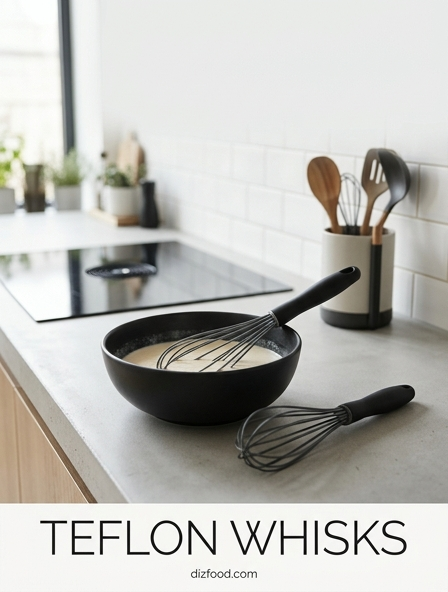
The Hidden Dangers of Metal Whisks
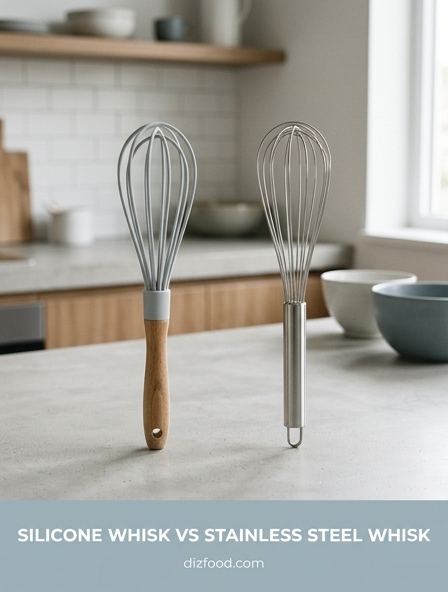
While stainless steel whisks are a staple in many professional kitchens, they pose a significant threat to the longevity of modern non-stick cookware. The primary danger lies in the physical hardness of the metal loops compared to the relatively soft fluoropolymer coatings used on pans. As the metal tines scrape against the interior surface, they create microscopic abrasions that compromise the structural integrity of the non-stick seal. Over time, these small scratches develop into larger gouges, leading to a phenomenon known as delamination where the coating begins to flake off into your food.
- Increased risk of chemical leaching from the exposed base metal.
- Permanent loss of the pan's easy-release properties.
- Physical contamination of sauces with non-stick coating particles.
- Accelerated wear and tear requiring frequent cookware replacement.
Beyond the physical damage, the sound of metal on metal can be incredibly grating, indicating the mechanical stress being applied to the vessel. Utilizing a Teflon-coated or nylon-reinforced whisk eliminates these risks by ensuring that the point of contact is softer than the pan itself, thereby maintaining the pristine condition of your culinary investments.
Understanding Teflon Coating Protection
Teflon coating on kitchen whisks serves as a protective barrier that harmonizes with high-end non-stick surfaces. This material, scientifically known as polytetrafluoroethylene (PTFE), is celebrated for its incredibly low coefficient of friction. When applied to the wires of a whisk, it ensures that the tool glides across the bottom of a pan without catching or dragging. This compatibility is essential for maintaining the hydrophobic nature of your cookware, which is what prevents food from bonding to the surface during the cooking process.
| Feature | Benefit to User |
|---|---|
| Low Friction | Effortless movement through thick batters. |
| Chemical Inertness | No reaction with acidic ingredients like lemon. |
| Surface Softness | Prevents mechanical scarring of the skillet. |
By choosing a whisk that utilizes similar materials to your pans, you are applying the principle of material matching. This reduces the mechanical energy transferred to the pan's surface during vigorous mixing. Consequently, the protective layer remains intact, ensuring that the non-stick performance lasts for years rather than months of regular kitchen use.
Preserving Non-Stick Surface Integrity
The integrity of a non-stick surface is binary; once it is compromised, its effectiveness drops exponentially. Preserving this surface requires a disciplined approach to tool selection, specifically avoiding any implement that can penetrate the topcoat. Teflon whisks are engineered to provide the necessary rigidity for aeration and emulsification while remaining gentle enough to preserve the manufacturer's original finish. To keep your pans in top shape, consider the following protocol:
- Always check the whisk loops for any exposed metal before use.
- Avoid using excessive downward pressure when whisking in a non-stick pan.
- Use a circular or figure-eight motion to distribute heat and ingredients evenly.
- Rinse the whisk immediately after use to prevent food drying on the coating.
When the surface integrity of a pan is maintained, heat distribution remains more consistent, and cleanup requires significantly less effort. A single accidental use of a sharp metal whisk can ruin a premium sauté pan, making the switch to coated whisks a critical decision for any home chef concerned with the long-term health of their kitchen equipment and the quality of their cooked results.
Heat Resistance and Culinary Performance
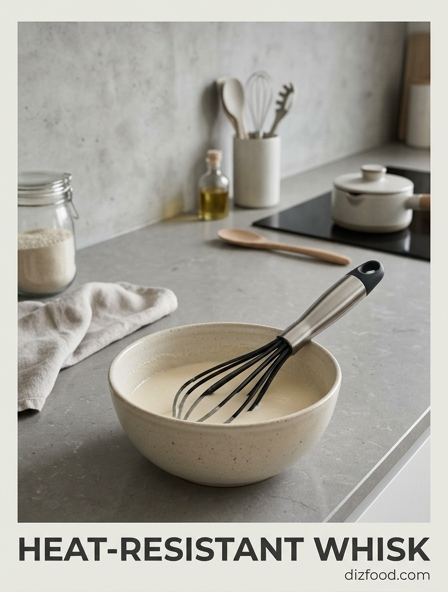
A common misconception regarding Teflon and silicone-coated whisks is that they lack the heat resistance required for high-temperature cooking. However, modern culinary-grade coatings are designed to withstand temperatures often exceeding 400 degrees Fahrenheit. This makes them perfectly suitable for creating roux, thickening gravies, or reducing sauces directly on a hot range. The performance of these whisks is further enhanced by their ability to maintain their shape under thermal stress, unlike cheaper plastic alternatives that may warp or soften when exposed to steam.
- Maintains structural rigidity at high simmering temperatures.
- Does not conduct heat to the handle as quickly as solid metal.
- Safe for use in boiling liquids and hot oil-based emulsions.
- Resistant to melting or deforming during prolonged stove-top use.
Culinary performance is not just about heat, but also about the "spring" of the whisk. Coated whisks often feature a high-tension steel core beneath the Teflon layer, providing the same rebounding action as a traditional French whisk. This ensures that you can achieve the same volume in whipped cream or egg whites without the associated risk of damaging your delicate bowls or non-stick pans.
The Science of Scratch Free Whisking
The science behind scratch-free whisking is rooted in the Mohs scale of mineral hardness and the study of tribology. In the kitchen, when two surfaces rub together, the harder material will always displace the softer one. Most non-stick coatings are designed to be slippery rather than exceptionally hard. By coating a whisk in a material like Teflon, manufacturers ensure the tool's surface hardness is lower than or equal to the pan's surface. This allows the whisk to slide over the pan rather than digging into it.
| Material | Friction Level | Scratch Risk |
|---|---|---|
| Stainless Steel | High | Critical |
| Nylon | Moderate | Low |
| Teflon Coated | Very Low | Negligible |
Furthermore, the rounded profile of coated whisk wires redistributes the force of the stroke across a wider surface area. This reduction in localized pressure prevents the "trenching" effect seen with thin, sharp metal wires. This scientific approach to tool design ensures that the mechanical action of mixing does not translate into destructive force, preserving the microscopic smoothness of the cooking surface that is essential for the non-stick effect.
Extending Your Premium Cookware Lifespan
Investing in premium cookware often involves a significant financial commitment. To maximize the return on this investment, the use of appropriate accessories is mandatory. A Teflon whisk acts as an insurance policy for your pans. By eliminating the primary source of surface degradation, you can extend the functional life of a non-stick pan by several years. Without the scratches caused by metal tools, the coating remains non-porous, preventing fats and proteins from "baking in" to the surface, which is the leading cause of permanent staining and sticking.
- Select whisks with a fully encapsulated head to prevent water ingress.
- Store whisks in a manner where they don't rub against other metal tools.
- Inspect the coating regularly for signs of thinning or peeling.
- Match the size of the whisk to the pan to avoid hitting the sidewalls.
Longevity is also increased because you will find yourself using less aggressive cleaning methods. When a pan is not scratched, food slides off with simple soapy water, removing the need for abrasive sponges or harsh chemicals. Consequently, the combination of gentle tools and gentle cleaning creates a virtuous cycle that keeps your premium kitchenware in like-new condition for the long haul.
Comparing Silicone and Teflon Materials
When selecting a non-scratch whisk, the two primary contenders are silicone and Teflon-coated steel. While both are safe for non-stick surfaces, they offer different tactile experiences and performance metrics. Silicone is generally softer and more flexible, making it excellent for scraping corners but sometimes too "floppy" for heavy batters. Teflon-coated whisks, however, typically use a thinner coating over a stiff wire, providing a more precise and traditional whisking feel that many professional chefs prefer for technical tasks.
| Criteria | Silicone | Teflon Coated |
|---|---|---|
| Flexibility | High | Low to Moderate |
| Heat Limit | Up to 500°F | Up to 450°F |
| Glide | Good | Superior |
| Thinness | Thicker wires | Traditional thin wires |
Teflon is particularly superior when it comes to the "glide" factor. Because Teflon is inherently more slippery than silicone, it moves through liquids with less resistance, allowing for faster whisking speeds. This makes it the ideal choice for tasks requiring rapid aeration, such as making a meringue or a light sponge cake batter, where the user needs maximum efficiency without the drag associated with grippier silicone surfaces.
Essential Features of Modern Kitchen Whisks
Modern kitchen whisks have evolved far beyond simple bent wires. Today's Teflon-coated variants incorporate several engineering features designed for comfort, hygiene, and efficiency. One of the most important features is the ergonomic handle, often weighted to provide balance and reduce wrist fatigue during long periods of stirring. Furthermore, the construction of the wires themselves is critical; they must be spaced optimally to allow for maximum airflow while remaining close enough to break up clumps in dry ingredients or thick sauces.
- Sealed handle junctions to prevent bacteria and water buildup.
- Counter-balanced handles for improved control and precision.
- High-grade PTFE coating that resists staining and odor absorption.
- Dishwasher-safe materials for convenient and thorough sanitation.
Another essential feature to look for is a hanging loop or a handle design that prevents the whisk from sliding into the pot. Since Teflon whisks are often used for stovetop sauces, having a tool that stays where you put it is a significant convenience. These modern design elements, combined with the protective coating, create a versatile tool that meets the demands of both amateur enthusiasts and seasoned culinary professionals.
Maintaining Your Non-Stick Investment
Ownership of a Teflon whisk requires a small amount of maintenance to ensure the tool itself remains effective and safe. Just as the whisk protects the pan, you must protect the whisk's coating. Over time, high heat or abrasive cleaning can wear down the PTFE layer. To maintain your investment, it is best to avoid using the whisk for extremely heavy-duty tasks like crushing ice or mixing very thick, cold doughs that might strain the wires and crack the coating.
- Hand wash with a soft cloth whenever possible to preserve the coating.
- Avoid using metal scouring pads on the whisk wires.
- Dry the whisk thoroughly after washing to prevent rust on any exposed points.
- Store in a dedicated utensil crock to avoid friction with sharp knives.
By following these simple maintenance steps, you ensure that the whisk remains a smooth, safe implement for your pans. If you notice the coating beginning to peel or flake, it is time to replace the tool. A well-maintained Teflon whisk should last for several years of regular use, providing a consistent, scratch-free experience every time you step into the kitchen to prepare a meal.
Optimal Tools for Delicate Sauces
Delicate sauces like Hollandaise, Béarnaise, and Crème Anglaise require precise temperature control and constant, gentle agitation. Using a metal whisk in these scenarios can be problematic, as the scraping of metal against the pan can introduce off-flavors and gray streaks into a light-colored sauce. A Teflon whisk is the optimal tool here, providing a silent, smooth action that allows the chef to focus on the emulsion's texture and the subtle changes in viscosity without distraction.
- Ensures a perfectly smooth texture without metallic contamination.
- Provides better control over aeration for light, foamy sauces.
- Prevents the "graying" effect in egg-based or dairy-based recipes.
- Allows for vigorous whisking in non-stick sauciers without damage.
The ability to whisk right up to the edge of the pan is vital for preventing scorched spots in thick reductions. Because Teflon whisks are safe for the entire interior surface of your cookware, you can reach every corner and curve, ensuring the sauce is heated uniformly. For any recipe where texture and color are paramount, the choice of a coated whisk is not just a matter of pan protection, but a fundamental requirement for achieving professional-level culinary results.

Comments