
Mastering the Zigzag Whisking Motion
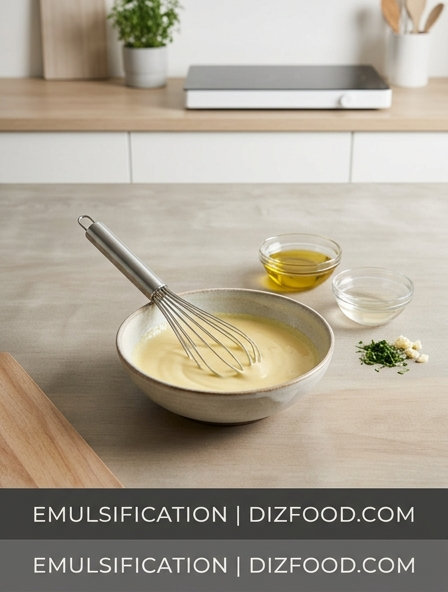
While many home cooks instinctively use a circular motion when whisking, the zigzag technique is scientifically superior for achieving stable emulsification. Moving the whisk rapidly side-to-side creates higher shear forces, which are essential for breaking down oil droplets into microscopic particles. When droplets are smaller, they are less likely to coalesce, resulting in a more permanent bond between the fat and the aqueous base. This mechanical agitation forces the ingredients to collide at higher velocities compared to the relatively passive flow of a circular stir.
Effective zigzagging requires a loose wrist and high frequency. By cutting through the center of the bowl repeatedly, you eliminate the "dead zones" where ingredients might otherwise separate. This method is particularly effective for thick emulsions like mayonnaise or hollandaise, where the resistance of the expanding mixture requires constant, aggressive disruption to maintain a smooth texture. Consider these benefits of the zigzag method:
- Increased shear force for smaller fat globules.
- Elimination of centrifugal separation common in circular whisking.
- Faster incorporation of air for lighter, stabilized foams.
- Reduction in physical fatigue during long mixing sessions.
Selecting the Right Whisk Geometry
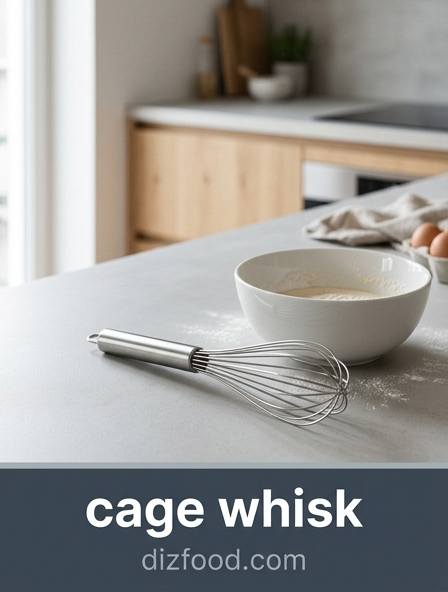
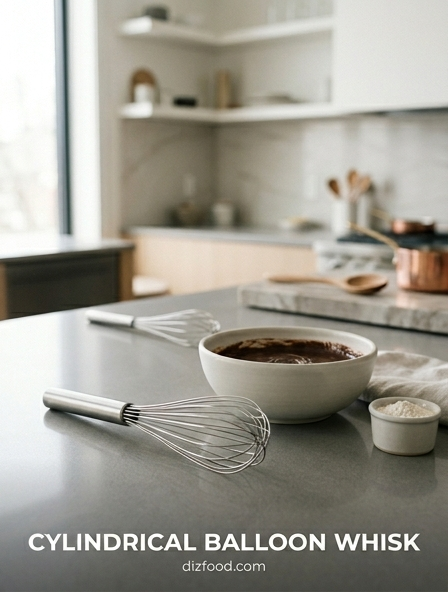
The success of an emulsion often depends on the tool's ability to interact with the volume and viscosity of the ingredients. A balloon whisk, characterized by its wide, bulbous shape and flexible wires, is ideal for light emulsions that require significant aeration. Conversely, a French whisk is narrower and stiffer, making it the preferred choice for emulsifying heavy sauces in deep pans where precision and strength are needed to reach the corners. The number of wires also plays a critical role; more wires mean more surfaces to break apart oil droplets with every stroke.
| Whisk Type | Primary Kitchen Use | Emulsion Benefit |
|---|---|---|
| Balloon | Vinaigrettes and Creams | Maximum aeration and volume |
| French | Hollandaise and Aioli | High-tension shearing |
| Flat/Roux | Pan Gravies | Deglazing and base blending |
When selecting a whisk, consider the handle balance as well. A heavy handle can cause the whisk to tip out of light bowls, disrupting the delicate process of pouring oil with one hand while whisking with the other. The goal is to maximize surface contact and wire vibration.
Optimizing Ingredient Temperatures for Emulsions
Temperature serves as a silent catalyst in the kitchen. For dairy-based emulsions or egg-heavy sauces like mayonnaise, room-temperature ingredients are non-negotiable. Cold fats, such as butter or oil, possess higher surface tension and viscosity, making them resistant to breaking down into the tiny droplets required for a stable emulsion. When eggs and oil are both around 70°F (21°C), the proteins in the yolk are more flexible and can more easily coat the oil droplets, acting as an effective emulsifier.
However, temperature control varies by context. In the case of a butter sauce like Beurre Blanc, the butter must be chilled and added to a warm reduction. The heat of the liquid gently melts the fat while the cold temperature of the butter prevents it from liquefying too quickly, allowing the milk solids to catch the fat in suspension. Maintaining this delicate thermal balance prevents the sauce from "breaking" into a greasy mess. If the mixture becomes too hot, the emulsifying proteins denature; if it is too cold, the fats solidify and separate from the water phase entirely.
The Importance of Sifting Dry Ingredients
While emulsification typically focuses on liquids, the introduction of dry components into a wet base can compromise the stability of the final mixture. Sifting dry ingredients like flour, cocoa powder, or cornstarch is a critical step in preventing the formation of hydrophobic clumps. These lumps occur when the exterior of a flour particle hydrates instantly, creating a waterproof barrier that traps dry powder inside. In a batter or thick sauce, these clumps disrupt the continuous phase of the emulsion, leading to an uneven grain and potential separation during cooking.
Sifting aerates the dry matter, ensuring that each grain is isolated as it hits the liquid. This allows for a more uniform distribution of particles, which is essential when the dry ingredients contain natural emulsifiers or stabilizers like starches. A fine-mesh sieve ensures that the dry particles are small enough to be suspended evenly throughout the fat and water matrix. This preparation step results in a smoother mouthfeel and ensures that the chemical leaveners are evenly dispersed, preventing localized over-reactions that can collapse a delicate emulsion.
Leveraging High Speed Immersion Blending
The immersion blender, or "stick blender," has revolutionized the creation of stable emulsions by providing mechanical power that manual whisking cannot match. These devices operate at thousands of revolutions per minute, creating a vortex that pulls oil and water through a high-shear blade housing. This process shatters oil into billions of microscopic droplets, creating an incredibly tight and stable bond. For a "one-minute mayonnaise," the immersion blender is placed at the bottom of a narrow jar, allowing the blades to interact with the egg and acid before slowly incorporating the oil layered on top.
- Place the liquid base and emulsifier at the bottom of a tall, narrow vessel.
- Pour the oil carefully over the base to create a distinct layer.
- Position the blender head firmly on the bottom of the container.
- Activate at high speed without moving the device until the base turns white.
- Slowly tilt and lift the blender to draw in the remaining oil.
This method minimizes the risk of human error and ensures a consistent texture every time. The speed of the blades creates an emulsion so thick it can often hold its shape better than whisked versions.
Strategic Liquid Incorporation Techniques
The most common failure in emulsification is the rapid addition of the dispersed phase-usually oil-into the continuous phase. To build a successful emulsion, the secondary liquid must be introduced at a glacial pace. In the initial stages, adding oil drop by drop is essential. This allows the emulsifying agent, such as lecithin in egg yolks or mucilage in mustard, to fully coat each droplet before more oil is introduced. If too much oil is added at once, the droplets will find each other and merge, causing the sauce to "break" or separate.
Once a stable "nucleus" or thick base is established, the rate of incorporation can be slightly increased to a very thin, steady stream. Continuous whisking must accompany this process to ensure the new liquid is immediately dispersed. If the mixture begins to look oily or loses its matte sheen, it is a sign that the oil is being added too quickly. In such cases, stopping the oil flow and whisking vigorously until the mixture regains its creamy consistency is the only way to save the emulsion before it collapses completely.
Eliminating Lumps with Electric Hand Mixers
Electric hand mixers offer a middle ground between the brute force of a blender and the precision of a hand whisk. They are particularly useful for large-batch emulsions like cake batters or heavy cream-based sauces. The dual-beater design creates multiple points of agitation, which helps in breaking down fat molecules and distributing them throughout the sugar and egg matrix. When using an electric mixer, speed control is paramount; starting on a low setting prevents the "splatter effect," which can cause an uneven ratio of ingredients if liquid is thrown against the sides of the bowl.
As the emulsion thickens, increasing the speed helps to maintain the suspension against the pull of gravity. However, over-mixing can be just as detrimental as under-mixing, especially if the ingredients contain proteins like gluten that toughen with agitation. The goal with a hand mixer is to achieve a homogenous state where no streaks of fat or pockets of moisture are visible. The consistent power of the motor ensures that the mechanical energy is even throughout the process, resulting in a predictable and repeatable texture that manual labor often fails to provide.
The Role of Bowl Surface Material
The material of the mixing bowl can significantly influence the ease and stability of an emulsion. Professional chefs often prefer stainless steel or copper bowls for specific tasks. Stainless steel is non-reactive and holds temperature well, making it ideal for most whisked sauces. Copper is particularly prized for egg-white based emulsions, as the ions in the copper react with the egg proteins to create a more stable molecular structure that is less likely to over-whip or collapse. This is a rare example where the container itself acts as a chemical stabilizer.
Conversely, plastic bowls should be used with caution. Plastic is porous and can retain thin films of grease even after washing. Since a successful emulsion often relies on the absence of stray fats (especially when whipping meringues) or the specific grip of the liquid against the bowl wall, a greasy plastic surface can cause the mixture to slide rather than shear. Glass and ceramic are excellent for visibility and temperature retention but can be heavy and slippery on the countertop. Using a damp towel under the bowl, known as a "torchon," provides the necessary stability to allow for aggressive, two-handed whisking and pouring.
Aeration Secrets for Silky Batters
Aeration is the process of folding air into an emulsion to create a light, silky texture. This is most critical in baking, where the emulsion of butter and sugar-known as "creaming"-sets the stage for the cake's final crumb. When fat is beaten with sugar, the jagged edges of the sugar crystals carve tiny air pockets into the fat. These pockets are then stabilized by the emulsifiers in the eggs added later. Without proper aeration, the resulting batter will be dense and the emulsion may feel greasy on the palate rather than smooth.
To achieve maximum aeration, one must look for a change in color and volume. A well-aerated butter and sugar mixture will turn from a deep yellow to a pale ivory. This visual cue indicates that enough air has been trapped to reflect light differently. During this phase, it is vital to scrape the sides of the bowl frequently. If un-aerated fat remains on the perimeter, it will create "fat pockets" in the final product, leading to an uneven emulsion that can leak oil during the baking process, ultimately ruining the structural integrity of the dish.
Final Sieving for Professional Consistency
The hallmark of a professional-grade emulsion is a perfectly smooth, silk-like consistency. No matter how skilled the whisking or how powerful the blender, microscopic imperfections can remain. Final sieving involves passing the completed emulsion through a fine-mesh chinois or a specialized tami. This step removes any tiny fragments of cooked egg in a hollandaise, undissolved spice particles, or stubborn micro-clumps of flour that escaped the initial mixing phases. It is the final insurance policy against a "grainy" mouthfeel.
Beyond removing solids, the physical act of forcing the emulsion through a fine mesh further homogenizes the mixture. The pressure required to push the liquid through the tiny holes acts as one last high-shear event, tightening the bond between the oil and water phases. For sauces meant to be served warm, sieving should be done immediately before service to ensure the texture is at its peak. This attention to detail elevates a standard kitchen preparation to a culinary masterpiece, ensuring that the emulsion remains stable and aesthetically pleasing from the first bite to the last.

Comments