
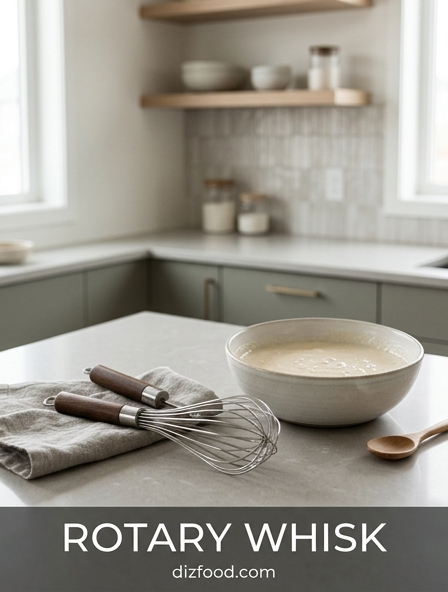
The Science of Manual Aeration
Manual aeration using a rotary whisk is a mechanical process that relies on the introduction of air into a liquid medium to create a stable foam or emulsion. When the wires of a whisk move through a substance like egg whites or heavy cream, they exert shear force, which physically unfolds tightly coiled proteins. This process, known as denaturation, exposes hydrophobic and hydrophilic regions of the protein molecules. As air is pulled into the mixture, these proteins realign themselves at the interface between the liquid and the air bubbles, creating a structural network that traps the gas.
- Mechanical Shear: The physical force that breaks molecular bonds.
- Surface Tension: The resistance of the liquid surface to expansion.
- Protein Denaturation: The unfolding of proteins to form new structural bonds.
- Encapsulation: The process of trapping air within a protein or fat matrix.
The efficiency of this process depends on the number of wires and the velocity of the whisking motion. A whisk with more wires provides more surface area to collide with the liquid, resulting in a higher volume of air being incorporated in a shorter period. This mechanical action is the foundation of light, airy textures in culinary applications.
Selecting the Right Whisk Shape
Choosing the appropriate whisk shape is critical for achieving the desired culinary outcome, as the geometry of the tool dictates how it interacts with the ingredients. Different whisks are designed to optimize airflow, reach into corners, or handle heavy resistances. Utilizing the wrong shape can lead to uneven mixing or unnecessary physical exertion. Below is a comparison of common whisk types used in professional kitchens:
| Whisk Type | Primary Function | Key Characteristic |
|---|---|---|
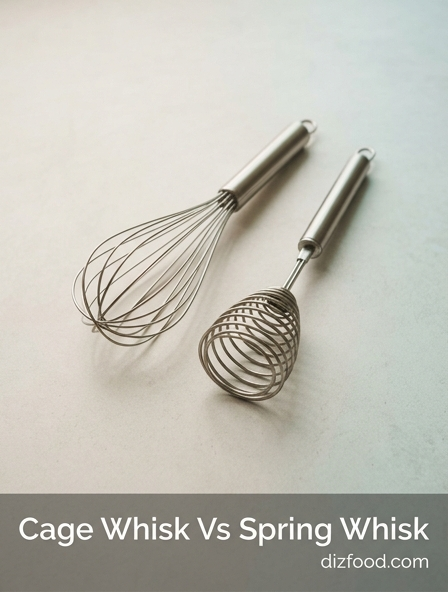
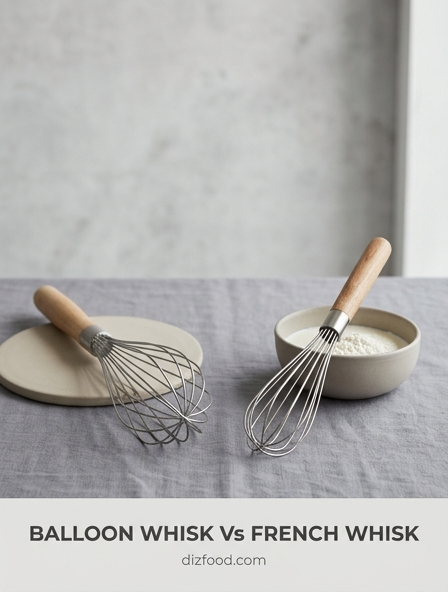
| Balloon Whisk | Aerating egg whites/cream | Large, rounded head with many wires |
| French Whisk | Mixing sauces and custards | Narrow, elongated profile |
| Flat/Roux Whisk | Deglazing pans | Flattened wires for bottom contact |
| Ball Whisk | Reaching tight corners | Individual wires tipped with beads |
The balloon whisk remains the standard for manual aeration due to its wide circumference, which maximizes the volume of air trapped per stroke. Conversely, the French whisk is preferred for emulsification where high aeration is not the goal, but thorough blending of ingredients is essential. Selecting based on the vessel shape and the desired density of the final product ensures efficiency.
Optimal Bowl Size and Material
The interaction between the whisk and the mixing bowl is often overlooked, yet the material and size of the container significantly impact the stability of the foam. A bowl that is too small restricts the whisk's range of motion, preventing the necessary shear force required for aeration. Conversely, a bowl that is too large can cause the liquid to spread too thinly, making it difficult for the wires to catch and lift the substance. Material choice also plays a chemical role in the process.
- Copper: Ideal for egg whites as it reacts to stabilize sulfur bonds.
- Stainless Steel: Highly versatile, non-reactive, and easy to sanitize.
- Glass/Ceramic: Retains temperature well but can be heavy and slippery.
- Plastic: Generally avoided because it can retain oily residues that deflate foams.
Copper bowls are particularly prized by pastry chefs because the ions in the metal bond with conalbumin in egg whites, creating a more flexible and stable foam that is less likely to collapse. Regardless of the material, a rounded bottom is essential for ensuring the whisk can reach all ingredients, preventing unmixed "dead zones" at the base of the vessel.
Perfecting the Side to Side Motion
While many beginners use a circular stirring motion, professional whisking relies on a vigorous side-to-side or "zigzag" technique. This method is scientifically more efficient because it forces the liquid to undergo rapid changes in direction, creating more turbulence and shear. A circular motion tends to move the entire mass of liquid in a single direction, which minimizes the collision between the whisk wires and the fluid. The side-to-side motion ensures that the wires are constantly cutting through the liquid, maximizing air incorporation.
- Grip the whisk firmly but keep the wrist flexible.
- Position the whisk in the center of the bowl.
- Move the hand rapidly in a straight line across the diameter.
- Rotate the bowl slightly with the other hand to ensure evenness.
By employing this linear movement, the chef reduces the time required to reach the desired consistency. This technique also distributes the physical workload more effectively across the forearm and wrist muscles, reducing the risk of fatigue during long preparation sessions. Mastery of this motion is the primary difference between a flat batter and a voluminous meringue.
Temperature Impact on Bubble Stability
Temperature is a deciding factor in the success of manual aeration, as it influences the viscosity and elasticity of the ingredients. Different substances require specific thermal environments to achieve peak volume. For instance, heavy cream and egg whites respond in opposite ways to heat and cold. Understanding these thermal properties allows for better control over the final texture of the foam. The following table highlights the optimal temperatures for common whisking tasks:
| Ingredient | Target Temp | Reasoning |
|---|---|---|
| Egg Whites | Room Temp (70°F) | Lowers surface tension for more volume |
| Heavy Cream | Cold (35-40°F) | Keeps fat globules solid for structure |
| Gelatin Bases | Lukewarm | Prevents premature setting during aeration |
When whisking egg whites, room temperature allows the proteins to unfold more easily, resulting in a larger volume. However, heavy cream must remain cold; if the fat becomes too warm, it softens and fails to support the air bubbles, leading to a greasy, collapsed mess. Utilizing chilled whisks and bowls can further assist in maintaining the low temperatures required for stable whipped cream in warm kitchen environments.
Mastering Soft and Stiff Peaks
Identifying the transition between different stages of aeration is vital for the structural integrity of desserts and batters. These stages are defined by how the mixture behaves when the whisk is lifted vertically out of the bowl. Knowing when to stop whisking is just as important as the whisking itself, as over-manipulation can lead to protein breakdown or the separation of fats. The three primary stages of peak development are essential markers for any cook.
- Soft Peaks: The mixture is thick enough to hold its shape briefly, but the tip of the peak folds over gently when the whisk is lifted.
- Medium Peaks: The peaks are stronger and stand mostly upright, with only the very tip curling over slightly.
- Stiff Peaks: The peaks stand straight up without drooping. The mixture should feel heavy and look glossy.
Reaching stiff peaks is the goal for meringues and certain cakes, but caution must be exercised. If whisked beyond stiff peaks, egg whites will become grainy and "weep" liquid, while cream will eventually turn into butter. Visual monitoring is the most reliable way to ensure the mixture maintains its loft and moisture.
Fat Contamination and Foam Failure
The presence of fat is the greatest obstacle when attempting to create a stable protein foam, particularly with egg whites. Even a microscopic amount of lipid can prevent the proteins from bonding around air bubbles. This occurs because fat molecules compete with the proteins for space at the air-liquid interface, but they lack the structural strength to hold the air. Consequently, the foam remains liquid or collapses immediately upon formation. To ensure success, strict cleanliness protocols must be followed.
- Ensure the whisk and bowl are completely free of grease or oil.
- Separate egg yolks carefully, as the yolk contains the fat.
- Wipe the equipment with lemon juice or vinegar to remove residual films.
- Avoid using plastic bowls, which can harbor hidden fat molecules in surface scratches.
If a foam fails to rise despite vigorous whisking, fat contamination is the most likely culprit. In such cases, the mixture cannot be "fixed" and must usually be discarded to start fresh with clean equipment. Understanding this chemical sensitivity saves time and prevents the waste of ingredients in high-stakes baking.
Whisking Speed for Consistent Texture
Consistency in texture is achieved through a controlled escalation of speed rather than maximum velocity from start to finish. Starting too fast creates large, uneven air bubbles that are structurally weak and prone to popping. By beginning at a moderate pace, the chef establishes a foundation of small, uniform bubbles. Once this stable "seed" foam is created, the speed can be increased to build volume. This gradual approach results in a much finer crumb and a more resilient foam.
- Slow Phase: Breaks up the liquid and introduces initial tiny bubbles.
- Medium Phase: Increases the density and begins the thickening process.
- Fast Phase: Expands the volume to reach the desired peak stage.
A consistent rhythm is also crucial. Irregular bursts of speed can introduce large pockets of air that create voids in the final product. Maintaining a steady, rhythmic side-to-side motion allows for better monitoring of the mixture's progress. This disciplined approach ensures that the texture remains smooth and homogeneous, providing a professional finish to sauces, creams, and batters alike.
Folding Techniques to Preserve Loft
Once a mixture has been successfully aerated with a whisk, the next challenge is incorporating other ingredients without deflating the trapped air. This is achieved through "folding," a gentle technique that combines a heavy mixture with a light foam. Using a whisk for folding is often more effective than a spatula, as the wires allow the heavy batter to pass through the light foam without crushing the air bubbles. The goal is to achieve a uniform color and texture while maintaining maximum volume.
- Place the lighter foam on top of the heavier base.
- Cut through the center with the whisk and scrape along the bottom.
- Lift the mixture up and over the top, rotating the bowl 90 degrees.
- Repeat the "J-motion" until no streaks of the base remain.
The airy structure created by the whisking process is delicate. Heavy-handed mixing at this stage will undo all the mechanical work performed during aeration. By using the whisk as a folding tool, the chef ensures that the density of the final batter remains low, leading to a light and fluffy finished product after baking or chilling.
Troubleshooting Dense and Heavy Batters
When a batter intended to be light turns out dense or heavy, the issue can usually be traced back to a failure in the whisking or mixing stage. Identifying the specific cause allows for adjustments in future attempts. Often, the problem lies in the timing or the temperature of the ingredients, rather than the recipe itself. Understanding the common pitfalls of manual aeration is essential for troubleshooting. The table below outlines common symptoms and their likely causes:
| Symptom | Possible Cause | Corrective Action |
|---|---|---|
| Grainy Texture | Over-whisking | Stop at stiff peaks; do not exceed. |
| Liquid at Bottom | Under-whisking | Ensure full aeration before folding. |
| Flat Finish | Rough Folding | Use a gentle J-fold motion. |
| Small Volume | Cold Egg Whites | Bring eggs to room temperature first. |
If a batter is already too dense, sometimes a "sacrifice" portion of the foam can be whisked vigorously into the base to lighten it before gently folding in the remaining foam. However, the best approach is always prevention through careful monitoring of peak stages and maintaining the chemical purity of the whisking environment. Consistent practice with the rotary whisk eventually leads to an intuitive understanding of these variables.

Comments