
In the modern culinary world, mastering high-speed motorized efficiency is the secret to elevating professional food preparation to new heights. These powerful tools streamline labor-intensive tasks, allowing chefs to focus on creative execution while maintaining rigorous standards of consistency. By harnessing rapid rotations and high-torque motors, you can achieve superior aeration and perfectly smooth emulsions in a fraction of the time required by manual methods. This technological leap not only optimizes workflow but also reduces physical strain during peak service hours. To determine which high-performance tool best suits your technique, it is vital to weigh the pros and cons of a Rotary Whisk Vs Immersion Blender Attachment for your specific recipes.
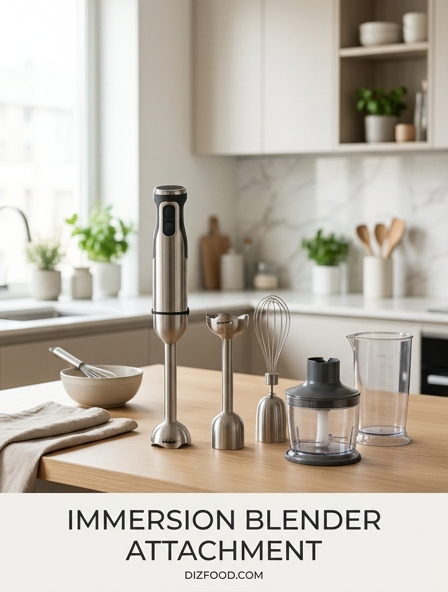
High Speed Whisking Fundamentals
The transition from manual whisking to utilizing an immersion blender attachment represents a significant leap in culinary efficiency. At its core, high-speed whisking relies on the mechanical conversion of motor torque into rapid rotational velocity. Unlike hand whisking, which is limited by human biomechanics, the electric whisk maintains a constant RPM, ensuring that ingredients are integrated with mathematical precision. This consistency is vital when working with delicate proteins or fats that require specific temperature ranges to remain stable during agitation.
When selecting a whisk attachment, it is essential to understand the primary applications for which the tool was designed. While standard balloon whisks are excellent for general aeration, many immersion systems utilize a reinforced cage design to handle denser mixtures. Proper technique involves a combination of immersion depth and circular motion to prevent the introduction of excessive heat. Key benefits of motorized whisking include:
- Uniform distribution of dry leavening agents in wet batters.
- Rapid stabilization of heavy cream into soft or stiff peaks.
- Efficient breakdown of protein structures in egg whites for meringues.
- Consistent texture in cold-process sauces and vinaigrettes.
Maximizing Aeration for Professional Textures
Aeration is the process of incorporating microscopic air bubbles into a liquid matrix to create volume and lightness. In professional kitchens, achieving a "cloud-like" texture in mousses and soufflés requires an immersion blender whisk that can operate at high frequencies. The speed of the wires passing through the liquid creates a vacuum effect, pulling air downward and trapping it within the molecular structure of the fat or protein. To maximize this effect, the user must control the angle of the whisk, often tilting the vessel to create a vortex that continuously cycles the mixture.
The physical properties of the ingredients play a massive role in how well they aerate. For instance, cold fats trap air more effectively than warm ones, which is why chilling the whisk attachment is a common professional secret. By utilizing the maximum speed setting on a high-torque motor, chefs can achieve a level of overrun-the percentage of air added-that is nearly impossible to replicate by hand. This results in a superior mouthfeel that defines high-end pastry work and sophisticated savory foams.
Precision Motor Control in Culinary Prep
Modern immersion blenders are equipped with sophisticated variable speed triggers that allow for precise motor control. This precision is critical when moving between different stages of culinary preparation. A slow start is necessary to prevent splattering and to gradually introduce air, while a high-velocity finish is required to set the structure of the mixture. Without this granular control, chefs risk over-processing delicate ingredients, leading to broken emulsions or grainy textures in dairy-based components.
Engineered motors often feature "smart" feedback loops that maintain a consistent speed even as the resistance of the batter increases. This ensures that the motor does not bog down when whisking thick ganache or heavy cake batters. Precision control also extends to the ergonomic design of the handle, which must allow the chef to make micro-adjustments in position without sacrificing grip. By mastering the throttle of the motor, a cook can transition seamlessly from a gentle stir to a high-intensity whip, maintaining complete authority over the final consistency of the dish.
Streamlining High Volume Emulsification
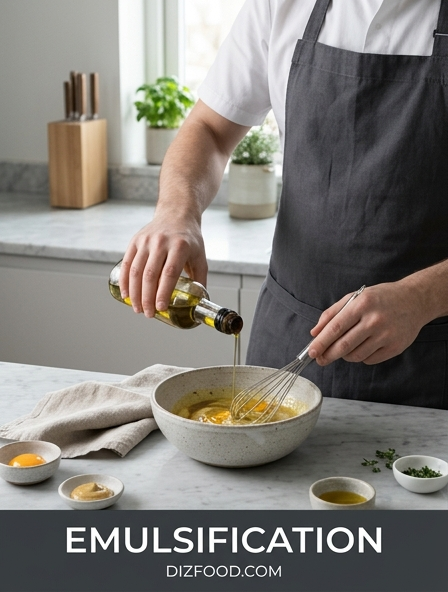
In high-volume environments, the ability to emulsify large batches of sauces quickly is a logistical necessity. An immersion whisk attachment excels at creating stable bonds between oil and water-based liquids by sheer force. The high rotational speed shears the oil into tiny droplets, which are then coated by emulsifiers like lecithin or mustard. This process must happen rapidly to ensure that the droplets do not coalesce before the emulsion is fully established.
| Emulsion Type | Primary Ingredient | Whisk Speed Requirement |
|---|---|---|
| Mayonnaise | Neutral Oil / Egg Yolk | High / Constant |
| Hollandaise | Clarified Butter / Egg Yolk | Medium / Controlled |
| Vinaigrette | Olive Oil / Vinegar | Medium / Pulse |
| Beurre Blanc | Cold Butter / Reduction | Low / Steady |
Using a motorized whisk reduces the time spent on these tasks from minutes to seconds, allowing for "a la minute" preparation during busy service periods.
The Science of High Velocity Mixing
The science behind the whisk attachment involves fluid dynamics and the study of shear rates. As the whisk wires rotate, they create a velocity gradient within the liquid. The area closest to the wire experiences the highest shear, which is responsible for breaking down clumps and distributing particles evenly. In high-velocity mixing, the goal is to achieve a homogenous state where every part of the mixture has undergone the same mechanical stress. This is particularly important for modernist cuisine applications, such as hydrating hydrocolloids like xanthan gum.
If the velocity is too low, the hydrocolloids will "fish-eye," creating lumps with dry centers. High-speed engineering ensures that the powder is dispersed before it has a chance to hydrate and clump. Furthermore, the heat generated by friction at high speeds can be used strategically to slightly warm certain ingredients, aiding in the solubility of sugars or salts. Understanding these physical interactions allows chefs to troubleshoot texture issues and push the boundaries of traditional ingredient behavior through calculated mechanical intervention.
Reducing Labor with Motorized Efficiency
Kitchen ergonomics are often overlooked, yet the physical toll of manual whisking can lead to repetitive strain injuries and general fatigue. By delegating the heavy lifting to a motorized attachment, chefs preserve their physical energy for more intricate tasks like plating and seasoning. The efficiency gained is not just in time, but in the consistency of the output. A tired human hand will inevitably slow down, leading to variations in the final product; a motor, however, performs exactly the same in the tenth hour of a shift as it did in the first.
Moreover, motorized whisking allows for multitasking. With one hand operating the immersion blender, a cook can slowly stream in oil or sugar, a process that usually requires two people or a very stable bowl when whisking by hand. This streamlining of labor is essential in modern kitchens where margins are thin and staffing may be limited. The whisk attachment effectively acts as a "force multiplier," allowing a single technician to produce results that would otherwise require significant manual effort and more prep time.
Achieving Consistent Peak Stiffness
The quest for the perfect "stiff peak" is a cornerstone of pastry arts. Whether preparing a Swiss meringue or a stabilized whipped cream, the window between perfect stiffness and over-whisking is narrow. An immersion whisk provides the tactile feedback and visual clarity needed to hit this mark consistently. By monitoring the resistance against the motor and the visual change in the liquid's reflectance, a chef can stop the process at the exact moment the proteins have reached their maximum stretch without snapping.
- Frothy Stage: Large bubbles form; the mixture is still entirely liquid.
- Soft Peak Stage: Peaks form but droop over immediately when the whisk is lifted.
- Firm Peak Stage: Peaks hold their shape but have a slight curl at the tip.
- Stiff Peak Stage: Peaks stand straight up; the mixture is glossy and does not move when tilted.
The high-speed capability of the immersion attachment allows the chef to move through these stages rapidly, which is beneficial for maintaining the cold temperature required for dairy-based foams.
Optimizing Workflow with Electric Whisks
Workflow optimization in a professional kitchen is about reducing "dead time" between tasks. The quick-connect nature of immersion blender attachments allows for a seamless transition from blending a soup to whisking a garnish. Instead of cleaning multiple standalone appliances, the chef simply swaps the blade for a whisk. This modularity is particularly useful in cramped prep stations where counter space is at a premium. By centralizing multiple functions into a single power base, the kitchen stays organized and efficient.
Furthermore, electric whisks are often easier to clean than traditional stand mixer bowls and whisks. The attachment can be rinsed and sanitized in seconds, ready for the next task. For prep cooks handling dozens of different recipes, this speed of transition is invaluable. It encourages a more dynamic cooking style where aeration and emulsification are integrated into every step of the process rather than being relegated to a final, separate stage. This leads to fresher, better-integrated flavors and textures across the entire menu.
Advanced Aeration Techniques for Pastry
In the world of pastry, the immersion whisk is used for more than just whipping cream. Advanced techniques involve "lightening" heavy bases like pastry cream or citrus curd before they are folded into other components. The high-speed whisk can break the tension of a dense gel, making it more receptive to the incorporation of air. This is crucial for creating mousselines or lightened ganaches where a silky, aerated finish is the primary goal. The control offered by the motor allows for the gradual incorporation of air, preventing the mixture from collapsing.
Another advanced application is the creation of "espumas" or culinary foams using stabilizers. The whisk attachment can be used to hydrate the stabilizer and then aerate the liquid to a specific density before it is loaded into a siphon. This ensures a more stable foam that holds its structure on a hot plate. By using motorized whisking, pastry chefs can achieve a level of uniformity in their batters-such as those for macarons or chiffon cakes-that ensures every item in the oven rises at the same rate and develops the same internal crumb structure.
Scaling Production via High Speed Engineering
Scaling a recipe from a single portion to a gallon requires a deep understanding of engineering and torque. Small, battery-operated frothers fail when faced with the resistance of a large batch of heavy cream. In contrast, professional-grade immersion blenders with whisk attachments are designed with heavy-duty gearing to maintain high speeds under load. This engineering allows for the scaling of production without a loss in quality. When a catering operation needs to produce fifty liters of chocolate mousse, the immersion whisk becomes the primary tool for the job.
The durability of these attachments is also a key factor in scaling. Stainless steel construction and reinforced drive shafts ensure that the tool can withstand the rigors of continuous use. For large-scale production, the whisk is often used in deep "lexan" containers or stockpots, where its long reach allows for total bottom-to-top integration of ingredients. This prevents the stratification of heavier elements at the bottom of the vessel, ensuring that the last portion served is identical to the first. High-speed engineering thus bridges the gap between artisanal quality and industrial quantity.

Comments