
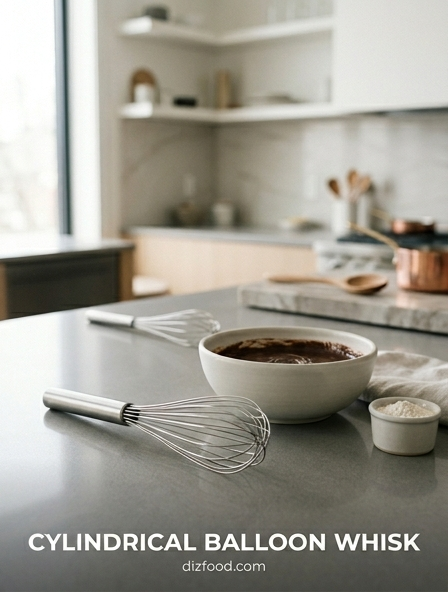
Introduction to Whisk Geometry and Function
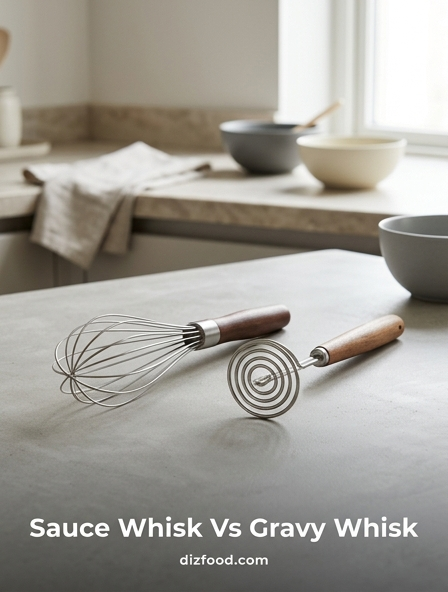
The geometry of a cylindrical balloon whisk is meticulously engineered to maximize the interaction between the liquid medium and the surrounding atmosphere. Characterized by a series of overlapping wire loops that form a bulbous, rounded profile, this tool operates on the principles of fluid dynamics. As the whisk moves through a substance, the wires split the liquid, creating turbulence and increasing the surface area exposed to air. This design is particularly effective for tasks requiring the incorporation of oxygen, such as lightening heavy batters or creating stable foams from protein-rich liquids.
- Spherical bulb shape for multidirectional agitation
- Variable wire counts to adjust resistance levels
- Ergonomic handle alignment for high-velocity movement
- Optimized wire spacing to prevent clogging in dense mixtures
In a professional kitchen setting, the functionality of the whisk extends beyond simple mixing; it is a precision instrument used to alter the structural integrity of ingredients. The specific curvature of the wires allows the chef to reach the bottom and sides of rounded mixing bowls, ensuring a homogeneous blend. By understanding the mechanical advantage provided by this geometry, culinary professionals can achieve consistent results in texture and volume across a wide variety of preparations.
Anatomy of the Cylindrical Balloon Whisk
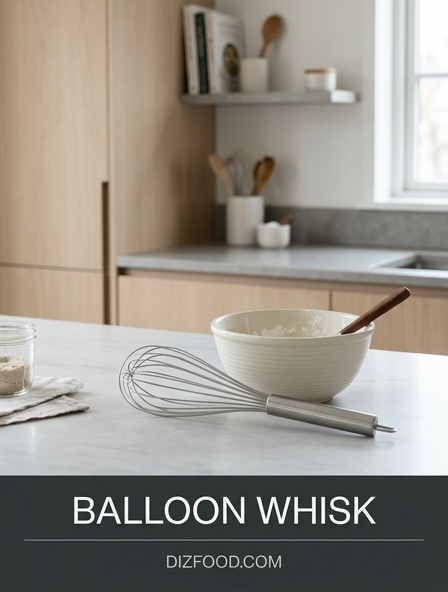
The construction of a professional-grade balloon whisk involves high-quality materials and precise assembly to ensure durability and performance. The primary components include the handle, the wire loops, and the ferrule or sealing cap that joins them. Most contemporary whisks utilize food-grade stainless steel for the wires due to its resistance to corrosion and its ability to maintain tension over repeated use. The handle is often weighted to provide balance, reducing wrist fatigue during prolonged periods of vigorous whipping.
| Component | Material/Feature | Primary Function |
|---|---|---|
| Wire Loops | Polished Stainless Steel | Aeration and ingredient integration |
| Handle | Silicone or Brushed Steel | Ergonomic grip and leverage control |
| Epoxy Seal | Food-Safe Resin | Prevents moisture entry and bacterial growth |
| Ferrule | Reinforced Steel | Secures wires to the handle assembly |
The number of wires, often ranging from eight to twelve loops, determines the whisk's efficiency. Finer wires provide more flexibility for delicate tasks, while thicker gauges offer the rigidity necessary for heavy custards or thick sauces. The seal at the base of the handle is a critical sanitary feature, ensuring that no food particles or liquids become trapped within the handle housing, which is essential for maintaining hygiene in a high-volume kitchen environment.
Design Benefits of the Conical Whisk
The conical whisk, a variation of the traditional balloon design, features a tapered profile that narrows significantly toward the tip. This specific structural modification allows for greater precision when working in smaller vessels or containers with steep sides. While the standard balloon whisk excels in large open bowls, the conical version is designed to access the tight corners of saucepans and bain-maries where traditional rounded whisks might struggle to make contact. The concentration of wires at the tip increases the agitation force at the point of contact, making it ideal for incorporating dry ingredients into liquids without clumping.
- Tapered shape for narrow vessel compatibility
- Increased wire density at the tip for targeted mixing
- Enhanced maneuverability in deep, straight-sided pots
- Efficient deglazing capabilities in small surface areas
Chefs often prefer the conical design when preparing delicate reductions or infused syrups. The narrowed tip allows for a more controlled stirring motion, which is vital when monitoring the temperature and consistency of heat-sensitive ingredients. By reducing the overall width of the wire assembly, the conical whisk provides a balance between the aeration capabilities of a balloon whisk and the scraping efficiency of a flat whisk, making it a versatile hybrid tool for specialized culinary tasks.
Achieving Maximum Volume through Aeration
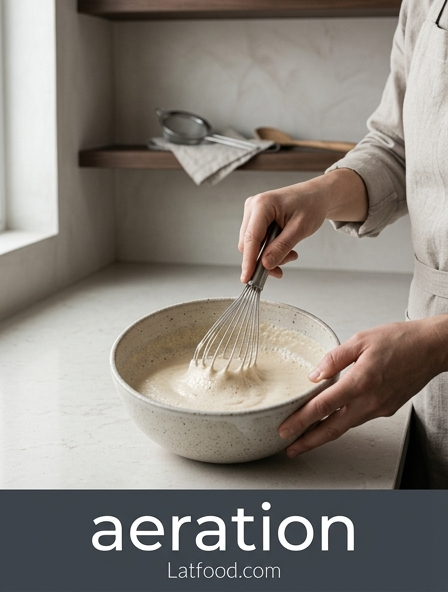
Aeration is the process of forcing air into a liquid to create a light, fluffy texture, and the balloon whisk is the premier manual tool for this objective. When whisking egg whites or heavy cream, the multiple wire loops act as a series of tiny blades that break the surface tension and trap air bubbles within the molecular structure of the ingredient. As the whisking continues, these bubbles are subdivided into smaller, more stable pockets, resulting in a significant increase in total volume. This physical transformation is essential for the creation of meringues, soufflés, and whipped garnishes.
- Begin with chilled ingredients to stabilize fat or protein structures.
- Use a wide, stainless steel bowl to provide ample room for expansion.
- Employ a rhythmic "figure-eight" motion to maximize air entrapment.
- Gradually increase speed as the mixture begins to hold soft peaks.
- Monitor for over-whipping, which can collapse the established air pockets.
The efficacy of this process depends heavily on the surface area of the whisk. A larger balloon whisk with more loops will aerate a mixture faster than a smaller one, but it requires more physical effort. The goal is to create a matrix of air and liquid that is strong enough to support its own weight, a feat made possible by the repetitive mechanical action of the whisk's wires against the bowl's surface.
The Conical Advantage for Shallow Pan Sauces
When working with shallow pans, such as sautuse or frying pans, the traditional bulbous whisk can be cumbersome and ineffective. The conical whisk provides a distinct advantage in these scenarios because its slanted profile allows for a larger surface area of the wires to remain in contact with the bottom of the pan. This is crucial for making pan sauces, gravies, or reductions where the liquid level is low. The design ensures that the entire bottom of the pan is agitated, preventing the scorching of solids and ensuring that the fond-the caramelized bits of meat and vegetables-is fully incorporated into the sauce.
- Optimized for low-depth liquid immersion
- Enhanced scraping ability to prevent bottom-scorching
- Improved heat distribution through constant movement
- Effective for emulsifying butter into mounting sauces
The mechanical action of the conical whisk in a shallow pan also facilitates faster evaporation. By constantly moving the liquid and increasing its exposure to the air, the chef can reduce a sauce to the desired consistency with greater speed and control. This tool's ability to navigate the intersection of the pan's bottom and its flared sides makes it indispensable for achieving a smooth, professional finish on any stovetop preparation.
Reaching Corners and Flat Surfaces Effectively
One of the primary challenges in stovetop cooking is ensuring that the contents of a pot or pan are heated evenly without sticking to the corners. Standard balloon whisks often leave a "dead zone" at the juncture where the wall of the pot meets the base. The structural design of specialized whisks, particularly those with a flatter or more tapered end, addresses this issue by providing direct contact with these difficult-to-reach areas. This prevents the buildup of starches or proteins that can burn and ruin the flavor profile of a delicate custard or roux.
| Vessel Type | Challenge Area | Whisk Solution |
|---|---|---|
| Stock Pot | Deep Bottom Corners | Long-handled Conical Whisk |
| Skillet | Wide Flat Surface | Flat or French Whisk |
| Mixing Bowl | Rounded Sides | Large Balloon Whisk |
Effective whisking in corners requires a tool that can maintain its shape under pressure while conforming to the vessel's interior. A whisk with high wire tension is particularly useful here, as it can scrape away localized hotspots where heat is concentrated. By eliminating these stagnant areas, the chef ensures a perfectly homogeneous texture and prevents the "burnt" aftertaste often associated with thick, milk-based sauces like Béchamel.
Whisking Techniques for Velvety Emulsions
An emulsion is a mixture of two liquids that are normally immiscible, such as oil and vinegar or melted butter and egg yolks. Achieving a velvety, stable emulsion requires a specific whisking technique that focuses on breaking the internal phase into microscopic droplets. The balloon whisk is ideal for this because its numerous wires provide the necessary shear force to disperse the fat uniformly throughout the continuous phase. Whether preparing a hollandaise or a vinaigrette, the key is consistent, rapid motion combined with the slow introduction of the fats.
- Stabilize the mixing bowl with a damp towel to allow for one-handed pouring.
- Whisk the base ingredients until they are slightly frothy and aerated.
- Slowly drizzle the oil or fat in a thin, steady stream.
- Maintain a vigorous circular or side-to-side whisking motion.
- Continue whisking for thirty seconds after all fat is incorporated to ensure stability.
The result of a well-executed whisking technique is a sauce with a glossy sheen and a smooth mouthfeel. If the whisking is too slow or the oil is added too quickly, the emulsion will "break," resulting in a greasy, separated mess. The balloon whisk's ability to move large volumes of liquid simultaneously is what allows the chef to create the mechanical tension needed to keep the emulsion bound together indefinitely.
Comparing Wire Tension and Flexibility
The performance of a whisk is largely determined by the tension and flexibility of its wires. These two characteristics must be balanced based on the viscosity of the ingredients being processed. Flexible wires are preferred for light, airy tasks such as whipping egg whites or cream, as they can move quickly through thin liquids and vibrate to incorporate more air. Conversely, stiff wires with high tension are necessary for thick batters, heavy doughs, or viscous sauces where the whisk must overcome significant resistance without deforming or bending permanently.
- High-Flex Wires: Best for thin liquids and delicate foams.
- Medium-Tension Wires: Ideal for general purpose mixing and vinaigrettes.
- Rigid Wires: Essential for heavy custards, roux, and thick batters.
- Spring-Steel Construction: Allows wires to return to their original shape after use.
When selecting a whisk, a chef must consider the "spring-back" factor. A high-quality whisk will have wires that resist tangling and return to their perfectly symmetrical bulb shape even after being compressed. This resilience ensures that the whisk maintains its maximum aeration potential over hundreds of uses. Choosing the wrong tension-such as using a delicate balloon whisk for a thick bread batter-can result in bent wires and an inefficient mixing process that leaves lumps in the final product.
Essential Tools for Pastry and Savory Cooking
In both the pastry and savory stations of a professional kitchen, the whisk is an indispensable tool that bridges the gap between raw ingredients and finished masterpieces. In pastry, the balloon whisk is used for creating structural foams, blending dry ingredients for cakes to ensure even distribution of leavening agents, and smoothing out pastry creams. In savory cooking, the whisk is the primary tool for deglazing pans, mounting sauces with cold butter (monter au beurre), and ensuring that starch-based thickeners like cornstarch or flour are fully dissolved into stocks.
- Pastry: Meringues, sabayons, and sponge cake batters.
- Savory: Velouté, bearnaise, and pan-gravy reductions.
- General: Scrambled eggs, pancake batters, and protein shakes.
The versatility of the whisk lies in its simple yet effective design. It is one of the few tools that can simultaneously mix, aerate, and emulsify. For a pastry chef, the whisk is about precision and volume; for a saucier, it is about texture and consistency. Owning a variety of whisks-different sizes, wire gauges, and shapes-allows a cook to tailor their approach to the specific physical properties of the dish they are preparing, ensuring professional results every time.
Maintaining Your Professional Kitchen Whisks
Proper maintenance of kitchen whisks is essential for both food safety and tool longevity. Because whisks consist of multiple overlapping wires, they are prone to trapping food particles at the base where the wires meet the handle. If not cleaned thoroughly, these areas can harbor bacteria. Professional whisks should be rinsed immediately after use, especially when working with proteins like eggs or dairy. Most high-quality stainless steel whisks are dishwasher safe, but manual scrubbing with a fine-bristled brush is often necessary to ensure the inner loops are completely clear of residue.
- Rinse under hot, high-pressure water immediately after use.
- Use a bottle brush to reach the interior wire intersections.
- Sanitize in a commercial dishwasher or a diluted bleach solution.
- Dry the whisk with the loops facing down to prevent water from pooling in the handle.
- Store on a hanging rack to prevent the wires from being bent by other heavy tools.
In addition to cleaning, chefs should regularly inspect their whisks for signs of "wire fatigue." If wires become loose, bent, or if the protective seal at the handle breaks, the whisk should be replaced. A damaged whisk not only performs poorly but can also pose a safety risk if a wire snaps off into the food. With the right care, a professional-grade stainless steel whisk can last for years, remaining a reliable staple in the culinary toolkit.


Comments