
Have you ever wondered how professional chefs achieve those sky-high peaks in their meringues and perfectly airy batters? The secret lies in mastering aeration, and the large balloon whisk is your ultimate tool for culinary success. Its rounded, expansive wires are meticulously designed to trap maximum air, transforming liquid ingredients into light, voluminous textures with minimal effort. Whether you are folding delicate sponges or whipping heavy cream, this kitchen essential ensures consistent, fluffy results every time. Understanding the nuances of your tools is key to baking perfection, especially when weighing the benefits of a small coil whisk vs large balloon whisk for specific kitchen tasks.
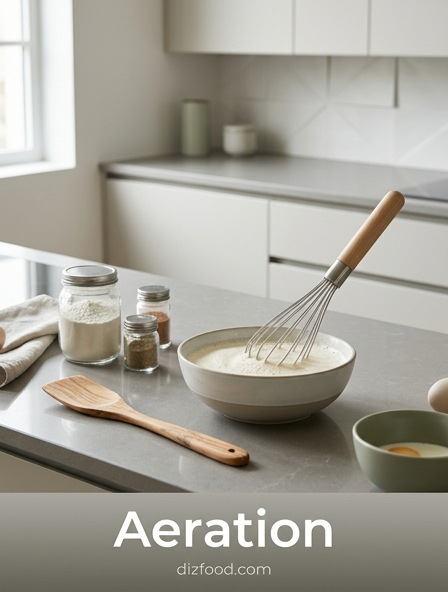
Principles of Culinary Aeration
Aeration is the fundamental process of introducing gas, typically atmospheric air, into a liquid or semi-solid substance to alter its density, texture, and volume. In a culinary context, this physical transformation relies on mechanical agitation to break the surface tension of ingredients, allowing air bubbles to become suspended within a matrix. Proteins or fats usually act as stabilizing agents, surrounding these microscopic bubbles to prevent them from coalescing or escaping the mixture. The efficiency of aeration depends on several variables, including the speed of agitation, the temperature of the ingredients, and the specific geometry of the tools utilized.
- Mechanical force: Breaking surface tension to admit air.
- Stabilization: Using proteins or fats to hold air in place.
- Volume expansion: Increasing the physical space a mixture occupies.
- Texture refinement: Creating a lighter mouthfeel through gas suspension.
Success in aeration requires a delicate balance between the force applied and the structural integrity of the medium. Without proper technique, textures remain dense and heavy, failing to achieve the desired lightness required for high-quality soufflés, mousses, or leavened baked goods.
Anatomy of the Large Balloon Whisk
The large balloon whisk is a specialized instrument engineered specifically for high-volume aeration. Its primary feature is the bulbous, rounded head formed by a series of flexible wire loops. These loops are typically constructed from high-tensile stainless steel, providing a necessary balance of rigidity and springiness. The handle is often weighted or ergonomically shaped to offer better control and reduce wrist fatigue during the vigorous movements required for whipping. The connection point, known as the ferrule, must be tightly sealed to ensure hygiene and structural integrity during use.
| Component | Primary Function |
|---|---|
| Wire Loops | Displace liquid and trap air bubbles. |
| Bulbous Head | Increases surface area contact for volume. |
| Handle | Provides leverage and ergonomic grip. |
| Ferrule | Secures wires and prevents debris entry. |
The specific arc of the balloon whisk allows it to reach the curved bottoms of mixing bowls, ensuring that no part of the mixture remains unagitated, which is essential for uniform foam development.
Impact of Wire Shape on Volume
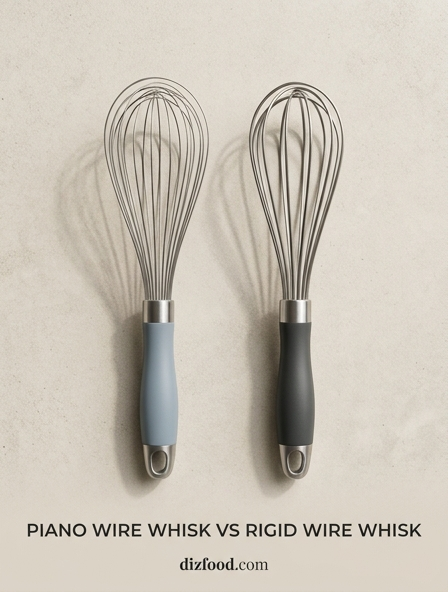
The geometry and thickness of whisk wires directly influence the efficiency of air incorporation. Thin, flexible wires are generally superior for aeration because they slice through liquids with minimal resistance, creating smaller, more numerous bubbles. This leads to a finer, more stable foam structure. Conversely, thick or rigid wires are better suited for mixing heavy batters or emulsifying sauces but fail to generate significant volume in delicate tasks like whipping egg whites or heavy cream.
The spacing between the wires also plays a critical role in the aeration process. Wider gaps allow more liquid to pass through without being "cut," while tighter groupings can lead to over-working certain ingredients too quickly. By maximizing the number of loops, a balloon whisk increases the frequency of air-to-liquid contact per stroke. This mechanical advantage ensures that volume is built rapidly and efficiently. Understanding these wire dynamics allows a chef to select the appropriate tool for specific textures, whether they are seeking a dense chocolate ganache or a cloud-like sponge cake base.
Mastering the Efficient Whisking Motion
Efficiency in whisking is not merely a matter of speed, but rather the direction and rhythm of the stroke. While many beginners intuitively use a circular motion, a side-to-side "beating" motion is scientifically more effective for aeration. This movement forces the whisk through the center of the liquid repeatedly, creating maximum turbulence and trapping more air within the protein or fat matrix. By breaking the surface of the liquid frequently, the chef ensures a constant supply of air is being pulled into the mixture.
- Hold the mixing bowl at a slight angle to increase surface area.
- Use a vigorous side-to-side wrist action rather than the whole arm.
- Keep the whisk head partially submerged to maintain the foam.
- Maintain a consistent, rapid tempo to build structural integrity.
- Rotate the bowl occasionally to ensure even aeration of all ingredients.
Proper technique reduces the time required to reach the desired peak stage and minimizes the physical strain on the cook, leading to more consistent results across various recipes.
Maximizing Air Incorporation in Egg Whites
Egg whites are comprised primarily of water and proteins, specifically albumin. To maximize air incorporation, several environmental factors must be optimized. First, the egg whites should ideally be at room temperature, as this reduces surface tension and allows the protein strands to denature and stretch more easily. Any presence of fat, such as a trace amount of yolk or oil residue on the bowl, will catastrophically prevent the formation of a stable foam by interfering with protein bonding.
- Ensure all equipment is completely grease-free and dry.
- Start whisking at a moderate speed to establish a base of small bubbles.
- Add a stabilizer, such as cream of tartar or lemon juice, to lower pH.
- Gradually increase whisking speed once the foam becomes opaque.
The goal is to create a network of denatured proteins that coat the air bubbles. This network provides the structural framework that allows the foam to expand during the baking process without collapsing under its own weight or the weight of added ingredients.
Achieving Perfect Soft and Stiff Peaks
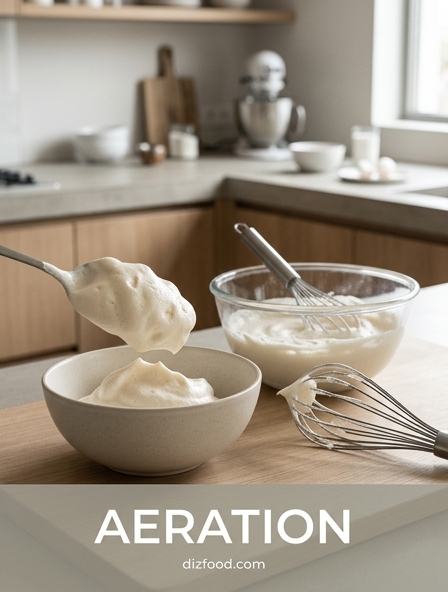
Recognizing the visual cues that signal the transition between different stages of aeration is vital for culinary success. As air is incorporated, the mixture changes from a watery liquid to a thick, opaque foam. The first major milestone is the "soft peak" stage. When the whisk is lifted, the foam should form a peak that gently curls over at the tip. This stage is ideal for folding into heavier batters, as it provides lightness without being too brittle.
| Stage | Visual Description | Typical Use |
|---|---|---|
| Soft Peak | Tips droop or curl over immediately. | Mousses and light batters. |
| Medium Peak | Tips hold shape but slightly bend. | Decorative toppings and pies. |
| Stiff Peak | Tips stand straight up and are glossy. | Meringues and royal icing. |
It is crucial to avoid over-whipping. If the process continues too long, the proteins bond too tightly, squeezing out moisture and resulting in a grainy, dry, and collapsed mess that cannot be easily recovered.
The Science of Stable Foam Structures
A stable foam is a delicate balance of air, water, and stabilizing agents. Mechanical force denatures the proteins, causing them to unfold. These proteins then realign themselves at the interface between the air and the liquid. The hydrophobic parts of the protein point toward the air bubbles, while the hydrophilic parts remain in the water, creating a protective film. To prevent these bubbles from popping, stabilizers like sugar are often introduced during the whisking process.
Sugar increases the viscosity of the liquid phase, which significantly slows down the rate at which water drains away from the bubbles-a process known as drainage. Acid helps the proteins bond just enough to be strong but not so much that they clump together. The resulting network is a complex matrix capable of supporting the weight of flour or cocoa powder in recipes like sponge cakes or soufflés. Understanding this molecular interaction allows chefs to troubleshoot foams that are either too fragile or too dense for their intended purpose.
Comparing Balloon and French Whisks
While both tools are essential in a professional kitchen, they serve distinct purposes based on their shape and wire density. The balloon whisk, with its wide, rounded profile, is the undisputed leader in aeration. Its design is optimized for light, liquid-heavy tasks where maximum air volume is the goal. In contrast, the French whisk is narrower and more elongated, making it better suited for different culinary applications.
- Balloon Whisk: Best for egg whites and heavy cream; maximizes air.
- French Whisk: Best for sauces, gravies, and emulsions; reaches corners.
- Balloon Whisk: Features flexible, thin wires for delicate foam.
- French Whisk: Features stiffer, densely packed wires for heavy mixing.
Selecting the wrong whisk can result in poor aeration or a lumpy sauce. For tasks requiring high volume and lightness, the balloon whisk's ability to incorporate air through its wide radius is unmatched. The French whisk is preferred when the chef needs to incorporate ingredients in a shallow pan or move a heavy custard without incorporating too much air.
Best Practices for Whipping Heavy Cream
Unlike egg whites, which rely on proteins, whipped cream depends on fat globules for its structure. To achieve the best results, the cream, the bowl, and the whisk should be chilled. Cold temperatures keep the milk fat in a solid state, which is necessary for the fat globules to partially coalesce and trap air bubbles effectively. Heavy cream must have a minimum fat content of 30% to 35% to provide enough structural integrity for a stable foam.
- Chill the bowl and whisk in the freezer for 15 minutes before use.
- Begin whisking at a slow speed to prevent splashing and large bubbles.
- Add sweeteners or flavorings only after the cream has thickened.
- Monitor the texture closely; cream can turn to butter in seconds.
Properly whipped cream should be smooth, billowy, and hold its shape. If the mixture begins to look grainy or yellowed, it has been over-agitated, and the fat globules have begun to fuse into butter, losing the trapped air in the process.
Maintaining Balloon Whisk Performance
The longevity and effectiveness of a balloon whisk depend on consistent maintenance. Because of the many interlocking wire loops, food particles can easily become trapped at the base near the handle. This can lead to bacterial growth or oxidation if not cleaned thoroughly after every use. It is best to rinse the whisk immediately with hot, soapy water to prevent ingredients from drying and hardening on the wires.
- Check for bent or overlapping wires that might impede movement.
- Hand wash to protect the integrity of the handle seal.
- Dry the whisk thoroughly before storage to prevent rust.
- Store by hanging or in a dedicated utensil crock to avoid deforming the loops.
By keeping the wires properly aligned and the surfaces free of residue, the whisk will continue to provide the necessary mechanical force for optimal aeration. A well-maintained whisk ensures that the chef can consistently achieve the high volumes and delicate textures required for professional pastry and culinary work.

Comments