
Deciding between the modern convenience of a toaster bag and the traditional method of direct rack toasting often comes down to a trade-off between texture and tidiness. While direct rack toasting is the undisputed champion for achieving that uniform, ventilated crispness and deep browning we crave, toaster bags offer a versatile solution for mess-free grilled cheese and crucial protection against gluten cross-contamination. If you value a quintessential golden crunch, the open heat of the rack is your best friend; however, if you are looking to reheat leftovers or toast gooey sandwiches without cleaning up burnt crumbs and melted cheese, the reusable toaster bag is a revolutionary kitchen hack. Explore our side-by-side comparison below to see which method delivers your version of the perfect slice.
| Feature | Toaster Bag | Direct Rack Toasting |
|---|---|---|
| Final Texture | Softer, slightly steamed finish | Maximum crispness & even browning |
| Cleanup Level | Zero mess; bags are dishwasher safe | High; crumbs and drips require removal |
| Versatility | Ideal for melts, pizza, & GF items | Limited to bread, bagels, & pastries |
| Allergen Safety | High; prevents cross-contamination | Low; high risk of gluten/residue contact |
| Heating Speed | Slightly slower (indirect heat) | Fast (direct radiant heat) |
| Durability | Reusable (approx. 50-100 uses) | Permanent appliance feature |
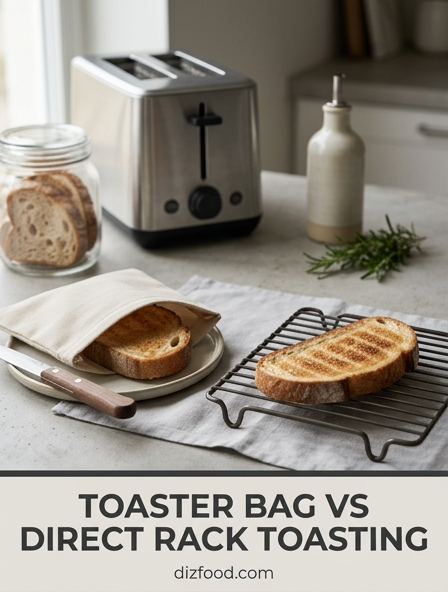
Toaster Bags vs Direct Rack Toasting Comparison
Deciding between toaster bags and direct rack toasting involves weighing the importance of texture against the convenience of cleanliness. Direct rack toasting is the traditional method where bread is placed directly into the slots, coming into close proximity with the heating elements. This method is favored by purists who demand a specific level of crispness and a quick turnaround time. Because there is no barrier between the heat source and the bread, the surface sugars caramelize rapidly, creating the classic golden-brown finish that many breakfast enthusiasts crave.
On the other hand, toaster bags represent a modern innovation designed to expand the utility of the standard pop-up toaster. These bags, typically made from PTFE-coated fiberglass, act as a protective sleeve for your food. While they prevent direct contact with the heating elements, they allow enough infrared heat to penetrate and cook the contents. The primary trade-off is the steaming effect; because moisture is trapped within the bag, the bread often retains more softness than it would on a rack. Below is a quick comparison of the two methods:
| Feature | Toaster Bags | Direct Rack |
|---|---|---|
| Texture | Soft/Chewy | Crispy/Crunchy |
| Cleanup | Minimal | High (Crumbs) |
| Food Variety | High (Sandwiches) | Low (Bread only) |
| Speed | Slower | Faster |
Mess Free Grilled Cheese Using Toaster Bags
One of the most revolutionary uses for toaster bags is the ability to create a grilled cheese sandwich inside a standard upright toaster without creating a hazardous mess. Traditionally, making a grilled cheese requires a skillet, butter, and constant supervision to ensure the bread doesn't burn while the cheese remains cold. Attempting this on a direct rack would result in melted cheese dripping onto the heating elements, causing smoke, foul odors, and potential electrical fires. Toaster bags solve this dilemma by containing every drip of melted cheddar or swiss within a non-stick environment.
To achieve the best results, you simply assemble your sandwich as usual. While some prefer to butter the outside of the bread, the bag actually allows for a "dry" toast that is lower in calories but still savory. The bag supports the structure of the sandwich as it slides into the slot. As the toaster cycles, the heat radiates through the fiberglass mesh, melting the cheese from the inside out. When the timer pops, you simply slide the sandwich out of the bag. The non-stick surface ensures that even the most stubborn burnt cheese bits slide right off, leaving your toaster internal components completely pristine and free of grease.
Achieving the Ultimate Crunch With Direct Rack Toasting
For those who prioritize the sensory experience of a "crunch," direct rack toasting remains the gold standard. The science behind this involves the immediate evaporation of surface moisture. When bread is placed on the rack, the heating elements utilize intense radiant heat to trigger the Maillard reaction almost instantly. This chemical reaction between amino acids and reducing sugars is what gives toasted bread its distinct flavor and brown color. Because the toaster is open to the air, the steam escaping from the bread dissipates into the kitchen rather than being trapped against the crust.
This airflow is the critical component missing from the bag method. In a toaster bag, the bread essentially undergoes a hybrid process of toasting and steaming. On the rack, however, the exterior becomes dehydrated and brittle, creating that satisfying snap when bitten into. To maximize this effect, it is important to ensure the toaster is pre-heated and the crumb tray is clear to allow for optimal heat reflection. Purists argue that the "ultimate crunch" can only be achieved when the bread fibers are allowed to stiffen under direct, unobstructed heat, providing a sturdy base for heavy toppings like avocado, thick jam, or cold butter that requires a resilient surface to spread evenly.
Preventing Gluten Cross Contamination in Shared Toasters
For individuals living with Celiac disease or severe gluten sensitivity, a shared kitchen can be a logistical minefield. Toasters are notorious for harboring gluten-filled crumbs that can easily transfer to a slice of gluten-free bread. Even a microscopic amount of wheat protein can trigger an adverse reaction. This is where toaster bags transition from a convenience item to a medical necessity. By placing a gluten-free slice inside a dedicated bag, you create a total physical barrier between the food and the contaminated environment of the toaster.
Using bags for cross-contamination prevention offers several benefits for multi-diet households:
- Total Isolation: The bread never touches the slots or the internal cage where crumbs accumulate.
- Portability: You can bring your own bags to hotels or friends' houses to ensure safety while traveling.
- Easy Identification: Many bags are translucent, allowing you to see the bread type without opening the protective seal.
- Peace of Mind: It eliminates the need for a second, dedicated "Gluten-Free" toaster on the counter, saving valuable kitchen space.
While the texture may be slightly softer, the safety afforded by the bag is an easy compromise for those who must strictly avoid gluten. It turns any standard toaster into a safe zone for sensitive diners.
Cleaning Comparison Crumb Trays vs Washable Bags
Maintenance is a significant factor in the longevity of kitchen appliances. Direct rack toasting inevitably leads to an accumulation of crumbs. Most modern toasters include a removable crumb tray at the bottom, which is designed to catch these particles. However, the tray never catches 100% of the debris. Over time, crumbs get lodged in the heating coils or stuck in the corners of the inner chassis. These trapped bits eventually burn, creating a carbon buildup that can affect the flavor of your toast and, in extreme cases, shorten the lifespan of the heating elements through uneven heat distribution.
In contrast, toaster bags centralize the mess. Since the food is contained, no crumbs or oils ever reach the interior of the appliance. The bags themselves are remarkably easy to clean. Most brands are rated for the top rack of a dishwasher, though a simple rinse with warm soapy water is usually sufficient. Because they are made from non-stick materials like PTFE, even burnt-on sugar or cheese wipes away with a soft sponge. While the bags do require manual cleaning after each use-whereas a crumb tray might only be emptied once a week-the bags prevent the "deep clean" difficulty associated with disassembling or shaking out a heavy toaster over a trash can.
Heat Distribution and Toasting Speed Differences
The physics of heat transfer differs significantly between these two methods. Direct rack toasting relies on direct radiation. The proximity of the bread to the nichrome wires ensures that the energy transfer is nearly instantaneous. This results in a very fast toast cycle, usually lasting between two to three minutes depending on the desired darkness. Because the heat hits the bread from both sides simultaneously without any interference, the distribution is generally even, provided the toaster's internal cages are properly aligned.
Toaster bags introduce a layer of insulation that slows down the process. The fiberglass material must first absorb and then re-radiate the heat to the bread. This can add 30 to 60 seconds to the total toasting time. Furthermore, heat distribution can sometimes be uneven if the bag is not positioned correctly. If the bag is folded or if the food inside is too thick, the edges might brown while the center remains cool. To compensate, many users find they need to turn their toaster to a higher setting when using a bag. While this uses slightly more electricity, it allows for the internal ingredients of a sandwich to reach a safe and palatable temperature without burning the outer crust prematurely.
Safety Risks and Fire Prevention Methods
Safety is a paramount concern in any kitchen, and both toasting methods carry specific risks. Direct rack toasting is primarily a fire hazard due to crumb accumulation. If the crumb tray is not emptied regularly, the dried bread particles can ignite under the intense heat of the elements. Furthermore, if a piece of bread is too small or misshapen, it can fall off the rack and rest directly on the wires, leading to immediate smoking and potential flames. Users should always remain in the room while the toaster is active and ensure the device is unplugged during deep cleaning.
Toaster bags introduce a different set of safety considerations. While they prevent crumb fires, the bags themselves must be handled with care.
- Temperature Limits: Most bags are rated for up to 500°F (260°C). Exceeding this can cause the PTFE coating to degrade.
- Steam Burns: When removing a bag from the toaster, trapped steam can escape quickly and cause burns to the fingers or face.
- Tear Inspection: If a bag becomes punctured or frayed, it should be discarded to prevent fiberglass particles from entering the food.
- Proper Sizing: Forcing an oversized bag into a narrow slot can cause the bag to jam, preventing the toaster from popping up and leading to overheating.
By following these guidelines, users can mitigate the risks associated with both the traditional and the bag-assisted methods.
Toasting Versatility Beyond Plain Bread
The versatility of a kitchen appliance is often measured by its ability to handle diverse tasks. Direct rack toasting is notoriously limited; it is designed for bread, bagels, and English muffins. Attempting to heat anything with a coating, such as a glazed donut or a slice of leftover pizza, will result in a sticky mess and a permanent odor of burnt sugar. The direct rack method is a "single-tasking" approach that excels at one thing but fails at nearly everything else.
Toaster bags transform the appliance into a mini-oven. This versatility allows users to heat a wide variety of items that would otherwise require a toaster oven or a full-sized oven. Reheating pizza in a toaster bag is particularly effective, as it crisps the crust while keeping the cheese contained. Other items that work well include:
- Chicken nuggets and fish sticks.
- Leftover pancakes or waffles that need a quick crisping.
- Pita bread stuffed with pre-cooked fillings.
- Pastries like turnovers or croissants that might otherwise shed too many flakes.
This flexibility is especially valuable in dorm rooms, small apartments, or office breakrooms where space for multiple appliances is limited. The bag acts as a protective shield that allows the toaster to function as a multi-purpose reheating station without the risk of cross-flavor contamination between different food types.
Longevity and Durability of Toaster Accessories
When considering the cost-effectiveness of these methods, the longevity of the accessories must be evaluated. Toaster bags are not permanent kitchen fixtures. Most high-quality bags are marketed as being reusable between 50 and 100 times. Over time, the non-stick coating will begin to wear down, and the fiberglass mesh may lose its structural integrity. You will notice the bag becoming discolored or "tacky" to the touch, at which point it must be replaced. From a financial perspective, this represents a recurring cost, albeit a relatively low one, similar to buying parchment paper or aluminum foil.
Direct rack toasting requires no additional accessories, but it does place more mechanical stress on the toaster itself. The repeated "popping" mechanism and the constant thermal expansion and contraction of the heating elements eventually lead to appliance failure. However, a well-maintained toaster used only for direct bread toasting can last for a decade or more. The longevity of the "direct" method is essentially the longevity of the appliance itself. While you save money by not purchasing bags, you may spend more time on maintenance. Ultimately, the durability of toaster bags is measured in months, while the durability of the direct rack method is measured in the years of service the toaster provides before the elements burn out or the lever snaps.
Final Verdict Which Toasting Method Wins
The "winner" in the debate between toaster bags and direct rack toasting depends entirely on the user's priorities and lifestyle. There is no objective superior method, as both serve distinct purposes in a modern kitchen. For the culinary purist who views breakfast as an art form, the direct rack method is the undisputed champion. The superior crunch, the faster speed, and the classic flavor profile produced by the Maillard reaction cannot be replicated by a bag. If you only ever toast plain bread or bagels and don't mind the occasional crumb cleanup, the traditional method remains the most efficient choice.
However, for the busy professional, the parent, or the individual with dietary restrictions, the toaster bag is a game-changer. Its ability to prevent cross-contamination, facilitate "grilled" sandwiches with zero cleanup, and reheat various snacks makes it a highly valuable tool. It effectively doubles the functionality of a standard toaster. While you sacrifice a bit of crispness and have the added task of washing the bags, the convenience and safety benefits often outweigh these drawbacks. In a shared environment, the bag is the clear winner for hygiene. For a solitary gourmet, the rack is king. Most households would likely benefit from having both options available, using the rack for daily toast and the bags for specialized tasks.




Comments