
Achieving culinary excellence often hinges on the microscopic details of your equipment, specifically the debate between self-centering and fixed guides. If you have ever struggled with uneven knife edges or inconsistent vegetable slices, the culprit is likely your guide system. Self-centering mechanisms are the modern chef's favorite for effortless precision, as they automatically adjust to the thickness of your blade or produce to ensure a perfectly symmetrical result every time. In contrast, fixed guides offer a rugged, unwavering path that rewards experienced users who demand a specific, repeatable angle without mechanical movement. Choosing the right one can transform your kitchen workflow from a game of guesswork into a masterclass in efficiency and razor-sharp accuracy.
| Feature | Self-Centering Guides | Fixed Position Guides |
|---|---|---|
| Alignment Logic | Dynamic; auto-adjusts to tool thickness. | Static; maintains a single set point. |
| User Skill Level | Beginner-friendly; eliminates "human error." | Intermediate/Pro; requires manual steadiness. |
| Precision Type | Perfect symmetry and centered edges. | High repeatability for specific angles. |
| Versatility | High; accommodates various blade widths. | Low; often limited to specific tool sizes. |
| Setup Speed | Instantaneous; "plug and play" motion. | Requires manual calibration/clamping. |
| Maintenance | Moderate; requires pivot point cleaning. | Low; fewer moving parts to fail. |
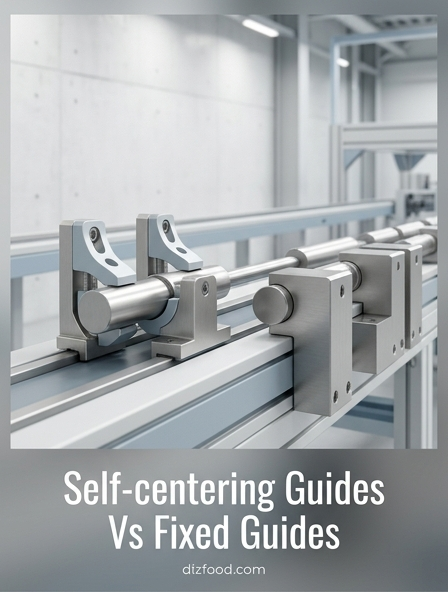
Understanding Self-Centering versus Fixed Guides
In the realm of modern kitchen cabinetry and appliance manufacturing, the distinction between self-centering guides and fixed guides is fundamental to both functionality and user experience. Self-centering guides are engineered with dynamic mechanisms, often utilizing spring-loaded rollers or tension-based systems, that automatically adjust to the width of the drawer or pull-out tray. These systems ensure that the moving component remains perfectly equidistant from the cabinet walls, regardless of slight variations in material thickness or assembly tolerances. They are particularly prevalent in high-end pull-out organizers and heavy-duty pantry systems where balance is critical.
Fixed guides, conversely, are stationary rails that are mounted at a predetermined distance from one another. These systems rely on rigid tracks, typically made of cold-rolled steel or aluminum, and do not possess the ability to shift or adapt once they are secured to the carcass of the cabinetry. While they lack the adaptive nature of their self-centering counterparts, they provide a rock-solid foundation for drawers that must maintain a specific, unchanging path of travel. Understanding these two systems involves recognizing the trade-off between the "smart" flexibility of self-centering hardware and the "dumb" reliability of fixed hardware. In a kitchen environment, where moisture and heat can cause wood to swell or contract, the choice between an active self-centering system and a passive fixed system dictates the long-term smoothness of every drawer pull.
Key Differences in Precision and Alignment
Precision in kitchen hardware is measured by the consistency of the reveal-the gap between the drawer front and the cabinet frame. Self-centering guides offer a superior advantage in maintaining this alignment because they compensate for human error during the installation phase. If a cabinet box is slightly out of square, a self-centering guide will pull the drawer box toward the true center of the opening, masking the structural imperfection. This results in a symmetrical appearance that is highly sought after in minimalist or handle-less kitchen designs where even a millimeter of misalignment is visible to the naked eye.
Fixed guides require a higher level of initial precision during the boring and mounting stages. Because they cannot adjust, any error in the placement of the pilot holes will be reflected in the final position of the drawer. However, fixed guides offer a different type of precision: lateral rigidity. In applications where side-to-side play must be eliminated entirely, fixed guides are superior. The following table highlights the comparative attributes of both systems:
| Feature | Self-Centering Guides | Fixed Guides |
|---|---|---|
| Tolerance Absorption | High; adjusts to 1-3mm variations | Zero; requires exact mounting |
| Lateral Movement | Controlled dampening | Rigid and locked |
| Visual Consistency | Automatic centering | Dependent on installer skill |
Comparing Installation Time and Setup Ease
The efficiency of a kitchen installation project is often dictated by the complexity of the hardware setup. Self-centering guides are generally viewed as a time-saving solution for large-scale residential projects. Because the hardware "hunts" for the center, installers do not need to spend excessive time utilizing shims or specialized jigs to ensure the tracks are perfectly parallel. This "plug-and-play" nature allows for a faster workflow, especially when dealing with pre-drilled cabinetry that may have shifted during transit. The internal springs or angled rollers do the corrective work that would otherwise fall to the technician.
Fixed guides, however, demand a rigorous setup process that can significantly extend the installation timeline if not handled by an experienced professional. The process typically involves:
While the initial setup for fixed guides is more labor-intensive, once they are locked in, they rarely require post-installation adjustment. Self-centering guides, while faster to install, may occasionally require fine-tuning of the tension settings to ensure the auto-centering mechanism isn't too aggressive or too sluggish for the weight of the intended load.
Impact on Material Handling Accuracy
In a kitchen context, material handling refers to how the hardware manages the weight and movement of various items, from lightweight spice racks to heavy cast-iron cookware. Self-centering guides excel at handling dynamic loads. When a heavy pot is placed off-center in a wide drawer, the self-centering mechanism redistributes the force, preventing the drawer from tilting or dragging on one side. This prevents premature wear on the glides and ensures that the user experience remains consistent regardless of how the drawer is loaded. This is a critical factor in the "ergonomic kitchen," where the goal is to minimize the physical effort required to access storage.
Fixed guides are less forgiving when it comes to uneven weight distribution. If a drawer is heavily loaded on the left side, a fixed guide system transfers that torque directly to the rail and the ball bearings. Over time, this can lead to "notching" in the metal tracks or failure of the plastic spacers. However, for specialized kitchen tasks-such as a pull-out cutting board or a mixer lift-fixed guides are often preferred because they provide a stable, non-shifting platform. When accuracy is defined by the absence of movement under pressure, fixed guides are the industry standard. They ensure that when you are applying downward force, such as kneading dough on a pull-out surface, the hardware does not attempt to "adjust" or shift position, which could be dangerous or counterproductive to the task at hand.
Cost Benefit Analysis of Both Systems
Budgetary considerations for kitchen renovations or commercial builds must weigh the hardware's purchase price against the long-term labor and replacement costs. Self-centering guides carry a significantly higher upfront price tag. This is due to the increased complexity of the components, including high-tension springs, precision rollers, and often integrated soft-close dampers. For a high-end custom kitchen, the cost of self-centering hardware can be 30% to 50% higher than standard fixed rails. However, the "benefit" side of the equation includes reduced labor hours during installation and a lower rate of service calls for "crooked drawers" or "binding," which can eat into a contractor's profit margins.
Fixed guides are the economical choice for mass-market cabinetry and budget-conscious builds. The simplicity of their design-consisting usually of two interlocking metal profiles and a series of ball bearings-makes them inexpensive to manufacture and easy to source. The cost benefit of fixed guides is realized in projects where the cabinetry is built to exacting industrial standards with CNC machinery, ensuring that the environment for the hardware is already perfect. In these scenarios, paying for the "intelligence" of a self-centering guide is unnecessary. When analyzing costs, one must also consider the "lifecycle cost"; while fixed guides are cheaper to buy, they may require more frequent replacement in high-use environments if they are subjected to lateral stresses that a self-centering system would have easily absorbed.
Versatility Across Varying Stock Sizes
Modern kitchens often feature a mix of standard and custom-sized storage solutions. Self-centering guides offer unparalleled versatility in this regard. Because they are designed to accommodate a range of widths, a single model of a self-centering guide can often be used across multiple drawer sizes within the same project. This reduces inventory complexity for cabinet makers and ensures that even if a drawer box is built slightly "off-spec" (e.g., 1/16th of an inch too narrow), the hardware will still function flawlessly. This adaptability is essential when working with natural materials like solid wood, which can vary in thickness and stability compared to engineered products like MDF.
Fixed guides are size-specific and unforgiving. They are designed for a very narrow "fit window," usually requiring a clearance of exactly 12.7mm (1/2 inch) on each side of the drawer box. If the stock size of the drawer box varies even slightly, the fixed guide will either be too tight to operate or too loose to stay on the track. This necessitates a rigid adherence to manufacturing standards and leaves no room for the artisanal variations found in custom wood shops. For projects utilizing standardized "stock" cabinetry where every box is identical, fixed guides are perfectly adequate. However, for "bespoke" or "custom" kitchens where every cabinet is a unique size, the versatility of self-centering guides makes them the preferred choice for designers who want to ensure a uniform feel across a diverse range of storage units.
Durability and Long Term Maintenance Needs
The kitchen is a harsh environment characterized by high humidity, fluctuating temperatures, and the presence of grease and food particles. The durability of guide systems is tested daily. Fixed guides are lauded for their simplicity; with fewer moving parts, there is less that can mechanically fail. Maintenance usually involves a simple cleaning of the tracks and occasional re-lubrication of the ball bearings. If a fixed guide does fail, it is usually due to physical deformation or the loss of bearings, and replacement is straightforward because the mounting holes are standard across the industry.
Self-centering guides, while built to high standards, are more complex. The springs that provide the centering force can lose tension over a decade of heavy use, and the centering rollers can develop flat spots if left in one position for too long under a heavy load. However, many modern self-centering systems are "sealed for life," meaning they are designed to prevent the ingress of kitchen grime into the sensitive mechanical parts. From a maintenance perspective, self-centering guides are often "zero-maintenance" until the point of failure, at which point they must be replaced rather than repaired. The long-term choice often depends on the expected lifespan of the kitchen; for a 20-year luxury kitchen, the robust, self-correcting nature of self-centering hardware often results in fewer "sagging" issues compared to fixed rails that might loosen over time.
Best Industrial Applications for Each Type
In industrial or commercial kitchen settings, the application dictates the hardware choice. Self-centering guides are the gold standard for mobile catering units and food trucks. In these environments, the cabinetry is subjected to constant vibrations and movement. A fixed guide would likely rattle or bind as the vehicle chassis flexes, but a self-centering guide maintains the drawer's position and absorbs the kinetic energy, protecting both the hardware and the contents. They are also favored in high-speed assembly lines where cabinet components are moved rapidly; the guides ensure that drawers are centered instantly for automated packing or finishing processes.
Fixed guide rails are the primary choice for heavy industrial storage, such as walk-in refrigerator shelving or heavy-duty pot racks in high-volume restaurants. When the weight of the items exceeds 100 or 200 pounds, the "give" in a self-centering mechanism becomes a liability. Industrial fixed rails are often over-engineered with thicker gauge steel to handle static loads that would crush a standard residential self-centering spring. Additionally, in environments where hygiene is the top priority-such as medical-grade kitchens or laboratories-fixed guides are preferred because their simple, open geometry makes them easier to sanitize using high-pressure steam or chemical agents, as there are no hidden springs or complex housings where bacteria can proliferate.
When to Choose Fixed Guide Rails
Despite the technological advantages of self-centering systems, there are several scenarios where fixed guide rails remain the superior choice. The most obvious is in budget-conscious projects, such as rental property renovations or entry-level housing, where the cost of premium hardware cannot be justified. Fixed guides provide reliable performance at a fraction of the cost, provided the installer is competent. Furthermore, fixed guides are the only viable option for "ultra-slim" cabinetry designs. Self-centering mechanisms require internal space to house the springs and adjustment rollers; in very narrow spice pull-outs or knife slots, there simply isn't enough physical room for a self-centering assembly.
Another critical use case for fixed guides is in restoration work for antique or period-accurate furniture. Modern self-centering guides often look bulky and out of place in a traditional kitchen. Fixed rails, particularly those with a low profile or under-mount design, can be hidden more easily, preserving the aesthetic integrity of the woodwork. Finally, fixed guides should be chosen when absolute lateral stability is required. If the application involves a heavy appliance that must be pulled out and used while still on the rails-such as a heavy stand mixer or a built-in espresso machine-the rigid, non-compliant nature of fixed rails provides the necessary safety and stability to prevent the appliance from wobbling during operation.
Optimizing Production Workflow with Proper Guides
For kitchen manufacturers, the choice between guide types is a strategic decision that affects the entire production workflow. Integrating self-centering guides into the manufacturing process can significantly reduce the "Quality Control" (QC) rejection rate. Since the hardware compensates for minor deviations in the cabinet box construction, fewer units need to be sent back for rework. This allows the assembly line to move faster and reduces the need for highly skilled labor at the final assembly stage, as the "smart" hardware handles the alignment that would otherwise require an expert eye. This optimization is particularly valuable for companies utilizing "Flat Pack" or RTA (Ready-To-Assemble) business models where the end-user is responsible for installation.
Conversely, optimizing a workflow around fixed guides requires a heavy investment in precision machinery. CNC routers and automated boring machines must be calibrated to extreme tolerances to ensure that every pilot hole is perfectly placed. While the hardware itself is cheaper, the infrastructure required to install it "perfectly every time" is expensive. However, for high-volume manufacturers, this approach can lead to lower "per-unit" costs over time. The key to optimizing the workflow is matching the guide type to the manufacturing capability: use self-centering guides to add value and ease to custom, variable-sized projects, and utilize fixed guides to maximize margins in highly standardized, high-volume production environments where precision is already baked into the process.

Comments