
Deciding between a classic pop-up toaster and a versatile toaster oven often comes down to your morning routine versus your culinary ambitions. If your priority is achieving the perfect, edge-to-edge golden browning on a slice of sourdough with lightning speed, the specialized vertical heating elements of a pop-up toaster remain undefeated for consistency and efficiency. However, for those seeking a multi-functional workhorse that can melt tuna melts, reheat leftover pizza, or even roast a small batch of vegetables, the toaster oven earns its larger footprint by acting as a powerful, miniature convection center. Whether you value the compact, "set-it-and-forget-it" simplicity of a dedicated browning machine or the diverse cooking modes of a countertop oven, choosing the right tool is about balancing your available counter space with your daily menu needs.
| Feature | Pop-up Toaster | Toaster Oven |
|---|---|---|
| Versatility | Limited to bread, bagels, & waffles. | Bakes, broils, roasts, & reheats meals. |
| Toasting Speed | Rapid (1-3 mins); no preheating required. | Slower (5-8 mins); often requires preheating. |
| Browning Quality | Highly even; consistent dual-side heating. | Variable; prone to "hot spots" and unevenness. |
| Counter Footprint | Minimal; easily tucked into corners or cabinets. | Substantial; requires permanent surface space. |
| Energy Efficiency | High; utilizes focused, radiant heat. | Lower; must heat a large internal air cavity. |
| Price Range | Budget-friendly ($20 - $100). | Investment piece ($50 - $400+). |
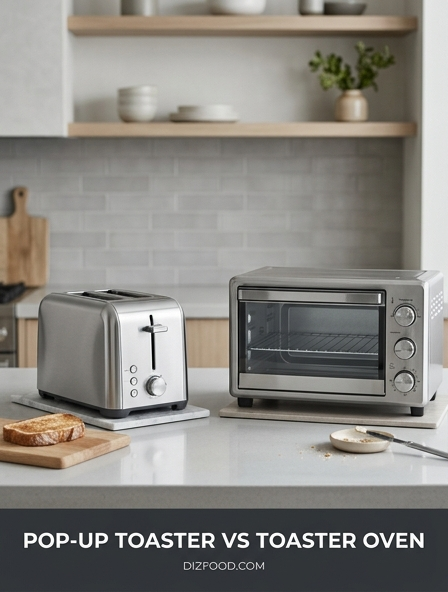
Pop-up Toaster vs Toaster Oven Main Differences
The primary distinction between a pop-up toaster and a toaster oven lies in their core engineering and intended functionality. A pop-up toaster is a specialized, single-purpose appliance designed specifically to toast sliced bread vertically. It utilizes internal heating elements-usually nichrome wires-positioned extremely close to the bread's surface. When the lever is pressed, the bread is lowered into a cage, and the proximity of the heat sources ensures a rapid, direct browning process. Once the timer finishes, a spring-loaded mechanism "pops" the bread up, signaling completion. Its design is compact, focusing entirely on speed and specific bread-based tasks.
In contrast, a toaster oven is essentially a miniature conventional oven that sits on your countertop. It functions using a horizontal rack system and can accommodate a much wider variety of items beyond sliced bread, such as frozen pizzas, leftovers, or small batches of cookies. Unlike the concentrated, direct heat of a pop-up model, a toaster oven heats the ambient air within its chamber, often utilizing convection fans to circulate warmth. This makes it a multi-functional tool capable of baking, broiling, and reheating. While both appliances can brown a piece of bread, the toaster oven is built for versatility, whereas the pop-up toaster is built for a singular, optimized task.
Which Appliance Toasts Bread More Evenly
When it comes to the perfection of a golden-brown slice of toast, the pop-up toaster generally holds the upper hand. Because the heating elements are situated mere millimeters away from the bread on both sides, the heat transfer is intense and uniform. Most modern pop-up models feature self-centering racks that ensure the bread is perfectly aligned between the glowing wires, preventing lopsided browning. This direct radiant heat reacts quickly with the starches in the bread, creating a crisp exterior while maintaining a soft interior.
Toaster ovens often struggle with consistency because they rely on heating the entire internal cavity. This can lead to "hot spots" or areas where the heat reflects off the metal walls differently. Additionally, the bread sits on a wire rack, which can block heat from reaching certain parts of the underside, often leaving behind un-toasted "stripes." If you are a connoisseur of perfectly symmetrical toast, the pop-up toaster is the superior choice. However, the toaster oven excels when toasting artisanal breads or oddly shaped items that simply would not fit into a standard vertical slot.
| Feature | Pop-up Toaster | Toaster Oven |
|---|---|---|
| Heat Proximity | Extremely Close | Distanced |
| Centering Mechanism | Yes (Automatic) | No (Manual Placement) |
| Browning Uniformity | High | Moderate to Low |
Speed and Energy Efficiency Comparison
Efficiency in the kitchen is often measured by how quickly an appliance can move from a cold start to a finished product. The pop-up toaster is the undisputed champion of speed. Because the heating chamber is tiny and the elements reach peak temperature almost instantly, a standard slice of toast is usually ready in two minutes or less. There is no "preheating" phase required; the energy is directed entirely into the surface of the bread, making it an incredibly efficient tool for a single, quick task. For a busy professional or a parent preparing school lunches, those saved minutes are invaluable.
Toaster ovens require significantly more energy and time because they must heat a much larger volume of air before the cooking process truly begins. Even the most advanced models typically take five to seven minutes to achieve the same level of browning that a pop-up toaster manages in two. Much of the energy consumed by a toaster oven is "wasted" on heating the glass door and the metal housing. However, the efficiency argument shifts if you are preparing a larger meal. If you need to toast four or six slices at once or reheat a sandwich, the toaster oven may be more efficient than running multiple cycles of a two-slot pop-up toaster.
Versatility and Cooking Capabilities Beyond Toasting
If you are looking for an appliance that can do more than just brown bread, the toaster oven is the clear winner. Its horizontal layout and adjustable temperature settings allow it to function as a secondary oven, which is particularly useful during large holiday meals or for individuals living in small apartments without a full-sized range. The versatility of a toaster oven extends to a wide range of culinary tasks that a pop-up toaster simply cannot perform due to its vertical orientation and narrow slots.
- Reheating Leftovers: Ideal for reviving crispy fries or pizza without the sogginess of a microwave.
- Melting and Broiling: Perfect for open-faced tuna melts, bruschetta, or melting cheese on top of a bagel.
- Small-Batch Baking: Can easily handle a few cookies, a single chicken breast, or a small tray of roasted vegetables.
- Frozen Foods: Effectively cooks frozen appetizers like chicken nuggets, mozzarella sticks, or egg rolls.
A pop-up toaster is strictly limited by its physical dimensions. You cannot put a sandwich with cheese inside a pop-up toaster without risking a fire or a permanent mess, nor can you use it to bake a potato. Its lack of versatility is its trade-off for its specialized speed and small footprint. For a minimalist who only eats toast, the pop-up is sufficient; for anyone else, the oven offers a much broader culinary horizon.
Kitchen Counter Space and Storage Considerations
In many modern kitchens, counter space is a premium commodity. The pop-up toaster is designed with a vertical orientation that minimizes its "footprint," making it ideal for small kitchens or for users who prefer to store their appliances in a cabinet when not in use. Its lightweight nature makes it easy to move, and many models include cord wraps on the bottom to keep things tidy. Because it generates heat primarily within its internal slots, it requires very little clearance from other objects or walls, allowing it to tucked into corners or placed under low-hanging cabinets safely.
Toaster ovens, on the other hand, are significantly bulkier. They require a substantial amount of flat surface area and, perhaps more importantly, they require significant clearance for safety. Because the exterior of a toaster oven-especially the top and the glass door-can become extremely hot during operation, you cannot place them too close to walls or under cabinets that might be sensitive to heat. This means a toaster oven often becomes a permanent fixture on the counter, as it is too heavy and awkward to move frequently. Before purchasing, you must measure your available space carefully to ensure the unit won't crowd your prep area or create a fire hazard.
Comparing Initial Price and Long Term Value
From a purely financial perspective, the pop-up toaster is almost always the more affordable entry point. You can find basic, reliable two-slice toasters for under twenty dollars at most big-box retailers. Even high-end models with digital displays and specialized "bagel" or "defrost" settings rarely exceed one hundred dollars. For someone on a tight budget or a student moving into a dorm, the low initial cost of a pop-up toaster makes it an easy purchase. However, because they are often built with more plastic components, their lifespan may be shorter if a heating element fails or the spring mechanism breaks.
Toaster ovens represent a higher initial investment, with entry-level models starting around fifty dollars and high-performance convection or air-fryer hybrids reaching three hundred dollars or more. Despite the higher price tag, the long-term value of a toaster oven is often perceived as higher because of its utility. By serving as a microwave, oven, and toaster all in one, it can save you money on other appliance purchases. Furthermore, using a toaster oven to bake a single dish instead of heating up a full-sized kitchen oven can result in noticeable savings on your monthly electricity bill over several years.
Cleaning and Maintenance Requirements for Each
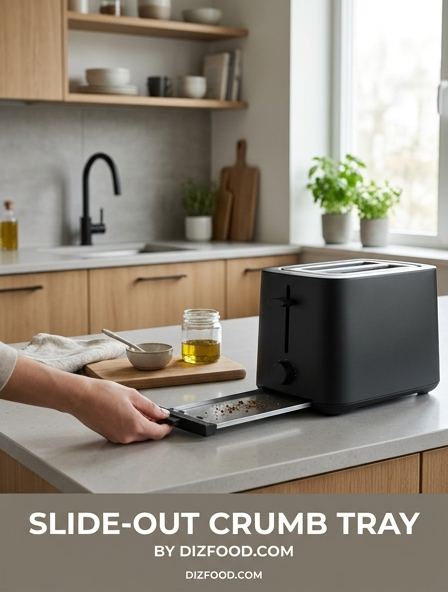
Cleaning a pop-up toaster is a relatively straightforward but limited process. Most modern units feature a removable crumb tray at the bottom that catches the majority of debris. To maintain the appliance, you simply slide out the tray, dump the crumbs, and give it a quick wipe. However, cleaning the internal heating elements or the side walls of the slots is nearly impossible and generally discouraged, as you could damage the delicate wires. If a piece of bread gets stuck or cheese melts inside, it often results in a permanent burnt smell that is difficult to rectify.
Toaster ovens require more frequent and intensive maintenance. Because you are often cooking fatty foods, melting cheese, or roasting meats, the interior can become coated in grease and food splatters. The glass door must be cleaned regularly to maintain visibility, and the interior racks and pans require washing after almost every use. If neglected, grease buildup can smoke or even ignite. On the positive side, because the interior is accessible, you can actually scrub the surfaces and keep the unit looking like new for much longer than a pop-up toaster. It is a trade-off between the "set-and-forget" simplicity of the pop-up and the "deep-clean" requirements of the versatile oven.
Ease of Use and Convenience for Daily Tasks
The pop-up toaster is the epitome of "user-friendly." It usually features a single lever and a browning dial. You drop the bread in, push the lever down, and walk away. There is no need to monitor the progress because the machine automatically stops and ejects the food when finished. This level of automation is perfect for those who are groggy in the morning or for children who are learning to prepare their own snacks. The tactile feedback of the "pop" is a clear audio-visual cue that breakfast is ready, making it the most convenient option for the specific task of toasting.
Toaster ovens require a bit more attention and manual configuration. Users must select the function (toast, bake, or broil), set the temperature, and often set a mechanical timer that may not be as precise as the electronic sensors in a pop-up model. Because there is no "pop-up" mechanism, it is easy to forget about your toast and leave it in the warm oven until it becomes hard or overly dry. Furthermore, retrieving food from a hot toaster oven requires oven mitts or tongs, adding an extra step to the process. For those who value simplicity and a "one-touch" experience, the pop-up toaster remains the more convenient daily driver.
The Best Scenarios for Using a Pop-up Toaster
While the toaster oven offers more features, the pop-up toaster remains a staple in kitchens worldwide for very specific reasons. There are several scenarios where the specialized nature of a pop-up toaster makes it the superior choice. If your morning routine is a race against the clock, the speed and automation of a vertical toaster cannot be beaten. It allows you to focus on brewing coffee or packing bags without worrying about burning your toast.
Consider the following ideal scenarios for a pop-up toaster:
- Small Living Spaces: In studio apartments or dorm rooms where counter space is measured in inches, the tiny footprint of a pop-up is essential.
- Toast Purists: If you only ever eat standard sliced bread or bagels and want them perfectly and evenly browned every time.
- Office Breakrooms: Where users need a quick, mess-free way to toast a bagel without the cleaning liability of a full oven.
- Budget-Conscious Households: When you need a reliable appliance for under $25 that will last for years of simple service.
Ultimately, the pop-up toaster is for the minimalist. It does one thing, and it does it with a level of efficiency and consistency that more complex machines struggle to replicate. It is the king of the "quick-start" breakfast.
Final Verdict Picking the Right Toaster for You
Choosing between a pop-up toaster and a toaster oven ultimately depends on your lifestyle, your culinary habits, and your kitchen's physical constraints. There is no universal "winner," as both appliances serve different niches. If your primary goal is to get two slices of bread evenly browned in the shortest amount of time possible, do not overcomplicate things-the pop-up toaster is your best friend. Its simplicity, speed, and low cost make it a practical choice for the majority of households that view toasting as a minor part of their morning routine.
However, if you view your toaster as a versatile cooking tool, the toaster oven is a much better investment. It is the ideal choice for small families, singles who don't want to use a large oven for small meals, or anyone who loves toasted sandwiches and reheated pizza. While it takes up more space and requires more cleaning, its ability to replace multiple appliances offers a level of utility that a pop-up toaster simply cannot match. Assess your daily needs: do you need a specialist or a generalist? Your answer to that question will guide you to the right purchase for your kitchen.

Comments