
When optimizing your kitchen's workflow, the debate between a manual lever and a motorized lift often comes down to a choice between tactile speed and effortless luxury. Manual lever mechanisms offer a rugged, "instant-on" reliability, utilizing spring-loaded tension to assist in lifting heavy mixers or food processors with zero reliance on power outlets. Conversely, motorized lifts represent the pinnacle of modern kitchen ergonomics, employing silent electric actuators to handle substantial weight loads at the push of a button. Whether you prioritize the rapid-deployment and budget-friendly nature of a mechanical arm or the hands-free, high-tech accessibility of an automated system, understanding how these mechanisms impact your daily culinary speed and physical strain is essential for a high-performance kitchen design.
| Feature | Manual Lever Mechanism | Motorized Lift System |
|---|---|---|
| Operation Speed | Instantaneous; user-controlled velocity. | Steady/Controlled (approx. 1-2 inches/sec). |
| Weight Capacity | Typical 20-60 lbs (limited by spring tension). | Heavy-duty 75-200+ lbs (linear actuators). |
| User Ergonomics | Requires physical pull/lifting force. | Zero-effort; button, remote, or voice control. |
| Power Requirements | None; functions during power outages. | Requires dedicated 110V/220V electrical outlet. |
| Installation Depth | Minimal; fits standard 12"-24" cabinetry. | Moderate; requires space for motor/housing. |
| Durability & Maintenance | High longevity; purely mechanical parts. | Complex; electronic components may need repair. |
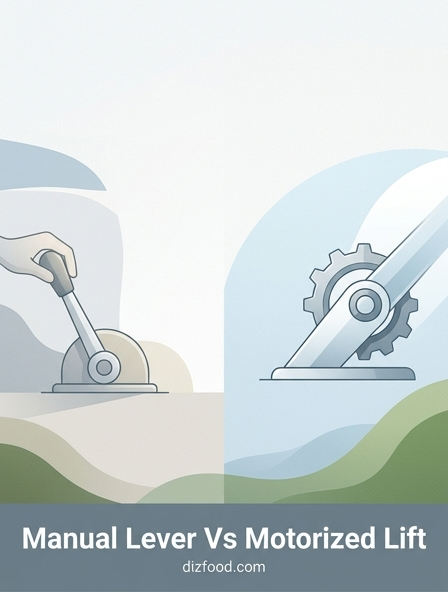
Manual Lever vs Motorized Lift Key Differences
The primary distinction between manual lever mechanisms and motorized lift systems in a kitchen context lies in the method of actuation and the source of power. A manual lever relies entirely on human physical force, often assisted by springs or gas struts, to move heavy appliances or cabinet components. In contrast, motorized lifts utilize electric actuators and gearboxes to perform the same task at the touch of a button. These differences influence not only the user experience but also the structural requirements of the cabinetry.
While manual systems are often simpler in design, they require a specific range of motion from the user, which may not be suitable for everyone. Motorized systems provide a consistent, programmable movement that can be integrated into smart home ecosystems. The following table highlights the core mechanical differences between these two solutions:
| Feature | Manual Lever | Motorized Lift |
|---|---|---|
| Power Source | Physical exertion/Tension springs | Electricity (AC or DC) |
| Control Method | Handheld handle or pull-tab | Remote, switch, or voice command |
| Weight Capacity | Limited by spring tension | High (up to 200+ lbs) |
| Complexity | Low (mechanical parts only) | High (motors, sensors, wiring) |
Beyond the power source, the spatial footprint varies. Manual levers often require clear paths for the arc of movement, whereas motorized lifts can move vertically or horizontally with greater precision in tighter tolerances.
Advantages of Manual Lever Mechanisms
Manual lever mechanisms remain a staple in kitchen design due to their inherent reliability and simplicity. Because these systems do not rely on electrical components, they are immune to power outages and electronic circuit failures. This makes them an excellent choice for high-utility areas where consistent access to appliances like stand mixers or food processors is required regardless of the home's electrical status.
The tactile feedback provided by a manual lever allows the user to control the speed and force of the lift dynamically. For many home cooks, this sense of control is preferable to the fixed speed of a motor. Additionally, manual systems are generally lighter and easier to retrofit into existing cabinetry without the need for professional electrical work. The primary benefits include:
- Zero Energy Consumption: Operates without drawing any power, contributing to a lower utility footprint.
- Instant Response: No "startup" time or delay associated with motor engagement.
- Longevity: Fewer moving parts mean fewer points of failure, often resulting in a lifespan that matches the cabinetry itself.
- Quiet Operation: While they may click or whistle, they lack the persistent hum of an electric motor.
For budget-conscious renovations, the manual lever offers a high degree of utility for a fraction of the cost of its electronic counterparts. It is the pragmatic choice for those who value mechanical simplicity and immediate physical engagement with their kitchen tools.
Benefits of Upgrading to Motorized Lift Technology
Upgrading to motorized lift technology transforms the kitchen into a high-tech, highly accessible environment. The most significant benefit is the elimination of physical strain. For heavy appliances like professional-grade stand mixers or hidden coffee stations, a motorized lift does the heavy lifting, protecting the user's back and wrists from repetitive stress or injury. This is particularly advantageous in households with elderly members or individuals with limited mobility.
Motorized lifts also offer a level of aesthetic sophistication that manual levers cannot match. They allow for "hidden" kitchens where appliances vanish into islands or countertops, maintaining a minimalist look. The precision of electric actuators ensures that the movement is smooth and synchronized, reducing the risk of jostling delicate equipment. Key benefits include:
- Programmable Heights: Many systems allow users to set specific stop points for ergonomic comfort.
- Safety Sensors: High-end motorized lifts feature "pinch protection" that stops movement if an obstruction is detected.
- Remote Integration: Can be controlled via smartphone apps or integrated into whole-home automation scenes.
- Higher Weight Thresholds: Electric motors can lift heavy granite sections or multiple appliances simultaneously that would be impossible for a spring-assisted manual lever.
The "wow factor" of a motorized lift cannot be ignored. It provides a luxury feel that increases the perceived value of the home while offering unmatched convenience during complex meal preparations.
Cost Comparison Manual vs Electric Lifting Systems
When evaluating the financial investment required for kitchen lifting solutions, there is a significant price gap between manual and electric options. Manual systems are generally considered "commodity" hardware, readily available at home improvement stores. Their cost is primarily tied to the quality of the steel and the strength of the tension springs. In contrast, motorized lifts are considered luxury or specialized hardware, incorporating expensive components like linear actuators, control boxes, and safety sensors.
Beyond the initial purchase price, homeowners must consider the cost of installation. A manual lever can often be installed as a DIY project with basic tools. A motorized system frequently requires a licensed electrician to run power to the cabinet, adding several hundred dollars to the total project cost. The following table provides a generalized cost breakdown:
| Expense Category | Manual Lever System | Motorized Lift System |
|---|---|---|
| Hardware Unit | $150 - $350 | $800 - $2,500+ |
| Installation Labor | $0 (DIY) - $100 | $300 - $600 (includes wiring) |
| Maintenance Cost | Low (Lubrication) | Moderate (Component replacement) |
| Total Estimated Cost | $150 - $450 | $1,100 - $3,100+ |
While the motorized option represents a significantly higher upfront investment, it may offer better long-term value for users planning to "age in place" or for those seeking to maximize their kitchen's resale appeal in high-end real estate markets.
Ergonomics and Ease of Use Analysis
Ergonomics in the kitchen is centered on reducing the "work" of cooking, and the choice between manual and motorized systems plays a pivotal role. Manual levers require a "pull and lift" motion that involves the core, shoulders, and arms. While spring-assisted models negate much of the weight, the user still must initiate the movement and lock the mechanism into place. This can be challenging for those with arthritis or limited upper-body strength.
Motorized lifts provide a superior ergonomic experience by following the principles of universal design. They require zero physical effort to actuate, often utilizing a simple button located at a comfortable height. This allows the user to maintain a neutral posture throughout the process. Furthermore, motorized systems often move vertically (straight up from a cabinet), whereas manual levers often swing out and up. The vertical path is frequently more ergonomic as it brings the appliance closer to the user without requiring them to reach over a swinging arm.
- Manual Ergonomics: Best for users who prefer physical feedback and have full range of motion.
- Motorized Ergonomics: Essential for ADA-compliant kitchens and reducing physical fatigue during long periods of kitchen use.
- Adjustment Precision: Motorized lifts allow for micro-adjustments to height, which is critical for matching the appliance surface to the countertop perfectly.
Ultimately, the motorized lift wins the ease-of-use analysis, as it accommodates the widest variety of physical abilities and reduces the risk of accidental drops or spills during the transition from storage to usage.
Durability and Maintenance Requirements Over Time
The durability of kitchen lifting mechanisms is largely determined by the environment-specifically exposure to heat, steam, and food particles. Manual lever mechanisms are remarkably durable because they are purely mechanical. They typically consist of heavy-gauge steel arms and high-tension springs. Maintenance usually involves nothing more than the occasional application of food-grade lubricant to the pivot points and checking the tightness of mounting screws.
Motorized lifts, while robustly engineered, are more sensitive to their environment. The electronic control boards can be affected by moisture or power surges, and the motors themselves have a finite number of cycles before the brushes or gears wear down. However, modern brushless motors have significantly extended this lifespan. Maintenance for motorized systems includes ensuring the tracks are clear of debris and occasionally recalibrating the limit switches if the lift becomes misaligned.
Consider the following maintenance aspects over a ten-year horizon:
- Spring Fatigue: In manual models, springs may lose tension after thousands of uses and require replacement.
- Cleaning: Manual systems have more open crevices that can trap flour or dust; motorized tracks are often sealed.
If longevity with zero maintenance is the priority, the manual lever is the superior choice. However, if the system is used frequently for very heavy loads, the motorized system's controlled movement might actually preserve the cabinetry better by preventing the "slamming" often associated with manual locks.
Speed and Efficiency Performance Benchmarks
Efficiency in a busy kitchen is measured by how quickly a tool can be deployed and used. Manual levers are the undisputed champions of speed. A skilled user can deploy a stand mixer from a base cabinet in under two seconds. The movement is as fast as the user's arm can move. Motorized lifts, by design, move at a controlled, slower pace to ensure safety and prevent mechanical strain. A typical motorized lift may take 10 to 15 seconds to reach full extension.
However, "efficiency" also includes the effort required to manage the load. While the motorized lift is slower, it allows the user to perform other tasks (like gathering ingredients) while the lift is in motion. The manual lever requires the user's full attention and both hands until the mechanism is locked. Performance benchmarks generally look like this:
| Metric | Manual Lever | Motorized Lift |
|---|---|---|
| Deployment Time | 1-3 Seconds | 10-20 Seconds |
| User Interaction | Active (Full focus) | Passive (Press and walk) |
| Consistency | Variable (User dependent) | Fixed (Mechanical) |
| Load Handling | Manual balance required | Self-balancing |
For a professional chef who moves at a frantic pace, the delay of a motorized lift might be frustrating. For the home baker who values a methodical, organized process, the steady ascent of a motorized platform is often seen as a beneficial "set-it-and-forget-it" feature.
Installation and Space Considerations for Both Options
Space is the most valuable commodity in any kitchen, and both lifting solutions have specific spatial requirements. Manual levers usually require a "swing zone." Because they move in an arc, the cabinet must have enough depth and height to accommodate the arm as it rotates. This often means the space behind the mechanism is difficult to use for other storage. Furthermore, manual levers are generally designed for standard 15-inch to 21-inch wide cabinets.
Motorized lifts often utilize a vertical column design, which can be more space-efficient in terms of the "swing." However, the motor housing and control box take up a significant amount of room at the base or back of the cabinet. Additionally, motorized systems require access to a dedicated electrical outlet, which may necessitate cutting holes in the cabinetry or rerouting wires behind the drywall. Important considerations include:
- Cabinet Reinforcement: Both systems put stress on the cabinet walls, but motorized systems often require reinforced floors to handle the weight of the actuator and the load.
- Clearances: Manual systems need side-wall clearance for the hardware; motorized systems need overhead clearance for the vertical travel.
- Accessibility: Manual levers must be reachable from the front; motorized buttons can be placed anywhere, even on the side of an island.
Before choosing, it is vital to measure the "dead space" each system creates. A manual lever might leave more room at the very bottom of the cabinet, while a motorized lift might allow for more storage on the sides of the mechanism.
Noise Levels and Environmental Impact
The sensory experience of the kitchen includes the sounds of the appliances. Manual levers are generally quiet, but they are not silent. The sound of metal-on-metal sliding, the "click" of a locking pin, or the "whoosh" of a gas strut are common. However, these sounds are brief and only occur during the second of deployment. They have zero environmental impact in terms of energy use, as they rely on potential energy stored in springs.
Motorized lifts produce a consistent mechanical hum during their entire travel time. Depending on the quality of the actuator, this can range from a whisper-quiet 40 decibels to a more noticeable 60 decibels. For some, this sound is a reassuring indicator of high-end machinery; for others, it is a disruption in a quiet home. From an environmental perspective, motorized lifts have a small but measurable carbon footprint due to their standby power consumption (vampire power) and the energy used during operation. Key environmental factors include:
- Material Recyclability: Manual levers are almost entirely steel and easily recycled.
- Electronic Waste: Motorized lifts contain PCBs and copper wiring, which require specialized recycling at the end of their life.
- Energy Efficiency: Modern DC motors are highly efficient, but they still represent an added electrical load compared to manual alternatives.
While the environmental impact of a single lift is negligible, the cumulative effect of "electrifying everything" in a kitchen is a consideration for the eco-conscious homeowner.
Decision Guide Selecting the Right Lifting Solution
Choosing between a manual lever and a motorized lift requires a balance of budget, physical capability, and kitchen usage patterns. There is no one-size-fits-all answer, but specific scenarios usually favor one over the other. If you are performing a quick update on a modest budget, or if you enjoy the fast-paced, tactile nature of cooking, the manual lever is likely your best option. It is reliable, fast, and cost-effective.
Conversely, if you are designing a "forever home" with a focus on luxury, accessibility, and clean lines, the motorized lift is the superior investment. It accommodates users of all ages and abilities and provides a futuristic feel that aligns with modern smart kitchens. Use the following checklist to make your final decision:
- Choose Manual if: You want a DIY installation, have a budget under $500, or need the fastest possible access to your tools.
- Choose Motorized if: You have chronic back or wrist pain, want to hide appliances in a kitchen island, or are lifting loads exceeding 50 pounds.
- Consider Space: Measure your cabinet depth; if you cannot afford a "swing zone," a vertical motorized lift is often the only solution.
- Check Power: If there is no existing outlet in your base cabinets and you aren't prepared to hire an electrician, stick with a manual lever.
Whichever you choose, integrating a lifting mechanism into your kitchen will significantly improve your workflow and protect your heavy appliances from the damage often caused by lifting them manually from low shelves to high countertops.



Comments