
Choosing between a long slot and a short slot toaster often comes down to your morning bread ritual and how much kitchen real estate you're willing to trade for versatility. While the classic short slot toaster is a reliable, space-saving champion perfect for standard sandwich loaves and bagels, the elongated design of a long slot toaster is a total game-changer for fans of oversized sourdough, artisanal boules, or hand-cut slices that simply won't fit in a traditional square cage. Whether you prioritize a compact footprint for a minimalist countertop or crave the flexibility to toast two long slices of a baguette simultaneously without cramming them in, understanding the trade-offs in heat distribution and capacity will help you pick the machine that masters every slice in your pantry.
| Feature | Long Slot Toaster | Short Slot Toaster |
|---|---|---|
| Best For | Artisanal, sourdough, & long rustic slices | Standard sandwich bread & frozen waffles |
| Capacity | 2 long or 4 standard slices (varies) | 2 or 4 standard slices (fixed slots) |
| Footprint | Slim & deep; fits against walls easily | Boxy & compact; ideal for small corners |
| Toasting Evenness | Excellent for long, irregular shapes | Highly consistent for uniform square slices |
| Versatility | High: Accommodates any bread length/width | Lower: Limited by specific slot dimensions |
| Heat Efficiency | Slightly slower due to larger heating area | Fast & concentrated for quick breakfasting |
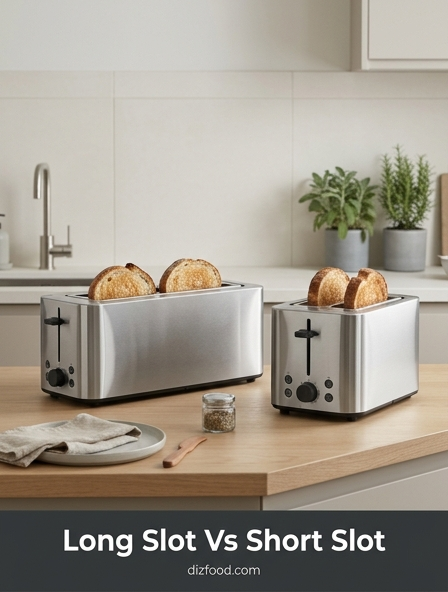
Understanding Long Slot vs Short Slot Toaster Differences
The primary distinction between long slot and short slot toasters lies in the physical dimensions of the heating chambers and how they accommodate various types of bread. A traditional short slot toaster typically features two or four independent openings, each designed to fit a standard square slice of pre-packaged bread. These openings are usually about five to six inches in length. In contrast, a long slot toaster features one or two extended openings that can reach between ten and twelve inches in length. This allows the user to insert a single very long slice of bread or two standard-sized slices side-by-side within the same slot.
Beyond the length, the internal mechanics often differ to account for the varied surface area. Short slot toasters are engineered for concentrated heat around a small, uniform area, which is ideal for the consistent shape of commercial loaves. Long slot models must distribute heat evenly across a wider horizontal plane to ensure that the ends of a long baguette or sourdough slice are toasted at the same rate as the center. While both appliance types utilize nichrome wires to generate infrared heat, the arrangement of these wires is tailored to the specific slot geometry to prevent cool spots or uneven browning.
Key Benefits of Choosing a Long Slot Design
The long slot toaster is frequently praised for its versatility, making it a favorite for culinary enthusiasts who enjoy a variety of bread styles. Unlike its short-slot counterpart, the long slot design removes the physical limitations imposed by standard bread dimensions. This flexibility allows for the toasting of oversized slices that would otherwise require manual trimming or being toasted in two separate cycles, which often leads to uneven results and burnt edges.
- Versatile Sizing: Accommodates long slices of boule, ciabatta, or rye bread that are too wide for standard units.
- Aesthetic Modernity: Often features a slim, streamlined profile that fits well against backsplashes in modern kitchen designs.
- Multi-Slice Efficiency: Can function as a four-slice toaster by placing two standard slices in each of the two long slots, often in a more compact frame than a traditional four-slot square toaster.
- Even Toasting for Artisanal Loaves: The elongated heating elements are designed to cover more surface area horizontally, reducing the need to flip bread mid-cycle.
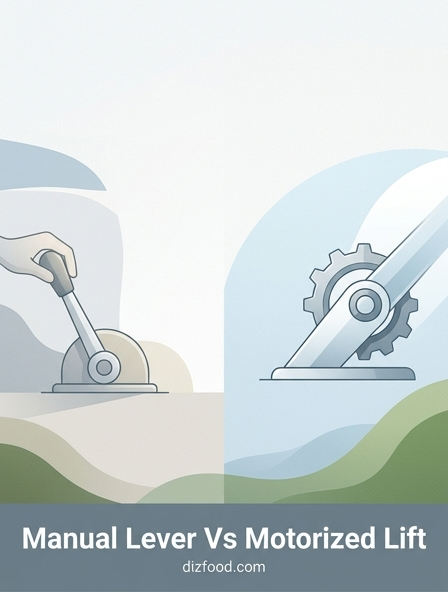
Additionally, the elongated design often incorporates advanced features such as "lift and look" levers or motorized lowering mechanisms, which are more common in premium long slot models. This makes the long slot design not just a tool for toasting, but a more comprehensive solution for varied breakfast and sandwich needs.
Why Short Slot Toasters Suit Small Kitchens
For many households, the short slot toaster remains the gold standard due to its compact nature and specialized efficiency. In kitchens where counter space is at a premium, such as in urban apartments, dormitories, or recreational vehicles, the smaller footprint of a two-slice short slot toaster is indispensable. These units are typically designed with a "squarer" profile, allowing them to tuck into corners or sit neatly inside small appliance garages without protruding significantly forward or spanning across a wide section of the countertop.
The efficiency of a short slot toaster also extends to its speed and energy usage. Because the heating chamber is smaller, it reaches the desired temperature more quickly and retains that heat effectively around a standard slice of bread. This focused heating environment is perfect for those who primarily consume standard sandwich bread, English muffins, or frozen waffles. Because these models are so common, they are available in a vast array of styles, from vintage retro designs to sleek stainless steel, ensuring a match for any decor. Furthermore, their lightweight nature makes them easy to move from a cupboard to the counter, which is ideal for users who prefer to keep their workspace clear when the appliance is not in use.
Bread Type Compatibility and Slot Dimensions
When selecting between these two styles, understanding the specific dimensions of the bread you consume most frequently is essential. Standardized commercial loaves usually measure approximately 4.5 by 4.5 inches, fitting perfectly into the 5.5-inch length of a short slot. However, artisanal breads, which are often baked in large round or oval loaves, produce slices that can exceed 8 or 9 inches in width. Attempting to force these into a short slot often results in crushed crusts or the top third of the bread remaining untoasted.
| Bread Type | Best Fit | Average Slice Width |
|---|---|---|
| Standard White/Wheat | Short Slot | 4 to 5 inches |
| Sourdough Batard | Long Slot | 7 to 10 inches |
| English Muffins | Short Slot | 4 inches |
| Artisanal Boule | Long Slot | 8 to 11 inches |
| Bagels | Either (requires wide slot) | 4.5 inches |
Depth and width are also critical factors. While length distinguishes these two categories, the width of the slot determines if you can toast thick-cut "Texas toast" or halved bagels. Most modern versions of both long and short slot toasters now include "extra-wide" slots, typically measuring 1.5 inches or more, to accommodate these thicker items regardless of the total slot length.
Countertop Space Efficiency and Footprint Comparison
The impact of a toaster on kitchen "real estate" depends largely on the orientation of your workspace. A short slot toaster, particularly a two-slice model, occupies a small, roughly square area of about 7 by 11 inches. This makes it ideal for narrow counters where depth is limited. Because it is short, it does not dominate the horizontal line of the kitchen, leaving room for other prep items like cutting boards or canisters. It is a vertical-focused appliance that minimizes its presence.
On the other hand, long slot toasters are characterized by their "slim-line" design. They are typically much narrower than a four-slice short slot toaster but significantly longer. A standard two-long-slot toaster might measure 15 to 18 inches in length but only 6 inches in width. This footprint is exceptionally efficient for deep countertops where the toaster can be pushed back against the wall, leaving the front area free for use. However, if your kitchen has limited horizontal wall space, the long slot model may prove cumbersome as it blocks a wider section of the backsplash area. Choosing the right one requires measuring the specific area where the toaster will live and deciding if a wide, shallow footprint or a narrow, deep footprint serves your workflow better.
Toasting Performance and Heat Distribution Analysis
Toasting performance is often a matter of engineering precision. Short slot toasters generally have a more uniform heat distribution for standard bread because the heating elements are closer to the food and centered around a smaller area. This proximity allows for a very crisp exterior while maintaining a soft interior. Because the heat doesn't have to travel far, short slot models are often slightly faster at reaching peak temperatures, making them highly effective for back-to-back toasting sessions.
Long slot toasters face a greater challenge in maintaining thermal consistency across the entire 12-inch span. In cheaper models, the heat may fade toward the ends of the slot, resulting in bread that is brown in the middle but pale at the edges. To combat this, high-end long slot toasters utilize more sophisticated sensor arrays and denser heating element patterns. Some even include "zones" that can adjust heat based on whether one or two slices are detected. When evaluating performance, the long slot design is superior for large, irregularly shaped items because it provides a continuous heating surface, whereas a short slot would require the bread to be turned or toasted in segments, which inevitably leads to over-toasted sections where the heat overlaps.
Capacity Considerations for Two vs Four Slices
Capacity is often where consumers feel the most confusion when choosing between these formats. A traditional four-slice toaster is almost always a short-slot configuration arranged in a 2x2 grid. This is a bulky appliance that is best for families where multiple people need breakfast simultaneously. It offers the benefit of independent controls; you can often toast two slices on a light setting while the other two are on a dark setting. This dual-control functionality is a major advantage for households with differing preferences.
A long-slot toaster can also be a "four-slice" machine, but it achieves this by having two long slots side-by-side, each holding two slices end-to-end. This is generally more space-efficient than the 2x2 grid of a short slot toaster. However, it usually features a single set of controls for all four slices, meaning everyone must agree on the level of browning. If you rarely toast four slices at once, a single long slot toaster (which holds two standard slices or one long slice) is a sleek alternative to the traditional two-slice toaster. It provides the capacity of a standard unit with the added benefit of being able to handle the occasional large piece of bread, making it a "hybrid" choice for many users.
Best Slot Size for Artisan and Sourdough Breads
For lovers of sourdough, rye, and hand-carved artisan loaves, the long slot toaster is the only practical choice. These breads are usually baked in elongated shapes or large circular boules. When sliced, the pieces are naturally longer than the standard 5-inch square. In a short slot toaster, these slices must be cut in half, which can ruin the aesthetic and structural integrity of a sandwich or an avocado toast base. Furthermore, the "half-slice" method often leads to small pieces getting lost or stuck at the bottom of the toaster, posing a fire hazard and making cleaning difficult.
The long slot design allows the crust-to-crust integrity of an artisan slice to remain intact. This is particularly important for sourdough, which has a dense, chewy crumb and a thick crust that requires consistent, high-heat exposure to toast properly. Many long slot toasters also feature a "bagel" or "crust" setting that intensifies heat on one side while warming the other, which is perfect for the varied textures of artisanal breads. Because these breads vary in thickness, the self-centering guides found in most long slot models are crucial; they hold the bread exactly in the middle of the slot, ensuring that the irregular surfaces of a hand-sliced loaf don't lean against the heating elements and burn.
Durability and Price Differences Between Models
In terms of pricing, short slot toasters offer the widest range, including the most budget-friendly options on the market. Because the design is standardized and produced in massive quantities, you can find basic short slot models for very low prices. These are often made with plastic housings and simple mechanical timers. While they are affordable, their durability can be limited, as the internal components are often not designed for long-term repair. However, high-end short slot models from premium brands do exist, offering die-cast metal construction and digital precision.
Long slot toasters are generally positioned as premium appliances and carry a higher average price tag. The engineering required to ensure even heating across a longer distance and the often-upscale aesthetic materials like brushed stainless steel contribute to this cost. However, this higher price often correlates with better durability and more robust warranties. Because they are marketed toward "foodies" and design-conscious consumers, manufacturers tend to use higher-grade heating elements and sturdier levers. While you will pay more upfront for a long slot toaster, the investment often pays off in the ability to handle a wider variety of foods and a longer operational lifespan, provided you choose a reputable brand with a focus on build quality.
Final Verdict Selecting the Right Toaster for Your Needs
The decision between a long slot and a short slot toaster ultimately comes down to your bread habits and your kitchen's layout. There is no objective "better" option, only the one that best facilitates your daily routine. If you are a traditionalist who primarily eats standard sandwich bread, bagels, and frozen waffles, the short slot toaster is the most efficient, cost-effective, and space-saving choice. Its focused heat and compact footprint make it a reliable workhorse for the average household.
However, if you find yourself frequently shopping at local bakeries or slicing your own loaves of sourdough and rye, the long slot toaster is a transformative upgrade. It eliminates the frustration of trying to fit oversized slices into small holes and provides a modern, sleek aesthetic that can enhance the look of your kitchen. To make the final choice, consider these three factors:
- Counter Space: Do you have a long, narrow strip available (Long Slot) or a small, deep corner (Short Slot)?
- Bread Variety: Does your bread often require trimming to fit in a standard toaster?
- Household Size: Do you need to toast four slices at once with different settings, or is a single uniform browning level acceptable for everyone?
By answering these questions, you can ensure that your next kitchen appliance purchase is perfectly tailored to your culinary lifestyle.

Comments