
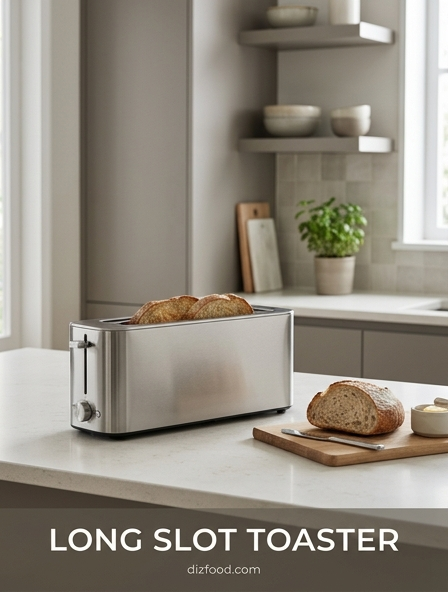
Accommodating Oversized Artisan Slices
Traditional toasters often struggle with the irregular dimensions of artisanal bread, forcing users to trim the edges or toast in multiple cycles. A long slot toaster eliminates this frustration by providing an elongated aperture that easily fits wide slices of sourdough or rye. These oversized slices, often characterized by their horizontal length rather than vertical height, require a specific heating chamber that doesn't compress the delicate crumb or force the bread into a cramped space.
- Fits slices up to 10 inches in length.
- Prevents the "half-toasted" effect seen in standard slots.
- Maintains the structural integrity of hand-carved loaves.
- Eliminates the need for manual trimming of crusts.
The engineering behind these machines prioritizes the expansive nature of rustic breads. By extending the internal carriage, manufacturers ensure that even the most unusually shaped pieces from a local bakery can be lowered fully into the heat zone. This results in a comprehensive toast that covers every inch of the surface, ensuring that the first bite is as satisfying as the last, regardless of the bread's original diameter.
The Versatility of Extra-Long Slots
The primary advantage of the long slot configuration is its inherent versatility. While it excels at handling specialty items, it remains perfectly capable of managing everyday breakfast staples. The elongated design allows for a "two-in-one" functionality where standard sliced bread can be placed side-by-side, or a single long piece can occupy the entire length. This flexibility makes it a superior choice for diverse households with varying preferences.
| Bread Type | Placement Strategy | Benefit |
|---|---|---|
| Standard White | Side-by-Side | Efficient dual toasting |
| Baguette Halves | End-to-End | Uniform heating |
| Ciabatta Slices | Centered | Deep browning |
Beyond traditional loaves, the extra-long slot is ideal for heating flatbreads, pitas, and even long waffles that would otherwise be jammed into a square toaster. The open layout reduces the risk of items getting stuck or torn upon retrieval. For the adventurous home cook, this means less time spent wrestling with the appliance and more time experimenting with different grain varieties and bake styles that standard hardware simply cannot accommodate.
Perfect Toasting for Sourdough and Boules
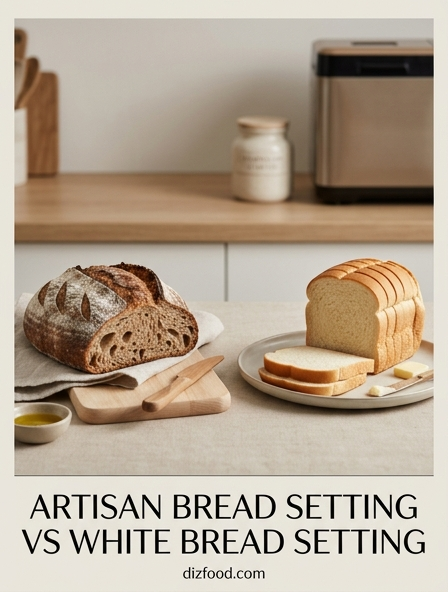
Sourdough and boules present a unique challenge due to their dense texture and rounded, often thick crusts. A long slot toaster provides the necessary room for these hearty breads to breathe during the heating process. Because these loaves are typically sliced from a large, round center, the resulting pieces are far wider than a standard 4x4 inch square slot. To achieve a perfect golden finish, the bread must be submerged entirely.
- Select a wide-cut slice from the center of the boule.
- Place the slice horizontally into the elongated slot.
- Adjust the browning level to account for moisture content.
- Engage the lift lever to check progress without interrupting the cycle.
The consistent heat application across the long slot ensures that the chewy interior of a sourdough slice is warmed through while the exterior achieves a crisp, glass-like snap. This balance is difficult to strike in smaller units where the proximity to heating elements may be too tight, leading to burnt edges and a cold center. The spacious interior of the long slot design allows for optimal airflow, which is essential for developing the complex flavors inherent in fermented doughs.
Uniform Heat Distribution for Irregular Shapes
One of the most significant engineering hurdles in toasting is ensuring that heat reaches every nook and cranny of an irregular surface. Long slot toasters utilize extended heating elements that run the full length of the chassis. This ensures that whether you are toasting a long sliver of a baguette or two small English muffins, the infrared radiation is distributed evenly across the metal wire guards. This prevents the "hot spots" that often plague cheaper, shorter toasters.
Advanced models often incorporate multiple heating wires with specific spacing to compensate for the cooling effect near the ends of the slot. This precision ensures that the middle of a long artisan slice isn't charred while the ends remain pale. The result is a uniform, aesthetic gradient of browning that enhances both the texture and the visual appeal of the bread. Furthermore, the increased internal volume helps regulate the ambient temperature, preventing the bread from steaming itself and becoming soggy. Instead, the dry heat locks in the aroma of the grains while creating a standardized crunch across the entire surface area, regardless of the slice's thickness or curvature.
Space-Saving Design for Modern Kitchens
Despite their ability to handle larger breads, long slot toasters are often more space-efficient than their four-slot counterparts. The slim, elongated profile allows the appliance to sit flush against the backsplash or be tucked into narrow counter spaces where a traditional wide-body toaster would be too bulky. This "sideways" orientation is a hallmark of modern kitchen ergonomics, prioritizing depth over width to preserve valuable prep areas.
- Streamlined silhouette fits between other appliances.
- Reduced width allows for more countertop "real estate."
- Ideal for galley kitchens and urban apartments.
- Minimalist aesthetic complements contemporary decor.
Many homeowners prefer the long slot design because it offers the capacity of a four-slice toaster without the massive footprint. By placing two slices end-to-end, the machine achieves high output while occupying roughly half the frontal width of a square four-slice unit. This clever use of geometry ensures that functionality is never sacrificed for form, providing a powerful kitchen tool that aligns with the trend toward cleaner, less cluttered living environments without losing the ability to serve a full family breakfast.
Handling Thick-Cut Homemade Loaves
Homemade bread rarely comes in perfectly uniform dimensions. When you slice a fresh loaf of honey wheat or brioche at home, the slices are often thicker and more substantial than factory-processed bread. Long slot toasters are specifically designed with wider apertures to accommodate these "Texas-toast" style thicknesses. This prevents the bread from rubbing against the heating elements, which can lead to smoking, burning, and potential fire hazards in smaller appliances.
| Bread Style | Typical Thickness | Slot Compatibility |
|---|---|---|
| Homemade Brioche | 1.25 inches | Excellent |
| Rustic Rye | 1.0 inches | Excellent |
| Standard Store-Bought | 0.5 inches | Dual-placement needed |
The self-centering racks within these toasters are critical for thick-cut loaves. As the lever is pressed, the internal cages grip the bread and hold it exactly in the center of the slot. This ensures that both sides of the thick slice are equal distances from the heat sources. For homemade bread lovers, this means no more squished slices or uneven browning, allowing the natural density and moisture of the crumb to be highlighted through proper caramelization.
Dual-Slice Efficiency in a Single Slot
For those who primarily eat standard sandwich bread but occasionally indulge in artisan loaves, the long slot toaster offers a unique "dual-slice" efficiency. Instead of having separate slots for each piece, two standard slices can be placed side-by-side in the single long opening. This streamlined approach simplifies the mechanical components of the toaster, often leading to more reliable performance and easier cleaning, as there are fewer internal dividers to collect crumbs.
- Insert the first standard slice at the far end of the slot.
- Place the second slice immediately adjacent to it.
- Lower the carriage to begin the synchronized toasting.
- Retrieve both slices simultaneously for a matched pair.
This method is particularly effective for making sandwiches, as it ensures both slices of bread are finished at the exact same moment. Because they share the same heating environment and browning sensors, the consistency between the two pieces is often superior to that of a traditional two-slot toaster where one slot might run slightly hotter than the other. It is a masterclass in functional minimalism, proving that one well-designed slot can do the work of many.
Why Standard Toasters Crush Delicate Crusts
Standard toasters are designed for high-volume, standardized bread products. Their compact slots are often spring-loaded with high tension, which can be detrimental to delicate, airy breads like ciabatta or sprouted grain loaves. When a piece of bread is slightly too wide for a standard slot, the user often has to force it in, leading to structural collapse and a "crushed" texture. This compression ruins the "open crumb" that bakers work so hard to achieve, turning a premium loaf into a dense, unappealing slab.
In contrast, the long slot toaster provides a generous "landing zone." The extra room means there is no need to jam the bread into a tight space. The bread sits freely within the carriage, allowing the heat to circulate around the crust rather than pressing the crust against the metal guards. This preserves the delicate air pockets within the dough, ensuring that the final product remains light and fluffy on the inside while becoming crisp on the outside. By respecting the geometry of the bread, the long slot toaster treats artisanal baking as a craft rather than just a commodity, maintaining the intended mouthfeel of every slice.
Precision Browning Controls for Specialty Grains
Specialty grains like pumpernickel, emmer, and einkorn have different sugar and moisture profiles than standard wheat. These differences affect how quickly the bread browns and how much heat is required to toast the center without burning the surface. Long slot toasters often come equipped with more sophisticated electronic browning controls to handle these nuances. Because these machines are marketed toward bread enthusiasts, the manufacturers prioritize precision over simple timers.
- High-resolution browning dials for incremental adjustments.
- Special settings for gluten-free or high-density grains.
- Sensors that adjust heat based on internal chamber temperature.
- Cancel and "a bit more" functions for custom finishing.
Precision is key when dealing with dark, dense breads that can turn from perfectly toasted to bitter and burnt in a matter of seconds. The long slot format allows for better visibility during the toasting process, and many high-end models include a "lift and look" feature. This allows the user to check the progress of a specialty grain slice without resetting the entire heating cycle, ensuring that the unique flavors of the ancient grains are enhanced by the heat rather than masked by over-toasting.
Elevating the Gourmet Breakfast Experience
The kitchen is often considered the heart of the home, and the breakfast ritual sets the tone for the entire day. Utilizing a long slot toaster elevates this experience from a functional task to a gourmet event. The ability to toast a large, beautiful slice of boule for an avocado toast or a poached egg foundation transforms a simple meal into something found in a high-end bistro. It encourages the use of quality ingredients that simply wouldn't fit in a standard appliance.
Visual presentation is a significant part of the gourmet experience. A single, long, perfectly browned piece of artisan bread looks more appetizing and professional than two small, cramped squares. It provides a larger canvas for toppings and spreads, allowing for creative culinary expressions. By investing in an appliance that accommodates the best breads available, the home cook signals a commitment to quality and texture. Ultimately, the long slot toaster is not just a tool for heating bread; it is an essential component for anyone looking to bring the sophistication of artisanal baking into their daily routine, ensuring every morning starts with a touch of luxury.

Comments