
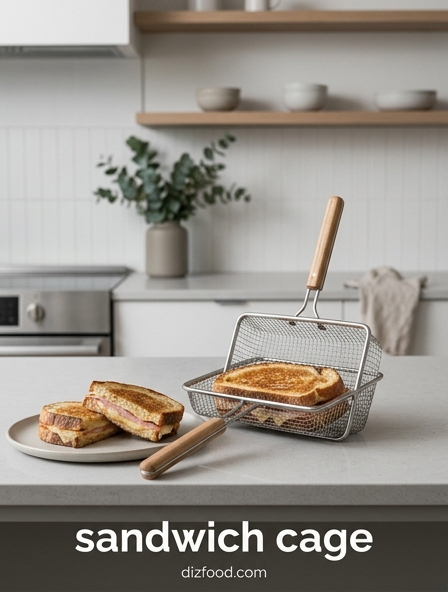
The Sandwich Cage Advantage
The sandwich cage is a transformative tool for any kitchen enthusiast looking to simplify their morning or lunch routine. By enabling a standard slot toaster to function as a sophisticated sandwich maker, it bridges the gap between basic bread toasting and complex pan-frying. The primary advantage lies in its vertical design, which allows for consistent heat application without the needed fats or oils typically required in a skillet. This results in a lighter, healthier sandwich that retains its structural integrity through the cooking process. Furthermore, the sandwich cage eliminates the need for bulky countertop appliances like panini presses, saving valuable real estate in smaller kitchens.
- Reduces the need for excess butter or oil.
- Compatible with most standard wide-slot toasters.
- Saves significant countertop and storage space.
- Provides a faster alternative to stovetop grilled cheese.
- Ensures portable and mess-free sandwich assembly.
This utility makes the cage an essential accessory for students, busy professionals, and families. It streamlines the preparation of hot meals, ensuring that even a novice cook can achieve professional-grade results with minimal effort and equipment cleanup.
Preventing Cheese Meltdown Disasters
One of the greatest fears when using a toaster for anything beyond plain bread is the risk of melting cheese dripping onto the heating elements. A sandwich cage acts as a protective barrier, utilizing a fine mesh or a structured frame to hold the sandwich components securely in place. By keeping the bread compressed, the cage ensures that as the cheese reaches its melting point, it stays trapped between the slices rather than escaping into the depths of the appliance. This prevents smoke, unpleasant odors, and potential fire hazards within the kitchen environment.
- Select a cheese with a medium melting point like Cheddar or Gruyère.
- Ensure the bread slices are slightly larger than the cheese portion.
- Firmly latch the cage handles to compress the edges of the sandwich.
- Monitor the toasting cycle to prevent over-liquification.
Because the cage maintains a vertical orientation, gravity works with the compression to keep the filling centered. This mechanical solution to a common culinary problem ensures that the only thing getting hot is your lunch, not your toaster's internal wiring or heating coils.
Achieving Even Heat Distribution
Unlike a frying pan where heat is applied to one side at a time, the sandwich cage allows the toaster's infrared elements to radiate heat simultaneously onto both sides of the sandwich. This dual-sided approach ensures that the bread toasts at an even rate while the internal ingredients are warmed through steadily. The mesh structure of the cage is specifically designed to allow maximum airflow and heat penetration. This prevents the common issue of a "cold center" often found in thick, pan-fried sandwiches.
| Feature | Cage Toasting | Pan Frying |
|---|---|---|
| Heat Source | Dual-sided Infrared | Single-sided Conductive |
| Consistency | High Uniformity | Variable (Requires Flipping) |
| Internal Temp | Rapid Equilibrium | Slower Penetration |
The result is a harmoniously heated meal where the cheese is fully melted at the exact moment the exterior reaches a golden brown. This level of precision is difficult to replicate on a stovetop without constant monitoring and precise temperature control, making the cage a superior choice for consistent quality.
Maximizing Toaster Space Efficiency
For those living in apartments or dormitories, kitchen space is often at a premium. The sandwich cage is the ultimate solution for space efficiency, as it utilizes the existing footprint of a standard toaster. Instead of purchasing a dedicated sandwich press, which can be cumbersome to store, the cage is a slim, lightweight accessory that can be tucked into a utensil drawer when not in use. This efficiency extends to the cooking process itself, as many modern toasters feature multiple slots, allowing for the simultaneous preparation of several sandwiches.
- Vertical storage allows for easy organization in slim cabinets.
- Eliminates the need for specialized electrical outlets.
- Can be used in any standard wide-slot toaster model.
- Simplifies the workflow by keeping the cooking area compact.
By leveraging the vertical space of the toaster, the cage maximizes output without increasing the clutter on the countertop. It is a masterclass in minimalist kitchen design, providing high functionality without the burden of heavy, single-use machinery. This makes it a favorite for those who value both culinary variety and an organized, clean kitchen environment.
The Secret to Crisp Exterior Textures
The primary appeal of a toasted sandwich is the contrast between a soft interior and a crisp, golden exterior. The sandwich cage excels here because it allows moisture to escape more freely than a closed press or a covered pan. As the toaster heats the bread, the steam is released through the mesh, preventing the bread from becoming soggy. This evaporation is crucial for the Maillard reaction, which creates the flavor and texture of perfectly browned toast. Without the trapping of steam, the bread achieves a superior crunch that is even across the entire surface.
To maximize this crispness, users should consider the type of bread used and the thickness of the slices. Thinner slices will crisp quickly, while artisan sourdough may require a longer cycle to achieve the desired rigidity. The cage keeps the bread flat, preventing the edges from curling upward and ensuring that every square inch of the crust receives equal exposure to the heat. This results in a professional-grade texture that provides a satisfying snap with every single bite, elevating a simple snack into a gourmet experience.
Loading Your Melts Without the Mess
Properly loading a sandwich cage is a skill that ensures a mess-free experience and a perfect result. The process begins with the structural integrity of the sandwich itself. Layering should be done carefully, placing denser ingredients like meats or hearty vegetables in the center, with cheese acting as the "glue" between the fillings and the bread. Once the sandwich is assembled on a clean surface, the cage is opened and the sandwich is slid into the frame. The goal is to ensure the bread is perfectly aligned with the cage boundaries before locking the mechanism.
- Place the base bread slice on a flat surface.
- Apply spreads sparingly to avoid leakage through the mesh.
- Add fillings, keeping a small margin near the crust.
- Top with the second slice and gently compress by hand.
- Slide the assembly into the open cage and secure the latch.
By following these steps, you minimize the risk of ingredients shifting during the transition from the counter to the toaster. A well-loaded cage ensures that even the most loaded melts remain intact, providing a clean cooking process and an aesthetically pleasing final product every time.
Comparing Cages to Conventional Toaster Ovens
While toaster ovens are versatile, they often fall short when it comes to the specific task of sandwich toasting. The proximity of the heating elements in a slot toaster, combined with the sandwich cage, provides a much more intense and direct heat than the ambient air of a toaster oven. This leads to faster cook times and a more pronounced exterior crunch. Toaster ovens also require the sandwich to be placed on a rack or tray, which often results in one side being toasted more than the other unless the sandwich is flipped manually midway through.
| Metric | Sandwich Cage | Toaster Oven |
|---|---|---|
| Preheat Time | Zero | 3-5 Minutes |
| Cooking Speed | Very Fast | Moderate |
| Texture | Uniform Crisp | Varied Crisp |
| Cleanup | Minimal | Moderate (Trays) |
The sandwich cage provides a more focused energy application, making it the more efficient choice for a quick meal. For users who prioritize speed and texture consistency, the combination of a slot toaster and a cage is nearly always the superior option compared to the slower, more diffuse heat of an oven.
Ideal Ingredients for Cage Toasting
Success with a sandwich cage often depends on the selection of ingredients. Because the space within the cage is limited by the width of the toaster slot, choosing the right components is vital. Sliced sourdough, rye, or standard Pullman loaves work best as they provide a sturdy foundation. For fillings, thin slices of deli meat, pre-cooked bacon, or roasted peppers are excellent choices. Cheese is a mandatory inclusion for many, but it should be sliced rather than shredded to ensure it stays within the bread's boundaries during the melting phase.
- Firm breads: Sourdough, Ciabatta, or thick-cut white.
- Cheeses: Provolone, Swiss, Muenster, or Monterey Jack.
- Proteins: Thin-sliced ham, turkey, or prosciutto.
- Vegetables: Spinach, sun-dried tomatoes, or thinly sliced pickles.
Avoid overly watery ingredients like fresh tomato slices or excessive condiments, as these can cause the bread to become soggy or leak into the toaster. By selecting dry, high-quality ingredients, you ensure that the sandwich cage can do its job effectively, resulting in a hot, crispy, and delicious meal that is easy to handle and consume.
Safe Handling and Heat Protection
Safety is paramount when dealing with any kitchen tool that reaches high temperatures. Sandwich cages are designed with long, insulated handles that extend out of the toaster slots, allowing the user to remove the sandwich without coming into contact with the hot metal or the internal elements. However, the metal mesh of the cage itself becomes extremely hot during the toasting cycle. It is essential to handle the cage only by the designated cool-touch grips and to have a heat-resistant surface or plate ready for when the sandwich is removed.
- Always use the insulated handles for extraction.
- Keep fingers away from the metal mesh immediately after use.
- Wait for the cage to cool before attempting to clean it.
- Ensure the toaster is off before inserting or removing the cage.
By following these basic safety protocols, you can enjoy the benefits of the sandwich cage without risk of burns. It is also important to remind younger users or children about the heat retention of the metal frame. Proper education on safe handling ensures that the kitchen remains a safe environment for everyone while enjoying the convenience of toasted meals.
Maintaining Your Sandwich Cage Longevity
To ensure that your sandwich cage provides years of reliable service, proper maintenance is required. Most cages are constructed from stainless steel or chrome-plated wire, making them durable but susceptible to residue buildup if not cleaned regularly. After each use, it is best to allow the cage to cool completely before wiping it down. If cheese or other ingredients have adhered to the mesh, a brief soak in warm, soapy water will loosen the debris, allowing it to be easily brushed away with a non-abrasive sponge.
- Rinse the cage after each use to remove crumbs.
- Soak in soapy water for stubborn, melted-on cheese.
- Avoid using steel wool or harsh chemicals that can damage the finish.
- Ensure the cage is completely dry before storing it.
- Check the latch mechanism periodically for smooth operation.
Many sandwich cages are labeled as dishwasher safe, which further simplifies the maintenance process. Regular cleaning not only extends the life of the accessory but also ensures that no old food particles affect the flavor of your next sandwich. Proper care preserves the structural integrity and aesthetic appeal of the tool for the long term.



Comments