
Achieving that golden-brown crunch on thick sourdough or chewy bagels is an art that relies heavily on consistent heat distribution. Unlike standard white bread, artisanal loaves have varying densities and moisture levels, requiring precise heating elements to prevent burnt edges while avoiding soggy centers. A well-engineered toaster ensures radiant heat reaches every nook and cranny of the bread's surface, caramelizing the sugars evenly for that satisfying snap. Whether you prefer a soft, warm bagel or a deeply charred crust, the right appliance must balance power with internal space. Finding the perfect fit for your kitchen often comes down to choosing between a long slot vs short slot toaster to accommodate your favorite bakery finds.
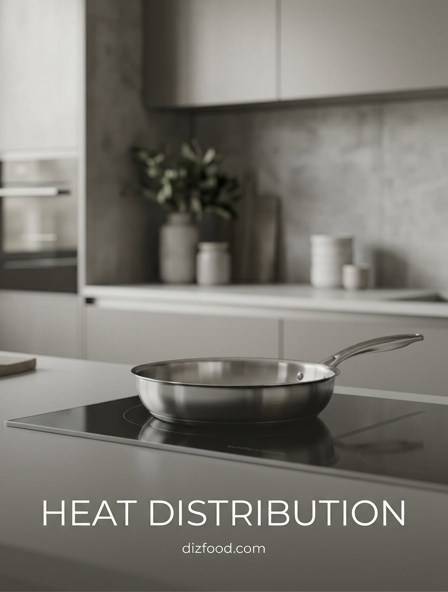
The Science of Radiant Heat in Modern Toasters
Modern toasters primarily utilize infrared radiation to transfer energy from heating elements to the surface of the bread. This process involves nichrome wires, which glow red-hot as electricity passes through them, emitting electromagnetic waves that directly excite the molecules on the bread's exterior. Unlike convection, which relies on the movement of air, radiant heat acts instantly and is highly sensitive to the distance between the source and the target. This proximity determines the intensity of the heat flux, making the internal geometry of the toaster critical for performance.
- Wavelength Absorption: The organic compounds in bread efficiently absorb infrared energy at specific frequencies.
- Inverse Square Law: Small changes in the distance between the slice and the wire result in significant variations in heat intensity.
- Reflective Cavities: Polished internal surfaces help redirect stray radiation back toward the bread.
Effective radiant heating ensures that the surface reaches the required temperature for browning without relying on the slower process of heating the air trapped inside the appliance. This direct energy transfer is the foundation of rapid toasting cycles found in high-end kitchen electronics.
Sourdough Density and Thermal Absorption
Sourdough presents unique challenges in heat distribution due to its complex alveolar structure and varying levels of hydration. The density of the crumb dictates its thermal mass; a dense, heavy sourdough requires more energy to increase its internal temperature compared to a lighter, aerated commercial white loaf. Because water has a high specific heat capacity, the moisture content within the sourdough acts as a thermal buffer, slowing down the rate at which the center of the slice heats up.
| Bread Characteristic | Effect on Heat Absorption |
|---|---|
| High Hydration | Requires more energy to evaporate surface moisture. |
| Large Alveoli | Air pockets act as insulators, slowing internal conduction. |
| Lactic Acid Profile | Influences the pH, which affects the rate of browning. |
When toasting sourdough, the thermal absorption is non-linear. The energy first works to drive off surface moisture before the temperature can rise sufficiently to trigger chemical browning. Consequently, a dense sourdough slice often requires a longer exposure time or a higher power setting to achieve a crisp exterior while maintaining a chewy, warm interior crumb.
Maillard Reaction Essentials for Artisanal Breads
The Maillard reaction is the chemical cornerstone of bread toasting, involving a complex interaction between reducing sugars and amino acids. This reaction typically begins to accelerate at temperatures between 140°C and 165°C (285°F to 330°F). For artisanal breads, which often contain more complex proteins and natural sugars from long fermentation, the reaction produces hundreds of different flavor compounds and deep brown pigments known as melanoidins.
- Dehydration: Surface water must evaporate before the temperature can rise above 100°C.
- Condensation: Carbonyl groups of sugars react with amino groups.
- Polymerization: Large molecules form, creating the characteristic brown crust.
Managing the heat distribution is vital because if the temperature exceeds 200°C (390°F), pyrolysis begins, leading to carbonization and a bitter, burnt taste. Artisanal loaves, with their irregular surfaces, require a balanced thermal environment where the peaks and valleys of the bread receive consistent energy to ensure the Maillard reaction occurs uniformly across the entire face of the slice rather than just on the highest points.
Managing Moisture Retention in Sliced Sourdough
Toasting is essentially a controlled dehydration process, yet the goal for high-quality sourdough is to retain internal moisture while achieving a crisp crust. If heat is applied too slowly, the entire slice reaches a uniform temperature, causing moisture to migrate from the center to the surface and evaporate, resulting in a dry, crouton-like texture. Conversely, intense radiant heat creates a steep temperature gradient, flash-drying the surface to create a moisture barrier.
This barrier, often referred to as the "skin," traps the remaining steam inside the crumb. The science of heat distribution in this context focuses on the "Leidenfrost-like" effect where the rapid evaporation at the surface creates a pressurized environment that keeps the interior supple. Achieving this balance requires precise control over the heating duration. The use of variable-width slots in modern toasters also plays a role, as they ensure that the air gap around the sourdough is minimized, reducing convective cooling and focusing the energy on the surface for a faster, more efficient sear that preserves the bread's structural integrity.
Surface Area Dynamics of Bagels versus Loaves
Bagels possess a significantly different surface-area-to-volume ratio compared to standard bread slices, which fundamentally alters their heat distribution requirements. The dense, boiled exterior of a bagel is more resistant to heat penetration than the porous interior. Furthermore, the hole in the center creates an additional boundary layer where heat can circulate, though it also limits the total mass available for thermal storage. When toasting, the goal is often to brown the "cut" side while merely warming the "crust" side.
| Feature | Bagel Geometry | Standard Loaf |
|---|---|---|
| Surface Curvature | High (convex/concave) | Low (flat) |
| Internal Density | Extremely high | Moderate to low |
| Heat Path | Radial and linear | Primarily linear |
Because of the bagel's thickness and curvature, radiant heat often hits the center of the bagel more intensely than the edges. This necessitates heating elements that can adjust their output or specialized "bagel modes" that deactivate the outer elements. This ensures that the dense crumb is heated through without scorching the exterior skin, which is already darkened from the pre-baking boiling process.
Convection Techniques for Even Bagel Browning
While radiant heat is the standard for toasting, convection plays a vital role in ensuring evenness, particularly for irregular shapes like bagels. Forced convection involves using a fan to move heated air around the food, breaking down the stagnant boundary layer of cool air that naturally clings to the bagel's surface. This increases the heat transfer coefficient, allowing energy to reach the recessed areas and the central hole more effectively than radiation alone.
- Boundary Layer Reduction: Air movement strips away moisture-laden air, accelerating the drying process.
- Turbulent Flow: Swirling air ensures that the rounded edges of the bagel receive the same thermal energy as the flat cut surface.
- Temperature Uniformity: Convection minimizes "cold spots" inside the toaster cavity.
In high-end kitchen appliances, combining radiant elements with a convection fan creates a hybrid environment. This is particularly beneficial for bagels, as it prevents the flat cut surface from burning before the thick, dense body of the bagel has reached an appetizing serving temperature. The result is a more consistent golden-brown finish across the entire topography of the bagel.
Temperature Gradient Control for Thick Slices
Thick-cut artisanal bread, often referred to as "Texas toast" or "hand-cut sourdough," requires a sophisticated approach to temperature gradient control. The law of heat conduction states that the rate of heat transfer through a material is proportional to the negative gradient of the temperature. In a thick slice, the distance from the surface to the center is greater, meaning the core remains cold long after the surface has reached Maillard temperatures. To avoid a burnt exterior and a cold interior, the heat flux must be managed carefully.
This is often achieved by using a pulsed heating method or a lower power density over a longer period. By allowing intervals for the heat to "soak" into the bread, the temperature gradient is flattened. This ensures that the thermal energy has sufficient time to conduct through the starch matrix without the surface temperature exceeding the point of carbonization. Proper heat distribution in this scenario relies on the balance between the intense radiant energy at the surface and the slower, conductive transfer toward the crumb's center. Modern toasters with "thick slice" settings automatically adjust these variables to optimize the result.
Heat Conductance Between Bread Crust and Crumb
The interface between the bread's crust and its internal crumb is a critical junction for heat conductance. The crust, being drier and more compact, has different thermal properties than the moist, porous crumb. Once the crust is heated, it acts as a thermal conductor to the interior, but also as an insulator that prevents rapid heat loss. This dual role is essential for achieving the perfect toast. The moisture within the crumb migrates outward as it turns to steam, a process that requires significant latent heat.
- Phase Change: Energy is consumed as water turns to steam at 100°C.
- Thermal Conductivity: The solid starch walls conduct heat faster than the air in the pores.
- Vapor Pressure: Internal steam helps cook the crumb from the inside out.
Understanding this conductance is key to preventing "toughness." If the heat distribution is uneven, the crust can become overly hard before the crumb is even warm. Effective toasting cycles take advantage of the crumb's internal moisture to conduct heat, ensuring the bread remains soft and chewy beneath its crisp outer layer.
Optimizing Heating Element Placement for Uniformity
The physical arrangement of heating elements within a toaster is a masterclass in geometric heat distribution. To ensure a uniform "golden crunch," the elements must be positioned to provide an even "view factor" to all parts of the bread slice. If the wires are too far apart, the bread will exhibit a "zebra stripe" pattern of toasted and untoasted sections. Conversely, if elements are too concentrated in the center, the edges of the bread remain underdone.
- Parabolic Reflectors: Use of curved metal to focus infrared waves toward the bread.
- Varying Wire Density: Placing more nichrome wire at the bottom to compensate for rising heat.
- End-Zone Compensation: Extra heating loops at the edges to combat heat loss through the toaster's frame.
Engineers use thermal imaging and computational fluid dynamics to map these heat patterns. By optimizing the placement, they ensure that the radiant energy is distributed evenly across the entire surface area. This is especially important for oversized artisanal slices that may sit close to the edges of the toaster's heating chamber, where thermal leakage is most likely to occur.
Thermal Consistency for the Perfect Golden Crunch
Achieving the perfect golden crunch depends heavily on thermal consistency across multiple toasting cycles. One of the most common issues in kitchen heat distribution is "heat creep," where the toaster's internal components retain residual energy from previous uses. This causes the second or third batch of toast to brown much faster than the first, often leading to burnt edges if the timing is not adjusted. High-quality appliances use sensors to monitor the ambient temperature of the cavity and adjust the cycle duration accordingly.
Thermal consistency also refers to the stability of the power supply. Small fluctuations in voltage can affect the temperature of the nichrome wires, leading to inconsistent results. A "perfect" crunch is the result of reaching a specific level of surface carbonization and dehydration without compromising the bread's structural integrity. By maintaining a stable thermal environment, the toaster ensures that the Maillard reaction proceeds at a predictable rate. This precision allows for the repeatable production of the ideal texture: a thin, brittle, golden-brown crust that shatters upon biting, revealing a warm and aerated interior crumb.



Comments