
The Science of Surface Caramelization
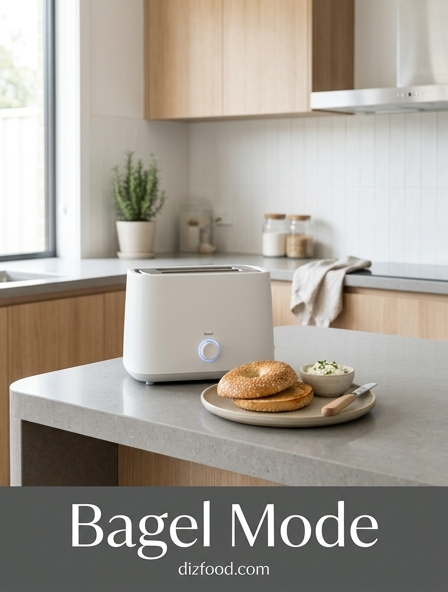
In the specialized environment of a bagel mode setting, surface caramelization is the primary objective for the cut face of the bread. This process relies on the Maillard reaction, a chemical interaction between amino acids and reducing sugars that occurs rapidly under focused heat. Unlike standard toasting, bagel mode concentrates thermal energy specifically on the internal crumb, where the sugar concentration is highest due to the boiling process used in traditional bagel making. As the temperature rises above 310 degrees Fahrenheit, the surface undergoes a complex transformation, creating hundreds of different flavor compounds that contribute to the savory, toasted aroma associated with professional bakeries.
- Acceleration of the Maillard reaction on exposed starches.
- Dehydration of the surface layer to create a brittle crust.
- Development of melanoidins which provide the rich brown color.
- Breakdown of complex carbohydrates into simpler, sweeter molecules.
The intensity of the heat must be carefully regulated to ensure that the caramelization remains at the golden-brown stage. If the radiant energy is too high, the transition from caramelization to carbonization occurs almost instantaneously, leading to a bitter, burnt profile that masks the natural sweetness of the malted barley often found in high-quality doughs.
Achieving the Signature Deli Crunch
The hallmark of a perfectly toasted bagel is the structural contrast between the brittle, snapping surface and the chewy interior. This "deli crunch" is achieved by applying high-wattage heat to the sliced side while keeping the rounded exterior relatively insulated. Modern kitchen appliances utilize a specific power distribution model to ensure the cut side reaches the critical dehydration point faster than the outer crust can harden into an unpalatable shell. This creates a multi-layered textural experience that mimics the results of a high-temperature stone oven used in commercial establishments.
| Toasting Phase | Surface Texture | Structural Integrity |
|---|---|---|
| Initial Heating | Soft/Doughy | Pliable |
| Moisture Evaporation | Tacky | Firming |
| Crystallization | Crisp/Brittle | Rigid Support |
By focusing the heating elements on the center of the toaster slots, the device ensures that the dense crumb is transformed into a lattice of toasted peaks and valleys. This provides the necessary resistance when bitten, followed immediately by the soft, aerated pull of the dough, which is the defining characteristic of the authentic New York-style bagel experience.
The Role of High Intensity Radiant Heat
Bagel mode functions by redirecting electrical current to specific heating filaments, typically favoring the inner coils while reducing or completely deactivating the outer ones. This creates a high-intensity radiant heat environment that targets the most absorbent part of the bread. Radiant heat is unique because it does not require air as a medium; instead, electromagnetic waves transfer energy directly to the bagel's surface. This direct transfer allows for a much faster temperature spike on the cut side, which is essential for searing the sugars before the internal moisture can fully escape through the crust.
The intensity of this heat is measured in watts per square inch, and in bagel mode, this ratio is significantly higher than in a standard toast cycle. The increased energy density ensures that the thick, dense crumb of an artisanal bagel is penetrated just enough to provide warmth without drying out the core. This specialized heating logic acknowledges that a bagel is fundamentally different from a slice of sandwich bread, requiring a more aggressive thermal approach to overcome its high density and relative moisture content. Without this localized intensity, the bagel would simply become warm and stale rather than toasted and vibrant.
Balancing Exterior Crispness with Interior Softness
The primary challenge in bagel preparation is maintaining the "pull" of the dough while simultaneously hardening the face. A successful bagel mode uses a specific thermal gradient to manage this balance. The heat must be asymmetrical, acknowledging that the rounded, seed-covered exterior requires much less energy to remain palatable. If the outer skin is overexposed to heat, it becomes tough and leathery, making it difficult to chew. Conversely, an under-toasted interior lacks the structural rigidity needed to support heavy spreads like cream cheese or lox.
- Direct radiant heat targets the open crumb to create a toasted seal.
- Residual ambient heat warms the outer crust to roughly 140 degrees Fahrenheit.
- Conduction moves heat toward the center of the bagel ring to soften the gluten.
- Moisture is retained within the dense center to prevent a "cracker-like" texture.
This careful modulation ensures that the bagel retains its iconic chewiness-a result of the high-protein flour and the boiling process-while the sliced surface provides a sharp, textural counterpoint. Achieving this balance requires the appliance to stop the heating process at the precise moment the surface sugars have crystallized but before the interior moisture has dropped below the critical threshold for softness.
Why Precision Timing Dictates Texture
In the world of high-density breads, the difference between a perfect toast and a ruined meal is often a matter of fifteen to thirty seconds. Precision timing in bagel mode is dictated by the thermal mass of the bread; because bagels are significantly denser than standard loaves, they possess a higher "thermal inertia." This means they take longer to heat up, but once they reach a certain temperature, they retain that heat and continue to cook even after the elements have turned off. Sophisticated kitchen timers account for this carry-over cooking by using sensors to monitor the cavity temperature.
If the timing is off by even a small margin, the delicate balance of the crumb is compromised. Too short a cycle results in a "steamed" texture that lacks any crunch, while too long a cycle results in a "biscotti" effect where the entire bagel becomes brittle. The timing mechanism must also compensate for the initial state of the bagel, whether it is room temperature, refrigerated, or frozen. Modern digital controllers use complex algorithms to adjust the cycle duration based on these variables, ensuring that the final output remains consistent regardless of the starting conditions of the bread being used.
The Impact of Specialized Heating Elements
The physical configuration of heating elements inside a toaster or oven determines the success of the bagel mode. In high-end appliances, these elements are often made of nichrome wire or quartz tubes, arranged to provide a specific directional flow of infrared energy. For bagel mode, the engineering focus shifts toward "zonal heating." This means the appliance can selectively power specific rows of elements. When the bagel button is depressed, the circuitry limits the voltage sent to the peripheral elements, focusing the bulk of the electrical load on the central filaments.
- Quartz elements provide rapid heat-up times for instant searing.
- Nichrome ribbons allow for a more consistent, long-wave infrared glow.
- Reflective shielding directs energy away from the crust toward the crumb.
- Variable wattage control allows for fine-tuning based on the browning setting.
Without these specialized configurations, a toaster would apply heat uniformly to both sides, which is the antithesis of what a bagel requires. The specialized elements ensure that the heat "wraps" around the cut face, reaching into the porous holes of the dough. This creates a multidimensional toast that is far superior to the flat, one-dimensional heating provided by standard, non-specialized kitchen appliances.
Mastering Consistent Golden Brown Results
Consistency is the hallmark of professional-grade kitchen results. To master a golden-brown finish every time, the appliance must manage "heat stacking"-the phenomenon where subsequent rounds of toasting get darker because the unit is already hot. Bagel mode often includes a thermal sensor that detects the ambient temperature of the toaster's housing. If the unit is already warm from a previous cycle, the processor automatically shortens the toasting time to prevent the sugars from over-caramelizing into a dark, bitter char.
Furthermore, consistent results depend on the user's placement of the bagel. The cut sides must face the internal elements to receive the direct radiant energy. When this protocol is followed, the golden-brown color-a visual indicator of flavor development-is achieved uniformly across the surface. This color reflects the perfect stage of the Maillard reaction, where the nuttiness of the wheat is most pronounced. Mastering this requires a combination of high-quality appliance engineering and an understanding of how density and sugar content vary between different types of dough, from traditional plain bagels to enriched egg or cinnamon raisin varieties.
Moisture Control for Professional Results
A significant difference between an amateur and a professional bagel experience is the level of moisture retention. High-quality bagel mode settings are designed to "flash-toast" the surface, which effectively creates a moisture barrier. This barrier traps the steam inside the dough, which is essential for maintaining the elastic, chewy texture that bagel lovers crave. If the heat is applied too slowly, the moisture evaporates through the pores, leaving the bagel dry, crumbly, and difficult to swallow. The goal is to reach a high temperature quickly enough to sear the surface before the internal water molecules can transition to a gaseous state and escape.
| Moisture State | Impact on Flavor | Impact on Mouthfeel |
|---|---|---|
| High Retention | Full, yeasty notes | Elastic and chewy |
| Moderate Loss | Subdued aromatics | Tough and firm |
| Excessive Drying | Bland/Dusty | Brittle and dry |
The table above illustrates how moisture levels dictate the sensory experience. Specialized bagel settings prioritize this retention by utilizing high-heat, short-duration cycles. This approach mimics the "steam-injection" ovens used by commercial bakers, which flash-heat the exterior to lock in the internal hydration of the dough.
The Secret to Even Heat Distribution
Even heat distribution is often the "secret sauce" that separates high-end toasters from budget models. In bagel mode, this is particularly difficult because bagels are rarely perfectly flat. The irregular surface of a hand-rolled bagel can lead to hot spots and cold spots. To combat this, advanced heating systems use parabolic reflectors behind the elements. These reflectors are shaped to bounce infrared waves in a wide, diffuse pattern rather than a narrow beam, ensuring that even the recessed areas of the bagel receive enough energy to brown.
Additionally, the distance between the heating element and the bread surface is critical. If the bagel is too close, it will burn in strips corresponding to the wire layout. If it is too far, it will dry out before it browns. Precision-engineered bagel slots are designed to center the bagel perfectly, maintaining an optimal distance for radiant transfer. This uniformity ensures that every bite has the same ratio of crunch to chew, preventing the common frustration of a bagel that is burnt on the edges but cold and soft in the middle. The science of geometry is just as important as the science of heat when it comes to perfect distribution.
Optimizing Settings for Dense Artisanal Breads
Artisanal bagels, often characterized by their larger size and higher density, require specific adjustments to the standard bagel mode. These breads often have a higher protein content and a more robust gluten structure, which means they can withstand-and actually require-longer exposure to heat to achieve the proper internal temperature. When optimizing settings for these dense breads, users should look for appliances with variable browning levels that allow for "low and slow" interior warming followed by a "high heat" finish. This two-stage approach ensures the core is hot without scorching the specialty toppings often found on artisanal varieties.
- Identify the density; heavier bagels require a higher browning setting.
- Check for toppings; seeds and onions burn faster than plain dough.
- Use the "frozen" modifier if the bagel has been stored in sub-zero temperatures.
- Allow a brief resting period after the cycle to let the internal heat stabilize.
For breads like sourdough or pumpernickel bagels, the sugar content may be lower, requiring a slightly longer cycle to reach the desired golden hue. Conversely, "everything" bagels require careful monitoring, as the dried garlic and onion flakes can quickly turn from savory to acrid if exposed to the highest heat settings for too long. Understanding these nuances allows the user to fully leverage the power of the bagel mode for a gourmet result.

Comments