
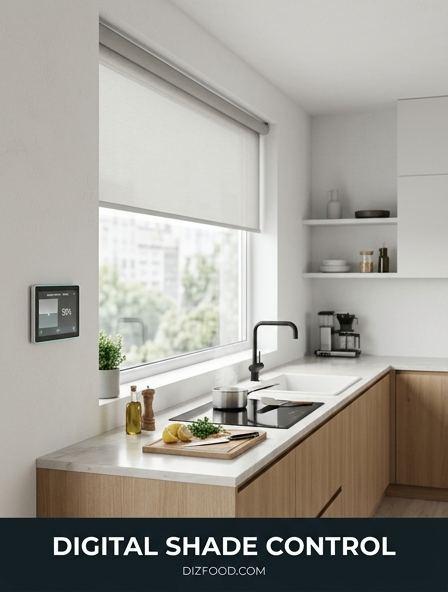
Say goodbye to the guesswork of breakfast prep and enjoy the luxury of a perfectly browned slice every single morning. By leveraging advanced microprocessor precision, modern toasters can now deliver consistent results that adapt to the internal temperature of the unit, ensuring your bread is never overdone or under-toasted. This smart technology monitors every cycle to provide uniform heat distribution, giving you that satisfying crunch whether you're toasting artisan sourdough or a thick bagel. To find the right balance of convenience and accuracy for your kitchen, it is helpful to compare the differences between an analog dial vs digital shade control.
The Science of Microprocessor Toasting
Modern kitchen appliances have transitioned from simple mechanical timers to sophisticated computational devices. At the heart of this evolution is the microprocessor, which manages the intricate Maillard reaction required for the perfect slice of toast. Unlike traditional bi-metallic strips that rely on physical heat expansion to trip a circuit, a microprocessor uses digital logic to monitor the electrical resistance and environmental variables within the toasting chamber. This ensures that the application of heat is not merely a countdown of seconds, but a calculated response to the specific conditions of the bread.
The integration of microchips allows the appliance to process data in real-time. By analyzing the current flowing through the heating elements, the system can make micro-adjustments to the power output. This level of scientific oversight prevents the fluctuations that often lead to charred edges or underdone centers. In a digital shade control system, the microprocessor serves as the central nervous system, translating a user's numerical preference into a precise thermal profile that guarantees repeatable results every time the lever is pressed.
Achieving the Perfect Golden Brown
The aesthetic and culinary goal of any toasting process is achieving a uniform golden-brown finish. This specific coloration is the result of controlled caramelization and the Maillard reaction, where amino acids and reducing sugars react under heat. Digital shade control utilizes high-resolution algorithms to ensure that the exterior of the bread reaches the exact temperature required for this chemical transformation without surpassing the threshold into carbonization.
- Sugar Concentration: Higher sugar breads require lower temperatures to avoid burning.
- Surface Porosity: Rougher surfaces increase the surface area, requiring faster heat pulses.
- Initial Temperature: Bread from a freezer requires a dedicated defrost-to-toast logic cycle.
By using digital presets, users can bypass the guesswork inherent in analog dials. The microprocessor calculates the exact energy delivery needed to reach the desired shade, accounting for the type of bread selected. This precision ensures that the "Golden Brown" setting produces the same visual and flavorful results, whether you are toasting a dense slice of sourdough or a light piece of white brioche.
Precision Control for Every Slice
Individualized toasting is a hallmark of high-end digital shade control systems. Because no two slices of bread are identical in terms of moisture content or density, a one-size-fits-all approach to heating is often insufficient. Digital systems utilize localized sensors to detect the proximity of the bread to the heating elements, ensuring that thin slices do not overcook while thicker bagels receive enough deep heat to warm the center.
This precision is managed through pulse-width modulation (PWM), a technique where the microprocessor rapidly cycles the heating elements on and off. This allows for a more "gentle" heat that penetrates the bread's surface without scorching it. Users benefit from a customized experience where the digital interface allows for granular adjustments-often in increments that analog systems simply cannot replicate. Whether it is a delicate pastry or a hearty whole-grain loaf, the microprocessor adapts its power curve to the specific resistance and thermal mass of the slice currently in the carriage, providing a bespoke toasting environment for every kitchen task.
Advanced Sensors and Heat Management
The foundation of digital shade control lies in its array of advanced sensors. Modern toasters are equipped with Negative Temperature Coefficient (NTC) thermistors that provide constant feedback to the control board. These sensors monitor the ambient temperature inside the toaster housing as well as the radiant heat emitted by the nichrome wires. This data is critical because heat builds up over time; a toaster that is already hot from a previous cycle will behave differently than one starting from a cold state.
Effective heat management involves more than just monitoring temperature; it requires active mitigation of thermal "runaway." The microprocessor uses the sensor data to adjust the duration of the cycle dynamically. If the internal sensors detect that the housing is becoming too hot, the digital logic will shorten the toasting time to compensate, ensuring the bread does not burn. This closed-loop feedback system represents a significant leap over open-loop mechanical systems, offering a level of safety and precision that maintains the integrity of the appliance while delivering superior food quality.
Eliminating Uneven Toasting Patterns
One of the most frequent complaints in traditional toasting is the presence of hot spots, where one side of the bread is significantly darker than the other. Digital shade control addresses this by managing independent heating zones. By using a microprocessor to distribute power across multiple elements, the appliance can ensure that infrared radiation is evenly dispersed across the entire surface area of the bread. This eliminates the "tiger-striping" effect often seen in budget appliances.
The digital logic also accounts for the vertical temperature gradient, as heat naturally rises within the chamber. To counteract this, the lower sections of the heating elements may be energized at a higher intensity than the upper sections. This balancing act results in a perfectly uniform shade from top to bottom. Through the use of digital monitoring, the toaster can even compensate for air currents or slight misalignments in the bread carriage, ensuring that every square millimeter of the slice receives the exact amount of thermal energy required for a consistent finish.
The Role of Digital Temperature Logic
Digital temperature logic is the software layer that dictates how an appliance responds to thermal data. In the context of a toaster, this logic is often based on Proportional-Integral-Derivative (PID) controllers. This mathematical formula allows the toaster to predict how much heat is needed to reach a specific "setpoint" and then maintain that heat with minimal fluctuation. Instead of just turning a heater on and off, the logic "looks ahead" to prevent the temperature from overshooting the target.
This logic is particularly important when dealing with various shade settings. The difference between a "Shade 3" and a "Shade 4" might only be a few degrees of surface temperature, but that difference is vital for the user's preference. Digital logic ensures that these distinctions are mathematically enforced. By processing thousands of data points per second, the microprocessor can adjust for voltage drops in the home's electrical supply or changes in room temperature, making the digital shade control system an incredibly stable platform for food preparation.
Smart Technology in Modern Kitchens
As the kitchen becomes increasingly connected, digital shade control has integrated with broader smart home ecosystems. Modern toasters now feature high-resolution LED or LCD touchscreens that provide visual countdowns and precise shade selections. These interfaces are backed by memory chips that can store user profiles, allowing every family member to save their specific toast preference for different bread types. This level of personalization is only possible through digital architecture.
Furthermore, smart technology allows for firmware updates that can refine toasting algorithms over time. Some premium models include connectivity features that allow the appliance to communicate with smartphone apps, providing notifications when the cycle is complete. Beyond simple convenience, this technology enhances safety by incorporating auto-shutoff routines and diagnostic checks that monitor the health of the heating elements. The transition to smart, digital systems has transformed the toaster from a humble utility into a high-performance tool that fits seamlessly into the modern, data-driven kitchen environment.
Consistency Across Multiple Toasting Cycles
The "successive toast syndrome" is a common issue where the second or third batch of toast comes out darker than the first because the toaster is already pre-heated. Digital shade control solves this problem through intelligent thermal compensation. The microprocessor tracks the duration and heat intensity of previous cycles to calculate the "residual heat" currently stored in the chassis and elements. It then automatically subtracts time from the subsequent cycle to ensure the results are identical.
| Cycle Number | Mechanical Timer Result | Digital Control Result |
|---|---|---|
| Cycle 1 (Cold) | Perfectly Golden | Perfectly Golden |
| Cycle 2 (Warm) | Dark/Burnt | Perfectly Golden |
| Cycle 3 (Hot) | Charred | Perfectly Golden |
This table illustrates the superior reliability of digital logic. By adjusting the cycle in real-time, the microprocessor ensures that the user never has to manually "babysit" the toaster or adjust the dial downward after the first use. This consistency is essential for busy breakfast environments where multiple batches are required in quick succession.
Optimizing Texture with Microchip Accuracy
Texture is just as important as color when it comes to the perfect toast. A microprocessor allows for the optimization of the "moisture-to-crunch" ratio. If bread is heated too slowly, it dries out completely, becoming hard and brittle. Conversely, if it is heated too quickly, the outside burns while the inside remains doughy. Digital shade control uses specific heat-up curves to flash-sear the exterior, locking in a small amount of internal moisture while creating a crisp outer crust.
Microchip accuracy allows for specialized modes such as "Bagel" or "Pastry," which alter the heating pattern to suit the specific structural requirements of the item. For example, in bagel mode, the microprocessor can direct 80% of the power to the inner elements to toast the cut side, while only applying 20% power to the outer elements to gently warm the crust. This granular control over the heating elements ensures that the textural integrity of the food is preserved, providing a sensory experience that far exceeds what a standard mechanical toaster can offer.
Why Microprocessor Precision Matters
The shift toward microprocessor-controlled kitchen appliances is driven by the demand for efficiency, safety, and perfection. In a digital shade control system, precision matters because it reduces food waste; users no longer have to throw away burnt slices or re-toast underdone bread. This reliability saves money and time, making the kitchen more productive. Moreover, the accuracy of digital systems extends the lifespan of the appliance by preventing the overheating of internal components, which is a common cause of failure in cheaper models.
Ultimately, microprocessor precision elevates the culinary experience. It provides the user with a sense of mastery over their breakfast, ensuring that the results are exactly as expected every single morning. As we continue to integrate technology into every facet of our lives, the application of digital logic to the simple task of toasting bread serves as a testament to how far kitchen engineering has come. Precision is not just about the technology itself; it is about the peace of mind that comes from knowing your equipment will perform flawlessly, every time.

Comments