
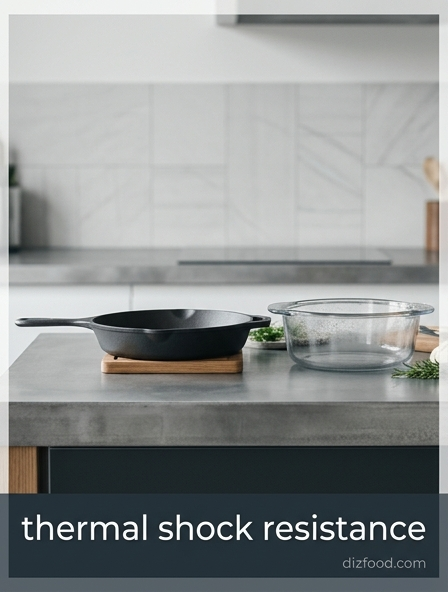
Defining Thermal Shock in Modern Cookware
Thermal shock in the kitchen refers to the rapid expansion or contraction of a material caused by a sudden, significant change in temperature. This physical phenomenon occurs when the surface of a pot, pan, or dish experiences a different temperature than its interior, creating internal stress. In modern cookware, this is most commonly observed when moving a dish directly from a cold refrigerator into a preheated oven, or when placing a hot pan under cold running water. The resulting stress can lead to catastrophic structural failure, such as cracking, warping, or even shattering.
Understanding this concept is vital for maintaining the longevity of kitchen tools. Most high-quality cookware is engineered to handle specific temperature ranges, but the rate of change is often the deciding factor in its survival. Manufacturers utilize various engineering techniques to improve resilience, focusing on materials with low coefficients of thermal expansion. By minimizing the movement at a molecular level during heat transfers, the cookware becomes more reliable for diverse culinary applications, ensuring that the structural integrity remains intact despite the demanding environments of a high-heat kitchen.
Science of Temperature Fluctuations and Durability
The durability of kitchenware is fundamentally tied to the science of thermodynamics and material elasticity. When heat is applied, molecules vibrate more intensely and require more space, causing the material to expand. Conversely, cooling leads to contraction. If these movements happen too quickly or unevenly across the object's surface, the material may reach its "fracture toughness" limit. Durability in this context is defined by a material's ability to redistribute this stress before a crack forms.
Several factors influence how well a kitchen tool survives these fluctuations:
- Coefficient of Thermal Expansion (CTE): Lower CTE values indicate that a material expands less when heated, reducing internal strain.
- Thermal Conductivity: Materials that conduct heat quickly, like copper or aluminum, equalize temperature differences faster, reducing the risk of localized shock.
- Wall Thickness: Thicker materials may take longer to heat through, potentially increasing the temperature gradient between the outside and inside surfaces.
- Material Homogeneity: Uniform materials without internal air bubbles or impurities are less likely to develop stress points.
Material Impact on Steaming Performance
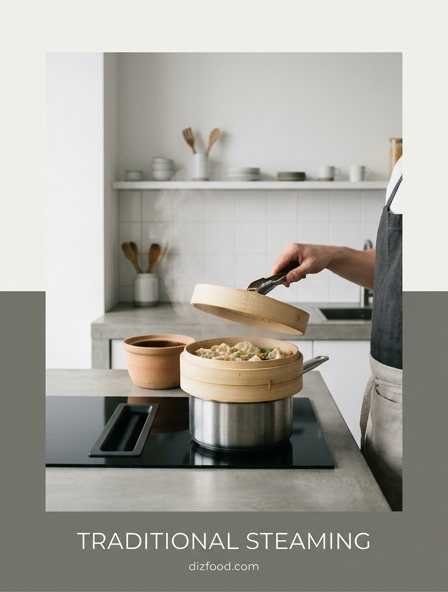
Steaming creates a unique environment where high humidity meets concentrated heat, requiring materials that can withstand localized moisture-induced temperature shifts. In steaming, the transition from room temperature to boiling vapor happens almost instantly. Materials must be able to absorb this latent heat without deforming or losing their finish. For instance, traditional bamboo provides excellent insulation but reacts differently to moisture than modern silicone or stainless steel inserts.
| Material | Steaming Suitability | Thermal Reaction |
|---|---|---|
| Stainless Steel | Excellent | Rapid heating with high stability. |
| Borosilicate Glass | High | Resistant to cracking from hot vapor. |
| Silicone | Good | Very flexible; handles extreme shifts easily. |
| Ceramic | Moderate | Requires gradual warming to avoid stress. |
The choice of material affects not only the speed of cooking but also the safety of the process. In steam-intensive environments, materials with poor shock resistance can micro-crack over time, eventually leading to failure during a standard cooking cycle.
Resistance Levels of High Grade Glassware
High-grade glassware, specifically those formulated with boron trioxide, represents the pinnacle of thermal shock resistance in transparent kitchenware. Borosilicate glass is the industry standard for items meant to transition between temperature extremes. Unlike standard soda-lime glass, which has a relatively high expansion rate, borosilicate glass expands very little under heat. This makes it ideal for laboratory-grade kitchen equipment and premium baking dishes that must survive the "freezer-to-oven" workflow.
The resistance levels are often measured by the temperature differential (delta T) the glass can withstand. While standard glass might shatter with a sudden change of 60°C, high-grade tempered or borosilicate options can often survive shifts exceeding 150°C. This resilience is achieved through controlled cooling during manufacturing, which creates compressive stress on the surface, making it much harder for cracks to initiate. Users should look for "tempered" or "borosilicate" labels to ensure their glassware is rated for high-stress thermal environments, especially when using convection ovens or high-moisture steaming techniques.
Transitioning Between Extreme Kitchen Temperatures
Managing the transition between temperature extremes is a critical skill for preserving the life of expensive cookware. The most dangerous scenario is the immediate application of moisture to a dry, hot surface, or the submersion of a frozen item into boiling liquid. To mitigate these risks, professional kitchens follow specific protocols to ensure materials have time to equilibrate. This prevents the molecular "whiplash" that causes permanent damage.
Follow these steps to safely transition cookware:
- The Tempering Rest: Allow items removed from the freezer to sit at room temperature for at least 15 minutes before applying heat.
- Avoid Direct Contact: Do not place a hot dish directly on a cold marble countertop; use a wooden trivet or a dry cloth as a buffer.
- Incremental Preheating: Start your oven or steamer at a lower temperature and gradually increase it if the cookware is cold.
- Dry Surfaces: Ensure the exterior of the dish is dry before placing it in a high-heat environment to prevent localized steam-induced shock.
The Role of Thermal Stability in Steaming
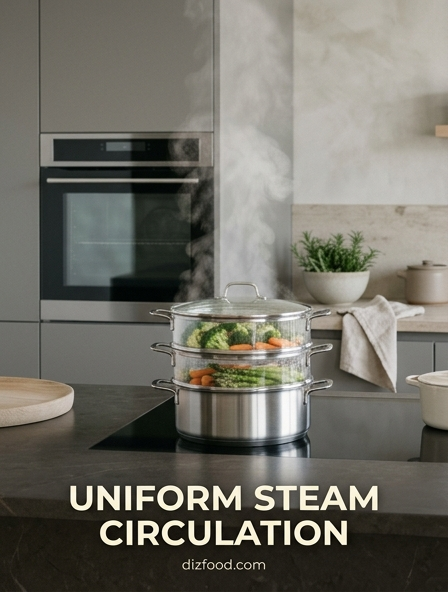
Thermal stability is the ability of a material to maintain its properties and shape during prolonged exposure to heat. In steaming, this is particularly important because the environment is consistently saturated with 100°C vapor. Stability ensures that the steamer basket, lid, or tray does not warp, which would otherwise break the seal and allow steam to escape. When steam escapes, cooking times become inconsistent, and the efficiency of the kitchen drops significantly.
Furthermore, stable materials prevent the leaching of chemicals. Some plastics and low-grade metals may experience structural degradation when exposed to constant moisture and heat, potentially contaminating food. Highly stable materials like 18/10 stainless steel or medical-grade silicone remain inert. This stability also plays a role in heat retention; a thermally stable vessel will maintain a constant internal temperature even when the heat source fluctuates slightly, leading to more even cooking results and better food texture, especially for delicate items like seafood or custards.
Preventing Structural Failure During Rapid Heating
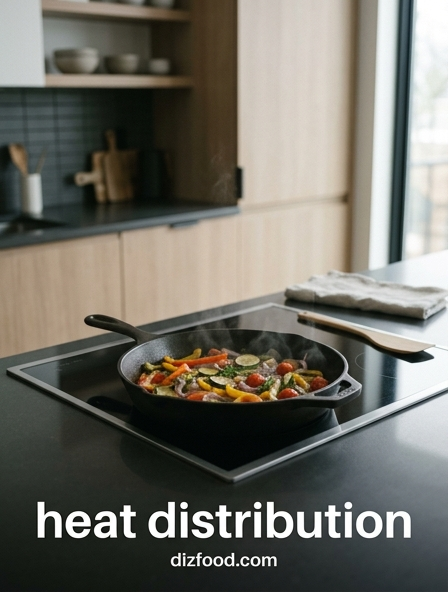
Structural failure during rapid heating often begins with microscopic defects that are invisible to the naked eye. These "stress risers" become the starting point for larger cracks when the material is forced to expand quickly. To prevent this, one must understand the limitations of different heat sources. Induction cooktops, for example, heat magnetic cookware extremely fast, which can cause thick-bottomed pans to bow or lose their bonded layers if the heat is set to "boost" from a cold start.
Prevention focuses on moderation. It is advisable to use a medium heat setting initially to allow the entire vessel to reach a baseline temperature. Using liquids strategically can also help; adding a small amount of oil or water can help distribute heat across the surface more evenly than dry heating. For glass and ceramic, avoiding "spot heating"-such as placing a large rectangular dish over a small circular burner-is essential. By ensuring the heat source is proportional to the size of the cookware, the internal temperature gradients are minimized, significantly reducing the likelihood of a sudden structural break.
Ceramic versus Steel Heat Tolerance Standards
Ceramic and steel represent two opposite ends of the thermal property spectrum. Ceramics are excellent insulators; they retain heat for a long time but are brittle and prone to cracking if the temperature changes too quickly. Steel, particularly stainless and carbon steel, is much more ductile. It can expand and contract slightly without shattering, though it is prone to warping if the gauge of the metal is too thin. Understanding these standards helps in selecting the right tool for specific tasks.
- Ceramic Tolerance: High heat retention, but sensitive to "thermal lag" where the core stays cool while the surface gets hot.
- Steel Tolerance: High thermal conductivity allows for quick equalization, but excessive heat can cause "oil canning" or permanent bowing.
- Impact of Finish: Glazed ceramics can craze (develop tiny surface cracks) if shocked, while steel may discolor or "blue."
In steam-intensive cooking, steel is generally preferred for its durability, whereas ceramic is favored for slow-roasting where temperature changes are gradual and controlled.
Long Term Reliability for Steam Intensive Cooking
For kitchens that rely heavily on steaming, long-term reliability is dependent on the fatigue resistance of the cookware. Repeated cycles of heating and cooling can eventually "tire" a material. This is why commercial steamers are almost exclusively built from high-grade stainless steel. The material's ability to withstand thousands of thermal cycles without losing its shape or developing stress fractures makes it the most cost-effective choice over time. Reliability is also a matter of maintenance; mineral deposits from hard water can create hot spots on the surface of the metal, leading to uneven thermal expansion.
To maintain reliability, users should regularly descale their steaming equipment and inspect for signs of pitting or thinning. In glass components, reliability is checked by looking for "seeds" or bubbles in the glass, which can expand under pressure. Choosing equipment with reinforced rims and multi-clad bases also contributes to longevity, as these features help distribute the mechanical stresses associated with high-temperature steam environments, ensuring the tools remain safe and functional for years of daily use.
Safety Benefits of Shock Resistant Materials
The primary safety benefit of thermal shock resistant materials is the prevention of "shatter events." When non-resistant glass or ceramic fails, it often does so violently, sending sharp shards across a kitchen. This poses an immediate risk to the cook and results in the total loss of the food being prepared. By utilizing borosilicate glass or tempered metals, the risk of explosive failure is virtually eliminated. Even if tempered glass does fail, it is designed to break into small, relatively blunt pieces rather than jagged daggers.
Beyond physical injury, shock-resistant materials provide peace of mind during complex cooking tasks. Knowing that a dish can be deglazed with cold wine without cracking, or that a steamer lid won't shatter when lifted into the cool kitchen air, allows for a more focused and efficient culinary process. This reliability is especially crucial in professional environments where speed is essential and the margin for equipment failure is slim. Investing in shock-resistant tools is ultimately a fundamental step in kitchen safety management, protecting both the staff and the quality of the output.

Comments