
| Feature | Folding Steamer Insert | Rigid Steamer Pot |
|---|---|---|
| Storage Efficiency | Collapsible design; takes up minimal drawer space. | Bulky; requires dedicated cabinet or shelf height. |
| Pot Compatibility | Universal; adjusts to fit various diameters (6"-10"+). | Fixed; requires the specific matching base or lid. |
| Cooking Capacity | Best for single servings or small side dishes. | High volume; supports large batches or whole fish. |
| Durability | Moving hinges/petals may loosen over heavy use. | Solid construction; typically lasts a lifetime. |
| Cleaning | Intricate joints can trap food; hand-washing preferred. | Smooth surfaces; usually 100% dishwasher safe. |
| Best Use Case | Occasional use, small kitchens, and apartment living. | Daily meal prep, large families, and gourmet steaming. |
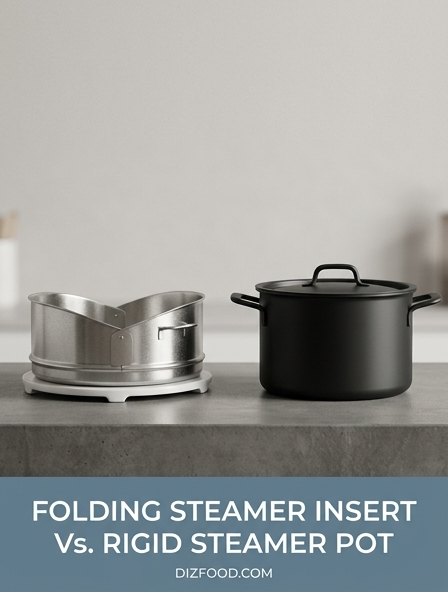
Folding vs Rigid Steamer Comparison
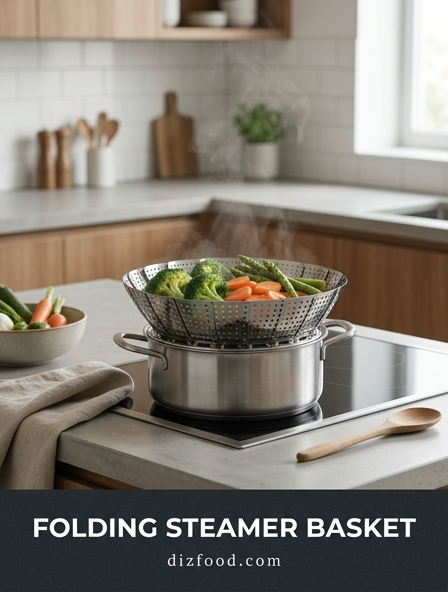
The primary distinction between a folding steamer insert and a rigid steamer pot lies in their structural design and intended flexibility. A folding steamer, often referred to as a "lotus" steamer due to its petal-like expansion, is designed to fit into various pot sizes. It consists of overlapping metal or silicone plates that expand or contract to hug the sides of the cooking vessel. In contrast, a rigid steamer pot is a fixed-diameter vessel, usually part of a tiered set, that sits securely atop a specific matching pot or base.
When comparing these two, the fundamental trade-off is between universal compatibility and specialized stability. The folding insert is a "one size fits most" solution, making it ideal for cooks who use different pots for different meal sizes. However, because it rests at the bottom of the pot, it often limits the amount of water you can use without submerging the food. The rigid steamer pot, being a separate tier, keeps food significantly higher above the boiling water, allowing for longer steaming sessions without the risk of the pot running dry.
| Feature | Folding Steamer Insert | Rigid Steamer Pot |
|---|---|---|
| Adjustability | High (expands/contracts) | None (fixed size) |
| Stability | Moderate (can tip if uneven) | High (locks into base) |
| Water Capacity | Low (limited by leg height) | High (sits above base pot) |
Space Saving Benefits of Folding Inserts
In modern kitchens where cabinet real estate is at a premium, the folding steamer insert offers an unparalleled advantage. Because these inserts are designed to collapse inward, their storage footprint is reduced to a fraction of their functional size. When fully closed, a standard folding steamer is roughly the size of a large grapefruit, allowing it to slide into narrow drawers or tuck into the corner of a shelf that would otherwise be wasted space. This makes it an essential tool for apartment dwellers, tiny home enthusiasts, or anyone looking to declutter their culinary environment.
Beyond its physical dimensions, the space-saving nature of the folding insert extends to its multi-functional utility. Instead of owning three different sizes of dedicated steamer pots, a single adjustable insert can serve the same purpose across your entire cookware collection. This consolidation eliminates the need for bulky, stacked metal tiers that often dominate lower cabinets. Key benefits include:
- Ultra-compact profile when collapsed for drawer storage.
- Lightweight design that does not require heavy lifting or deep cabinet retrieval.
- Elimination of the need for dedicated "steamer only" storage areas.
- Portability for camping or travel where kitchen space is non-existent.
The convenience of simply grabbing a small disc from a drawer and placing it into any saucepan you already have on the stove cannot be overstated for those prioritizing efficiency and minimalism.
Durability of Rigid Steamer Pots
Rigid steamer pots are engineered for longevity and heavy-duty use, often constructed from high-grade stainless steel or thick-walled aluminum. Unlike folding inserts, which rely on dozens of tiny rivets and moving joints, the rigid steamer is a solid, static piece of hardware. This lack of moving parts is its greatest strength; there are no hinges to loosen, no "petals" to become unaligned, and no central posts to break off over years of use. For a high-volume kitchen where steaming occurs daily, the structural integrity of a rigid pot ensures it will remain functional for decades.
The thickness of the material in a rigid pot also contributes to its overall resilience. While folding inserts are necessarily thin to allow for flexibility and overlapping, rigid pots can be built with heavy gauges that resist denting and warping under high heat. This sturdiness is particularly important when dealing with heavy ingredients like large root vegetables or shellfish, which could potentially overwhelm the delicate balance of a collapsible insert. When you invest in a rigid steamer, you are purchasing a piece of cookware that can survive accidental drops and the rigors of commercial-grade cleaning without losing its shape or effectiveness. It is a "buy it once" item that provides consistent performance without the mechanical failures associated with moving kitchen gadgets.
Versatility and Pot Compatibility
The versatility of a folding steamer insert is its most celebrated feature, as it transcends the limitations of standardized cookware sizing. Most inserts feature a telescoping or overlapping leaf design that can accommodate pot diameters ranging from six inches to ten inches or more. This adaptability means you can steam a single egg in a small saucepan or a large batch of broccoli in a wide Dutch oven using the exact same tool. This level of compatibility is particularly useful for cooks who frequently change their batch sizes depending on the number of guests.
However, rigid steamer pots offer a different kind of versatility, specifically in terms of tiered cooking. Many rigid systems are designed to be stackable, allowing the cook to steam multiple types of food simultaneously on separate levels over a single heat source. While they are not compatible with every pot in the cupboard, they excel in specialized tasks. Consider the following compatibility factors:
- Folding Inserts: Work with almost any flat-bottomed pot; require a lid that fits the host pot, not the insert itself.
- Rigid Pots: Require a precise diameter match to the base pot to ensure a steam-tight seal; often sold as dedicated sets.
- Lid Dynamics: Folding inserts can sometimes interfere with lid closure if the pot is too shallow, whereas rigid pots come with dedicated, high-clearance lids.
Ultimately, the folding insert wins on universal fit, while the rigid pot wins on specialized, multi-level integration within its own ecosystem.
Cooking Capacity and Batch Size
When it comes to the volume of food that can be processed at once, rigid steamer pots generally outperform folding inserts. Because a rigid steamer is a full-sized pot with vertical walls, it utilizes the entire circumference and height of the vessel. This allows for deep layers of vegetables, large tamales, or several whole fish to be steamed simultaneously. The stable, flat bottom and high sides prevent food from spilling over the edges, making it the preferred choice for family-sized meals or meal-prep sessions.
Folding inserts, by contrast, have a bowl-shaped profile when expanded. This sloping geometry reduces the effective surface area for laying out food flat. Additionally, because the insert sits inside the pot, the available cooking space is limited by the diameter of the host pot's interior. In many cases, the central handle or post of a folding insert further bisects the cooking area, making it difficult to place larger, singular items. The differences in capacity are best illustrated by comparing their typical usage scenarios:
| Steamer Type | Best For... | Max Batch Size |
|---|---|---|
| Folding Insert | Small side dishes, single servings | 2-3 Liters (approx.) |
| Rigid Steamer Pot | Large families, bulk steaming | 5-10+ Liters |
| Multi-Tier Rigid | Whole meals (proteins + sides) | Extremely High |
Cleaning and Maintenance Comparison
Cleaning a steamer is an often-overlooked aspect of kitchen maintenance that significantly impacts the user experience. Rigid steamer pots are generally much easier to clean because they feature smooth, continuous surfaces. Whether made of stainless steel or ceramic, these pots can be scrubbed vigorously with a sponge or placed in a dishwasher without concern. There are no hidden crevices where food particles can become trapped, ensuring a higher level of hygiene with minimal effort.
Folding steamer inserts present a more significant cleaning challenge. The very design that allows them to collapse-overlapping leaves and small hinges-creates dozens of tiny gaps where fibers from vegetables like broccoli or asparagus can get stuck. Over time, calcium deposits from boiling water can also build up in these joints, making the insert difficult to open and close. To maintain a folding insert, one often has to follow a specific cleaning regimen:
- Rinse immediately after use to prevent food from drying in the hinges.
- Use a soft-bristled brush to reach under the overlapping plates.
- Periodically soak in a vinegar solution to remove mineral buildup from the moving parts.
- Ensure the insert is fully expanded when placed in the dishwasher to expose all surfaces.
While most modern folding inserts are dishwasher safe, the mechanical complexity simply requires more attention than the straightforward design of a rigid pot.
Material Quality and Heat Performance
The materials used in steamer construction dictate how efficiently heat is transferred and how evenly food is cooked. Rigid steamer pots are typically manufactured from heavy-gauge stainless steel, which provides excellent heat retention. Because the steam is contained within a dedicated, sealed environment with a precision-fit lid, the internal temperature remains highly consistent. The thick base of the accompanying pot ensures that water boils steadily, providing a constant flow of steam through the perforated bottom of the rigid tier.
Folding inserts are available in two primary materials: stainless steel and silicone. Stainless steel inserts are durable and offer good heat conduction, but because they are thinner, they don't hold heat as well as a heavy pot. Silicone folding inserts are popular for their non-scratch properties, making them safe for use in non-stick or ceramic-coated pans. However, silicone is an insulator rather than a conductor, which can slightly alter the steaming dynamics. In a folding insert, steam escapes around the edges of the "petals" as well as through the holes, which can sometimes lead to slightly less uniform cooking compared to the pressurized environment of a dedicated rigid pot set. For delicate items like custards or bao buns, the superior heat management of a rigid pot often yields more professional results.
Storage Solutions for Small Kitchens
For those living in urban environments or smaller homes, the choice between these two steamers often comes down to storage logic. A rigid steamer pot is essentially an extra pot that requires its own dedicated space. While some can be "nested" inside larger stockpots, their height and fixed handles often make them awkward to fit into standard-depth drawers. If you have a collection of rigid steamers, you are essentially committing a large portion of a cabinet to a single cooking method.
The folding insert solves this problem by disappearing when not in use. It is the ultimate "hidden" tool. However, storage is not just about size; it's about accessibility. A folding insert is so small it can be stored in a utensil crock or even hung on a hook if it has a center ring. For kitchens with minimal cabinetry, the folding insert allows for a high degree of culinary capability without the physical clutter. Some creative storage strategies for both types include:
- For Folding: Store vertically in a plate rack or flat in a shallow "junk" drawer.
- For Rigid: Use as a colander when not steaming to justify its permanent spot on the counter or shelf.
- For Rigid: Invest in a "universal" rigid lid that fits multiple pots to reduce the total number of pieces.
In the end, if you can only afford to dedicate the space of one dinner plate to your steaming needs, the folding insert is the only logical choice.
Long Term Durability and Value
Evaluating value requires looking past the initial price tag to the expected lifespan of the product. Folding steamer inserts are generally inexpensive, often costing less than twenty dollars. However, they are prone to mechanical wear. The rivets that hold the leaves together can rust or snap, and the legs can become bent over time. In a busy kitchen, a folding insert might need to be replaced every few years, which can add up in the long run. They are high-value in terms of immediate convenience, but lower in terms of generational durability.
A rigid steamer pot represents a higher initial investment, often sold as part of a multi-piece set that can cost significantly more. However, its value lies in its near-indestructibility. A well-made stainless steel rigid steamer is a lifetime purchase. It can be passed down through generations because it has no points of failure. When you calculate the "cost per use" over twenty or thirty years, the rigid pot often emerges as the more economical choice. Furthermore, rigid steamers often hold their value better and provide a more "professional" cooking experience, which can be a value-add for serious home chefs who prioritize the quality of the final dish over the ease of storage.
Choosing the Right Steamer
Selecting the ideal steamer depends heavily on your cooking habits, the size of your household, and your available storage space. There is no single "best" option, only the best option for your specific circumstances. If you are a student, a solo dweller, or someone who only occasionally steams a side of vegetables, the folding insert is likely the most practical choice. Its low cost and tiny footprint make it a low-risk addition to any kitchen. It provides enough functionality for basic tasks without requiring a reorganization of your cabinets.
On the other hand, if you steam food several times a week, cook for a family, or enjoy making complex steamed dishes like dumplings or large tamales, the rigid steamer pot is the superior investment. The ease of cleaning and the massive cooking capacity will save you time and frustration every time you prepare a meal. To help finalize your decision, consider these three questions:
- How many people do I usually cook for? (1-2: Folding; 3+: Rigid).
- Do I have empty cabinet space or empty drawer space? (Cabinet: Rigid; Drawer: Folding).
- Is ease of cleaning more important than ease of storage? (Cleaning: Rigid; Storage: Folding).
By weighing these factors, you can choose a tool that integrates seamlessly into your workflow, ensuring that steaming remains a healthy and enjoyable part of your cooking routine.

Comments