
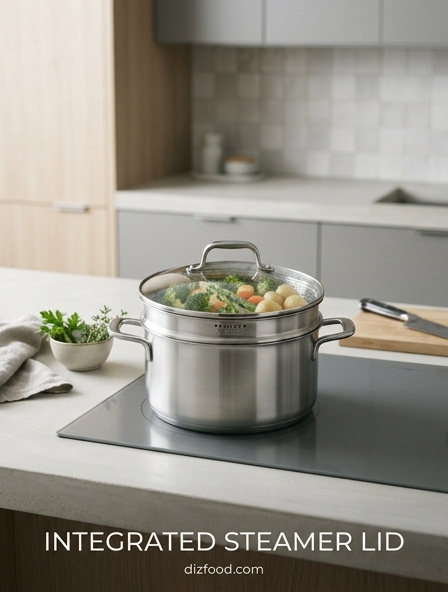
The Science of Airtight Steam Cooking
Airtight steam cooking relies on the principles of thermodynamics to create a highly efficient cooking environment. When an integrated lid forms a perfect seal, it prevents the escape of water vapor, causing a localized increase in atmospheric pressure. This internal environment allows the temperature to stabilize rapidly, ensuring that heat is transferred to the food via convection and conduction more effectively than in open-air systems. Because steam carries significantly more latent heat than dry air, the cooking process is accelerated while maintaining a delicate touch on the cellular structure of the ingredients.
- Phase Change: The conversion of water to steam absorbs energy, which is then released upon contact with cooler food surfaces.
- Vapor Pressure: Increased pressure raises the boiling point slightly, allowing for faster thermal penetration.
- Convection Currents: The sealed chamber creates a continuous cycle of hot air and moisture, eliminating cold spots.
By containing every molecule of moisture, integrated steamer lids ensure that the energy provided by the heat source is utilized entirely for cooking, rather than being lost to the kitchen environment. This scientific approach results in a more controlled and predictable culinary outcome.
Maximizing Flavor with Integrated Lid Technology
The primary advantage of integrated lid technology lies in its ability to trap volatile organic compounds that are responsible for flavor and aroma. In conventional cooking, these essential oils and aromatic molecules evaporate into the air, leaving the food tasting bland or requiring heavy seasoning. A precision-engineered lid ensures these flavors are reflected back into the dish, creating a self-basting environment that intensifies the natural essence of the ingredients.
| Feature | Impact on Flavor |
|---|---|
| Hermetic Seal | Retains 95% of volatile aromatic compounds. |
| Condensation Grooves | Redistributes juices evenly across the food surface. |
| Non-Reactive Materials | Prevents metallic aftertastes from leaching into steam. |
This technology is particularly effective for delicate proteins and aromatics like ginger, lemongrass, and garlic. Instead of losing their potency, these ingredients infuse the entire chamber, allowing the steam to act as a flavor carrier. The result is a profile that is deep, complex, and requires significantly less added salt or fat to achieve a professional-grade taste.
Precision Temperature Control Through Superior Seals
Maintaining a constant temperature is the hallmark of professional cooking, and integrated steamer lids achieve this through superior gasket engineering. Standard lids often suffer from "venting chatter," where steam forces the lid to lift, causing rapid temperature fluctuations. An integrated system utilizes heavy-duty seals or locking mechanisms to maintain a steady thermal state. This precision allows for the following benefits:
- Consistent Denaturation: Proteins cook evenly without toughening due to sudden heat spikes.
- Starch Gelatinization: Grains and root vegetables achieve a uniform softness throughout.
- Thermal Inertia: The sealed environment remains hot even if the heat source is lowered, providing better control.
By eliminating the unpredictable loss of heat through escaping vapor, chefs can rely on exact timings. The seal acts as a thermal barrier, insulating the cooking zone from external kitchen drafts. This level of control is essential for sensitive dishes like custards or terrines, where a variance of even a few degrees can alter the final texture and success of the recipe.
Nutrient Retention and the Benefits of Pressure
Traditional boiling often leads to "leaching," where essential vitamins and minerals dissolve into the water and are subsequently discarded. Integrated steam cooking mitigates this loss by suspending food above the water line in a pressurized environment. This method preserves the water-soluble vitamins, such as Vitamin C and the B-complex group, which are highly susceptible to heat and water degradation. The slight pressure generated by a high-quality integrated lid speeds up the cooking process, further reducing the time nutrients are exposed to heat.
- Mineral Integrity: Potassium and magnesium remain within the food fibers.
- Phytochemical Preservation: Antioxidants in colorful vegetables are protected from oxidation.
- Enzymatic Stability: Quick steaming deactivates enzymes that cause food spoilage without destroying nutrition.
Because the food is cooked in its own juices and the surrounding vapor, the natural salts and sugars are not diluted. This makes the final dish not only healthier but also more naturally satisfying. Using an integrated lid ensures that the "goodness" of the raw ingredients makes it to the plate rather than down the drain.
How Integrated Lids Outperform Standard Cookware
Standard cookware lids are often designed for coverage rather than performance. They frequently lack the weight or the precision-fit rim necessary to manage steam effectively. In contrast, integrated steamer lids are engineered as part of a holistic system. The difference in performance is measurable in both the speed of heat recovery and the uniformity of the moisture distribution. While a standard lid allows steam to escape from the sides, an integrated lid directs condensation back toward the center of the pot.
| Metric | Standard Lid | Integrated Lid |
|---|---|---|
| Steam Retention | 60-70% | 98-100% |
| Heat Loss | High (Venting) | Minimal (Insulated) |
| Moisture Cycle | Irregular | Continuous / Balanced |
Furthermore, integrated systems often feature built-in drainage or specialized venting ports that can be toggled. This allows the cook to transition from high-moisture steaming to a "dryer" finish without ever removing the lid. This versatility is simply not possible with universal or loosely fitting lids, which lack the structural integrity to handle internal vapor pressure consistently over long cooking durations.
Achieving Consistent Texture in Every Dish
Texture is often the deciding factor in the quality of a meal. Integrated steamer lids facilitate a "soft heat" environment that prevents the exterior of the food from overcooking before the interior is reached. This is vital for items with high protein content, such as fish or chicken breasts, which can easily become rubbery if exposed to dry, uneven heat. The saturated atmosphere ensures that every surface of the ingredient is enveloped in moisture simultaneously.
- Vegetables: Achieve a "tender-crisp" state where the cell walls are softened but not collapsed.
- Dumplings: The dough remains hydrated and elastic rather than becoming gummy or dry.
- Seafood: Flaky textures are preserved as the steam gently separates the muscle fibers.
The consistency provided by the integrated seal means that the results from one day to the next remain identical. Whether you are preparing a single portion or a full batch, the lid manages the internal microclimate to ensure that nothing is ever dried out. This reliability is why integrated systems are preferred in high-volume professional kitchens where uniformity is a requirement for every plate served.
Reducing Cooking Time with High Efficiency Sealing
Efficiency in the kitchen is often a matter of managing heat loss. An integrated steamer lid drastically reduces cooking times by creating a highly conductive environment. Because the lid prevents the latent heat of the steam from escaping, the internal temperature rises to the desired level much faster than in an open or poorly sealed vessel. This efficiency can reduce the cooking time of dense vegetables like beets or potatoes by up to 30%.
- Rapid Pre-heating: The chamber reaches the steaming point in seconds rather than minutes.
- Direct Transfer: Steam molecules collide with food at high velocity, transferring energy instantly.
- Residual Cooking: The superior seal allows for "off-heat" cooking, where the food finishes in its own trapped heat.
This reduction in time does not come at the cost of quality; in fact, the shorter exposure to heat often results in better color and flavor. For the modern home cook, this means that complex, healthy meals can be prepared in the same timeframe as processed convenience foods, making the integrated steamer lid an essential tool for time-conscious nutrition.
The Role of Moisture Management in Professional Results
Professional results require more than just heat; they require the precise management of moisture. Integrated lids are often designed with specific curvatures or interior "basting spikes" that control how condensation behaves. Instead of water dripping down the sides of the pan, it is channeled back onto the food. This creates a closed-loop system where the moisture is recycled, preventing the bottom of the pot from boiling dry and scorching the food.
- Hydration Balance: Ensures that starches like rice or quinoa absorb water at a controlled rate.
- Surface Integrity: Prevents the "skin" of the food from toughening due to dehydration.
- Steam Saturation: Maintains a 100% humidity level, which is ideal for delicate pastry steaming.
By managing the "rain" inside the pot, the integrated lid ensures that the seasoning and juices are constantly redistributed. This mimics the professional technique of basting without requiring the chef to open the lid and lose heat. The result is a succulent, evenly seasoned dish that retains its aesthetic appeal and structural integrity from the pot to the plate.
Energy Efficiency in the Modern Steam Kitchen
As energy costs and environmental concerns rise, the efficiency of kitchen appliances becomes paramount. Integrated steamer lids are a sustainable choice because they require significantly lower heat settings to maintain a boil. Once the initial steam is generated, the airtight seal allows the burner to be turned down to a minimum while maintaining a full head of steam. This is a stark contrast to standard pots that require a high flame to compensate for the constant loss of energy through escaping vapor.
| Efficiency Factor | Benefit |
|---|---|
| Heat Retention | Reduces stove-top energy consumption by up to 40%. |
| Ambient Temperature | Keeps the kitchen cooler by containing heat within the vessel. |
| Water Usage | Requires less water as very little is lost to evaporation. |
By maximizing the utility of every joule of energy, integrated systems contribute to a more sustainable cooking practice. They turn the cookware into a mini-insulated oven, ensuring that the heat stays where it is needed-in the food-rather than heating the air in the room. This makes the integrated steamer lid a smart investment for the ecologically conscious chef.
Mastering Advanced Steaming Techniques at Home
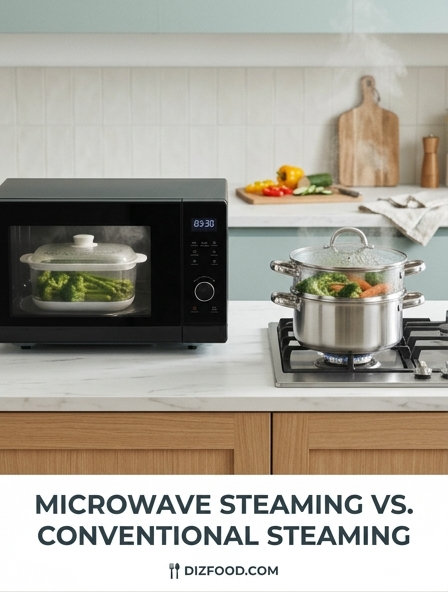
With an integrated steamer lid, home cooks can move beyond simple vegetables and explore advanced techniques such as multi-tier steaming and aromatic infusion. Multi-tier steaming allows for the preparation of an entire meal simultaneously, with flavors layered strategically. For example, fish can be placed on the top tier so its juices lightly season the vegetables below. The precision seal ensures that the steam reaches the highest levels of the stack with the same intensity as the bottom.
- Aromatic Bedding: Steam through a layer of herbs or citrus to infuse the vapor itself.
- Layered Cooking: Place dense items at the bottom and delicate items at the top for perfect timing.
- Steam Infusion: Use liquids other than water, such as broth or wine, to add another layer of flavor.
Mastering these techniques requires understanding the flow of vapor within the sealed system. Because the integrated lid provides such a stable environment, you can experiment with confidence, knowing that the variables of heat and moisture are controlled. This allows for the creation of restaurant-quality dishes, from Cantonese-style whole fish to perfectly bloomed bao buns, all within a standard domestic kitchen.

Comments