
Mastering Temperature Accuracy for Perfect Steam
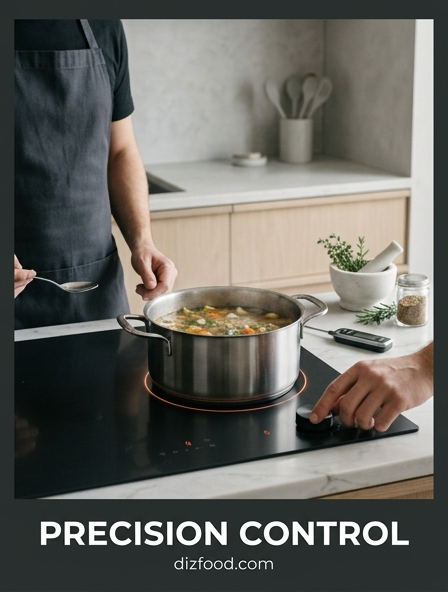
Achieving the perfect steam requires more than just boiling water; it demands rigorous temperature management to ensure that delicate proteins and fibers do not break down prematurely. In modern kitchens, precision control allows for a stable thermal environment where fluctuations are kept to a minimum. This stability is critical when preparing sensitive items like scallops or custards, where a variance of just a few degrees can result in a rubbery texture or structural collapse. By maintaining a constant heat level, the steam remains saturated, providing a gentle medium for heat transfer that penetrates food evenly without the aggressive agitation associated with boiling.
- Prevents cellular breakdown in leafy greens.
- Ensures uniform protein coagulation in seafood.
- Maintains structural integrity of delicate desserts.
- Optimizes energy consumption by avoiding unnecessary overheating.
Furthermore, digital sensors now provide real-time feedback, allowing the heating elements to adjust instantaneously. This feedback loop ensures that once the desired setpoint is reached, the internal atmosphere remains locked, providing a professional-grade reliability that was previously unattainable in domestic settings.
The Evolution of Home Steaming Technology
The journey from traditional bamboo baskets over boiling woks to integrated digital steam ovens marks a significant leap in culinary engineering. Early methods relied heavily on manual intervention and visual cues, which often led to inconsistent results. As technology transitioned into the digital age, the introduction of atmospheric and non-atmospheric steaming systems allowed for greater autonomy in the kitchen. Modern appliances now integrate sophisticated thermal sensors and microprocessor-controlled water delivery systems that manage the vapor density with extreme accuracy.
These advancements have transformed steaming from a supplementary cooking method into a primary technique capable of handling complex multi-stage recipes. The shift toward precision control means that home cooks can now replicate industrial processes, such as sous-vide style steaming or high-moisture roasting. This evolution is characterized by a move away from mechanical timers toward smart interfaces that calibrate the environment based on the specific moisture requirements of different food groups, effectively bringing the capabilities of a commercial kitchen into the standard household environment.
Consistency Through Digital Programming
Digital programming is the cornerstone of repeatability in the modern kitchen. By utilizing programmable logic controllers, steam appliances can execute complex sequences that adjust temperature and humidity at specific intervals. This removes the variable of human error, ensuring that a recipe performed today will yield the exact same results when repeated in the future. For high-volume cooking or complex meal preparation, this level of consistency is indispensable, allowing the chef to focus on flavor development rather than constant monitoring.
| Function | Purpose | Benefit |
|---|---|---|
| Multi-stage Timing | Varies heat during cycles | Perfect crust and interior |
| Memory Presets | Stores specific parameters | One-touch repeatability |
| Delayed Start | Schedules cooking times | Optimal freshness |
The integration of these digital toolsets allows for the standardization of kitchen workflows. Whether it is proofing bread or slow-cooking a roast, the ability to program specific atmospheric conditions ensures that the results are dictated by data rather than guesswork, leading to a more efficient and predictable cooking experience.
Achieving Chef-Level Texture with Precision
Texture is often the primary indicator of a chef's skill, and precision steam control is the tool that makes professional results accessible. When moisture is controlled to the percentage point, the exterior of the food can be managed independently of the core temperature. This allows for the creation of textures that are paradoxically soft yet firm, a hallmark of high-end gastronomy. Digital steam modulation prevents the "washed out" texture often associated with over-steaming, instead preserving the natural snap of vegetables and the silkiness of fish.
- Preserves the natural crunch of cruciferous vegetables.
- Creates a velvety crumb in steamed cakes and breads.
- Maintains the juicy interior of lean meats without oil.
- Produces a translucent, tender skin on dumplings.
By using fine-tuned calibration, the cook can manipulate the steam's energy to interact with the food's surface in specific ways. This level of control over the vapor pressure ensures that moisture is forced into the fibers exactly where it is needed, resulting in a mouthfeel that is consistently superior to traditional, non-regulated methods.
Eliminating Guesswork in the Kitchen
One of the greatest challenges in cooking is the ambiguity of "doneness." Precision control technology eliminates this uncertainty by utilizing integrated meat probes and internal cavity sensors that communicate directly with the steam generator. Instead of relying on estimated timeframes, the system monitors the actual physical state of the food. When the internal temperature reaches the precise degree required for safety and flavor, the system can automatically transition to a "hold" mode or shut down entirely, preventing overcooking.
This data-driven approach shifts the focus from observation to orchestration. The user no longer needs to frequently open the oven door-an action that releases heat and steam and disrupts the cooking cycle. Instead, the digital interface provides a transparent view of the cooking progress through real-time metrics. This certainty allows for more complex multitasking, as the cook can trust that the appliance will maintain the necessary conditions without constant supervision, resulting in a more relaxed and successful culinary process.
The Science of Digital Humidity Control
Digital humidity control is based on the principle of relative humidity and its impact on heat transfer. In a dry oven, moisture evaporates from the food's surface, cooling it down and often drying it out. However, by precisely controlling the saturation of the air, a steam oven can prevent this evaporation, allowing the food to cook faster and retain its natural juices. Advanced sensors measure the moisture content within the oven cavity and adjust the steam injection to maintain the exact percentage requested by the user.
This scientific approach is particularly beneficial for complex baking and roasting. For example, a high-humidity environment during the initial phase of bread baking allows the dough to expand fully before the crust sets. Conversely, reducing humidity in the final stages can help in achieving a golden-brown finish. This granular control over the gaseous environment within the kitchen enables a level of culinary precision that was once the exclusive domain of food scientists and industrial manufacturers.
Unlocking Professional Flavor Profiles
Precision control in steaming is a gateway to enhanced flavor retention. Traditional boiling often leaches nutrients and water-soluble flavor compounds into the cooking liquid, which is then discarded. Steaming, particularly when digitally regulated, keeps these compounds within the food. By operating at specific temperatures, it is possible to trigger certain enzymatic reactions that enhance sweetness or umami without the need for excessive salt or fats. The result is a cleaner, more vibrant flavor profile that highlights the quality of the raw ingredients.
- Retention of volatile aromatic compounds.
- Concentration of natural sugars through controlled evaporation.
- Enhanced infusion of herbs and spices via steam transport.
- Prevention of off-flavors caused by overheating fats.
When the environment is perfectly balanced, the natural essence of the ingredient is amplified. Professional chefs use this to create dishes that are both healthy and intensely flavorful. By mastering the precision of the steam environment, the home cook can achieve a depth of taste that defines gourmet cuisine.
Modern Steam Ovens and Digital Calibration
The modern steam oven is a marvel of digital calibration, designed to synchronize multiple heating elements with a precise water-injection system. Calibration ensures that the display temperature matches the actual internal environment, accounting for factors such as altitude and ambient humidity. These machines often feature self-diagnostic tools that check the functionality of the steam generator and descaling sensors, ensuring that the performance does not degrade over time due to mineral buildup or mechanical wear.
This technical rigor translates to a versatile tool capable of various functions, from low-temperature fermentation to high-heat combi-roasting. The interface usually allows for manual overrides, giving the user total control over the steam percentage and fan speed. This marriage of hardware and software means the oven can adapt to the specific requirements of the dish, whether it needs a gentle puff of moisture or a continuous high-pressure stream, ensuring that the appliance remains a reliable partner in the pursuit of culinary perfection.
Smart Timing for Nutrient Preservation
Nutrient preservation is directly linked to the speed and temperature of the cooking process. Precision control allows for "smart timing," where the steam is delivered at the optimal moment to minimize the exposure of vitamins and minerals to heat. Water-soluble vitamins, such as Vitamin C and various B vitamins, are highly susceptible to degradation. By using a precisely controlled steam environment, the cooking time is reduced, and the temperature is kept just high enough to ensure food safety while protecting the nutritional integrity of the ingredients.
- Rapid heat-up phases reduce total thermal exposure.
- Consistent vapor density prevents nutrient leaching.
- Automated cooling cycles stop the cooking process instantly.
- Precision sensors prevent hot spots that destroy antioxidants.
In a health-conscious kitchen, this ability to lock in nutrients is a primary benefit. Digital systems can be programmed to follow specific health-optimized profiles, ensuring that the family receives the maximum nutritional value from every meal without sacrificing the taste or texture of the food.
Bridging the Gap Between Home and Commercial Cooking
The line between commercial and domestic kitchens is blurring, largely due to the democratization of precision control technology. Features that were once found only in high-end restaurants-such as combi-steam functionality, delta-T cooking, and humidity sensors-are now standard in premium home appliances. This shift allows passionate home cooks to experiment with professional techniques like "low and slow" steam roasting or precision proofing. The hardware has become more compact and user-friendly, while the software provides the sophisticated logic needed for complex culinary tasks.
As these technologies become more accessible, the gap in food quality between home-cooked meals and professional dining continues to shrink. The ability to control every variable of the cooking process empowers the individual to produce restaurant-quality results consistently. By embracing digital calibration and precision steam, the modern kitchen becomes a laboratory for culinary innovation, bridging the gap between professional expertise and domestic creativity through the power of exact science and advanced engineering.

Comments