
Choosing between a high-pressure and low-pressure steamer can redefine your kitchen's workflow and the quality of your signature dishes. High-pressure steamers function like turbo-charged industrial cookers, utilizing internal pressure to force heat into dense foods, which dramatically slashes cooking times for items like root vegetables and frozen proteins. Conversely, low-pressure-or atmospheric-steamers offer a gentler, more accessible experience; they allow chefs to open the door mid-cycle to check progress, making them the gold standard for delicate seafood and "cook-as-you-go" operations. Whether you prioritize the blistering speed of a pressurized unit or the versatile, user-friendly nature of an atmospheric model depends entirely on your menu's volume and the delicacy of your ingredients.
| Feature | High-Pressure Steamer | Low-Pressure (Atmospheric) |
|---|---|---|
| Operating Pressure | 5 to 15 PSI | 0 to 1 PSI |
| Cooking Speed | Ultra-fast; up to 50% faster than low-pressure | Standard; consistent with boiling water temps |
| Door Access | Locked until cycle ends & pressure drops | Can be opened anytime to add/remove food |
| Best Food Types | Dense meats, root vegetables, frozen bulk items | Delicate seafood, greens, eggs, and dim sum |
| Maintenance | High; requires strict gasket & valve safety checks | Moderate; focused on descaling and drainage |
| Kitchen Fit | High-volume institutional (hospitals, schools) | A la carte restaurants and casual dining |
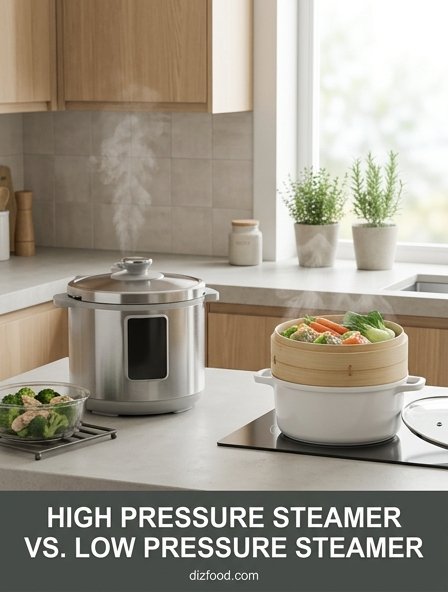
Understanding High Pressure vs Low Pressure Steamers
In the modern culinary landscape, steaming technology has evolved far beyond the simple pot of boiling water. Today, professional and home kitchens differentiate between high pressure and low pressure (atmospheric) steaming systems. A low pressure steamer operates at approximately 0 to 1 PSI (pounds per square inch), relying on the natural movement of steam at a temperature of 212°F. These units are common in residential kitchens and small-scale catering, providing a gentle environment for delicate ingredients like fish and certain green vegetables. They are often preferred for their simplicity and safety, as they do not require airtight seals or complex locking mechanisms.
Conversely, high pressure steamers are designed to operate at significantly higher pressures, typically ranging from 5 to 15 PSI. By trapping steam within a sealed chamber, these units raise the boiling point of water, allowing steam temperatures to reach 250°F or higher. This increased thermal energy accelerates the cooking process exponentially. Understanding the distinction is crucial for chefs and kitchen managers who must balance food quality with production speed. While low pressure systems offer a "set and forget" approach for many items, high pressure systems require precise timing because even a thirty-second variance can mean the difference between perfectly cooked grains and over-processed mush. Both systems have a dedicated place in the kitchen depending on the volume of food and the specific textures required by the menu.
Core Mechanics of Pressure and Steam Output
The fundamental difference between these two systems lies in the laws of thermodynamics. In a low pressure or atmospheric steamer, steam is generated in a reservoir and vented through the cooking chamber. Because the chamber is not sealed, the steam remains at the boiling point of water relative to local altitude. This results in a "wet" steam that carries a high amount of moisture but limited kinetic energy. The heat transfer occurs as the steam condenses on the cooler surface of the food, releasing latent heat. This process is steady but limited by the maximum temperature of 212°F.
High pressure steamers utilize a pressure vessel to manipulate the vapor-pressure curve. When steam is confined, the molecules are forced closer together, increasing the frequency of collisions and raising the temperature. This creates "dry" steam, which has significantly more penetrating power. The mechanics involve a heavy-duty gasket, a locking handle, and a pressure release valve to ensure safety. The steam output in these systems is much more concentrated, allowing for rapid heat transfer that can penetrate deep into dense proteins or root vegetables. The following table illustrates the core mechanical differences:
| Feature | Low Pressure | High Pressure |
|---|---|---|
| Operating PSI | 0 - 1 PSI | 5 - 15 PSI |
| Temperature | 212°F (100°C) | 227°F - 250°F+ |
| Chamber Seal | Vented/Loose | Airtight/Locking |
| Cooking Speed | Standard | Ultra-Fast |
Comparing Steam Penetration and Cleaning Power
Steam penetration is the primary metric by which kitchen staff judge the effectiveness of a steamer. In high pressure environments, the pressurized vapor is forced into the cellular structure of the food much faster than in atmospheric conditions. This is particularly beneficial for high-fiber foods like artichokes, potatoes, and legumes. High pressure steam breaks down tough pectin and cellulose fibers in a fraction of the time, often resulting in a creamier interior texture while maintaining the structural integrity of the exterior. Low pressure steam, while effective, relies on surface-level heat conduction, which can lead to overcooked exteriors before the core reaches the desired temperature in very dense items.
Beyond cooking, steaming systems are often utilized for sanitation within the kitchen. High pressure steam is a superior cleaning agent for removing carbonized grease and stubborn food residues from kitchen equipment. The high-velocity, high-temperature output acts as a thermal chisel, loosening bonds that regular scrubbing cannot reach. While low pressure steam can soften grease, it lacks the mechanical force required to blast away contaminants. In professional environments, high pressure steam wands are frequently used to sanitize cutting boards, gaskets, and stainless steel surfaces, ensuring a level of microbial reduction that atmospheric steam simply cannot match due to the lower temperature threshold.
Key Benefits of High Pressure Steaming Systems
The most prominent advantage of high pressure steaming in a commercial kitchen is the dramatic reduction in cooking time. For high-volume establishments, the ability to cook a batch of broccoli in 60 seconds or a tray of potatoes in under 10 minutes is a logistical necessity. This speed does not just improve service times; it also preserves the nutritional profile of the food. Since the food spends less time exposed to heat, water-soluble vitamins like Vitamin C and B-complex are less likely to leach out or degrade. The resulting vegetables are often more vibrant in color and have a superior "snap" compared to those boiled or steamed for longer periods at lower pressures.
Another significant benefit is the versatility in handling different types of cuisine. High pressure systems are exceptional for:
- Rapidly hydrating dried beans and pulses without pre-soaking.
- Tenderizing tough cuts of meat for stews or pulled textures.
- Preparing large quantities of rice and grains with consistent fluffiness.
- Opening shellfish like clams and mussels instantly and uniformly.
Furthermore, high pressure steamers are generally more energy-efficient per pound of food cooked. Because the cooking cycles are so short, the heating elements or boiler systems run for less time, leading to lower utility costs in the long run. For operations that serve hundreds of covers per day, the accumulated time and energy savings make high pressure systems a high-return investment.
Why Low Pressure Steamers Are Best for Home Use
While high pressure systems dominate the professional world, low pressure steamers are overwhelmingly preferred for residential kitchens. The primary reason is safety. High pressure vessels require rigorous maintenance of seals and valves, and a failure can be catastrophic. In a home environment where users may be distracted, the simple, non-pressurized design of a low pressure steamer eliminates the risk of steam burns from pressurized bursts or mechanical failures. If a user opens a low pressure steamer mid-cycle, the steam simply wafts out, whereas a pressurized unit must be carefully vented before the door can even be unlocked.
Cost and spatial footprint also play major roles. High pressure steamers require robust construction and often specialized plumbing or high-voltage electrical connections. Low pressure models are available as compact countertop appliances, built-in wall ovens, or even simple stovetop inserts. They are significantly more affordable and require no special training to operate. For the typical home cook who is steaming a few fillets of salmon or a side of asparagus, the speed advantage of high pressure is negligible. A three-minute steam versus a one-minute steam does not justify the added expense and complexity of a pressurized system for domestic use. Additionally, low pressure steamers are easier to clean and descale, making them much more practical for the casual user.
Speed and Efficiency Analysis for Professional Steamers
In a professional kitchen, efficiency is measured by throughput-the amount of food produced per hour. High pressure steamers are the clear winners in this category. In a side-by-side comparison, a high pressure unit can often outperform two or three atmospheric steamers of the same size. This allows kitchen designers to save valuable floor space by installing a smaller, more powerful unit rather than multiple low pressure cabinets. The recovery time-the time it takes for the unit to return to cooking temperature after the door has been opened-is also typically faster in high pressure systems because they are built with higher BTU or kilowatt ratings.
However, efficiency also involves labor. High pressure steamers require more focused attention from the culinary staff. Because the cooking window is so tight, an extra minute in a high pressure steamer can ruin a product, whereas a low pressure steamer is much more forgiving. In a "batch cooking" scenario common in schools or hospitals, low pressure steamers may be more efficient from a labor perspective because they allow for larger windows of error and can hold food at temperature without immediately overcooking it. Managers must weigh the mechanical efficiency of high pressure against the human efficiency and skill level of their staff to determine which system truly optimizes their specific workflow.
Fabric Safety Guide for High and Low Pressure
While the focus is usually on food, steamers are integral to maintaining kitchen textiles, such as chef coats, aprons, and table linens. High pressure steam is an effective tool for deep-cleaning and de-wrinkling heavy-duty fabrics like cotton twill or canvas. The pressure allows the steam to penetrate through the thick fibers, relaxing them instantly and killing bacteria or odors trapped in the weave. This is particularly useful for chef whites that have been exposed to grease and smoke. However, high pressure steam must be used with caution on blended fabrics or synthetic materials often found in modern uniforms, as the extreme heat (250°F+) can melt fibers or damage moisture-wicking coatings.
Low pressure steamers are the safer choice for delicate kitchen fabrics, such as silk-screened aprons, microfiber towels, or fine linen napkins used in front-of-house service. The lower temperature (212°F) is sufficient to remove wrinkles without risking heat damage or "shining" the fabric-a common issue where high heat creates a permanent glossy patch on dark materials. For general maintenance of kitchen apparel, a low pressure vertical steamer is often more than adequate and far more portable than industrial pressurized units. When choosing between the two for textile care, one must consider the fabric weight and the specific goal: high pressure for heavy-duty sanitation and crispness, and low pressure for delicate finishing and general de-wrinkling.
Industrial vs Residential Steaming Applications
The application of steaming technology varies wildly between industrial food processing and residential meal preparation. Industrial steaming often involves "continuous" high pressure systems where food moves on a conveyor through a pressurized tunnel. This is used for blanching vegetables before freezing or for industrial-scale canning. These systems are engineered for 24/7 operation and require professional engineering oversight. In a residential setting, steaming is an occasional task, usually performed with a small electric appliance or a pot insert. The residential goal is nutrition and taste for a small group, whereas the industrial goal is consistency, shelf-life, and massive volume.
In the middle ground lie commercial restaurant kitchens, which may use "boilerless" atmospheric steamers or high pressure "autoclave" style units. The choice here depends on the menu. A seafood restaurant may prefer the gentle touch of a low pressure steamer to ensure shrimp and scallops do not become rubbery. Conversely, a large hotel banquet department will favor high pressure steamers to prep hundreds of pounds of root vegetables simultaneously. Residential users rarely have access to the electrical phase power or the direct water lines required for industrial-grade high pressure units, reinforcing the divide between consumer-grade simplicity and professional-grade power.
Cost Comparison and Long Term Maintenance
The initial purchase price of a high pressure steamer can be three to five times higher than that of a comparable low pressure model. This premium covers the cost of heavy-gauge stainless steel, specialized locking hardware, and high-limit safety controls. Furthermore, installation for high pressure units is more expensive, often requiring professional plumbing with pressure-reducing valves and dedicated drainage capable of handling high-temperature discharge. Low pressure units are often "plug and play," particularly the boilerless models that only require a standard electrical outlet and a manual water fill.
Long-term maintenance is where the costs can truly diverge. High pressure steamers have more failure points, including:
- Door gaskets that must be replaced annually to maintain the seal.
- Pressure relief valves that require regular testing for safety compliance.
- Advanced descaling requirements, as scale buildup in a pressurized vessel can lead to dangerous hotspots or sensor failures.
- Strict insurance and local government inspections for pressure vessels in some jurisdictions.
Low pressure steamers, by contrast, are relatively low-maintenance. The most common task is simple descaling of the reservoir, which can often be done with vinegar or a mild commercial descaler. While high pressure units save money on labor and energy in high-volume settings, those savings must be balanced against the significantly higher maintenance budget required to keep the units operating safely and legally.
Choosing the Right Steamer for Your Specific Needs
Selecting the ideal steamer requires a clear-eyed assessment of your kitchen's priorities. If you are operating a fast-paced commercial environment where speed and throughput are the primary drivers, a high pressure steamer is an indispensable tool. It will allow you to turn tables faster and maintain high quality during peak rushes. This is especially true for menus focused on hearty vegetables, grains, and proteins that benefit from rapid heat penetration. However, you must ensure that your staff is properly trained to handle the equipment safely and that your budget accounts for the necessary preventative maintenance.
For home cooks, small cafes, or establishments that specialize in delicate items like dim sum or flaky fish, a low pressure steamer is usually the better choice. It provides a safer, more forgiving cooking environment that is easier to manage on a day-to-day basis. The lower entry price and minimal maintenance requirements make it a more practical addition for those who do not need to cook in massive volumes. Before purchasing, consider your available utilities, your staff's technical skill level, and the specific items on your menu. By matching the pressure capability to your actual needs, you can ensure a balance of food quality, operational safety, and financial efficiency.

Comments