
Have you ever wondered why some steamed dishes emerge perfectly vibrant while others end up a soggy disappointment? The secret lies in the invisible battle between dry steam and wet steam, a culinary distinction that separates home cooking from professional-grade results. While wet steam is the familiar vapor from a stovetop pot-laden with water droplets that can saturate delicate textures-dry steam is heated beyond the boiling point to minimize moisture and maximize heat transfer. By understanding how these two thermal mediums interact with proteins and starches, you can achieve everything from a crackling bread crust to flawlessly tender-crisp vegetables, ensuring you truly master every texture in your kitchen with scientific precision.
| Feature | Wet Steam (Saturated) | Dry Steam (Superheated) |
|---|---|---|
| Temperature | Constant at ~100°C (212°F) | Variable, often 120°C to 150°C+ |
| Moisture Content | High; contains liquid water droplets | Low; <5% liquid water particles |
| Best For | Poaching, dumplings, root vegetables | Baking, roasting, crisping skins |
| Texture Impact | Soft, hydrated, and heavy | Light, airy, and potentially crisp |
| Heat Transfer | Slower; limited by boiling point | Rapid; high thermal energy density |
| Kitchen Tool | Stovetop steamer, bamboo basket | Combi-steam oven, pressure cooker |
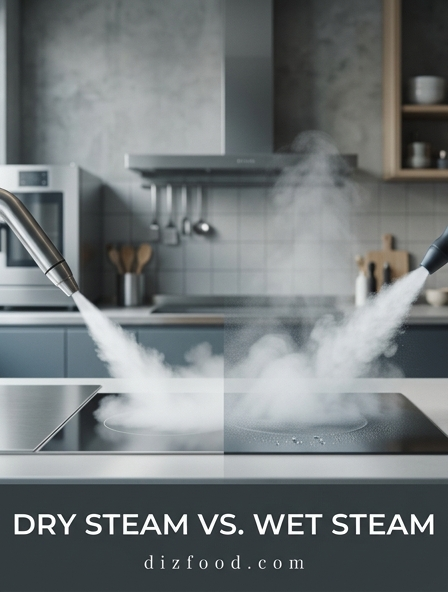
Dry Steam vs Wet Steam Key Differences
In commercial kitchen environments and industrial food processing, understanding the distinction between dry and wet steam is essential for both food quality and equipment longevity. Dry steam, often referred to as saturated steam, exists as a completely gaseous state where no liquid water droplets are present. It is characterized by its high energy content and its invisibility to the naked eye until it begins to cool and condense. In contrast, wet steam contains a mixture of gaseous water and suspended liquid droplets, which results in a visible mist or "cloud" commonly associated with boiling water.
The primary physical differences between these two states can be summarized by their energy density and moisture content. Wet steam typically carries lower heat energy because a portion of the mass is already in liquid form, having already released its latent heat of vaporization. This makes wet steam less efficient for rapid heating tasks compared to dry steam. The following table highlights the core physical characteristics of each:
| Feature | Dry Saturated Steam | Wet Steam |
|---|---|---|
| Composition | 100% Gas | Gas with liquid droplets |
| Visibility | Invisible at the source | Visible white mist |
| Heat Content | Maximum latent heat | Reduced latent heat |
| Impact on Surfaces | Leaves surfaces dry | Leaves moisture residue |
For kitchen staff, dry steam is preferred for precision cooking and sterilization, while wet steam is often an unavoidable byproduct of inefficient boiler systems or poorly insulated piping. Distinguishing between them allows operators to optimize cooking times and prevent unwanted sogginess in steamed products.
Understanding Steam Quality and Dryness Fraction
The technical measurement used to define the state of steam is the dryness fraction, often denoted as "X." This value represents the proportion of completely evaporated steam within a specific mass of a steam-water mixture. A dryness fraction of 1.0 signifies 100% dry saturated steam, containing no liquid water. Conversely, a dryness fraction of 0.90 indicates that the mixture is 90% steam and 10% entrained liquid water. In most commercial kitchen applications, steam is considered high quality when the dryness fraction exceeds 0.95.
Steam quality directly dictates the amount of latent heat available for transfer. Since liquid water cannot undergo the phase change required to release latent heat, its presence lowers the total thermal energy of the steam. This reduction in quality can occur due to several factors within a kitchen's steam system:
- Rapid pressure drops at the point of use, causing some steam to condense.
- Insufficient insulation on steam delivery lines, leading to heat loss.
- High water levels in the boiler, causing "carryover" where liquid water is pulled into the steam line.
- Inadequate steam trapping, which allows condensate to accumulate in the pipes.
Monitoring steam quality is vital because low-quality steam acts as an insulator rather than a conductor. When wet steam enters a jacketed kettle or a combi-oven, the liquid droplets form a film on the heat transfer surfaces, significantly slowing down the cooking process. Maintaining a high dryness fraction ensures that the maximum amount of energy is delivered to the food or equipment instantly upon contact.
Performance Benefits of Dry Saturated Steam
Dry saturated steam is the "gold standard" for professional culinary applications due to its predictable behavior and high energy density. When dry steam contacts a cooler surface, such as a tray of vegetables or a stainless steel vessel, it collapses and releases its latent heat almost instantly. This rapid energy transfer allows for shorter cooking times and higher production throughput in busy commercial kitchens. Because dry steam contains no liquid droplets, it does not contribute to excess moisture on the surface of the food, which is critical for maintaining texture.
Beyond cooking efficiency, dry steam provides several operational advantages:
- Uniform Temperature: Dry steam provides a consistent temperature-to-pressure relationship, ensuring that every part of the cooking chamber reaches the exact set point simultaneously.
- Superior Texture Control: In pastry and baking, dry steam is used to create the perfect crust without making the dough gummy or waterlogged.
- Reduced Contamination Risk: Dry steam does not carry liquid water that might contain boiler chemicals or minerals, ensuring a purer environment for direct-contact cooking.
- Enhanced Cleaning: For "dry-steam" cleaning applications, the high heat and lack of liquid moisture allow for the sanitization of sensitive electronics and intricate kitchen machinery without the risk of water damage.
By utilizing dry steam, chefs can achieve results that are impossible with wet steam. For example, delicate seafood or greens steamed with dry vapor retain their vibrant colors and structural integrity, whereas wet steam often results in a limp, bleached, or over-saturated appearance. The efficiency of dry steam also translates to lower energy consumption, as less steam is required to achieve the same thermal result.
How Wet Steam Causes Equipment Erosion
The presence of moisture in steam lines is not merely a thermal efficiency issue; it is a primary cause of mechanical degradation in kitchen infrastructure. Wet steam acts as an abrasive medium. When steam travels at high velocities through pipes and valves, the suspended water droplets gain significant kinetic energy. These droplets act like tiny projectiles, physically scouring the internal surfaces of the steam system through a process known as impingement or erosion-corrosion.
The damage caused by wet steam is often most visible in the following components:
- Control Valves: Water droplets can erode the valve seat and plug, leading to "wire-drawing" where steam leaks through even when the valve is fully closed.
- Pipe Bends and Elbows: The centrifugal force flings heavy water droplets against the outer radius of pipe bends, thinning the metal over time and eventually leading to pinhole leaks.
- Turbines and Pumps: In larger facilities, wet steam can cause cavitation and blade erosion, necessitating expensive repairs.
- Steam Traps: Overloading traps with excessive moisture can cause them to fail in an open or closed position, further worsening the steam quality.
Furthermore, wet steam is the primary cause of "water hammer." This occurs when slugs of liquid water are pushed at high speeds by the steam flow. When these slugs hit a valve or a corner, they create a massive pressure shock that can shake pipes, break supports, and even rupture fittings. Maintaining dry steam is therefore a critical preventative maintenance strategy that extends the lifespan of expensive steamers, kettles, and boiler components.
Heat Transfer Efficiency Dry vs Wet Steam
The fundamental goal of using steam in a kitchen is to move heat from a source to the food as efficiently as possible. Dry steam is vastly superior in this regard due to the physics of condensation. When dry saturated steam hits a surface, it releases its latent heat and turns into a tiny amount of water. This process is very efficient. However, if the steam is already wet, it introduces a layer of liquid water onto the heat transfer surface immediately upon entry.
This liquid film acts as a thermal barrier. Water is a poor conductor of heat compared to the phase-change energy of steam. A thin film of water on the inside of a jacketed kettle can significantly increase the "thermal resistance," meaning the heat must struggle to pass through the water layer before it can reach the food. The comparison of efficiency can be understood through these points:
- Latent Heat: Dry steam maximizes the use of latent heat (the energy required to turn water to gas), which is much higher than the sensible heat of liquid water.
- Film Resistance: Wet steam thickens the condensate film on heat exchanger walls, reducing the overall heat transfer coefficient (U-value).
- Surface Area: Dry steam spreads evenly across surfaces, whereas wet steam can "channel" or create cold spots where water has pooled.
In practical terms, using 90% quality steam instead of 100% quality steam does not just mean a 10% loss in efficiency; it can result in a much higher percentage of increased cooking time because of the insulating effect of the moisture. For high-volume production, this inefficiency leads to higher utility bills and slower service speeds.
Practical Industrial Applications for Both Steam Types
While dry steam is generally preferred for most kitchen tasks, both dry and wet steam have specific roles in broader industrial food production. Dry steam is the standard for high-speed "combi" ovens, industrial blanching, and atmospheric steaming. It is also used in "flash" pasteurization where rapid, precise temperature spikes are required to kill pathogens without cooking the entire product through. In the context of "dry steam cleaning," it is utilized to sanitize conveyor belts and packaging lines where traditional water washing would be too messy or damaging.
Wet steam, while often seen as an efficiency loss, is sometimes utilized in specific niche applications. For example, some large-scale industrial rendering processes or certain types of grain conditioning may utilize steam with higher moisture content to add weight or specific hydration levels to a product. However, in these cases, the moisture is a deliberate addition rather than a failure of the steam system.
Common applications categorized by steam type include:
- Dry Steam: Sterilization of medical-grade kitchen tools, baking crusty breads, steaming delicate vegetables, and jacketed kettle heating.
- Wet Steam: Some heavy-duty humidification tasks, certain types of low-temperature poaching where moisture replenishment is constant, and specific cleaning tasks where a "flushing" action is needed.
In most commercial culinary settings, the goal is to eliminate wet steam entirely. The industrial kitchen designer's objective is to ensure that by the time steam reaches the point of use-whether it is a dim sum steamer or a large autoclave-it is as dry as possible to ensure repeatable, high-quality results.
Impact of Moisture Content on Steam Systems
Moisture content in a steam system acts as a catalyst for various systemic failures and operational headaches. When steam is "wet," the water droplets often carry dissolved solids and chemicals from the boiler water. These solids are deposited onto the internal surfaces of the steam system as the steam evaporates or moves through the lines. This leads to scale buildup, which further insulates the pipes and reduces the internal diameter, causing pressure drops and reduced flow capacity.
The impact of moisture can be categorized into three main areas of concern for kitchen facilities management:
- Corrosion: Moisture, especially when combined with oxygen or carbon dioxide, accelerates the oxidation of metal pipes. This leads to "pitting" and eventual structural failure of the steam delivery network.
- Sensor Interference: Many modern commercial kitchen appliances use sensitive probes to monitor temperature and pressure. Moisture buildup can coat these sensors, leading to inaccurate readings and potentially dangerous operating conditions.
- Steam Trap Overload: Steam traps are designed to remove condensate. If the steam is excessively wet, the traps must work constantly. This leads to premature wear of the trap mechanisms and increases the likelihood of "blow-through," where live steam is wasted into the condensate return line.
Ultimately, the moisture content degrades the "exergy" or the useful work potential of the steam. A system designed for dry steam that is forced to run wet will experience increased downtime, higher maintenance costs, and a significant decrease in the quality of the final food product due to inconsistent heating profiles.
Steam Sterilization Efficacy and Standards
In the culinary world, sterilization is critical for food safety and the longevity of processed goods. Steam is one of the most effective sterilization agents, but its efficacy is entirely dependent on its quality. International standards for sterilization, such as those used for autoclaves and canning retorts, typically require a dryness fraction between 0.95 and 1.0. If the steam is too wet, sterilization may fail, even if the temperature appears correct.
The reason for this is "superheating" and "moisture shielding." If steam is too wet, the liquid droplets can physically shield bacteria and spores from the heat, preventing the total denaturing of proteins required for sterilization. Conversely, if steam is "too dry" (superheated), it behaves more like hot air and lacks the moisture needed to penetrate the cell walls of microorganisms. Therefore, dry saturated steam is the ideal medium.
Key standards for steam sterilization include:
- Temperature Accuracy: The steam must reach a specific temperature (e.g., 121°C or 134°C) correlated to its pressure.
- Air Removal: For steam to be effective, all air must be purged from the chamber, as air pockets act as insulators.
- Moisture Balance: The steam must have enough moisture to be biologically active but not so much that it leaves the sterilized items "wet," which could lead to re-contamination upon removal.
In professional kitchens, particularly those involved in sous-vide prep or large-scale canning, ensuring steam quality is a matter of regulatory compliance and public health. Using poor quality, wet steam can lead to "wet packs" or incomplete sterilization cycles, which are unacceptable in a commercial food safety plan.
Measuring and Maintaining High Steam Quality
To maintain high steam quality in a kitchen or food processing plant, operators must implement both measurement tools and mechanical safeguards. Measuring the dryness fraction directly can be complex, often requiring a throttling calorimeter or a non-contacting steam quality meter. However, for most kitchen environments, maintenance focuses on the "indicators" of steam quality, such as observing the clarity of steam at a test point or monitoring the volume of condensate being handled by traps.
Maintaining high quality involves a multi-layered approach to the steam distribution system. The following mechanical components are essential for ensuring that wet steam does not reach the cooking equipment:
- Steam Separators: These are installed in the steam line to mechanically remove water droplets. They use baffles or centrifugal force to fling water out of the steam flow, where it is then drained away.
- Effective Insulation: High-quality lagging on all steam pipes prevents the "radiant cooling" that causes steam to turn back into water before it reaches its destination.
- Steam Trapping: Regularly inspected steam traps must be placed at low points in the piping and before every major piece of equipment to ensure any formed condensate is removed immediately.
- Boiler Water Management: Proper chemical treatment and "blowdown" procedures prevent foaming and carryover, ensuring the steam leaving the boiler is as dry as possible.
By focusing on these maintenance points, a facility can ensure that its steam remains in a dry, saturated state. This not only protects the food quality but also ensures that the energy consumed by the boiler is actually being used for work rather than just heating up waste water in the pipes.
Cost Implications of Wet Steam in Boilers
The financial impact of wet steam is often underestimated in commercial kitchen management. The costs are both direct, in terms of fuel consumption, and indirect, in terms of maintenance and product loss. Because wet steam has a lower energy content per pound, the boiler must burn more fuel to deliver the same amount of heat to the kitchen. This inefficiency can increase energy bills by 5% to 15% in systems with poor steam quality.
The economic burden of wet steam can be broken down into several categories:
| Cost Category | Impact of Wet Steam |
|---|---|
| Fuel Costs | Increased consumption to compensate for lower latent heat. |
| Maintenance | Frequent replacement of eroded valves, traps, and pipe fittings. |
| Product Waste | Soggy food or inconsistent batches leading to discarded inventory. |
| Downtime | Unscheduled repairs caused by water hammer or scale buildup. |
| Chemicals | Higher boiler water carryover requires more frequent chemical dosing. |
Furthermore, wet steam increases the load on the condensate return system. If the return system is overwhelmed, it can lead to back-pressure issues that further degrade boiler efficiency. Investing in steam separators and proper insulation might seem like a high upfront cost, but the "payback period" is usually very short when considering the reduction in fuel waste and the extension of the equipment's service life. In a high-volume kitchen, dry steam is not just a culinary preference; it is a financial necessity.


Comments