
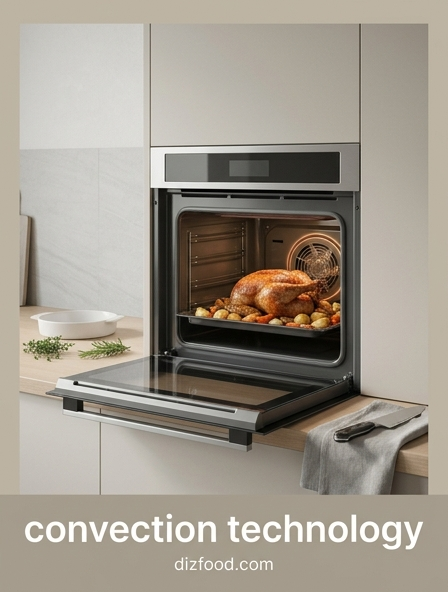
Convection technology transforms your culinary results by using integrated fans to actively circulate hot air, ensuring that every inch of your dish receives consistent, direct heat. This constant movement eliminates the "cold spots" often found in traditional radiant ovens, leading to faster cooking times and more reliable browning. Because the moving air efficiently strips away surface moisture, it creates a perfectly crisp exterior while sealing in natural juices, resulting in a superior food texture for everything from roasted proteins to delicate pastries. Mastering these thermal dynamics is essential for any home chef, especially when comparing specialized tools like an In-Bore Steamer Vs. Over-Pot Steamer.
The Mechanics of Forced Air Circulation
The fundamental principle behind convection technology lies in the use of an integrated fan system designed to move air actively throughout the oven cavity. In a traditional radiant oven, air remains relatively stagnant, relying on natural rising and falling patterns to distribute heat. This often leads to stratified temperature layers where the top is significantly hotter than the bottom. Convection systems bypass this inefficiency by forcing heated air to circulate continuously around the food.
Most modern convection ovens utilize one of two primary configurations to achieve this mechanical advantage:
- Standard Convection: A fan located at the rear or side of the oven moves air heated by the existing top and bottom elements.
- True or European Convection: This system incorporates a third heating element specifically located behind the fan, ensuring the air is already at the target temperature before it is pushed into the cooking chamber.
By transforming the internal environment from a static chamber to a dynamic thermal system, forced air circulation significantly increases the rate of heat transfer. This mechanical movement strips away the "cold envelope" of air that naturally surrounds cool food items, allowing the heat to penetrate the surface much more efficiently.
Eliminating Cold Spots for Uniform Cooking
One of the most persistent challenges in domestic culinary environments is the presence of cold spots within the oven. In conventional thermal ovens, heat tends to pool in specific corners or directly above the heating elements, leaving other areas underheated. This inconsistency forces cooks to rotate trays frequently to ensure even browning. Convection technology addresses this by homogenizing the internal atmosphere through constant movement.
The elimination of localized temperature variances allows for multi-rack cooking without the penalty of uneven results. When air is pushed into every corner of the appliance, the thermal energy is distributed with mathematical precision. This is particularly beneficial for high-volume tasks such as baking multiple sheets of cookies or roasting several trays of vegetables simultaneously. The following table illustrates the typical performance difference between radiant and convection environments:
| Feature | Radiant Oven | Convection Oven |
|---|---|---|
| Temperature Gradient | High Variance | Minimal Variance |
| Air Movement | Natural Convection | Mechanical Forced Air |
| Rack Utilization | Optimal on Single Rack | Consistent Across All Racks |
By neutralizing these cold pockets, the appliance ensures that every square inch of the cooking surface receives the same caloric input, leading to predictable and uniform outcomes.
Consistency Through Constant Thermal Distribution
Consistency is the hallmark of professional-grade kitchen results, and convection technology provides the infrastructure necessary to achieve it. When a recipe calls for a specific temperature, a convection oven delivers that heat with a much higher degree of stability than its traditional counterparts. Because the air is constantly being cycled and reheated, the oven does not suffer from the dramatic temperature swings that occur when a standard heating element cycles on and off.
This constant thermal distribution is vital for delicate items that are sensitive to temperature fluctuations, such as soufflés or meringues. The steady stream of warm air ensures that the structure of the food is supported by a reliable environment from the moment it enters the chamber until it is removed. Furthermore, the reduction in preheating time contributes to a more streamlined workflow, as the circulating air reaches the desired set point faster. By maintaining a locked-in thermal state, the convection system allows the chef to focus on preparation rather than monitoring the erratic behavior of an inconsistent heat source.
Enhancing Texture with Rapid Heat Transfer
The speed at which heat is transferred to the surface of food dictates its final texture. Convection technology excels at accelerating this transfer, which is essential for creating the Maillard reaction-the chemical process responsible for browning and flavor development. In a traditional oven, the moisture evaporating from the food creates a layer of humid air that acts as an insulator, slowing down the cooking process. The convection fan effectively blows this "moisture shroud" away.
With the insulating moisture removed, the dry heat makes direct contact with the food surface, leading to several textural improvements:
- Crisping: Skin on poultry becomes thinner and more brittle, while potato wedges develop a distinct crunch.
- Caramelization: Natural sugars on the exterior of vegetables and meats brown more quickly and deeply.
- Volume: The rapid heat causes steam inside doughs to expand quickly, providing a better "oven spring" for breads and pastries.
The result is a contrast between a crisp, well-developed exterior and a properly cooked interior. This acceleration doesn't just save time; it fundamentally alters the physical properties of the ingredients to produce a superior mouthfeel and aesthetic appeal.
The Synergy of Steam and Convection Fans
The combination of steam injection and convection fans represents the pinnacle of modern oven technology, often referred to as "combi-cooking." While dry convection is excellent for browning, the addition of controlled moisture prevents the food from dehydrating during the high-speed heat transfer process. When the fan operates in tandem with steam, it distributes the water vapor with the same uniformity it applies to heat.
This synergy is transformative for both delicate proteins and hearty grains. The moving air ensures that the steam reaches every crevice of the food, facilitating a highly efficient transfer of latent heat. Steam carries more energy than dry air; therefore, when the convection fan pushes steam around the chamber, the cooking speed increases even further while protecting the food's integrity. This dual-action approach allows for high-temperature roasting that would otherwise dry out a lean cut of meat. By managing both the velocity of the air and the percentage of humidity, these systems offer a level of control that was once reserved for industrial food processing facilities.
Achieving Golden Crusts and Moist Interiors
Achieving the perfect balance between a golden-brown crust and a succulent interior is a frequent challenge in roasting and baking. Convection technology provides the solution by optimizing the evaporation rate at the surface without overcooking the core. In a chicken roast, for example, the moving air renders fat and browns the skin rapidly, creating a sealed exterior that helps trap the natural juices within the muscle fibers.
For bakers, the benefits are equally pronounced. When baking bread, the initial blast of circulating heat-often combined with a burst of steam-creates a flexible, glossy crust that allows the loaf to expand fully before the exterior sets. Once the steam is vented, the convection fan continues to dry the surface, resulting in a thick, mahogany-colored crust that shatters when cut. The following list highlights the specific advantages for different food categories:
- Breads: Superior crust development and even crumb structure.
- Meats: Enhanced fat rendering and moisture retention.
- Pastries: Distinctive layering in puff pastry due to rapid steam release.
This balance ensures that the food is not only visually appealing but also maintains the desired moisture content for optimal flavor.
Precision Temperature Control for Better Results
Advanced convection technology integrates sophisticated electronic sensors to monitor and adjust the internal environment in real-time. Precision control is necessary because the movement of air can lead to a perceived temperature higher than what is displayed on the dial. High-end convection ovens often include "convection conversion" features that automatically adjust the set temperature downward by 25 degrees Fahrenheit to account for the increased efficiency of forced air.
The precision offered by these systems reduces the margin of error significantly. In a traditional oven, the temperature might swing 15 degrees above or below the target, but a high-performance convection system keeps these fluctuations to a minimum. This stability is crucial for technical tasks like tempering chocolate or slow-roasting delicate fish. Furthermore, many units now feature variable fan speeds, allowing the user to dictate the intensity of the airflow. A lower speed might be used for delicate cakes to prevent the batter from leaning, while a high speed is reserved for intense searing. This level of granular control empowers the cook to tailor the thermal environment to the specific needs of the dish.
How Airflow Accelerates the Steaming Process
In a standard steaming environment, water vapor moves through natural buoyancy, which can be relatively slow and inconsistent. However, when airflow is introduced via a convection fan, the steaming process is radically accelerated. The moving air acts as a carrier, forcing the hot steam molecules to collide with the surface of the food more frequently and with greater force. This increased "bombardment" of thermal energy results in significantly faster cooking times.
The acceleration of steaming is particularly useful for preserving the nutritional value and vibrant color of vegetables. Because the food spends less time exposed to heat, there is less degradation of vitamins and minerals. The process can be broken down into three stages:
- Saturation: The fan quickly fills the chamber with a dense, uniform cloud of steam.
- Penetration: Forced airflow pushes the steam into the center of the food items, ensuring even heat throughout.
- Completion: The rapid transfer of energy finishes the cooking process in up to 30% less time than traditional steaming.
This efficiency makes convection-assisted steaming an essential technique for high-volume kitchens and health-conscious home cooks alike.
Maintaining Humidity with Active Air Circulation
A common misconception is that convection fans always dry out food. While dry air convection does encourage evaporation, modern systems designed for humidity maintenance use active air circulation to stabilize the moisture levels within the oven. By circulating the humid air, the system prevents the formation of dry pockets that could lead to localized shriveling or toughening of the food surface. This is vital for "low and slow" cooking methods where moisture retention is the primary goal.
In these systems, the fan works to ensure that the relative humidity is consistent from the top rack to the bottom. This prevents the top of a dish from drying out while the bottom remains soggy. When cooking items like cheesecakes or terrines, which traditionally require a water bath, the active circulation of moist air can often achieve similar results without the need for cumbersome pans of water. The movement of the humid air creates a gentle, "envelope-like" heating effect that protects the proteins from denaturing too quickly, resulting in a silky, tender texture that is difficult to achieve in a static, dry environment.
Professional Results Through Advanced Convection Tech
The transition of convection technology from commercial laboratories to residential kitchens has redefined the standards of home cooking. Advanced convection systems now feature aerodynamic baffles that direct airflow in specific patterns, ensuring that no part of the oven is left untouched by the thermal current. These professional-grade features allow home cooks to replicate the textures and flavors previously only found in high-end restaurants. The marriage of high-velocity air, precision sensors, and integrated moisture control creates a versatile tool capable of handling any culinary challenge.
Whether the goal is a perfectly roasted ribeye with a dark crust or a tray of macarons with perfectly flat bottoms and high feet, advanced convection tech provides the necessary environment. The reduction in cooking times and the increase in energy efficiency are secondary benefits to the primary goal: superior food quality. By mastering the mechanics of airflow and thermal distribution, the modern kitchen appliance has evolved into a precision instrument. Ultimately, the adoption of these advanced systems ensures that the gap between amateur preparation and professional execution continues to shrink, allowing for consistent excellence in every meal prepared.


Comments