
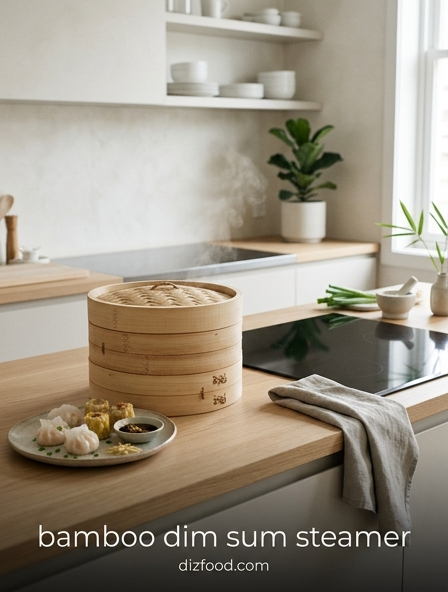
Bamboo Moisture Absorption and Texture
The primary advantage of utilizing bamboo in the construction of dim sum steamers lies in the material's innate ability to interact with water vapor. Unlike synthetic materials or dense metals, bamboo is a cellulose-based fiber that possesses significant hygroscopic properties. During the steaming process, the interior environment of the vessel becomes saturated with high-temperature moisture. The bamboo walls and base actively absorb a portion of this excess humidity, preventing the internal atmosphere from reaching a point of total saturation that would otherwise lead to condensation. This moisture management is critical for the textural integrity of delicate doughs.
- Reduces the likelihood of surface gumminess in wheat-based wrappers.
- Maintains the structural firmness of yeast-leavened buns.
- Ensures that the base of the food remains dry enough to prevent tearing.
- Facilitates a balanced micro-climate for gluten stabilization.
By pulling moisture away from the surface of the food, the bamboo ensures that the exterior of a dumpling or bun remains soft yet resilient. This specific interaction between the fiber and the steam results in a finished product that feels light and airy rather than dense and heavy, which is a hallmark of high-quality dim sum preparation in traditional kitchens.
Preventing Condensation Drip on Wrappers
A frequent challenge in steaming delicate foods is the formation of water droplets on the interior of the lid, which can subsequently fall back onto the food. This phenomenon, often referred to as "rain," can devastate the appearance and texture of dumplings by creating wet spots or causing the dough to dissolve. Bamboo steamers solve this problem through their intricate woven design. The lattice-like structure of the lid allows the steam to pass into the fibers where it is absorbed or slowly dissipated, rather than pooling on a flat, cold surface. This ensures that the aesthetic presentation of the dim sum remains pristine and professional.
Furthermore, the domed shape of a traditional bamboo lid encourages any residual moisture that does condense to migrate toward the outer edges of the steamer rather than the center. This architectural choice works in tandem with the natural porosity of the bamboo. Consequently, users can steam items for extended periods without the risk of water damage. This reliability is why professional chefs prefer bamboo over glass or metal covers, which lack the ability to manage localized condensation effectively. The result is a consistently dry surface on every wrapper, preserving the delicate pleats and intricate shapes of handmade dumplings.
Natural Airflow of Woven Lids
The woven lid of a bamboo steamer is not merely a cover; it is a sophisticated ventilation system that regulates the movement of hot air. Because the bamboo strips are interlaced, they create a series of microscopic gaps that allow for a controlled release of steam. This natural airflow prevents the buildup of excessive internal pressure, which can sometimes cause delicate wrappers to burst or expand too rapidly. By allowing the vessel to "breathe," the lid ensures that the temperature remains steady while the moisture levels are perfectly modulated throughout the cooking cycle.
- Steam rises from the boiling water through the porous bamboo slats.
- The heat is trapped within the chamber to cook the food thoroughly.
- Small amounts of vapor escape through the woven lid to prevent over-saturation.
- Fresh heat replaces the dissipated steam, creating a continuous convective loop.
This steady exchange of air is essential for achieving a uniform cook. Without this breathability, the steam would become stagnant, potentially leading to uneven heating zones where the food closest to the edges cooks faster than the center. The woven lid acts as a passive regulator, maintaining an ideal equilibrium that supports the delicate chemistry of steaming without the need for manual intervention or complex venting mechanisms.
Consistent Heat Retention and Distribution
Bamboo is a natural insulator, which means it handles heat differently than conductive materials like stainless steel. Once the bamboo steamer has been seasoned and heated, it retains a high level of thermal energy within its walls. This creates a stable cooking environment where temperature fluctuations are minimized, even when the heat source beneath the wok or pot varies slightly. The thick, multi-layered rings of the steamer act as a thermal buffer, distributing heat evenly across the entire surface area of the steaming rack. This ensures that every item, regardless of its position, is cooked to the same degree.
The distribution of heat is further enhanced by the circular design, which encourages the steam to swirl around the food items. Because bamboo does not get as hot as metal to the touch, it radiates a gentler, more pervasive heat that penetrates the center of thick buns without scorching or overcooking the exterior. This "soft heat" is particularly beneficial for proteins and vegetable fillings, as it preserves their natural juices and colors. In a professional kitchen setting, this consistency allows for predictable timing and high-quality results across hundreds of individual servings, making the bamboo vessel an indispensable tool for high-volume dim sum production.
Bamboo Versus Metal Steamer Results
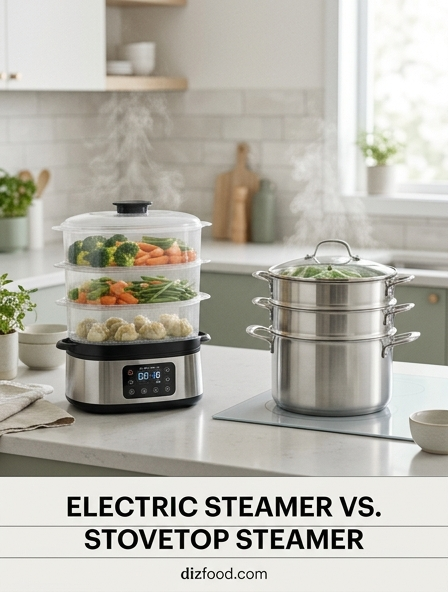
When comparing bamboo steamers to their metal counterparts, the differences in the final product are often distinct. Metal steamers are highly efficient at conducting heat, which can lead to very fast cooking times, but they lack the moisture-wicking capabilities of natural fibers. This often results in a wetter environment that can compromise the texture of traditional dim sum. Bamboo provides a more nuanced approach to temperature and humidity, which is essential for certain dough types. The table below outlines the primary differences in performance between these two common kitchen tools.
| Feature | Bamboo Steamer | Metal Steamer |
|---|---|---|
| Moisture Control | Absorbs excess vapor | Condensation drips on food |
| Heat Profile | Gentle and insulating | Rapid and conductive |
| Aroma | Subtle woody fragrance | Neutral / Metallic |
| Dough Texture | Firm and non-soggy | Can become gummy |
Ultimately, the choice depends on the desired outcome. While metal is durable and easy to clean, bamboo is widely considered the superior choice for traditional dim sum because of the textural superiority it imparts. The bamboo vessel allows the dough to set firmly while remaining moist, a balance that is difficult to replicate in the non-porous environment of a metal steaming tier.
Porosity and Non-Soggy Dumpling Skins
The microscopic porosity of bamboo is the secret to producing dumpling skins that are perfectly set without being soggy. When dumplings are placed directly on a surface or a liner within the steamer, the base is often the most vulnerable part of the dish. In a non-porous vessel, water can collect at the contact point, turning the bottom of the dumpling into a mushy paste. However, the slats of a bamboo steamer are designed to allow steam to pass through while the fibers themselves draw away the liquid that settles at the base. This capillary action keeps the dumpling skins intact and structurally sound.
This benefit is most apparent when steaming "Har Gow" (shrimp dumplings) or "Siu Mai," where the wrapper is thin and translucent. The porosity ensures that the starch in the dough gelatinizes correctly without absorbing excessive external water. To further enhance this effect, many chefs use perforated parchment paper or cabbage leaves as liners, which work in harmony with the bamboo's natural drainage. By preventing the accumulation of "puddles," the bamboo steamer ensures that the dumplings can be lifted easily from the tray without tearing, maintaining the visual elegance and the satisfying "bite" that characterizes high-quality Cantonese cuisine.
Subtle Aroma Infusion from Natural Fibers
One of the most overlooked aspects of using bamboo steamers is the sensory contribution they make to the food. When exposed to hot steam, the bamboo releases a very mild, earthy fragrance derived from its natural lignin and cellulose components. This scent is not overpowering; rather, it provides a subtle aromatic backdrop that complements the savory notes of the dim sum. This infusion of flavor is a natural byproduct of the material and is a characteristic that cannot be replicated by plastic or stainless steel steamers, which are chemically inert and scentless.
- Enhances the herbal notes in meat fillings.
- Complements the sweetness of lotus seed paste.
- Provides a traditional "kitchen" aroma that signals freshness.
- Wicks away "off" smells that can accumulate in enclosed metal systems.
This aromatic quality is part of the "wok hei" or the soul of the cooking process in many Asian cuisines. The interaction between the boiling water, the rising steam, and the heated wood creates a holistic environment that seasons the food from the outside in. For many enthusiasts, the faint scent of bamboo is as much a part of the dim sum experience as the taste of the dumplings themselves, providing a rustic and authentic layer to the meal.
Multi-Tier Steaming Efficiency and Texture
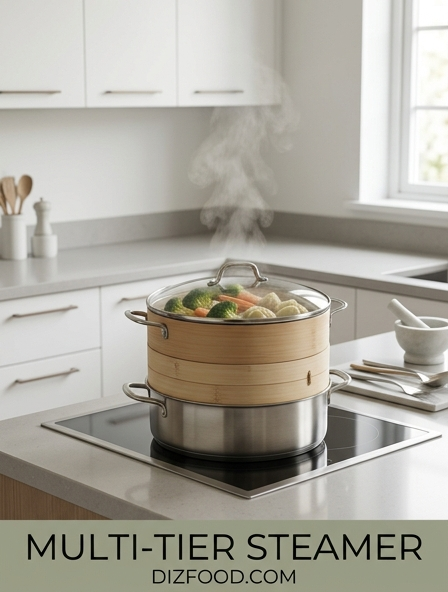
The stackable nature of bamboo steamers is a marvel of kitchen efficiency, allowing multiple dishes to be cooked simultaneously over a single heat source. This vertical arrangement is not just about saving space; it also creates a gradient of heat and moisture that can be utilized for different types of food. As the steam rises through the tiers, it loses a small amount of heat and becomes slightly more saturated. Professional chefs often place items requiring the most intense heat at the bottom and more delicate items at the top to ensure optimal texture across the entire menu.
This multi-tier system also ensures that flavors do not easily migrate between levels. Because the steam is constantly moving upward and out through the lid, the aromatic profile of a pork rib dish in the bottom tier won't necessarily overwhelm a delicate sweet bun in the top tier. The consistent pressure maintained throughout the stack ensures that even the highest level receives enough thermal energy to cook through. This method of cooking is highly efficient, utilizing the energy of a single burner to prepare a full feast, all while maintaining the specific textural requirements of each individual dish through careful tier placement.
Pressure Regulation in Bamboo Vessels
Effective steaming requires a delicate balance between containing heat and releasing pressure. If a steaming vessel is too tightly sealed, the internal pressure can rise to a point where it alters the texture of the food, sometimes causing it to collapse once removed from the heat. Bamboo steamers provide a natural solution to this problem through their semi-permeable construction. The gaps between the woven bamboo and the fit of the lid allow for "auto-venting," where the vessel maintains a near-atmospheric pressure even while the interior is filled with high-energy steam.
- Excess steam pressure finds exit points through the lid weave.
- The internal temperature stays just at the boiling point without spiking.
- Expansion of yeast-based doughs occurs steadily rather than explosively.
- Cool-down occurs more gradually, preventing "thermal shock" to the dough.
This regulation is particularly important for buns like "Char Siu Bao," which require a specific amount of expansion to achieve their fluffy, cracked tops. If the pressure is too high, the buns may become dense; if too low, they won't rise. The bamboo vessel acts as a mechanical regulator that simplifies this complex physical process, allowing home cooks and professionals alike to achieve consistent results without the need for sophisticated pressure gauges or adjustable vents.
Achieving Professional Translucent Dough Finish
The hallmark of a master dim sum chef is the production of crystal dumplings with skin that is perfectly translucent and slightly chewy. Achieving this "glass-like" finish requires precise control over the steaming environment, specifically the humidity levels. If the dough is exposed to too much direct liquid water, it becomes opaque and white. If it is too dry, it becomes brittle. The moisture-balancing properties of bamboo are essential here, as they provide the exact level of hydration needed to gelatinize the wheat and tapioca starches commonly used in these wrappers.
In a bamboo steamer, the steam is finely filtered through the bottom slats, hitting the dumplings as a fine mist rather than a heavy cloud. This allows the starches to hydrate evenly from the outside in. The result is a wrapper that is clear enough to see the pink of the shrimp or the green of the chives inside, a visual indicator of quality in the dim sum world. By providing a stable, moisture-wicking, and breathable environment, the bamboo steamer empowers the cook to master these difficult doughs. This professional finish is why the bamboo steamer remains a staple in kitchens globally, despite the advent of modern electric steaming technology.

Comments