
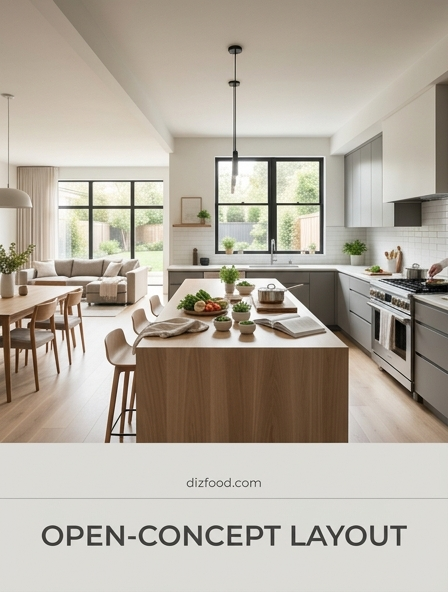
Eliminating Architectural Barriers for Better Connection
The traditional kitchen was once a confined, utilitarian space tucked away from the rest of the home. Modern open-concept designs prioritize the removal of physical walls to foster a sense of unity. By eliminating these architectural barriers, the kitchen is transformed from a hidden workspace into a vibrant communal hub. This structural shift allows for an uninterrupted flow of light and energy, making the entire home feel more expansive and welcoming to both residents and guests alike.
Beyond aesthetics, the absence of walls facilitates a more inclusive environment. When the kitchen is integrated with the dining and living areas, the person preparing the meal is no longer isolated from the group. This transparency encourages a collaborative atmosphere where household members naturally converge. Key benefits of removing these barriers include:
- Enhanced natural light distribution across the entire floor plan.
- Improved ventilation and air circulation throughout the living space.
- Greater flexibility in furniture arrangement and zone definition.
- The ability to monitor children or pets while handling culinary tasks.
Ultimately, removing barriers creates a democratic space where every square foot serves a social purpose, ensuring that the heart of the home is truly accessible to everyone at all times.
The Kitchen Island as a Social Anchor
In an open-concept layout, the kitchen island serves as the definitive center of gravity. It is far more than a mere countertop for food preparation; it functions as a multipurpose furniture piece that facilitates various social interactions. Whether it is used for a quick morning coffee, a homework station for children, or a buffet setup during a dinner party, the island provides a centralized point where paths inevitably cross. Its placement is strategic, acting as a soft boundary that separates the "work" zone from the "rest" zone without sacrificing visibility.
The versatility of the island is often enhanced by integrated features that cater to social needs. By incorporating different heights and amenities, the island becomes a sophisticated tool for modern living. The following table highlights common social features of the kitchen island:
| Feature | Social Utility |
|---|---|
| Cantilevered Seating | Allows guests to sit comfortably at eye level with the chef. |
| Integrated Wine Fridge | Provides easy access to beverages without interrupting the cook. |
| Pop-up Outlets | Supports digital devices for shared recipe browsing or remote work. |
By designing the island with these interactive elements in mind, homeowners can ensure their kitchen remains a high-functioning environment that naturally draws people together.
Bridging the Gap Between Cooking and Hosting
For many years, hosting a dinner party meant the cook spent half the evening behind a closed door, missing out on the conversation and laughter. Open-concept kitchens bridge this gap by aligning the culinary workspace with the entertainment area. This design philosophy recognizes that cooking itself is a form of entertainment and an act of hospitality. When the stove and prep areas face the living room, the host becomes a central participant in the social gathering rather than a distant provider.
To successfully bridge this gap, homeowners should consider the following steps in their kitchen planning:
- Position the primary cooking surface on the island or a peninsula to face guests.
- Invest in high-performance, quiet ventilation systems to minimize noise distractions.
- Incorporate "landing zones" for appetizers and drinks near the perimeter of the kitchen.
- Use consistent materials and colors to blend the kitchen's aesthetic with the dining room.
This integration ensures that the transition from chopping vegetables to pouring wine is seamless. It allows the host to maintain eye contact and engage in dialogue, turning the preparation of the meal into a shared experience that begins long before the food hits the table.
Maximizing Sightlines for Inclusive Conversations
Effective communication relies heavily on visual cues, and open-concept kitchens are specifically designed to maximize sightlines. By ensuring that there are no tall cabinets or bulky appliances blocking the view of the dining or living area, the space becomes conducive to inclusive conversations. When a cook can see the expression on a friend's face across the room, the level of engagement increases exponentially. This visibility creates a cohesive social fabric where no one feels left out of a punchline or a poignant moment.
Maximizing sightlines also serves a practical purpose for families. Parents can keep a watchful eye on children playing in the living room or doing homework at the dining table while managing the oven. This visual connectivity reduces the stress of multitasking and allows for a more relaxed domestic atmosphere. Designers often achieve this by using low-profile appliances, pendant lighting that hangs above eye level, and strategically placed mirrors to bounce light and reflections. The result is a space that feels intellectually and emotionally connected, where the physical layout actively supports the human desire for constant interaction and shared awareness within the household.
Fluid Transitions Between Culinary and Living Zones
A successful open-concept kitchen feels like a natural extension of the living area rather than a separate, sterile compartment. Achieving fluid transitions involves a careful balance of interior design elements that guide the eye and the body from one zone to the next. Instead of harsh breaks in flooring or wall colors, designers use "threshold" elements to create harmony. This might include continuous hardwood flooring, a shared ceiling treatment, or a color palette that repeats throughout the entire open floor plan.
To ensure these transitions remain functional and visually appealing, consider these design strategies:
- Use area rugs to define the living zone without introducing physical walls.
- Implement layered lighting, such as dimmable recessed lights, to shift the mood between zones.
- Choose cabinetry that looks like high-end furniture to soften the industrial feel of the kitchen.
- Incorporate indoor plants to act as organic dividers that add texture and life.
By focusing on these subtle cues, the kitchen loses its rigid boundaries. The movement from the sofa to the refrigerator becomes a graceful experience, reinforcing the idea that the home is a singular, multifaceted environment built for modern, interconnected lifestyles.
The Psychology of Shared Open Spaces
The movement toward open-concept kitchens is deeply rooted in environmental psychology. Humans are inherently social creatures, and physical isolation within the home can lead to feelings of disconnection. An open layout satisfies the subconscious need for "prospect and refuge"-the ability to see one's surroundings (prospect) while feeling secure in a specific task (refuge). In this context, the kitchen becomes a safe harbor where one can work while still feeling part of the larger family unit. This proximity reduces the psychological burden of household chores, as they are no longer viewed as solitary burdens.
Furthermore, shared spaces promote a sense of transparency and trust among residents. When activities are visible to all, it fosters an environment of mutual participation. Even if family members are engaged in different tasks-one reading, one cooking, one watching television-the shared acoustic and visual space creates a "togetherness" that is impossible to achieve in a compartmentalized home. This layout encourages spontaneous interactions and reduces the friction of communication, ultimately leading to stronger domestic bonds and a more harmonious living experience where every inhabitant feels seen and heard throughout the day.
Enhancing Guest Engagement Through Integrated Design
When hosting guests, the kitchen should act as a welcoming stage rather than a restricted staff area. Integrated design elements allow guests to feel comfortable moving into the kitchen space without feeling like they are in the way. By creating designated areas for guests to "park" themselves, such as a beverage station or a secondary snack counter, the host can direct traffic and manage the flow of the event effectively. This approach turns the kitchen into a participatory environment where guests might even offer to help with small prep tasks.
To maximize engagement, the kitchen must be equipped with features that cater to visitors. The table below outlines design choices that facilitate guest interaction:
| Design Element | Guest Impact |
|---|---|
| Open Shelving | Allows guests to find glasses or plates without asking the host. |
| Prep Sink in Island | Encourages guests to wash hands or help with produce. |
| Integrated Sound System | Ensures music is consistent from the living room to the stove. |
By thinking about the guest experience during the design phase, the kitchen becomes an inviting extension of the party, fostering a relaxed atmosphere where conversation flows as freely as the wine.
Creating a Natural Path for Movement and Interaction
The ergonomics of an open-concept kitchen must account for more than just the "work triangle" of the stove, sink, and refrigerator. It must also consider the "social triangle"-the path between the food prep area, the seating, and the entryways. Creating a natural path for movement prevents bottlenecks and ensures that traffic flows smoothly even during busy times. A well-designed path allows people to move through the space without interrupting the person who is actually cooking, maintaining both safety and social harmony.
To optimize movement and interaction, designers often follow these principles:
- Widening walkways to at least 42-48 inches to allow two people to pass comfortably.
- Placing the refrigerator at the edge of the kitchen zone for easy access by non-cooks.
- Aligning the island so it guides guests toward the seating area and away from the hot zone.
- Ensuring that cabinet doors and drawers do not block main thoroughfares when open.
When movement is intuitive, the space feels larger and more organized. This thoughtful planning allows for "choreographed" interaction where people can socialize, cook, and clean in a synchronized fashion, making the kitchen a stress-free environment for everyone involved.
From Solitary Prep to Collaborative Dining
The shift from solitary food preparation to collaborative dining is one of the greatest benefits of the open-concept kitchen. In this layout, the kitchen is designed to accommodate multiple "chefs" at once. With expansive countertops and multiple workstations, the act of making a meal becomes a group activity rather than a one-person chore. This collaborative spirit often extends to the dining experience itself, as the informal nature of the space encourages "grazing" and casual eating rather than a stiff, formal dinner setting.
Fostering this collaborative environment requires specific kitchen features that support teamwork:
- Double sinks or an additional prep sink on the island.
- Extra-wide islands that allow for prep on one side and dining on the other.
- Storage solutions that make tools easily accessible to more than one person.
- Flexible seating that can be moved or adjusted based on the size of the group.
By transforming prep time into a social event, the kitchen becomes a place for teaching, learning, and bonding. Whether it is a parent teaching a child to bake or friends assembling tacos together, the open-concept layout makes these collaborative moments possible and enjoyable for all participants.
Designing for Multi-Generational Social Connectivity
An open-concept kitchen is uniquely suited to meet the needs of a multi-generational household. By providing a wide, accessible space, it allows family members of all ages and abilities to interact in a single location. For elderly family members, the absence of narrow doorways and the presence of varied seating heights make the kitchen a comfortable place to linger. For children, the open sightlines ensure they are always within the safety of a parent's view while they play or study nearby. This inclusivity is essential for maintaining strong family ties in a busy world.
Designing for multi-generational connectivity involves selecting features that cater to diverse physical needs. This might include lower-level microwave drawers that are easy for kids to reach, or pull-out pantry shelves that require less bending for older adults. Lighting also plays a crucial role; bright task lighting helps those with declining vision, while soft ambient lighting creates a cozy atmosphere for evening chats. When a kitchen is designed with every generation in mind, it becomes the true heart of the home-a place where history is shared over a meal and new memories are made across the ages in a supportive, open environment.


Comments