
Are you a moonlit fridge-raider or a sunrise espresso-sipper? The battle between late-night snack raids and early-morning coffee rituals is more than just a matter of timing; it is a reflection of your biological rhythm and psychological needs. Whether you find sanctuary in the quiet, blue glow of the kitchen at midnight or derive your daily power from the rhythmic hiss of a 6:00 AM pour-over, these habits reveal your culinary chronotype. While the night owl seeks sensory indulgence and decompression after a long day, the early bird uses the kitchen as a launchpad for productivity, turning caffeine into a sacred gear-shifting ceremony. Understanding which habit defines you can help you optimize your energy levels and embrace the unique comfort found in your favorite time of day.
| Feature | Late Night Snack Raids | Early Morning Coffee Rituals |
|---|---|---|
| Peak Window | 11:00 PM - 2:00 AM | 5:00 AM - 8:00 AM |
| Primary Driver | Dopamine & Decompression | Cortisol & Cognitive Function |
| Typical Intake | Carbs, leftovers, salty snacks | Caffeine, antioxidants, light protein |
| Atmosphere | Secretive, quiet, indulgent | Structured, rhythmic, hopeful |
| Bio-Impact | Lowered sleep quality/metabolism | Spiked alertness/metabolic rate |
| Social Context | Solitary "me-time" exploration | News consumption or family prep |
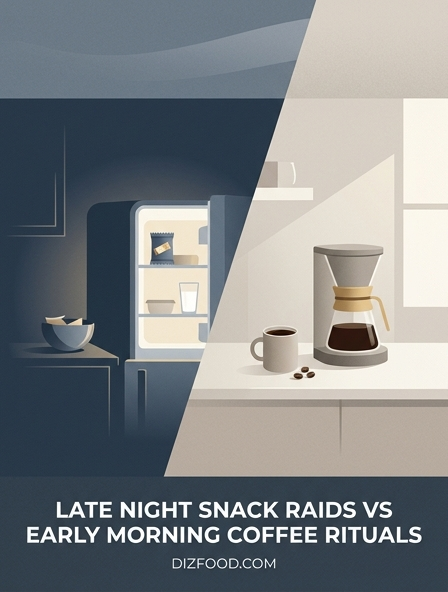
Midnight Indulgence Versus Sunrise Caffeine Routines
The kitchen undergoes a profound transformation between the hours of two in the morning and six in the morning. During a late-night snack raid, the environment is defined by stealth and impulse. The cool glow of the refrigerator light illuminates a landscape of leftovers and chilled treats, while the hum of the cooling compressor provides the only soundtrack to the quiet exploration of the pantry. These moments are often solitary and clandestine, driven by a primal urge for comfort or a sudden spike in hunger that bypasses the logic of a regular meal schedule.
In contrast, the early morning coffee ritual is a structured ceremony of awakening. The kitchen is no longer a place of shadows but a sanctuary of preparation. The sounds change from the soft closing of a cupboard to the rhythmic grinding of beans and the hiss of steam. While the midnight raid is about immediate gratification, the morning brew is about intentionality and the transition from rest to productivity. One is an ending to a long day, a final indulgence before sleep, while the other is the foundational pillar upon which the coming day is built.
- Midnight Raid Atmosphere: Dim lighting, silence, cold surfaces, impulsive choices.
- Morning Ritual Atmosphere: Increasing natural light, mechanical sounds, warmth, methodical steps.
- Midnight Social Context: Usually solitary and private.
- Morning Social Context: Can be a shared experience or a personal meditation.
The Science of Late Night Cravings and Morning Brews
The biological drivers behind these two kitchen behaviors are rooted in complex neurochemical and hormonal shifts. At night, the body's levels of leptin, the hormone responsible for satiety, typically drop, while ghrelin, the hunger hormone, may spike if the body is fatigued. This hormonal imbalance often leads to cravings for high-carbohydrate or high-fat foods, as the brain seeks a quick energy source to cope with sleep deprivation. The kitchen becomes a laboratory for these biological demands, leading to the "raid" phenomenon where nutritional logic is often suspended in favor of calorie-dense rewards.
Morning coffee routines are governed by the interaction between caffeine and adenosine. Throughout the day and night, adenosine builds up in the brain, binding to receptors that signal tiredness. Caffeine molecules are structurally similar to adenosine and effectively "plug" these receptors, preventing the sleepiness signal from reaching the brain. This pharmacological intervention is the primary goal of the morning ritual. Understanding these mechanisms helps illustrate why we reach for certain items at specific times.
| Factor | Midnight Craving | Morning Coffee |
|---|---|---|
| Primary Chemical | Ghrelin / Cortisol | Caffeine / Adenosine |
| Biological Goal | Energy replenishment | Alertness and arousal |
| Typical Craving | Glucose and Lipids | Alkaloids and Antioxidants |
Balancing Midnight Snack Habits With Morning Coffee Energy
The relationship between what we consume in the middle of the night and how we respond to our morning caffeine is a delicate physiological tug-of-war. A heavy, sugary midnight snack can lead to a "glucose crash" by the time the sun rises, making the morning coffee feel like a desperate necessity rather than an enjoyable ritual. When the blood sugar spikes and then plummets during sleep, the body often wakes up in a state of mild inflammation or lethargy, commonly referred to as a "food hangover." This state requires a higher dose of caffeine to achieve the same level of baseline alertness.
To find balance, one must acknowledge how these two events interact within the confines of the kitchen. Choosing complex carbohydrates or small amounts of protein during a night raid can mitigate the morning-after sluggishness. Furthermore, delaying the morning coffee by sixty to ninety minutes after waking can help the body naturally clear out residual adenosine, allowing the caffeine to work more effectively without crashing later in the afternoon. By viewing the midnight snack and the morning brew as two ends of a single continuous cycle, individuals can better manage their energy levels and avoid the roller-coaster of extreme highs and lows that often characterize poorly timed consumption habits.
Sleep Quality Impact of Night Snacking vs Morning Caffeine
The kitchen is the gateway to sleep quality, acting as the primary source of substances that either promote or inhibit rest. Late-night snacking, particularly if it involves spicy, acidic, or heavy foods, can trigger indigestion and acid reflux, which are significant disruptors of the sleep cycle. When the body is forced to focus on the thermic effect of food-digesting a large meal-it cannot efficiently lower its core temperature, a necessary step for entering deep REM sleep. Consequently, the kitchen raid often results in fragmented rest and a lack of restorative recovery.
Conversely, the timing of morning caffeine can also dictate the quality of the following night's sleep. Because caffeine has a half-life of approximately five to six hours, a cup of coffee consumed too late in the day can remain in the system well into the evening. However, the morning ritual itself, when performed early, sets a "biological timer." By using the kitchen as a space for early-day stimulation, we help anchor our internal clock.
- Digestion Interruptions: High-fat snacks delay stomach emptying, causing discomfort.
- Insulin Spikes: Late sugar intake can lead to nocturnal awakenings as blood sugar fluctuates.
- Caffeine Persistence: Residual caffeine blocks the natural buildup of sleep pressure.
- Temperature Regulation: Eating increases metabolic heat, counteracting the body's natural cooling for sleep.
Dopamine Cycles in Late Night Eating and Early Coffee
Both the midnight snack and the morning coffee are powerful triggers for the brain's reward system, specifically through the release of dopamine. During a late-night kitchen raid, the brain often seeks a "quick win" to combat stress or boredom. The act of finding a hidden treat or preparing a simple, salty snack provides an immediate dopaminergic hit. This is why late-night eating can become habitual; the brain associates the quiet, dark kitchen with a reliable source of pleasure that isn't available during the hectic daytime hours.
The morning coffee ritual operates on a slightly different dopamine pathway involving anticipation. The smell of the grinding beans and the warmth of the mug provide sensory cues that signal the brain that a period of focus and reward is coming. This is a "learned" dopamine response where the ritual itself becomes as satisfying as the caffeine. While the midnight snack is often a reactive response to an emotional state, the morning coffee is a proactive setup for a desired cognitive state. Both, however, reinforce the kitchen's role as the emotional and chemical control center of the home, where the cycle of desire and satisfaction repeats every twenty-four hours.
Nutritional Profiles of Midnight Treats and Breakfast Drinks
When analyzing what is actually consumed during these periods, a clear nutritional divide emerges. Midnight raids are rarely about balanced nutrition; they are about convenience and flavor profiles that satisfy immediate cravings. Common choices include cereal, crackers, ice cream, or leftover pizza. These items are typically high in refined carbohydrates and sodium, which provide a temporary sense of fullness but offer very little in the way of long-term satiety or micronutrient density. The nutritional profile of a "raid" is often skewed toward macronutrients that provide quick energy but lead to metabolic storage rather than expenditure.
Morning drinks, on the other hand, are often viewed through a functional lens. While some may opt for sugary lattes, the traditional morning coffee is low in calories but rich in antioxidants like quinines and chlorogenic acid. The nutritional goal here is hydration and metabolic stimulation.
| Nutrient Type | Common Night Snack | Morning Coffee (Black) |
|---|---|---|
| Calories | 200 - 500 kcal | 2 - 5 kcal |
| Sugar Content | High (often hidden) | Negligible |
| Antioxidants | Low | High |
| Main Benefit | Satiety/Comfort | Focus/Metabolic rate |
Metabolism Shifts Between Late Night Bites and Early Sips
The body handles nutrients very differently depending on the position of the sun. In the late hours, insulin sensitivity tends to decrease as the body prepares for its fasting state during sleep. When we raid the kitchen at midnight, the carbohydrates we consume are more likely to be stored as adipose tissue because the body is not in an active state to burn off the resulting glucose. This nocturnal eating can lead to metabolic inflexibility over time, where the body struggles to switch between burning fat and burning sugar effectively.
The morning coffee ritual acts as a metabolic "jumpstart." Caffeine has been shown to increase the basal metabolic rate and stimulate lipolysis, the process of breaking down fats for energy. By consuming coffee in the morning, especially if taken without heavy creams or sugars, the individual encourages the body to utilize its stored energy reserves. The kitchen thus acts as a switchboard for our metabolism; late-night use often signals storage and conservation, while early-morning use signals expenditure and activity. This shift is vital for maintaining a healthy weight and ensuring that the body's energy production remains consistent throughout the daylight hours.
Psychological Comfort of Night Raids vs Morning Rituals
Beyond the physiological and nutritional aspects, there is a deep psychological component to how we use the kitchen at opposite ends of the day. The late-night snack raid is frequently a form of "revenge bedtime procrastination" or a way to reclaim personal time after a day of following others' schedules. It is a moment of total autonomy. The psychological comfort comes from the lack of judgment and the indulgence in something forbidden or unnecessary. It serves as a soft landing for the psyche before the total surrender of sleep.
The morning coffee ritual provides comfort through stability and control. In an unpredictable world, the process of making coffee is a series of steps that the individual can master perfectly every single time. It provides a sense of self-efficacy. For many, the kitchen in the morning is a place of mental "booting up," where thoughts are organized and the day's challenges are visualized.
- Morning: Establishing a sense of order and routine.
- Midnight: Seeking emotional regulation through sensory pleasure.
- Morning: Using the kitchen as a gateway to the external world.
- Midnight: Using the kitchen as a retreat from the external world.
Finding Balance Between Midnight Hunger and Morning Focus
Achieving harmony in the kitchen requires a conscious effort to bridge the gap between the impulsive night-owl and the disciplined early-bird. If a midnight snack is truly necessary, shifting the choice toward foods rich in tryptophan or magnesium, such as a small bowl of Greek yogurt or a handful of walnuts, can actually aid sleep rather than disrupt it. This turns the raid into a functional bridge to the morning rather than an obstacle. By making the "raid" more intentional, the negative impact on the next day's focus is significantly minimized.
Similarly, the morning coffee can be optimized to work with the body's natural rhythms. Instead of using caffeine to mask the damage of a late-night indulgence, it should be used to enhance an already rested state. This involves keeping the kitchen stocked with high-quality beans and clear water, ensuring that the ritual is as much about hydration as it is about stimulation. When these two kitchen behaviors are balanced, the transition from the quiet of the night to the energy of the morning becomes seamless. The kitchen stops being a place of dietary conflict and starts being a tool for sustained cognitive and physical performance.
Circadian Rhythm Effects of Night Snacks and Morning Joe
The circadian rhythm is the body's internal clock, and the kitchen is its primary calibration station. Light and food are the two strongest "zeitgebers," or time-givers, that sync this clock. Eating late at night sends a confusing signal to the peripheral clocks in our liver and digestive system, telling them it is time to be active when the central clock in the brain is signaling sleep. This internal desynchrony can lead to long-term health issues, as the body's systems are essentially operating in different time zones.
Morning coffee, particularly when paired with the natural light that filters into the kitchen, helps reset the central clock. Caffeine influences the expression of certain clock genes, helping to reinforce the "awake" phase of the cycle. By managing the timing of kitchen activities, we can strengthen our circadian alignment.
- Phase Delay: Late eating can push the sleep cycle later, making it harder to wake up.
- Phase Advance: Early morning stimulants and nutrients help pull the cycle forward.
- Metabolic Timing: Keeping the "eating window" aligned with daylight supports better hormonal health.
- Consistency: Performing the morning ritual at the same time every day stabilizes the rhythm.






Comments