
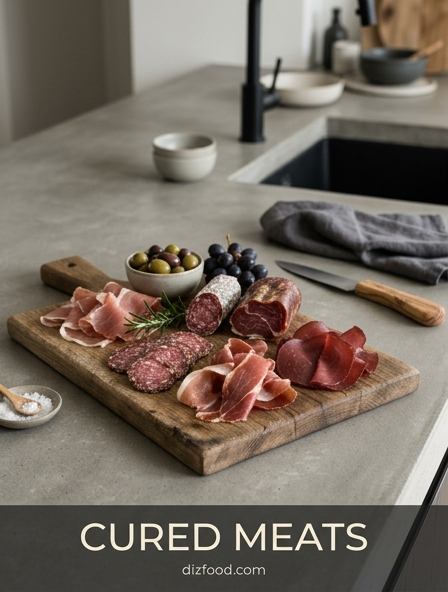
Essential Cured Meat Varieties for Charcuterie
Building a foundational charcuterie board requires a thoughtful selection of meats that represent various curing methods and textures. A balanced board typically includes a mix of salt-cured whole muscles and fermented ground sausages to provide a comprehensive tasting experience. Salt, time, and temperature are the primary agents that transform raw protein into the delicacies found in high-end kitchens. These products rely on historical preservation techniques that have been perfected over centuries, resulting in deeply concentrated flavors.
To ensure your selection covers the necessary sensory ground, consider including these essential varieties:
- Prosciutto di Parma: A delicate, thin-sliced ham aged with only sea salt.
- Spanish Chorizo: A firm, fermented sausage heavily seasoned with smoked paprika.
- Soppressata: A classic Italian dry-cured salami with a coarse grind and subtle garlic notes.
- Bresaola: Air-dried, salted beef that offers a lean, herbaceous alternative to pork.
- Mortadella: A heat-cured silk-textured sausage studded with cubes of pork fat and pistachios.
Each of these meats contributes a unique profile, from the buttery melt of prosciutto to the spicy kick of chorizo, ensuring every guest finds something appealing on the platter.
Balancing Flavors Between Meats and Cheeses
The interplay between the saltiness of cured meats and the diverse profiles of cheeses is the cornerstone of a successful kitchen presentation. When selecting pairings, one must consider the intensity of the cure. A heavily salted meat can easily overwhelm a mild cheese, while a pungent blue cheese might mask the subtle sweetness of a long-aged ham. The goal is to create a symbiotic relationship where the fat in the meat cleanses the palate for the acidity of the cheese, and vice versa.
Acidity plays a crucial role in this balance. Many cured meats are rich in fats that coat the tongue, which requires a sharp or acidic cheese to cut through the weight. Conversely, very dry, hard cheeses benefit from being paired with meats that have a higher moisture content or a significant fat cap. By thinking of flavor in terms of "high notes" and "low notes," you can construct a board that guides the eater through a complex landscape of umami, salt, and tang, preventing palate fatigue during the meal.
The Importance of Slicing Techniques for Texture
How a cured meat is sliced significantly alters the consumer's perception of its flavor and texture. In professional kitchens, the thickness of a cut is never an afterthought; it is a deliberate choice based on the density of the product. Whole muscle cures like Lonzino or Coppa are typically sliced paper-thin to allow the intricate marbling to dissolve almost instantly upon contact with the warmth of the tongue. In contrast, firmer sausages might be better served in thicker coins or hand-cut chunks to highlight their rustic grind.
| Meat Type | Recommended Thickness | Sensory Objective |
|---|---|---|
| Prosciutto | Paper-thin / Transparent | Dissolving fat, delicate mouthfeel |
| Hard Salami | 1/8 inch (3mm) | Chewy, substantial bite |
| Bresaola | Ultra-thin | Silky texture, easy mastication |
| Spanish Chorizo | Bias-cut coins | Structural integrity, bold spice release |
Using a high-quality mandoline or a professional-grade deli slicer ensures consistency, which is vital for both aesthetic appeal and flavor uniformity across the entire serving.
Selecting Regional Specialties for Authenticity
Focusing on regional specialties allows a chef to tell a story through the kitchen's offerings. Every geography with a history of curing has developed specific techniques based on local climate and available ingredients. For instance, the humid regions of Italy are famous for slow-aged hams, while the drier highlands of Spain produce the intensely nutty Jamón Ibérico. Incorporating these specific items provides an educational element to the dining experience and honors the artisanal traditions of the producers.
Authenticity is often protected by geographic designations, which act as a hallmark of quality. When sourcing, look for specific regional markers:
- DOP (Italy): Denominazione di Origine Protetta for items like Culatello.
- AOC (France): Appellation d'Origine Contrôlée, essential for authentic Jambon de Bayonne.
- DO (Spain): Denominación de Origen, covering the elite Pata Negra hams.
By curating a board based on a specific region, such as the Basque Country or the Emilia-Romagna province, you create a cohesive flavor profile that reflects the terroir and cultural heritage of the area.
Pairing Bold Salamis with Creamy Cheeses
The contrast between a bold, spice-forward salami and a decadent, creamy cheese is one of the most celebrated combinations in the culinary world. High-fat, soft-ripened cheeses like Brie, Camembert, or Brillat-Savarin provide a cooling, luxurious base that tempers the heat of spicy cured meats. When a guest bites into a slice of Calabrese salami followed by a smear of triple-cream cheese, the spice is muted just enough to allow the floral notes of the pork and the earthiness of the cheese mold to shine through.
This pairing strategy also works well with fermented sausages that have high acidity or "tang." The lactic acid produced during the fermentation of the meat resonates with the creamy textures, creating a bright and refreshing finish rather than a heavy one. To execute this perfectly, ensure the cheese is served at the correct ripeness; a runny, gooey center provides the best textural counterpoint to the firm, crystalline structure often found in well-aged, bold sausages. This dynamic duo remains a staple for any kitchen aiming to provide high-impact flavor profiles.
Incorporating Whole Muscle Versus Ground Meats
Understanding the distinction between whole muscle and ground meat preparations is essential for any kitchen specializing in cured products. Whole muscle cures involve taking an entire cut-such as the neck, loin, or hind leg-and curing it intact. This preserves the natural grain of the meat and the specific distribution of fat. Ground meats, or salumi, involve mincing the protein and mixing it with back-fat, salts, and spices before stuffing it into casings for fermentation and drying.
| Category | Common Examples | Primary Characteristic |
|---|---|---|
| Whole Muscle | Capicola, Speck, Lomo | Intact muscle fibers, natural marbling |
| Ground Meats | Finocchiona, Pepperoni, Fuet | Uniform spice distribution, tangy fermentation |
A sophisticated display includes both categories to provide variety. Whole muscle meats offer a more "pure" meat flavor and a silky texture, while ground meats allow for a creative infusion of aromatics like fennel seeds, wine, or truffles, providing a more complex and engineered flavor profile that complements the simpler cuts.
Enhancing Your Display with Savory Accompaniments
While cured meats are the stars of the show, savory accompaniments act as the supporting cast that elevates the entire experience. These additions are not merely decorative; they serve a functional purpose by providing acidity, crunch, and bitterness to cleanse the palate between different types of fat. In a professional kitchen, these items are carefully selected to match the specific moisture content and salt levels of the meats being served. They transform a simple plate of meat into a multifaceted meal.
Consider integrating the following savory elements for a well-rounded presentation:
- Cornichons: Tiny, tart pickles that offer a sharp vinegary snap.
- Castelvetrano Olives: Buttery, mild green olives that bridge the gap between meat and cheese.
- Stone-Ground Mustard: Provides a nasal heat that cuts through the richness of fatty sausages.
- Marcona Almonds: Adds a necessary crunch and a nutty saltiness.
- Pickled Red Onions: Introduces both acidity and a vibrant splash of color to the board.
These elements ensure that the richness of the charcuterie does not become overwhelming, allowing the diner to enjoy larger quantities of meat with sustained interest.
Sourcing High Quality Artisanal Cured Meats
The quality of a cured meat product is determined long before it reaches the kitchen. Sourcing artisanal meats requires an understanding of animal husbandry and traditional processing. Small-batch producers often utilize heritage breeds of hogs, such as Berkshire or Duroc, which are known for their superior intramuscular fat and flavor. Unlike mass-produced meats, artisanal products are cured slowly without the use of accelerated chemical processes, allowing the natural enzymes to break down proteins and develop deep, complex umami notes.
When sourcing, it is important to develop relationships with purveyors who prioritize transparency. Inquire about the length of the drying process and the types of wood used for smoking, if applicable. High-quality cured meats should have a clean ingredient list, usually consisting of meat, salt, and spices, without excessive fillers or artificial preservatives. In the kitchen, the chef's role is to respect these products by storing them at the correct humidity and temperature, ensuring that the hard work of the artisan is preserved until the moment of service.
Creating Visual Appeal Through Meat Arrangement
The visual arrangement of cured meats is an art form that significantly impacts the perceived value of the dish. A well-composed board uses height, color, and shape to create an inviting landscape. Instead of laying slices flat, kitchen staff are often trained to fold, "ribbon," or bunch the meat. This not only creates volume but also makes it easier for guests to pick up individual portions without them sticking together. The goal is to avoid a static look and instead create a sense of abundance and movement.
Color contrast is another vital tool. Placing a deep red Bresaola next to a pale, white-spotted Mortadella creates a striking visual break. Using the natural curves of the sausages to create "S-curves" or circular fans can guide the eye across the board. Furthermore, incorporating negative space is just as important as the meat itself; overcrowding a board can make it look messy rather than plentiful. By thoughtfully placing each slice, the kitchen ensures that the first "bite" taken with the eyes is just as satisfying as the actual tasting experience.
Serving Temperatures for Maximum Flavor Profiles
One of the most common mistakes in serving cured meats is presenting them directly from the refrigerator. Cold temperatures mute the flavors and cause the fats to remain waxy and firm, which prevents them from coating the palate. For the best sensory experience, meats should be brought to room temperature before serving. This allows the oils to soften and the volatile aromatic compounds to be released, ensuring the diner experiences the full spectrum of the cure's profile.
Different types of meat require slightly different considerations regarding temperature management:
- Hard Salamis: Benefit from 20-30 minutes of tempering to soften the fat.
- Delicate Hams: Should be sliced cold for precision but served at room temperature to maximize silkiness.
- Spreadables (Nduja): Must be warm enough to be pliable and spread easily without tearing the bread.
A general rule in the kitchen is to pull the charcuterie platter approximately 30 minutes before service. This simple step transforms a standard snack into a gourmet experience where the nuances of wood smoke, fermentation, and spices are fully realized and appreciated by the guest.






Comments