
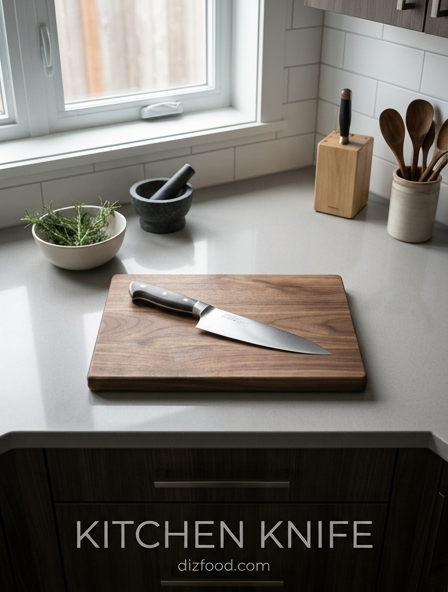
Essential Features of Professional Kitchen Knives
Understanding the anatomy of a professional kitchen knife is the first step toward culinary mastery. A high-quality blade is defined by its material composition, balance, and construction. Most professionals prefer high-carbon stainless steel because it offers the durability of stainless steel with the edge retention of carbon steel. The "tang"-the part of the blade that extends into the handle-is equally critical. A full-tang knife, where the steel runs the entire length of the handle, provides superior balance and longevity compared to partial-tang alternatives.
| Feature | Description | Benefit |
|---|---|---|
| Forged Blade | Created from a single piece of heated steel. | Increased strength and weight. |
| Bolster | The thick junction between blade and handle. | Protects fingers and adds balance. |
| Edge Angle | Typically 15 to 20 degrees. | Ensures surgical precision. |
Weight distribution is the final essential factor. A well-balanced knife should feel like an extension of the hand, with the center of gravity located at the bolster. This reduces wrist fatigue during repetitive tasks, allowing chefs to maintain high performance throughout long sessions of food preparation.
Selecting the Best Blade for Gourmet Snacks
Preparing gourmet snacks requires a versatile kit of specialized blades, as different ingredients demand unique cutting edges. While a chef's knife is the workhorse of the kitchen, it is not always the most efficient tool for intricate appetizers. For instance, a serrated utility knife is indispensable for slicing through the waxy skin of tomatoes or the crusty exterior of a baguette without crushing the soft interior. Conversely, a paring knife provides the control necessary for peeling small fruits or removing seeds from peppers.
- Chef's Knife: Best for dicing onions, mincing herbs, and heavy chopping.
- Santoku: Features a flat edge ideal for thin, vertical vegetable slices.
- Paring Knife: Perfect for intricate garnishes and small-scale precision.
- Serrated Blade: Essential for soft-centered snacks with firm exteriors.
When selecting a blade for gourmet tasks, consider the texture of the food. Using a heavy blade on a delicate strawberry will likely bruise the fruit, whereas a light, sharp paring knife preserves the integrity of the flesh. Matching the knife to the specific snack component ensures professional results and enhances the overall visual appeal of the final dish.
Mastering the Professional Pinch Grip Technique
The pinch grip is the gold standard for professional chefs, offering unparalleled control and safety. Unlike the common mistake of wrapping all fingers around the handle or placing a finger along the spine, the pinch grip involves "pinching" the heel of the blade with the thumb and the side of the index finger. The remaining three fingers wrap comfortably around the handle. This technique moves the pivot point forward, allowing the knife to become more responsive to subtle hand movements.
- Position your hand at the junction where the handle meets the blade.
- Grip the blade itself between your thumb and the first joint of your index finger.
- Curl the other fingers around the handle for stability.
- Ensure your grip is firm but relaxed to avoid muscle strain.
This method significantly improves accuracy when performing fine tasks like mincing garlic or julienning peppers. By gripping the blade directly, you eliminate the "wobble" that often occurs with handle-only grips. Over time, this technique becomes second nature, drastically increasing your speed and reducing the risk of the blade slipping during high-pressure snack preparation.
Precision Slicing Methods for Elegant Appetizers
Elevation in culinary arts often comes down to the precision of the cut. For elegant appetizers, uniformity is not just about aesthetics; it ensures a consistent mouthfeel and balanced flavor profile in every bite. Techniques such as the chiffonade-slicing leafy greens into long, thin ribbons-can transform a simple garnish into a sophisticated design element. Similarly, the brunoise cut, which produces tiny 3mm cubes, is essential for creating refined salsas or toppings that sit perfectly atop a crostini.
To achieve these results, the "rocking motion" is vital. By keeping the tip of the knife in constant contact with the cutting board and lifting only the heel, you create a smooth, rhythmic slicing action. This prevents the "chopping" motion that can tear delicate fibers. For harder vegetables, the "push-cut" or "draw-cut" allows for clean separation without sticking. Using these specialized methods demonstrates a high level of craftsmanship, turning basic ingredients like radishes or cucumbers into artistic components that define the gourmet experience. Consistent sizing ensures that every guest enjoys the same texture, making the appetizer tray look professional and intentional.
How Knife Sharpness Enhances Snack Flavors
A sharp knife is more than a safety tool; it is a flavor-enhancer. When a blade is dull, it hacks through food at a cellular level, crushing cell walls rather than slicing them. This mechanical damage causes a rapid release of enzymes and fluids, leading to premature oxidation and the loss of essential juices. For example, a dull knife used on basil will cause the leaves to blacken almost instantly as the oils are bruised out of the plant. A razor-sharp edge, however, passes cleanly through the cells, keeping the flavors trapped inside the ingredient until it is consumed.
Furthermore, the texture of a cleanly sliced ingredient feels superior on the palate. A sharp cut creates a smooth surface area that interacts differently with the tongue than a ragged, torn edge. In the context of gourmet snacks, where raw ingredients are often the stars, the preservation of moisture and crispness is paramount. Investing time in honing and sharpening your blades ensures that your ingredients retain their vibrant colors, crisp textures, and peak nutritional value. Ultimately, the quality of your equipment directly dictates the sensory quality of the food you serve.
The Secret to Uniform Vegetable Crudités
The hallmark of a professional vegetable crudité platter is the uncanny uniformity of its components. Achieving this level of consistency requires more than just a sharp eye; it requires a systematic approach to preparation. Before the first cut is made, vegetables should be "squared off." This involves slicing a thin sliver off one side of a round vegetable, like a carrot or cucumber, to create a flat, stable base. This eliminates rolling, which is the primary cause of uneven slices and accidental slips.
- Stabilize: Always create a flat surface on the vegetable first.
- Measure: Use the width of your knife or a finger as a consistent guide.
- Segment: Cut vegetables into equal lengths before slicing them into batons.
- Align: Stack slices to cut multiple uniform strips simultaneously.
Uniformity ensures that every piece of vegetable has the same "crunch" factor and fits neatly into dipping containers. When carrots, celery, and bell peppers are cut to identical dimensions, the platter takes on a geometric beauty that signals care and attention to detail. This precision also allows for even seasoning or marinating, as the surface-area-to-volume ratio remains constant across all pieces.
Artisan Cheese and Charcuterie Cutting Guide
Artisan cheeses and cured meats present a variety of textures, from the creamy yielding of a Brie to the dense resistance of a dry salami. Using a single knife for a whole board is a common mistake that can ruin the presentation and contaminate flavors. A dedicated cheese knife set often includes blades with holes to prevent soft cheeses from sticking, and narrow blades for hard cheeses to minimize friction. Charcuterie, on the other hand, requires a long, thin blade capable of producing translucent slices of prosciutto or clean discs of chorizo.
| Food Type | Recommended Knife | Cutting Goal |
|---|---|---|
| Soft Cheese | Open-blade (holes) | Prevent sticking/tearing. |
| Hard Cheese | Cleaver or Spreader | Clean fractures or slices. |
| Cured Meats | Slicing Knife | Uniform, thin rounds. |
| Baguette | Serrated Knife | Crisp crust, airy center. |
When preparing a charcuterie board, always cut the meat while it is cold to maintain structural integrity, while cheese is often better cut at room temperature to prevent crumbling. Matching the tool to the texture ensures that each slice looks as good as it tastes.
Maintaining Your Gourmet Slicing Tools
Even the most expensive kitchen knife will lose its edge without proper maintenance. Maintenance is divided into two categories: honing and sharpening. Honing should be done frequently, perhaps every time you use the knife. A honing rod doesn't remove metal; instead, it realigns the microscopic "teeth" of the blade that bend during use. Sharpening, however, is a more intensive process involving whetstones to grind away a small amount of metal and create a fresh edge. This should be done only a few times a year depending on usage.
- Hand wash knives immediately after use with mild soap.
- Dry the blade thoroughly to prevent spotting or corrosion.
- Store knives in a wooden block or on a magnetic strip.
- Never place professional knives in a dishwasher, as the heat and agitation dull the edge.
Proper storage is just as vital as cleaning. Allowing blades to clatter in a drawer will nick the edges and pose a safety risk. By treating your knives with respect and following a regular maintenance schedule, you ensure they remain sharp, safe, and ready for any gourmet challenge.
Safe Cutting Practices for Home Chefs
Safety in the kitchen is the foundation of culinary confidence. The most important rule is also the most counterintuitive: a sharp knife is safer than a dull one. A dull blade requires more force to penetrate the food, increasing the likelihood of the knife slipping and causing a deep injury. Beyond maintenance, your physical posture and the "claw grip" are your primary defenses against accidents. The claw grip involves tucking your fingertips inward and using your knuckles to guide the side of the blade, keeping your digits far from the edge.
- The Damp Towel Trick: Place a damp paper towel under your cutting board to prevent it from sliding.
- Clear Workspace: Maintain a clutter-free zone to allow for full range of motion.
- Focus: Never look away from your hands while the knife is in motion.
- Walking with Knives: Carry the knife tip-down by your side if moving across the kitchen.
If a knife falls, the golden rule is to step back and let it drop; never try to catch it. By establishing these habits, you create a controlled environment where creativity can flourish without the distraction of preventable injuries.
Transforming Simple Ingredients Through Expert Cuts
Expert knife skills have the power to elevate humble ingredients into the realm of fine dining. A standard potato, when turned into a "fondante" or sliced into paper-thin carpaccio, becomes a luxury item. This transformation is driven by the mastery of surface area and presentation. For instance, a diagonal cut on a scallion or asparagus provides more visual surface area than a straight cross-cut, making the ingredient appear more abundant and architecturally interesting. This is particularly effective when preparing snacks, where visual impact is half the battle.
Furthermore, professional cuts allow for innovative textures. A "julienned" apple provides a delicate crunch that integrates perfectly into a salad, whereas a chunky chop would feel clumsy. By varying the thickness and shape of your cuts, you can control the release of flavor and the way the food interacts with dressings and sauces. This level of detail transforms cooking from a chore into an artisan craft. Whether you are hosting a formal gathering or preparing a simple afternoon snack, the precision of your knife work serves as a silent testament to your culinary expertise and respect for the ingredients.

Comments