
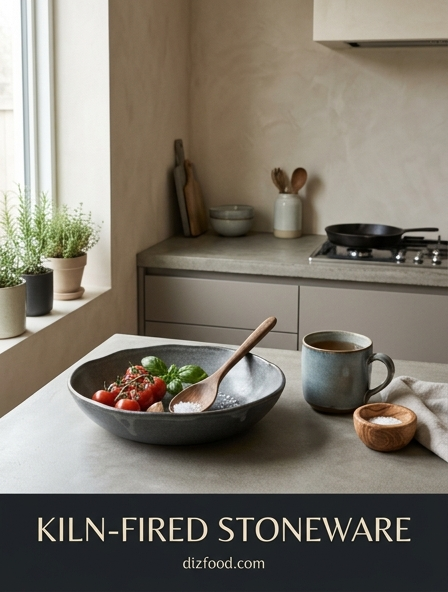
Thermal Mass and Density in Stoneware
Stoneware is renowned in the culinary world for its exceptional thermal mass, a direct result of its high-density composition. Unlike thinner ceramic variants, kiln-fired stoneware is crafted from refined clay bodies that are fired at temperatures ranging between 2,100 and 2,300 degrees Fahrenheit. This intense heat causes the clay to undergo vitrification, a process where the material becomes glass-like and non-porous. The resulting density allows the vessel to absorb significant amounts of thermal energy and release it slowly and evenly.
This physical property is essential for maintaining the integrity of hot dishes. Because the material is thick and tightly packed at a molecular level, it acts as a natural insulator. Chefs prefer stoneware for items that require a stable environment, as it resists the rapid temperature fluctuations that can ruin delicate textures. The following table illustrates the typical physical properties of high-fired stoneware compared to standard earthenware:
| Property | Stoneware | Earthenware |
|---|---|---|
| Firing Temp | 1150°C - 1300°C | 1000°C - 1150°C |
| Porosity | Low (Vitrified) | High (Porous) |
| Durability | High | Moderate |
Sustaining Heat for Slow Snacking
In the context of casual dining and social gatherings, the ability to maintain food temperature over an extended period is a significant advantage. Stoneware excels in "slow snacking" scenarios where guests graze on appetizers over the course of an hour or more. Because stoneware retains heat so effectively, it prevents fats from congealing and sauces from breaking, ensuring that the final bite is as enjoyable as the first. This is particularly useful for communal dining styles where conversation often takes precedence over the speed of consumption.
When preheated in an oven, a stoneware platter serves as a passive heating element on the tabletop. This eliminates the need for unsightly warming candles or electric hot plates in many domestic settings. Popular snacks that benefit from this sustained warmth include:
- Baked brie and warm cheese fondues
- Roasted root vegetable medleys
- Spinach and artichoke dips
- Swedish meatballs in gravy
- Warm artisanal focaccia and flatbreads
By leveraging the material's natural heat retention, hosts can focus more on their guests and less on rushing dishes back to the kitchen for reheating.
The Firing Process and Thermal Stability
The journey of stoneware from raw clay to a kitchen staple involves a rigorous firing process that dictates its ultimate thermal stability. The initial "bisque" fire removes chemically bonded water, while the subsequent glaze firing creates the final hardened state. During these stages, the clay particles fuse together, eliminating air pockets that might otherwise cause the vessel to crack under the pressure of thermal expansion. This stability is what allows stoneware to transition safely from a heated oven to a tabletop.
Thermal stability is also a product of the specific mineral additives found in stoneware clay, such as silica and feldspar. These components ensure that the material expands and contracts uniformly. While no ceramic is completely immune to thermal shock-extreme, sudden temperature changes-kiln-fired stoneware is significantly more resilient than glass or porcelain. This makes it an ideal choice for baking tasks that require a steady climb in temperature, such as sourdough bread or deep-dish savory pies, where a consistent internal environment is the key to a perfect crust and even crumb.
Enhancing Gourmet Visuals with Texture
Beyond its functional utility, stoneware provides a unique tactile and visual experience that elevates the presentation of gourmet cuisine. The kiln-firing process allows for a variety of glaze interactions, resulting in textures that range from ultra-smooth silk to rugged, earthy grit. These textures interact with light in ways that mass-produced, perfectly uniform porcelain cannot. The slight imperfections and "speckling" often found in stoneware suggest an artisanal quality that aligns with modern farm-to-table movements.
Food stylists often choose stoneware to create contrast between the plate and the ingredients. A vibrant, micro-green salad pops against a dark, matte charcoal surface, while a cream-based soup finds depth when served in a bowl with a reactive "breaking" glaze. The organic feel of the material complements the natural shapes of whole foods. Common textural finishes include:
- Reactive Glazes: Creating variegated colors and "flow" patterns.
- Matte Finishes: Minimizing glare for professional food photography.
- Toasted Edges: Highlighting the rim where the clay body meets the heat.
- Satin Vellums: Providing a soft, non-reflective touch.
Heat Retention for Hot Appetizer Styling
Styling hot appetizers requires a balance between aesthetic placement and temperature management. Stoneware is the preferred medium for this because its heavy walls act as a thermal reservoir. When a chef plates a series of hot hors d'oeuvres, the plate itself must not "steal" the heat from the food. Stoneware's low thermal conductivity means that once it is warm, it stays warm, preventing the cold surface from chilling the base of the appetizer immediately upon contact.
This property is especially critical for appetizers that rely on a specific viscosity, such as melted cheeses or reductions. If served on a thin glass plate, these items would thicken and lose their appeal within minutes. The following data highlights the cooling rate of appetizers on different surfaces over fifteen minutes:
| Time (Min) | Stoneware Temp (°C) | Porcelain Temp (°C) |
|---|---|---|
| 0 | 75 | 75 |
| 5 | 68 | 55 |
| 10 | 62 | 42 |
| 15 | 57 | 35 |
As shown, stoneware maintains a palatable temperature for nearly twice as long as thinner materials.
Practical Benefits for Home Entertaining
For the home cook, stoneware represents a marriage of durability and versatility. One of the primary practical benefits is its "oven-to-table" capability. This reduces the number of dishes required for a dinner party, as the same vessel used for roasting or baking serves as a sophisticated presentation piece. This efficiency is highly valued in modern kitchens where space and time are at a premium. Furthermore, the vitrified nature of the clay makes it naturally non-stick and easy to clean, even after exposure to high oven temperatures.
In addition to its heat-resistant properties, stoneware is incredibly robust. It is less prone to chipping than delicate china and is generally safe for use in various kitchen appliances. The following list outlines the common practical advantages for the domestic host:
- Dishwasher Safe: Resists the harsh chemicals and high heat of cleaning cycles.
- Microwave Compatibility: Does not overheat or leach chemicals when reheating leftovers.
- Scratch Resistance: The hard glaze stands up to metal cutlery and heavy use.
- Freezer to Oven: Certain high-quality stoneware can withstand controlled temperature transitions.
Professional Grade Food Presentation Surfaces
In professional culinary environments, the choice of plateware is as strategic as the choice of ingredients. Stoneware has become the industry standard for high-end bistros and Michelin-starred restaurants seeking a "handcrafted" look. The weight of stoneware conveys a sense of quality and permanence to the diner, grounding the meal. Unlike lightweight plastic or thin ceramic, the substantial feel of a stoneware plate signals to the guest that the meal is an artisanal experience rather than a processed commodity.
Professionals also value the way stoneware glazes react to different lighting conditions in a dining room. Under warm, dim lights, the crystalline structures within the glaze can shimmer, adding a layer of visual complexity to the tabletop. Moreover, because stoneware is fired at such high temperatures, the glazes are chemically fused to the body, ensuring that they do not wear down or fade even after thousands of cycles through a commercial dishwasher. This longevity makes it a cost-effective investment for busy establishments that cannot afford frequent replacements due to wear and tear.
Consistency in Temperature for Small Plates
The "small plate" or tapas style of dining relies on the delivery of multiple dishes over a staggered period. In this service model, consistency is paramount. Stoneware's ability to distribute heat evenly across its surface ensures that every item on the plate stays at the same temperature. There are no "cold spots" that occur when a dish is placed on a material with poor thermal distribution. This is particularly important for dishes featuring multiple components, such as a seared scallop paired with a warm puree.
Because small plates have less mass than large entrees, they lose heat more rapidly to the surrounding air. Stoneware compensates for this low food mass by providing high plate mass. By pre-warming the stoneware in a professional warming drawer, the plate effectively becomes part of the cooking and holding process. This synergy between the vessel and the food allows for a more relaxed dining pace, as the pressure to eat before the food cools is significantly diminished. It ensures that the kitchen's hard work in reaching the perfect internal temperature is not lost during the transition from the pass to the guest's table.
Material Science of Kiln Fired Clay
The performance of stoneware is rooted in its specific mineralogy. Kiln-fired clay is a complex composite material that changes its chemical identity during the firing process. The primary ingredients are carefully balanced to achieve the desired density and thermal properties. Understanding these components explains why stoneware outperforms other ceramics in kitchen environments. The vitrification process transforms the clay into a dense, stony substance that is almost entirely impervious to liquid absorption, preventing the growth of bacteria and the retention of food odors.
The chemical makeup typically includes several key elements that contribute to its strength:
- Kaolin: A white clay that provides plasticity and structural integrity.
- Flux (Feldspar): Lowers the melting point of the silica, allowing it to fuse the particles together.
- Silica (Quartz): Acts as the primary glass-forming agent within the clay body.
- Ball Clay: Added to increase the workability and "green" strength of the piece before it enters the kiln.
This sophisticated blend results in a material that is not only beautiful but also scientifically optimized for the rigors of high-heat cooking and frequent handling.
Elevating Tabletop Aesthetics with Stoneware
The final aesthetic of a dining table is heavily influenced by the choice of dinnerware. Stoneware brings an element of raw, natural beauty that bridges the gap between traditional rustic styles and contemporary minimalism. The "wabi-sabi" philosophy, which finds beauty in imperfection and transience, is often reflected in the varied glazes and organic silhouettes of stoneware pieces. This creates a more intimate and less clinical atmosphere compared to the stark uniformity of white porcelain.
When coordinating a tabletop, stoneware serves as a versatile foundation. It pairs excellently with wooden serving boards, linen napkins, and heavy-gauge stainless steel or copper flatware. The visual weight of the material anchors the setting, making it feel more intentional and curated. Whether it is a breakfast bowl with a thumbprint indentation from the potter or a large, sprawling platter with a speckled "snow" glaze, these pieces invite touch and engagement. In an era of digital perfection, the tactile, earthy reality of stoneware provides a grounding sensory experience that enhances the overall pleasure of the meal, making the act of eating feel like a meaningful ritual.

Comments