
When aiming to transform a standard meal into a curated dining experience, the debate between ceramic dip bowls and melamine ramekins centers on the harmony of aesthetics and utility. Ceramic dip bowls are the premier choice for those seeking to elevate their table presentation, offering a sophisticated weight, high-gloss finish, and an artisanal quality that resonates under ambient lighting. While melamine ramekins provide a practical, shatterproof alternative perfect for high-volume catering or outdoor picnics, they often lack the heat retention and premium sensory appeal of kiln-fired stoneware. For hosts who prioritize a luxurious atmosphere and "Instagram-worthy" food styling, the timeless elegance and substantial feel of ceramic remain the gold standard for showcasing everything from artisanal salsas to decadent chocolate ganache.
| Feature | Ceramic Dip Bowls | Melamine Ramekins |
|---|---|---|
| Material & Feel | Natural clay; heavy, premium, and cool to the touch. | Hardened resin; lightweight and plastic-based. |
| Visual Impact | High-end luster, vibrant glazes, and artisanal textures. | Mimics ceramic/wood; matte finish; can look "utility." |
| Durability | Prone to chipping/cracking if dropped; long lifespan. | Shatterproof and virtually unbreakable; ideal for kids. |
| Heat Safety | Microwave, oven, and dishwasher safe (most varieties). | Dishwasher safe; never microwave or oven safe. |
| Thermal Retain | Excellent; keeps dips warm or sauces chilled longer. | Poor; material acts as a neutral thermal insulator. |
| Best Use Case | Fine dining, dinner parties, and gourmet food styling. | Bistros, poolside service, and high-traffic cafeterias. |
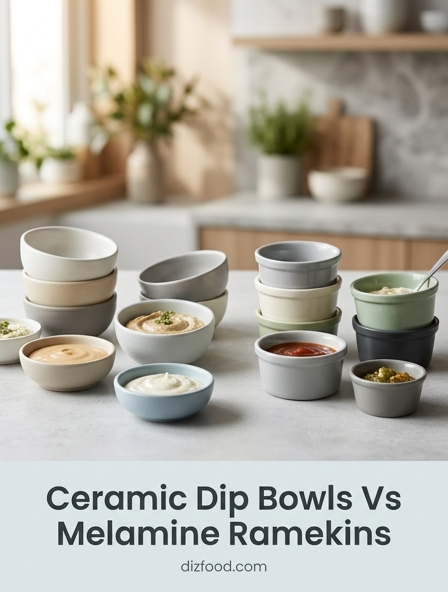
Ceramic vs Melamine Material Durability
When evaluating the material durability of ceramic dip bowls versus melamine ramekins, the primary distinction lies in their reaction to physical impact. Ceramic is a traditional material made from clay fired at high temperatures, resulting in a hard, dense, and rigid structure. While ceramics are exceptionally resistant to warping and surface compression, they are inherently brittle. If a ceramic bowl is dropped onto a hard kitchen floor, it is highly likely to shatter or develop significant cracks, rendering it useless. Furthermore, the glazed edges of ceramic bowls are susceptible to chipping if they knock against other dishes in a crowded sink or dishwasher.
In contrast, melamine is a nitrogen-based plastic resin known for its extreme toughness and resilience. It is essentially break-resistant under normal kitchen conditions. When a melamine ramekin hits the floor, it typically bounces rather than shatters, making it a preferred choice for high-volume environments where accidents are frequent. However, durability is not just about breakage; it is also about structural integrity over time. Melamine can eventually become brittle if exposed to extreme temperature fluctuations repeatedly, whereas ceramic maintains its structural composition for decades if handled carefully.
- Ceramic: High rigidity, low impact resistance, prone to chipping.
- Melamine: High impact resistance, virtually unbreakable, flexible resin base.
- Lifespan: Ceramic lasts indefinitely with careful handling; Melamine eventually degrades after years of heavy use.
Heat Resistance and Microwave Safety
The performance of these two materials under heat is perhaps the most critical safety distinction for any home cook or professional chef. Ceramic dip bowls are generally microwave, oven, and dishwasher safe because they are forged in kilns at temperatures exceeding 2,000 degrees Fahrenheit. This allows them to handle the intense electromagnetic waves of a microwave without leaching chemicals or suffering structural damage. They can often transition from a refrigerator to a microwave, provided the temperature change isn't so abrupt that it causes thermal shock.
Melamine ramekins, however, face significant limitations regarding heat. While they can handle hot food items up to a certain point-usually around 160°F to 200°F-they are strictly prohibited from use in microwaves and ovens. When melamine is exposed to microwave radiation, the material absorbs the energy and heats up excessively, which can cause the resin to dry out, crack, or even melt. More importantly, excessive heat can cause the migration of melamine and formaldehyde into the food, posing potential health risks. Therefore, if a recipe requires melting cheese or heating a dip directly in the serving vessel, ceramic is the only viable option.
| Feature | Ceramic | Melamine |
|---|---|---|
| Microwave Safe | Yes | No |
| Oven Safe | Often (check labels) | No |
| Maximum Temp | Very High | Low to Moderate |
Comparing Aesthetic and Table Presence
Aesthetic appeal and table presence often dictate which vessel is chosen for specific occasions. Ceramic dip bowls are widely regarded as the "premium" choice for formal dining and sophisticated presentations. Because they are often hand-finished or treated with various glazes, each piece can have a unique character. The high-gloss or matte finishes of ceramic provide a depth of color and a tactile richness that signifies quality. The heavy weight of ceramic also contributes to a sense of luxury, making it feel substantial in the hand and stable on the table.
Melamine has come a long way in terms of design, with modern manufacturing techniques allowing it to mimic the look of stone, wood, or even porcelain quite convincingly. From a distance, a high-quality melamine ramekin can be indistinguishable from its ceramic counterpart. However, the illusion is broken upon closer inspection or touch. The lightness of the material and the "plastic" sound it makes when struck with a spoon can detract from a formal atmosphere. While melamine is available in an endless array of vibrant colors and patterns that do not fade easily, it remains firmly categorized as a casual or functional aesthetic, best suited for bistros, cafes, and family-style meals.
Weight and Portability Differences
The weight of kitchenware significantly impacts the ease of service and storage. Ceramic dip bowls are notably heavy. A single ceramic bowl might weigh three to four times as much as a melamine ramekin of the same size. For a home cook serving a single dip, this weight is negligible and often appreciated for the stability it provides. However, in a professional setting or when hosting a large party, the cumulative weight of ceramic dishes can become a physical burden for servers or when carrying a large tray from the kitchen to the dining area.
Melamine ramekins are designed with portability in mind. Their lightweight nature makes them exceptionally easy to stack in high towers without the risk of the bottom unit crushing under the weight. This lightness is a massive advantage for catering companies, food trucks, or even parents carrying snacks for children. Because they are so light, they can be transported in bulk in simple storage bins without the same level of protective padding required for ceramics. This makes the logistics of setup and cleanup much faster and less physically taxing for the user.
Cleaning and Dishwasher Maintenance
Both materials are generally dishwasher safe, but they require different levels of care to maintain their finish. Ceramic dip bowls are incredibly resilient to the harsh chemicals and high heat found in industrial and residential dishwashers. Their non-porous glazed surface acts as a shield, preventing food particles and detergents from penetrating the material. You can place ceramics on both the top and bottom racks without fear of melting or warping, although care must be taken to ensure they do not rattle against other items, which could lead to chipping.
Melamine cleaning requires a more nuanced approach. While it is dishwasher safe, it is highly recommended to place melamine items only on the top rack to keep them away from the heating element. Over time, the intense heat of a dishwasher's drying cycle can cause melamine to lose its luster and become dull. Furthermore, melamine should never be cleaned with abrasive scrubbing pads or harsh scouring powders, as these can create microscopic scratches that harbor bacteria and stains. If food is stuck on a melamine ramekin, a brief soak in warm soapy water is usually necessary before a gentle wipe, whereas ceramic can often handle more aggressive scrubbing.
Suitability for Indoor vs Outdoor Dining
When choosing between ceramic and melamine, the dining environment is a primary factor. Indoor dining typically favors ceramic dip bowls. The controlled environment minimizes the risk of drops, and the ambient lighting highlights the rich glazes of the ceramic. Ceramic is also less likely to be moved around by wind or accidental bumps, providing a grounded experience for dinner parties and holiday feasts. It fits perfectly within the traditional kitchen or dining room setting where elegance and heat retention are prioritized.
For outdoor dining, melamine is the undisputed champion. Whether it is a poolside party, a backyard barbecue, or a picnic in the park, the risk of breakage on hard surfaces like concrete or stone is high. Using ceramic outdoors is often a liability, as shattered shards can be dangerous in high-traffic areas or near swimming pools. Melamine's durability provides peace of mind; it can be dropped on a patio without shattering. Additionally, its lightweight nature makes it easy to transport to a deck or balcony. For any scenario involving children or an uneven outdoor surface, melamine ramekins offer a level of safety and convenience that ceramic simply cannot match.
Impact on Food Temperature Retention
The thermal properties of ceramic and melamine are vastly different, which affects how long your dips and sauces stay at the desired temperature. Ceramic has a high thermal mass, meaning it can absorb and hold heat or cold for extended periods. If you pre-warm a ceramic bowl before adding a hot artichoke dip, the bowl will help maintain that warmth throughout the meal. Conversely, chilling a ceramic bowl in the refrigerator before serving salsa or hummus will keep the contents cool even on a warm day. This makes ceramic the superior choice for dips that are temperature-sensitive.
Melamine acts more as an insulator than a heat conductor. While it won't pull heat away from the food as quickly as a thin metal bowl might, it does not have the mass to "store" temperature. A hot dip placed in a melamine ramekin will cool down much faster than one in a ceramic vessel because the material does not retain the heat. However, one benefit of melamine's insulating property is that it remains cool to the touch even when holding hot food, reducing the risk of burns for the person holding the dish. For long meals where the dip is meant to be enjoyed slowly, ceramic provides a much more consistent temperature experience.
Stain and Scratch Resistance Comparison
The longevity of a bowl's appearance depends on its resistance to the tools we use and the foods we serve. Ceramic is highly scratch-resistant; the fired glaze is much harder than the stainless steel found in spoons and knives. You can stir vigorously or scrape the bottom of a ceramic dip bowl without leaving "silverware marks" or deep gouges. Furthermore, ceramic is virtually immune to staining. Highly acidic foods or those with strong pigments, like tomato sauce or turmeric-heavy curry, will wash right off the glazed surface without leaving a trace.
Melamine is more vulnerable to the physical and chemical environment. While it is hard, it is softer than ceramic and can be scratched by serrated knives or even heavy-handed use of metal spoons. Over time, these scratches can accumulate, making the ramekin look worn and dull. Additionally, melamine is more porous than glazed ceramic. Certain foods with intense dyes can penetrate the surface if left to sit for too long, leading to permanent discoloration. This is why many commercial kitchens replace melamine ramekins every few years-they eventually become "flavor-stained" or visually unappealing, whereas ceramic maintains its pristine finish as long as it remains unbroken.
Eco-Friendliness and Sustainability Factors
Sustainability is an increasingly important consideration in kitchenware selection. Ceramic is generally considered the more eco-friendly option over the long term. It is made from natural earth materials and, while the firing process is energy-intensive, the resulting product can last for generations. Even if a ceramic bowl breaks, it is chemically inert and will not leach toxins into the environment as it slowly breaks down into clay-like particles. However, it is important to note that most municipal recycling programs do not accept ceramic, so broken pieces usually end up in landfills.
Melamine presents a more complex environmental profile. As a petroleum-based plastic, it is not biodegradable and is very difficult to recycle. Most recycling centers are not equipped to process melamine resin, meaning that once a melamine ramekin is discarded, it stays in a landfill indefinitely. The production of melamine also involves chemicals like formaldehyde, which requires strict industrial management. While the extreme durability of melamine prevents frequent disposal, it is fundamentally a plastic product. For consumers looking to minimize their plastic footprint and choose renewable materials, ceramic is the clear winner in the sustainability category.
Final Verdict on Cost Effectiveness
Determining the cost-effectiveness of ceramic dip bowls versus melamine ramekins requires looking beyond the initial price tag. On a per-unit basis, melamine ramekins are almost always cheaper than ceramic bowls. For a restaurant or a household on a tight budget, the low entry price of melamine is very attractive. When you factor in the "replacement cost," melamine often wins in high-stress environments. Because they don't break, you aren't constantly buying new sets to replace shattered pieces, which can lead to significant savings over a period of years in a commercial kitchen.
However, for the home user who values quality and versatility, ceramic may be the more cost-effective "one-time" purchase. A single set of high-quality ceramic dip bowls can serve multiple purposes: they can be used for baking, microwaving, and formal hosting. Because they don't stain or scratch easily, they stay looking new for much longer than melamine. While you might pay $20 for a set of ceramic bowls compared to $10 for melamine, the ceramic bowls provide a superior dining experience and more utility. Ultimately, melamine is the best value for bulk, outdoor, or high-risk use, while ceramic is the better investment for versatility and long-term aesthetic value.
- Commercial/High-Volume: Melamine is more cost-effective due to low breakage.
- Home/Multi-purpose: Ceramic is more cost-effective due to microwave/oven versatility.
- Replacement Rate: Melamine is replaced due to staining/dulling; Ceramic is replaced due to breakage.

Comments