
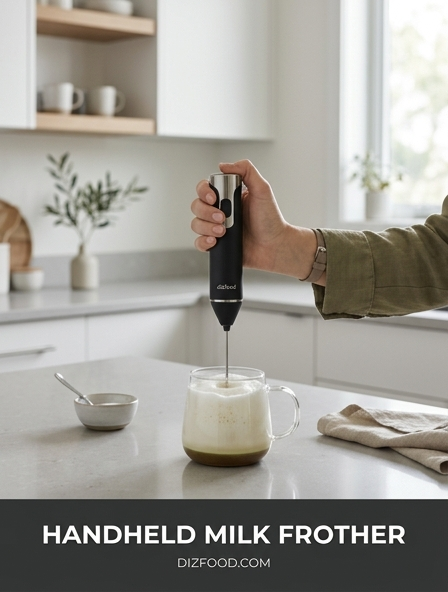
Handheld vs Electric Milk Frothers
Choosing between a handheld wand and a standalone electric frother depends largely on your kitchen space and desired level of control. Handheld milk frothers are prized for their portability and precision. They allow the user to manually adjust the depth and angle of the whisk, which is essential for creating specific textures for latte art. These devices are typically battery-operated or rechargeable, making them easy to tuck away in a drawer when not in use. On the other hand, electric frothers are countertop appliances that heat and froth milk simultaneously, offering a hands-off experience.
| Feature | Handheld Wand | Electric Countertop |
|---|---|---|
| Portability | High (Travel-friendly) | Low (Stationary) |
| Heating | Manual heating required | Built-in heating element |
| Customization | High manual control | Pre-set programs |
| Storage | Drawer or small stand | Countertop footprint |
While electric models provide convenience for those who want a hot cappuccino at the touch of a button, handheld versions offer a more tactile experience for coffee enthusiasts who prefer to heat their milk separately to an exact temperature. Ultimately, the handheld option remains the favorite for minimalist kitchens and budget-conscious baristas.
Achieving Barista Quality Microfoam at Home
The secret to a perfect latte lies in the microfoam-a velvety, glossy texture consisting of tiny, uniform air bubbles rather than large, soapy suds. To achieve this with a handheld frother, temperature is the most critical variable. Milk should ideally be heated to between 140°F and 155°F; any hotter, and the proteins begin to break down, losing their ability to hold air. Start by placing the whisk just below the surface of the milk to create a "whirlpool" effect. This incorporates air quickly, creating the initial volume.
Once the volume has increased slightly, submerge the wand deeper and tilt the container. This stage, often called "stretching" and "rolling," breaks down larger bubbles into the microscopic ones required for a professional finish. If you notice large bubbles on top, gently tap the pitcher on the counter and swirl it. This movement helps integrate the foam with the liquid milk, resulting in a consistent, pourable texture that mimics the high-pressure steam wands found in commercial espresso machines. Consistency and patience are the hallmarks of mastering this home technique.
Essential Features for Quick Coffee Foaming
When selecting a handheld frother, certain technical specifications significantly impact its performance and longevity. A high-torque motor is the most important component, as it needs to maintain a consistent RPM even as the milk thickens. Look for a device that offers at least 10,000 to 15,000 rotations per minute to ensure rapid aeration. The construction of the whisk also matters; food-grade 304 stainless steel is the industry standard for its resistance to rust and ease of sterilization.
- Ergonomic Grip: A soft-touch or contoured handle prevents slipping when hands are wet or oily from kitchen tasks.
- One-Touch Operation: A button that requires a single press rather than constant holding reduces hand fatigue during longer frothing sessions.
- Dual-Coil Whisk: Some high-end models feature a double-spring head, which doubles the surface area and speeds up the frothing process.
- Power Source: Options include traditional AA batteries or USB-rechargeable lithium-ion batteries for consistent power delivery.
These features combined ensure that the tool is not just a novelty, but a durable piece of kitchen equipment capable of standing up to daily use. Investing in a model with a reinforced connection point between the motor and the wand will also prevent the common issue of the whisk bending or snapping over time.
Top Rated Battery Operated Frothing Wands
Battery-operated frothing wands are the backbone of the home coffee movement due to their simplicity and lack of cumbersome cords. Most reputable models run on two AA batteries, providing enough power for several weeks of daily use. These tools are designed to be "grab-and-go," requiring no setup time beyond inserting the batteries. The beauty of these devices lies in their lightweight design, which allows for delicate movements that are often difficult with heavier, corded equipment. For travelers or office workers, these wands are indispensable, as they can transform a standard cup of coffee into a gourmet beverage anywhere.
Market leaders often include a sleek stainless steel stand with the wand, which not only looks professional on a coffee bar but also protects the delicate whisk from being bent in a cluttered utensil drawer. When selecting a battery-operated model, users should prioritize those with a shielded motor housing to reduce noise. While no frother is completely silent, the top-rated versions produce a low hum rather than a high-pitched whine, making early morning coffee preparation a much more pleasant experience for everyone in the household.
Manual Tools for Thick Milk Foam
For those who prefer a traditional approach without relying on electronics, manual frothing tools offer a reliable alternative. These often take the form of a glass or stainless steel carafe equipped with a plunger and a fine-mesh screen. By rapidly pumping the plunger up and down, you force air through the milk, creating an exceptionally thick and stable foam that is perfect for traditional cappuccinos. This method is often preferred for its durability, as there are no motors to burn out or batteries to replace.
- Heat the Milk: Warm your milk in the microwave or on the stovetop to roughly 150°F.
- Fill the Carafe: Pour the milk into the manual frother, ensuring you do not exceed the halfway mark to allow room for expansion.
- Pump Vigorously: Move the plunger up and down for about 20 to 30 seconds until the milk doubles in volume.
- Let it Sit: Allow the foam to rest for 1 minute; this helps the structure solidify and makes it easier to scoop.
Manual frothers are particularly effective at creating "stiff peaks," a texture that handheld wands sometimes struggle to achieve. They are the ideal choice for those who appreciate the ritual of manual coffee preparation and want a tool that will last for decades.
Compact Frothers for Small Kitchen Spaces
In modern urban kitchens where counter space is at a premium, the compact nature of handheld frothers is a significant advantage. Unlike bulky espresso machines with integrated steam wands or large automatic frothing carafes, a handheld wand takes up virtually zero square footage. Many models are designed with a slim profile, barely wider than a standard whisk, allowing them to fit into narrow organizers or even hang from a small hook near the coffee station. This makes them a favorite for apartment dwellers, RV owners, and college students.
The "minimalist" appeal also extends to the maintenance of these devices. There are no large tanks to descale or intricate internal tubes to clean. Because they are so small, they do not dominate the visual aesthetic of the kitchen, maintaining a clean and uncluttered look. Some manufacturers even produce "mini" versions specifically for travel, which come with a protective hard-shell case. These ensure that even when you are away from home, you can enjoy a high-quality coffee experience without sacrificing precious luggage space or kitchen real estate upon your return.
Ease of Cleaning Your Frothing Equipment
The longevity and hygiene of a milk frother depend entirely on how it is cleaned. Milk residues can quickly harbor bacteria and create unpleasant odors if not removed immediately. Fortunately, handheld frothers are among the easiest kitchen gadgets to maintain. The most effective cleaning method is the "pulse and rinse" technique: immediately after use, submerge the whisk into a glass of warm, soapy water and turn it on for a few seconds. The centrifugal force dislodges any milk particles trapped in the coils of the whisk.
After the soapy rinse, repeat the process with clean water and then spin the frother in the air for a few seconds to "spin-dry" the attachment. It is crucial to remember that the handle, which contains the motor and batteries, should never be submerged in water. A simple wipe with a damp cloth is sufficient for the exterior. For those using manual pump frothers, most carafes and plungers are dishwasher safe, though hand-washing the fine mesh screen is often recommended to prevent it from fraying over time. Regular maintenance ensures that every cup of coffee tastes fresh and that the motor remains free from sticky obstructions.
Compatibility with Dairy and Plant Milks
Not all milks are created equal when it comes to frothing. The success of your foam depends on the protein and fat content of the liquid. Handheld frothers are versatile enough to handle almost any variety, but the technique may vary. Whole dairy milk is the gold standard for frothing because its fat content creates a rich flavor while its proteins provide the structural integrity needed for stable bubbles. However, the rise of plant-based diets has led to significant innovations in "barista blend" alternative milks designed specifically for foaming.
| Milk Type | Froth Quality | Best Use |
|---|---|---|
| Whole Dairy | Excellent, creamy | Lattes, Cappuccinos |
| Oat Milk | High, very stable | Latte Art |
| Almond Milk | Moderate, thin bubbles | Light Macchiatos |
| Soy Milk | Good, thick foam | Standard Coffee |
Oat milk is widely considered the best plant-based option for handheld frothers because it mimics the creamy texture of dairy. Almond milk, being thinner, often produces a more "airy" foam that dissipates quickly. When using plant milks, it is often helpful to froth them at a slightly lower temperature than dairy to prevent the proteins from curdling or separating.
Budget Friendly Tools for Gourmet Coffee
One of the most compelling reasons to purchase a handheld milk frother is the incredible value it provides. While a high-end espresso machine can cost thousands of dollars, a quality handheld frother typically ranges from fifteen to thirty dollars. This small investment allows a coffee drinker to replicate the texture of expensive cafe drinks at a fraction of the cost. When you consider that a single flavored latte at a commercial coffee shop can cost over five dollars, the tool pays for itself within the first week of use.
Being budget-friendly does not necessarily mean low quality. Many affordable frothers use the same motor technology as their more expensive counterparts. The price difference usually comes down to aesthetic finishes, such as a matte metallic coating versus standard plastic, or the inclusion of extra accessories like stencils or rechargeable bases. For the average home user, a mid-range battery-operated wand offers the best balance of performance and price. By pairing a budget frother with a simple Moka pot or Aeropress, anyone can create a complete home barista setup that rivals professional establishments without breaking the bank.
Fast Foaming Gadgets for Busy Mornings
In a fast-paced morning routine, every second counts. The primary advantage of a high-speed handheld frother is the efficiency it brings to the breakfast table. Most quality wands can transform cold or warm milk into a thick cloud of foam in under 20 seconds. This is significantly faster than waiting for an automatic machine to cycle through its heating and frothing phases. Because the device is so lightweight and easy to activate, it integrates seamlessly into the process of brewing coffee, allowing you to froth while your espresso pulls or your French press steeps.
The speed of these gadgets also makes them ideal for multitasking. Since they are easy to rinse, you can quickly move from frothing milk for your coffee to mixing a protein shake or whisking matcha powder without a long cleanup delay. For parents, they are excellent for making "babyccinos"-warm frothed milk with a dusting of cocoa-in seconds. The combination of rapid motor startup and high-velocity whisking makes the handheld frother the ultimate tool for those who refuse to sacrifice the quality of their morning beverage despite a hectic schedule.





Comments