
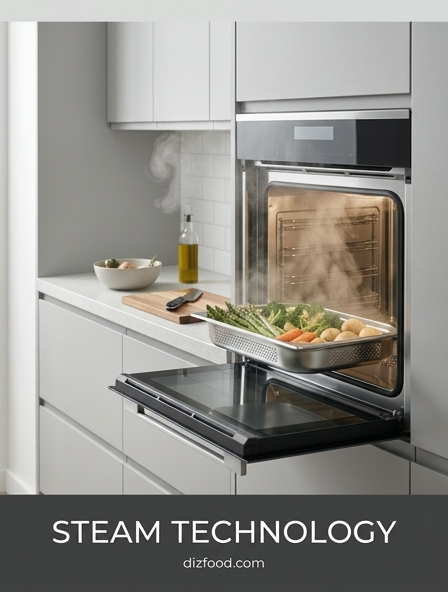
Say goodbye to the frustration of torn egg whites and stubborn shells. Advanced steam technology has revolutionized the kitchen by providing a precise, gentle heat that penetrates the shell more effectively than turbulent boiling water. By surrounding the eggs in a consistent cloud of vapor, the steam causes the internal membrane to shock and pull away from the shell instantly. This process creates a smooth physical barrier, ensuring that every egg peels effortlessly to reveal a flawless, picture-perfect surface every single time. When deciding on the best equipment for your kitchen, it is helpful to weigh the pros and cons of an electric egg cooker vs boiling pot to achieve these consistent results.
The Science of Steam for Easy Peeling
Steam technology leverages the gaseous state of water to transfer energy with extreme efficiency. When high-temperature vapor surrounds an egg, it moves more dynamically than liquid water. This vapor penetrates the porous calcium carbonate shell, interacting almost immediately with the delicate inner membranes. Unlike boiling, where the egg is subjected to physical turbulence, steam provides a uniform thermal environment. This uniformity prevents the rapid expansion of the egg white that typically causes it to bond tightly to the shell.
The process relies on "latent heat," the energy released when steam condenses back into liquid upon contact with the cooler egg surface. This localized heat burst shocks the proteins in the outer layer of the albumen, causing them to contract quickly and pull away from the membrane. The result is a clean separation that makes peeling effortless.
- Pore penetration: Steam enters the shell micro-structures easily.
- Condensation shock: Rapid energy transfer triggers protein contraction.
- Pressure balance: Vapor stabilizes the internal pressure of the air cell.
Why Vapor Heat Beats Traditional Boiling
Traditional boiling relies on immersion, which often leads to uneven cooking and cracked shells due to physical agitation. Vapor heat, conversely, provides a gentler yet more effective medium for heat transfer. Because steam molecules are less dense but more energetic than liquid water molecules, they can maintain a more consistent temperature throughout the cooking chamber. This eliminates the "cold spots" often found in large pots of boiling water, ensuring that every egg in the batch reaches the same level of doneness simultaneously.
Furthermore, steaming uses significantly less water, meaning the energy required to reach cooking temperature is drastically reduced. This efficiency is not just about speed; it is about the quality of the thermal energy applied to the food. The lack of turbulence ensures that shells remain intact, preventing the messy leakage of egg whites into the cooking liquid.
| Feature | Traditional Boiling | Steam Technology |
|---|---|---|
| Medium | Liquid Water | Gaseous Vapor |
| Agitation | High (Turbulence) | Negligible |
| Heat Consistency | Variable | Highly Uniform |
| Shell Integrity | Prone to Cracking | Superior Preservation |
How Precise Temperature Weakens the Egg Membrane
Precision temperature control is the hallmark of modern kitchen steam technology. When an egg is heated, the two thin membranes-the inner and outer shell membranes-play a critical role in the ease of peeling. In traditional methods, fluctuating heat can cause these membranes to fuse to the shell and the albumen simultaneously. Steam technology allows for a precise "thermal shock" that denatures the membrane proteins without forcing them to bond to the shell's interior.
By maintaining a steady 100°C (212°F) environment without the fluctuations of a rolling boil, the steam creates a microscopic cushion of moisture. This moisture acts as a lubricant between the shell and the egg white. As the proteins in the membrane coagulate under precise heat, they shrink away from the calcium wall, effectively breaking the structural bond that usually makes peeling a chore.
- Immediate protein denaturation at the membrane level.
- Differential expansion between the shell and the egg contents.
- Moisture retention in the sub-membrane space.
The Structural Benefits of Steaming Egg Whites
One of the most significant advantages of using steam technology in the kitchen is the superior texture of the final product. High-intensity boiling often results in rubbery, overcooked egg whites because the outer layers reach high temperatures long before the yolk is set. Steam, however, provides a more atmospheric and controlled heat application. This results in an albumen that is tender and creamy rather than tough.
The humidity inherent in a steam environment prevents the egg white from dehydrating during the cooking process. This is particularly important for those who prefer soft-boiled or medium-boiled eggs, where the structural integrity of the white must be delicate enough to enjoy but firm enough to hold its shape. The gentle nature of vapor cooking preserves the molecular structure of the proteins, leading to a better mouthfeel.
- Enhanced tenderness due to high-moisture cooking.
- Prevention of "rubbery" texture from protein over-coagulation.
- Uniform setting of the albumen from the outer edge to the yolk.
Achieving Consistent Results with Advanced Steam Cycles
Modern kitchen appliances now feature advanced steam cycles that take the guesswork out of egg preparation. These cycles are engineered to regulate the volume and pressure of steam released into the cooking chamber. By controlling the steam flow, the technology can cater to specific preferences, from "jammy" yolks to fully set hard-boiled eggs. This level of automation ensures that the results are repeatable every single time, regardless of the egg's starting temperature or size.
The integration of sensors allows these appliances to adjust the steam intensity based on the load. This precision prevents the common issue of the "green ring" around the yolk, which is caused by overcooking and the subsequent reaction between sulfur and iron. Instead, the steam cycle terminates at the exact moment the desired internal temperature is reached.
| Cycle Type | Steam Intensity | Resulting Texture | High Initial / Low Hold | Liquid Yolk / Set White | Constant Moderate | Jammy Yolk / Tender White | Constant High | Fully Set Yolk / Firm White |
|---|
Rapid Heating Technology for Faster Healthy Snacking
Steam technology is fundamentally faster than boiling because of the mass-to-heat ratio. To boil eggs, one must first heat a large volume of water to its boiling point, which can take ten minutes or more depending on the stove's power. In contrast, a steam-based system only needs to heat a small reservoir of water-often less than half a cup-to create a chamber full of high-energy vapor. This allows the cooking process to begin almost instantly.
For individuals focused on healthy snacking and meal prep, this speed is a game-changer. The rapid transition from "off" to "active cooking" reduces the total preparation time by nearly 50%. Furthermore, because steam transfers heat more effectively than air or water, the actual cooking duration is often shorter, meaning you can go from the refrigerator to a finished snack in under ten minutes.
- Reduced water volume for faster boiling.
- Immediate vapor production for instant cooking start.
- Optimized heat transfer for shorter overall cook times.
The Physics of Shell Separation in High Moisture Environments
The ease of peeling an egg is directly related to the moisture levels present during the cooking phase. In a dry-heat or traditional boiling environment, the space between the egg white and the shell can become vacuum-sealed or glued together by drying proteins. Steam technology solves this through the physics of high-humidity environments. As steam surrounds the shell, it maintains a constant "vapor pressure" that prevents the internal moisture of the egg from evaporating too quickly.
This high-moisture environment ensures that the thin film between the shell and the white remains hydrated. When the egg is eventually cooled-ideally in an ice bath-the moisture trapped under the shell contracts, creating a clean break in the surface tension. This is why steamed eggs often have shells that slide off in one or two large pieces, leaving a perfectly smooth, unblemished surface behind.
- Vapor pressure maintenance prevents internal dehydration.
- Hydrated films facilitate easier shell sliding.
- Reduced surface tension between albumen and membrane.
Eliminating Kitchen Frustration with Perfect Peel Performance
Few things are as frustrating in the kitchen as trying to peel a hard-boiled egg only to have it come apart in jagged chunks. This common issue is usually the result of the egg white bonding to the shell membrane. Steam technology effectively eliminates this frustration by targeting the bond at its source. By using vapor to cook, you are employing a method that is scientifically proven to produce a "perfect peel" every time, regardless of the freshness of the eggs.
Fresh eggs are notoriously difficult to peel because of their low pH levels, which cause the white to stick to the shell. However, the intense and rapid heat of steam overcomes this chemical hurdle by forcing the proteins to set before they have a chance to bond to the shell. This provides a reliable solution for home cooks and professional chefs alike.
- Consistent success with both fresh and aged eggs.
- Aesthetic perfection for deviled eggs and salads.
- Reduction in food waste from torn egg whites.
Steam Technology for Superior Nutritional Retention
When food is immersed in boiling water, water-soluble vitamins and minerals can leach out into the liquid. While the shell of an egg provides significant protection, the prolonged exposure to high-heat liquid can still impact the overall quality of the fats and proteins. Steam technology is a much more "non-invasive" cooking method. By using vapor rather than immersion, the egg is cooked in its own natural environment without the leaching effects of excess water.
Additionally, the shorter cooking times associated with steam help to preserve heat-sensitive nutrients like riboflavin and certain antioxidants found in the yolk. Because steam distributes heat so evenly, there is less risk of "hot spots" that can denature healthy fats or oxidize the cholesterol in the yolk. This makes steaming the preferred method for health-conscious consumers looking to maximize the nutritional density of their meals.
- Minimal leaching of water-soluble nutrients.
- Preservation of heat-sensitive vitamins through speed.
- Protection of delicate yolk fats from oxidation.
Mastering Large Batch Meal Prep with Steamed Eggs
For those who practice weekly meal prep, steam technology is an indispensable tool. Cooking a dozen or more eggs in a traditional pot often leads to crowding, which results in uneven cooking and a higher rate of shell breakage. Steam chambers, however, allow for eggs to be stacked or arranged in tiers without affecting the flow of heat. The gaseous nature of steam ensures that the egg in the center of the rack receives the exact same thermal energy as the egg on the edge.
This scalability makes it easy to prepare large quantities of protein for the week ahead. Whether you are preparing eggs for salads, high-protein snacks, or breakfast on the go, the consistency of steam technology ensures that every single egg is as easy to peel and as perfectly cooked as the last.
| Batch Size | Recommended Steam Time | Efficiency Gain |
|---|---|---|
| 1-6 Eggs | 8-10 Minutes | High |
| 7-12 Eggs | 10-12 Minutes | Very High |
| 12+ Eggs | 12-14 Minutes | Maximum |


Comments