
If you're looking to elevate your home brewing game, the debate between a handheld milk frother and a professional steam wand is central to achieving that perfect cup. While a handheld frother offers ultimate convenience and a budget-friendly entry point for quick lattes, it typically creates a "dry" foam with larger bubbles. In contrast, the steam wand-found on espresso machines-injects hot, pressurized steam into the milk to create a silky, dense microfoam essential for pourable latte art. Choosing between them comes down to whether you prioritize a fast, portable caffeine fix or the rich, creamy texture of a true barista-style specialty drink.
| Feature | Handheld Milk Frother | Espresso Steam Wand |
|---|---|---|
| Mechanism | Battery-operated spinning whisk | High-pressure water vapor injection |
| Foam Quality | Light, airy, and "bubbly" texture | Silky, dense microfoam (velvet) |
| Temperature | Does not heat milk; requires pre-heating | Heats and textures simultaneously |
| Skill Level | Beginner; "press and go" operation | High; requires technique and practice |
| Maintenance | Quick rinse of the whisk head | Requires purging and wiping after every use |
| Best For | Instant coffee, travel, and budget setups | Latte art and authentic cappuccinos |
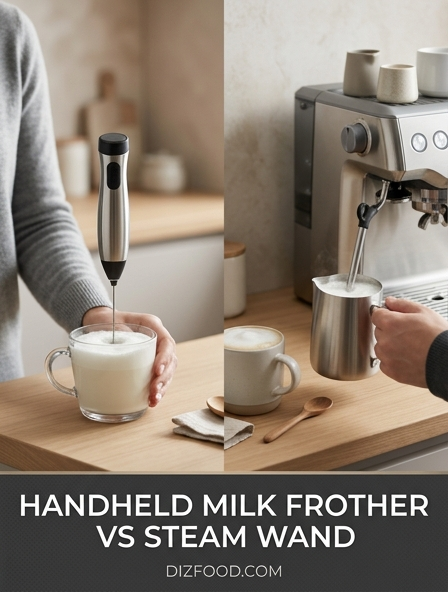
Handheld Milk Frother vs Steam Wand Key Differences
The primary distinction between a handheld milk frother and a steam wand lies in the mechanism used to aerate the milk. A handheld milk frother, often referred to as a wand whisk, relies on a battery-operated or rechargeable motor that spins a small wire coil at high speeds. This mechanical agitation introduces air into the liquid to create bubbles. Crucially, a handheld frother does not change the temperature of the milk; it merely alters its physical structure. Users must heat their milk separately in a microwave or on a stovetop before or after the frothing process.
In contrast, a steam wand is a functional component of an espresso machine that utilizes pressurized water vapor. It performs two tasks simultaneously: heating the milk and aerating it. The steam wand forces hot, dry steam into the pitcher, which creates a vortex that incorporates air while breaking down large bubbles into a velvety texture. This process also introduces a small amount of water dilution, which contributes to the characteristic sweetness and mouthfeel of professional cafe drinks. While the frother is a standalone, portable tool, the steam wand is a fixed, powerful instrument designed for high-performance beverage preparation.
- Power Source: Handhelds use batteries/USB; steam wands use internal boilers.
- Heat Integration: Steam wands heat as they froth; handhelds require external heating.
- Portability: Handhelds are travel-friendly; steam wands are stationary kitchen fixtures.
- Fluid Dynamics: Handhelds use centrifugal force; steam wands use thermal pressure.
Milk Texture and Microfoam Consistency Comparison
Texture is the most significant differentiator for coffee enthusiasts seeking the perfect latte or cappuccino. A handheld frother typically produces what baristas call "sea foam" or "dry foam." This texture consists of larger, stiffer bubbles that sit on top of the coffee rather than integrating with it. Because the whisk spins at a constant rate without the ability to "stretch" the milk proteins using heat, the resulting foam often lacks the structural integrity and silkiness required for complex beverages. It provides a light, airy topping that is pleasant but chemically different from steamed milk.
The steam wand is the gold standard for creating true microfoam. Microfoam is achieved when the steam wand's pressure creates a whirlpool effect, folding tiny air bubbles into the milk's fat and protein molecules. This results in a liquid that looks like wet paint or melted ice cream. The texture is dense, glossy, and uniform, allowing the milk to blend seamlessly with the espresso. The following table highlights the textural differences:
| Feature | Handheld Frother | Steam Wand |
|---|---|---|
| Bubble Size | Large, visible bubbles | Microscopic, invisible bubbles |
| Viscosity | Thin liquid with thick cap | Uniform, creamy emulsion |
| Surface Appearance | Matte or dull | Glossy and reflective |
| Stability | Dissipates quickly | Holds shape for several minutes |
Pros and Cons of Using a Handheld Frother
The handheld milk frother is a staple in many kitchens due to its extreme accessibility and low barrier to entry. For many home users, the biggest advantage is the speed and simplicity of the device. You can froth milk in any container, from a standard coffee mug to a small pitcher, in under 30 seconds. Furthermore, these devices are not limited to milk; they are frequently used for mixing matcha powder, protein shakes, or even whisking eggs, making them a multi-functional kitchen gadget. Their small footprint allows them to be tucked away in a drawer, keeping counters clear of clutter.
However, the limitations are notable for those seeking a professional experience. The lack of temperature control is a significant drawback, as the user must manually ensure the milk doesn't exceed 155°F during the pre-heating phase to avoid scorching. Additionally, handheld frothers are prone to mechanical failure over time, particularly if the motor is weak or the wand becomes bent. The foam produced is often "one-dimensional," meaning it lacks the sweet, caramelized flavor profile that occurs when steam interacts with lactose. For users who prioritize convenience over cafe-quality aesthetics, the frother remains a solid choice, despite its inability to produce a truly integrated milk-and-coffee beverage.
Benefits of Professional Steam Wand Performance
A professional steam wand offers a level of control and sensory quality that handheld tools cannot replicate. The primary benefit is the chemical transformation of the milk. When high-pressure steam hits the milk, it breaks down the fats and denatures the proteins, which creates a natural sweetness. This eliminates the need for added sugar for many drinkers. The ability to control the angle and depth of the wand allows the user to precisely dictate how much air is introduced, switching effortlessly between the dense foam of a cappuccino and the silky microfoam of a flat white.
Durability and power are also major advantages of the steam wand. Built into espresso machines, these components are designed for heavy daily use and can handle large volumes of milk at once. Because the steam is generated by a boiler, the pressure remains consistent throughout the frothing process, ensuring a uniform temperature. Furthermore, the steam wand provides an immersive "craft" experience. There is a tactile satisfaction in finding the "sweet spot" where the milk begins to hiss and swirl. For the serious home barista, the steam wand is not just a tool but a necessary instrument for mastering the art of the perfect pour and achieving a professional mouthfeel.
Cost and Value Analysis for Home Baristas
When analyzing cost, the handheld milk frother is the clear winner for budget-conscious consumers. These devices typically range from $10 to $20, making them an impulsive yet functional purchase. They require very little additional investment, aside from the occasional battery replacement or a USB charge. For someone who only drinks milk-based coffee occasionally, the value proposition is high because the cost-per-use is negligible. It provides a "good enough" experience without a significant financial commitment or the need for expensive dedicated equipment.
The steam wand, conversely, represents a significant investment because it is almost always tied to the purchase of an espresso machine. Entry-level machines with functional steam wands start around $100, while prosumer models can cost several thousand dollars. However, the "value" must be measured by the longevity of the equipment and the savings from not visiting coffee shops. A high-quality steam wand can last a decade or more with proper maintenance. For a daily latte drinker, an espresso machine with a steam wand can pay for itself within a year. The following list breaks down the general price tiers for milk frothing technology:
- Basic Handheld Whisk: $10 - $25 (Best for beginners and travelers).
- Electric Aeroccino/Standalones: $50 - $150 (Automatic, but less control).
- Entry-Level Espresso Machines: $100 - $500 (Functional steam wands).
- Prosumer Espresso Machines: $1,000+ (High-pressure, professional-grade wands).
Ease of Use and Learning Curve Breakdown
The learning curve for these two tools is vastly different. A handheld frother requires almost no skill to operate. One simply submerges the whisk into the milk, turns it on, and moves it up and down until the desired volume of foam is achieved. There is no risk of "messing up" the milk beyond making it too bubbly. Because the process is so straightforward, it is ideal for busy mornings where the user wants a quick caffeine fix without having to focus on technique or timing. It is a "point and shoot" solution for the modern kitchen.
The steam wand, however, has a steep learning curve that can be frustrating for beginners. Mastering the "stretch" (introducing air) and the "roll" (incorporating the air) requires precision and practice. A few seconds of improper positioning can lead to "screaming" milk, which results from insufficient air, or "dry foam" that is too thick to pour. Users must also learn to gauge temperature by feel, holding the side of the metal pitcher until it becomes too hot to touch. While this process is rewarding, it requires patience and a willingness to waste some milk during the initial training phase. For those who enjoy the process of learning a craft, the steam wand offers a lifetime of refinement, whereas the handheld frother offers instant, if limited, results.
Maintenance and Cleaning Requirements for Each Tool
Maintenance is a critical factor in kitchen hygiene, especially when dealing with dairy products. The handheld frother is remarkably easy to clean. Most models only require the whisk attachment to be rinsed under hot soapy water immediately after use. Some users even pulse the whisk in a glass of clean soapy water to clear out any residue from the coils. Because the motor is housed in the handle, it must be kept dry, but the overall maintenance profile is very low. It does not require descaling or complex disassembly, making it a low-maintenance favorite.
Steam wands require a much more disciplined cleaning regimen to prevent the buildup of milk proteins and bacteria. Because the wand is hot, milk tends to bake onto the stainless steel surface instantly. It must be "purged" (blowing steam through the tip) before and after every use to clear the internal holes. The exterior must be wiped down with a damp microfiber cloth immediately after frothing. If neglected, milk can be sucked back into the boiler, leading to expensive repairs and foul odors. Additionally, the tip of the wand occasionally needs to be removed and soaked in a specialized milk-cleaning solution to remove deposits from the small steam holes.
- Frother: Rinse whisk, dry handle, replace batteries.
- Steam Wand: Purge steam, wipe exterior, deep soak tip weekly.
- Risk: Steam wands can clog; frothers can have motor burnout.
Temperature Control and Milk Heating Efficiency
Effective milk frothing is as much about temperature as it is about air. The ideal temperature for frothed milk is between 140°F and 155°F. At this range, the milk is hot enough to be pleasant but cool enough that the sugars haven't burned. The handheld frother offers zero temperature control. The user must heat the milk separately, often leading to inconsistent results. If the milk is heated in a microwave, it often develops hot spots, and if it is heated on a stove, it is easy to accidentally scald it. This two-step process is less efficient and less precise.
The steam wand is an efficient heat-exchange system. As the steam enters the milk, it transfers its thermal energy directly into the liquid. This allows the user to monitor the temperature in real-time, either by using a clip-on thermometer or by sensing the heat through the wall of the stainless steel pitcher. The efficiency of a steam wand is unmatched; it can take refrigerated milk to the perfect serving temperature in 15 to 30 seconds while simultaneously creating texture. This integration ensures that the foam and the liquid are at the same temperature, which prevents the "cold foam on hot coffee" sensation that often occurs with poorly managed handheld frothing. The steam wand provides a professional level of thermal consistency that is vital for flavor balance.
Creating Latte Art with Frothers vs Steam Wands
For those who aspire to pour hearts, rosettas, or tulips into their coffee, the choice of tool is paramount. Latte art is only possible with microfoam-milk that has been aerated to a point where the bubbles are too small to see, creating a liquid with the consistency of heavy cream. A steam wand is designed specifically to produce this texture. The microfoam created by a steam wand is fluid enough to flow under the crema of the espresso and then rise to the top, allowing the barista to "paint" with the white foam against the brown coffee base.
Creating latte art with a handheld frother is notoriously difficult, if not impossible, for complex designs. The foam produced by a spinning whisk is usually too "stiff" or "dry." Instead of flowing out of the pitcher in a controlled stream, it tends to come out in a large clump at the end of the pour. While some enthusiasts have found ways to improve handheld results by "grooming" the milk-tapping the pitcher on the counter and swirling it to integrate the foam-it rarely achieves the elasticity needed for intricate patterns. If your goal is to master the visual presentation of your drinks, the steam wand is an essential requirement. The handheld frother is best suited for those who want the taste of foam without the need for artistic expression.
Which Milk Frothing Method Fits Your Kitchen Needs
Deciding between a handheld frother and a steam wand depends on your lifestyle, budget, and how much you value the "ritual" of coffee making. If you are a casual coffee drinker who wants a quick froth for a morning latte without spending a lot of money, the handheld frother is the logical choice. It is also the superior option for people with limited counter space or those who travel frequently and want to maintain their coffee routine in hotels or campers. Its versatility with other liquids like matcha and protein shakes adds a layer of utility that a steam wand cannot match.
On the other hand, if you consider coffee a hobby or a craft, the steam wand is the only way to go. It offers a sensory experience and a level of beverage quality that mimics your favorite local cafe. While it requires more space, a larger financial investment, and a commitment to cleaning and maintenance, the results are objectively superior in terms of taste and texture. It is the better fit for homeowners who have a dedicated coffee station and the desire to learn the technical skills of a barista. Ultimately, the handheld frother is about convenience, while the steam wand is about quality and control. Assess your daily habits and your kitchen's footprint to determine which tool will bring the most value to your morning routine.




Comments