
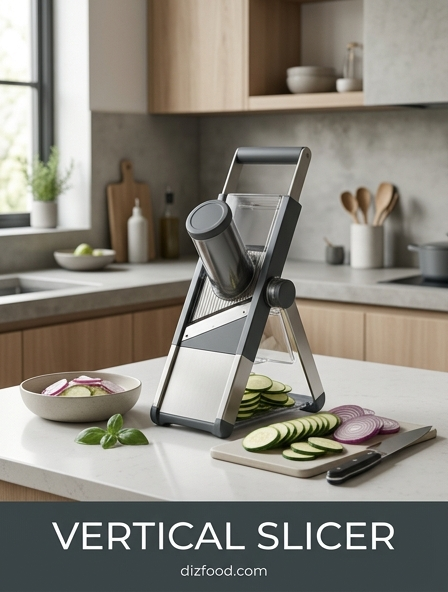
Vertical Slicer Precision Essentials
The vertical slicer stands as a cornerstone of high-volume deli and butchery operations, distinguished by its 90-degree blade orientation. Unlike gravity-feed models that rely on the weight of the product to slide toward the blade, the vertical slicer requires the operator to manage the product manually against the gauge plate. This design offers unparalleled control for specialized tasks, such as creating paper-thin slices of expensive cured meats where waste must be minimized. The precision of these machines depends on the mechanical harmony between the carriage, the blade, and the pusher plate.
To master the vertical slicer, one must understand the ergonomics of the machine. The operator's posture and hand placement are critical for maintaining a steady rhythm. Achieving consistent results requires a deep understanding of the following components:
- The gauge plate, which dictates the thickness and must remain perfectly parallel to the blade.
- The product holder, featuring sharp spikes to secure the item firmly.
- The blade guard, which protects the user while allowing for maximum visibility of the cut.
- The sharpening assembly, typically mounted at the top for quick edge maintenance.
When these elements are properly tuned, the vertical slicer can produce translucent slices that maintain their structural integrity, essential for professional charcuterie presentation.
Blade Maintenance for Consistent Accuracy
A vertical slicer is only as effective as the edge of its blade. Over time, friction and acidity from food products can dull the steel, leading to ragged edges and uneven thickness. Regular sharpening is not just a recommendation; it is a necessity for maintaining the high standards expected in professional kitchens. Most vertical slicers feature a built-in stone sharpener that must be used daily to ensure the blade remains razor-sharp. However, over-sharpening can lead to premature blade wear, so a balanced approach is required.
Effective maintenance follows a specific sequence to prevent contamination and ensure longevity:
- Thoroughly clean the blade to remove all fat and protein residues before sharpening.
- Engage the sharpening stone for approximately 10 to 15 seconds while the blade is spinning.
- Apply the honing stone for 2 to 3 seconds to remove the burr created by sharpening.
- Sanitize the blade again to remove any metallic dust or stone grit.
- Lubricate the slide rods with food-grade oil to ensure smooth carriage movement.
Consistent maintenance prevents the motor from straining and ensures that every slice, from the first to the last of the day, remains perfectly uniform in texture and appearance.
Stabilizing Large Roasts for Even Cuts
Handling large, heavy roasts or massive rolls of mortadella requires specific techniques to prevent the product from shifting during the slicing process. Because the vertical slicer operates on a flat plane, gravity does not assist in keeping the product against the gauge plate. If a large roast is not properly stabilized, the pressure from the blade can cause the meat to tilt, resulting in "wedge-shaped" slices that are thicker on one end. This not only ruins the presentation but also affects portion control and food costs.
To stabilize substantial items, follow these best practices:
- Ensure the spiked product holder is deeply embedded into the densest part of the roast.
- Use the adjustable fence to provide lateral support, preventing the product from rolling.
- Apply consistent forward pressure with the carriage hand while using the other hand to steady the product if the machine design allows.
- Trim irregular ends of the roast before starting to create a flat surface for the initial contact.
Proper stabilization ensures that even the heaviest items move across the blade with fluid precision, resulting in professional-grade yields every time.
Delicate Cut Handling and Technique
Slicing delicate items like Prosciutto di Parma or soft cheeses requires a level of finesse that differs significantly from processing standard deli meats. These products are often prone to tearing or sticking to the blade. In a vertical slicer, the manual carriage movement allows the chef to slow down the stroke, giving the product time to release cleanly from the blade. The goal is to produce a slice so thin it is almost transparent, yet strong enough to be folded or draped on a platter.
Techniques for handling delicate items include:
- Using a "soft touch" on the carriage to avoid compressing the product fibers.
- Adjusting the slice deflector to ensure the meat falls away from the blade without folding onto itself.
- Chilling the product to its lowest safe temperature to increase its firmness.
- Using a rhythmic "catch" technique where the operator gently guides the falling slice with their hand or a specialized fork.
By mastering these subtle movements, a chef can transform high-end ingredients into elegant portions that highlight the quality of the product rather than the mechanics of the machine.
Calibrating Thickness for Uniform Results
Accuracy in thickness is the hallmark of professional slicing. The vertical slicer utilizes an index knob that moves the gauge plate in micro-increments. For professional chefs, "eyeballing" the thickness is rarely sufficient; instead, specific settings are used to meet the requirements of different dishes. Calibration should be checked at the start of each shift by slicing a test piece and measuring it against a standard. This ensures that recipe costs remain predictable and that the customer experience is consistent across all servings.
The following table outlines common thickness settings for various kitchen applications:
| Product Type | Application | Suggested Thickness |
|---|---|---|
| Prosciutto | Charcuterie | 0.5 mm - 1.0 mm |
| Roast Beef | Sandwiches | 1.5 mm - 2.0 mm |
| Salami | Pizza/Toppings | 2.0 mm - 3.0 mm |
| Hard Cheese | Garnish | 1.0 mm - 1.5 mm |
Maintaining these standards requires the operator to periodically check the index knob for "drift," which can occur due to vibration. Tightening the locking mechanism ensures the plate stays fixed throughout high-volume service.
Optimal Meat Temperature for Slicing
The temperature of the product is perhaps the most overlooked factor in achieving precision with a vertical slicer. Warm meat is soft and pliable, which often leads to "shredding" or uneven edges as the blade pulls on the muscle fibers. Conversely, meat that is too cold can be brittle. For the best results, meat should be chilled to just above freezing, typically between 30°F and 34°F (-1°C to 1°C). At this temperature, the fats are solidified and the proteins are firm, allowing the blade to pass through with minimal resistance.
Consider these temperature management tips:
- Blast-chill cooked roasts for at least two hours before attempting to slice.
- Keep products in the refrigerator until the very moment they are needed on the slicer.
- If slicing high-fat items like pancetta, consider a 15-minute stint in the freezer to harden the lipids.
- Monitor the ambient temperature of the kitchen; heat from nearby ovens can quickly soften the product.
Managing temperature not only improves the quality of the cut but also ensures food safety by keeping the product out of the danger zone during processing.
Vertical Carriage Alignment and Control
The mechanical integrity of the carriage is vital for the safety and accuracy of the vertical slicer. Because the carriage moves horizontally across the blade, any misalignment can cause the product to hit the blade at an angle, leading to uneven wear and poor cuts. The operator must ensure that the carriage slides smoothly on its rails without sticking or "jumping." Regular lubrication with food-grade mineral oil is necessary to maintain this fluid motion, which in turn reduces operator fatigue and improves the consistency of the slices.
To maintain proper carriage control, operators should follow these steps:
- Inspect the slide bar daily for any debris or dried meat juices that could impede movement.
- Apply two drops of lubricant to the primary slide rod every 8 hours of use.
- Check the tension on the carriage arm to ensure it holds the product firmly against the plate.
- Practice a consistent stroke length that clears the blade entirely before the return motion.
A well-maintained carriage allows the chef to focus on the product rather than fighting the machine, resulting in a more refined finished product.
Safety Measures for Precision Slicing
The vertical slicer is one of the most dangerous tools in a kitchen if not respected. The exposed blade and the manual nature of the vertical design require strict adherence to safety protocols. Precision should never come at the cost of safety. Modern machines include several safety features, such as no-volt release switches and blade guards, but the primary safety mechanism is the operator's training. Using the machine while distracted or fatigued is a leading cause of kitchen accidents.
Essential safety protocols include:
- Always wearing a stainless steel mesh or cut-resistant glove on the hand closest to the blade.
- Ensuring the machine is unplugged or locked out during cleaning and blade removal.
- Never bypassing the "last-cut" pusher; using fingers to hold a small piece of meat is extremely hazardous.
- Setting the thickness gauge to zero when the machine is not in use to cover the blade edge.
By integrating these safety measures into the daily workflow, the kitchen staff can maintain a high-precision environment without compromising their physical well-being.
Texture Management for Tender Portions
The direction of the cut relative to the grain of the meat determines the final texture of the portion. A vertical slicer provides the control necessary to adjust the product's orientation precisely. Slicing against the grain breaks up long muscle fibers, making even the toughest cuts of beef feel tender on the palate. When working with vertical slicers, the chef can easily see the grain through the top of the machine and adjust the roast accordingly. This is particularly important for items like London Broil or flank steak.
To optimize texture management, chefs should consider:
- Identifying the grain direction before placing the meat on the carriage.
- Rotating the product 90 degrees if the grain direction changes mid-roast.
- Adjusting blade speed if the machine allows, using higher speeds for softer textures.
- Using the vertical slicer's unique angle to create "biased" cuts for better visual appeal.
Managing the interaction between the blade and the fiber structure ensures that every slice delivered to the customer is as tender and palatable as possible, regardless of the initial toughness of the protein.
Advanced Slicing Methods for Pro Chefs
For the professional chef, the vertical slicer is more than a tool for portioning; it is an instrument for culinary artistry. Advanced techniques like "shingling" and "interleaving" are used to create stunning displays that are ready for immediate service. Shingling involves moving the receiving tray or hand in a synchronized motion with the carriage to overlap slices perfectly. Interleaving requires placing wax paper between delicate slices of cheese or cured meats to prevent sticking and allow for easy service in high-pressure environments.
Key advanced methods include:
- The Ribbon Cut: Creating long, continuous thin strips for garnishing or rolling.
- The Stack: Slicing directly into a vertical pile for high-volume sandwich builds.
- The Fan: Arranging slices in a circular pattern directly from the blade for platter presentation.
- Weight-based Slicing: Developing a "feel" for the machine to hit exact gram measurements without a scale.
Mastering these advanced methods allows a chef to increase efficiency while elevating the aesthetic quality of their food. The vertical slicer, when used to its full potential, bridges the gap between mechanical processing and artisanal preparation.



Comments