
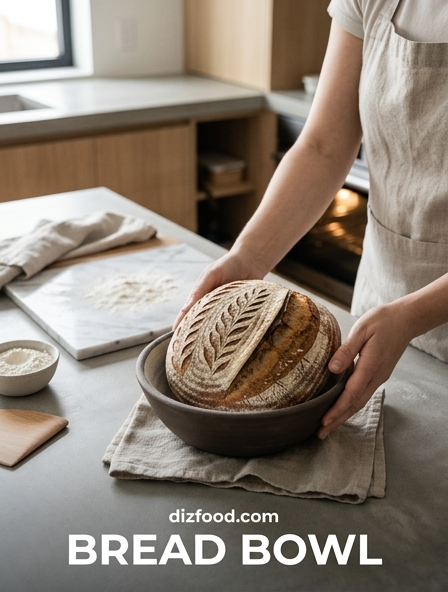
Mastering the Bread Bow Technique
Utilizing a bread bow knife requires a shift in traditional cutting mechanics. Unlike standard kitchen knives that rely on downward pressure, the bow knife leverages tension and a rhythmic sawing motion to glide through various crust densities. To begin, place the loaf on a stable surface and grip the wooden handle firmly but without excessive tension in your wrist. The design of the bow allows the blade to remain perfectly straight, which is essential for maintaining a clean path through the bread.
The key to mastery lies in the following steps:
- Position the blade at the furthest point of the loaf.
- Apply light downward pressure while initiating a long, smooth drawing motion.
- Allow the serrations to do the work rather than forcing the blade through the crumb.
- Maintain a consistent speed to ensure the crust does not tear or shatter.
By focusing on the length of the stroke rather than the force applied, you preserve the internal aeration of the bread. This technique prevents the common issue of squashing fresh, soft loaves, resulting in a professional-grade slice every time you use the tool.
Anatomy of a Perfect Artisan Slice
A perfect artisan slice is defined by the harmony between its exterior crust and interior crumb. When using a bread bow, the goal is to achieve a clean cut that highlights the fermentation patterns and hole structure of the loaf. A high-quality slice should have a uniform thickness from top to bottom, with no jagged edges or compressed sections. The bow knife is specifically engineered to achieve this by keeping the blade under constant tension, which prevents the "wavering" often seen with flexible serrated knives.
| Feature | Description | Success Metric |
|---|---|---|
| Crust Integrity | Minimal flaking or shattering | Clean, sharp edges |
| Crumb Texture | Open alveoli remain uncompressed | Visible airy structure |
| Thickness | Even width across the entire surface | Parallel vertical faces |
Achieving these metrics requires a blade that is thin yet incredibly sharp. When the bow knife enters the loaf, it should separate the fibers of the bread without dragging them. This precision is what transforms a simple loaf into an aesthetic centerpiece for any meal.
Achieving Uniform Thickness Every Time
Consistency is the hallmark of a skilled home baker or professional chef. One of the primary advantages of the bread bow design is its ability to produce identical slices, which is vital for even toasting and presentation. To achieve uniform thickness, you must establish a visual reference point before the first cut. Using the width of the wooden frame as a guide can help you calibrate the distance for subsequent slices.
- Align the blade parallel to the previous cut.
- Anchor the loaf with your non-dominant hand, keeping fingers well away from the blade path.
- Start the cut at the highest point of the crust to establish a groove.
- Follow through to the base with a steady, horizontal motion.
If you find that your slices are tapering at the bottom, it usually indicates that the loaf is shifting during the process. Ensure your cutting board is secured with a damp cloth or silicone mat. By maintaining a 90-degree angle between the blade and the board, you can produce a stack of perfectly uniform slices that are as functional as they are beautiful.
The Mechanics of the Bow Design
The bread bow knife, often referred to as an Appalachian bow saw, is a masterpiece of ergonomic engineering. Its structure consists of a rigid wooden frame-usually made from hardwoods like cherry, walnut, or oak-which holds a very thin, high-carbon steel blade in a state of high tension. This tension is the secret to its performance; it allows the blade to be much thinner than a conventional knife while remaining perfectly straight during the cut. A thinner blade means less displacement of the bread material and less friction.
- Frame Tension: Keeps the blade from bowing outward during heavy-duty tasks.
- Blade Thinness: Reduces the "wedge" effect that crushes soft interiors.
- Handle Ergonomics: Places the hand above the cutting line, providing better leverage.
- Serration Profile: Designed to hook into hard crusts and saw through them efficiently.
The mechanics allow the user to apply force across the entire length of the blade simultaneously. This distribution of energy makes it significantly easier to slice through dense, crusty sourdoughs or oversized boules that might otherwise deflect a standard chef's knife.
Slicing Crusty Sourdough with Ease
Sourdough presents a unique challenge due to its thick, caramelized crust and high-hydration, elastic interior. Traditional knives often struggle to penetrate the exterior without squashing the delicate internal structure. The bread bow excels in this scenario because the high-tension blade can be sharpened to a finer edge. When approaching a sourdough boule, it is best to start by making a small "notch" in the crust with the tip of the serrations.
- Position the loaf so you are cutting across its shortest axis.
- Use a long, rhythmic back-and-forth motion with very light pressure.
- Listen for the "crunch" of the crust; once through the exterior, speed up the motion slightly.
- Complete the cut fully through the bottom crust to avoid tearing the base.
Because the bow knife is designed for horizontal movement, it minimizes the vertical force that typically flattens the air pockets (alveoli) in the crumb. This ensures that every slice of your sourdough retains its signature chewy texture and aesthetic appeal, whether you are serving it fresh or preparing it for a gourmet sandwich.
Maintaining Blade Sharpness for Precision
A bread bow is only as effective as the edge of its blade. Unlike standard knives that can be easily honed with a steel rod, the serrated blade of a bow knife requires specific care. Most high-quality bow knives feature replaceable blades, but you can extend the life of your current blade through proper maintenance. Always avoid cutting on surfaces like glass, granite, or marble, as these will dull the teeth almost instantly. Instead, use wood or high-density plastic cutting boards.
- Cleaning: Hand wash only with a soft cloth and mild soap; never place in a dishwasher.
- Drying: Dry immediately to prevent oxidation or rust on the high-carbon steel.
- Storage: Store in a dry place where the teeth will not come into contact with other metal tools.
- Oil: Periodically rub the wooden frame with food-grade mineral oil to prevent cracking.
When the blade eventually loses its "bite," replacing it is usually a simple matter of loosening the tension screws. A sharp blade is not only more efficient but also safer, as it requires less force to operate and is less likely to slip during a cut.
Safety Essentials for Bow Knife Users
While the bread bow is a highly efficient tool, its extreme sharpness and unique shape require specific safety precautions. The most common mistake is improper hand placement. Because the blade is suspended within a frame, users sometimes forget that the entire length of the metal is exposed. Always ensure that your "anchor" hand-the one holding the bread-is positioned well behind the path of the blade. Using a "claw grip" where fingertips are tucked under can further protect you.
- Always check that the blade tension is tight before use.
- Ensure the bread is stable and not rocking on the board.
- Never attempt to slice bread while holding it in the air.
- Keep the knife out of reach of children, as the serrations can cause deep lacerations.
When you are finished slicing, it is a good habit to wipe the blade away from the edge and return it to its designated storage area. If your bow knife came with a blade guard, use it every time. Treating the tool with respect ensures that your kitchen remains a safe environment for culinary creativity.
Optimizing Your Slicing Workspace
The environment in which you slice your bread can significantly impact the quality of the results. To get the most out of your bread bow, you need a dedicated workspace that allows for a full range of motion. The sawing action required by the bow design means you need ample clearance on both sides of the cutting board. If your workspace is cramped, you may find yourself shortening your strokes, which leads to uneven cuts and increased effort.
- Board Size: Use a board that is at least four inches wider than your loaf.
- Lighting: Ensure the light source is directly above or in front of you to avoid shadows on the cut line.
- Height: A waist-high counter is ideal for applying the correct ergonomic leverage.
- Stability: Place a non-slip mat under the board to prevent any lateral movement.
By organizing your kitchen station to accommodate the specific needs of the bow knife, you reduce fatigue and increase precision. A clean, uncluttered area allows you to focus on the rhythm of the slice, turning a routine kitchen task into a meditative and rewarding part of the baking process.
Professional Presentation for Artisan Loaves
Presentation is the final step in the artisan bread-making journey. How you slice and arrange your bread can elevate a simple meal into a professional-level display. The bread bow allows for creative slicing techniques that standard knives cannot easily replicate, such as ultra-thin "carpaccio" style slices for crostini or thick, rustic slabs for French toast. The precision of the bow ensures that every slice looks identical, which is key for high-end plating.
| Style | Thickness | Best Use |
|---|---|---|
| Crostini | 1/4 Inch | Appetizers and dipping |
| Standard | 1/2 Inch | Sandwiches and daily toast |
| Texas Toast | 1 Inch | Thick grilling or French toast |
To enhance the presentation further, consider slicing on a slight bias (diagonal). This increases the surface area of the slice, making the bread appear larger and more inviting. Arrange the slices in an overlapping fan pattern on a wooden board or in a linen-lined basket to showcase the texture of the crumb and the golden hues of the crust.
Comparing Bow Knives to Serrated Blades
When choosing between a traditional serrated knife and a bread bow, it is important to understand the functional differences. A traditional serrated knife is versatile and can be used for cakes or tomatoes, but it often suffers from blade flex. This flexibility can cause the knife to "wander" during a cut, resulting in slices that are thicker at the top than the bottom. In contrast, the bread bow is a specialized tool designed specifically for the physics of bread.
- Stability: The bow's frame eliminates blade flex entirely.
- Effort: The bow requires about 50% less downward pressure.
- Thinness: Bow blades are generally much thinner than traditional serrated knives.
- Longevity: Replacing a bow blade is cheaper than professional sharpening for high-end serrated knives.
While a standard serrated knife is a jack-of-all-trades, the bread bow is the undisputed master of the loaf. For those who bake regularly or appreciate the nuances of artisan crusts, the bow knife offers a level of control and ease that a standard kitchen knife simply cannot match, making it an essential investment for any serious kitchen.

Comments