
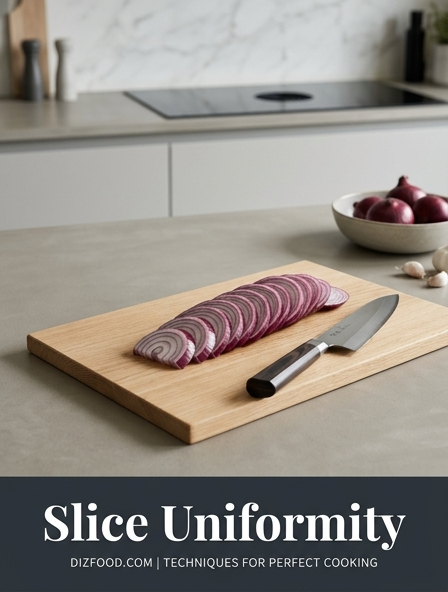
The Science of Slice Symmetry
Achieving uniformity in the kitchen is not merely an aesthetic pursuit; it is a fundamental requirement for culinary precision and consistent thermal transfer. When ingredients are sliced to an identical thickness, they respond to heat in a predictable manner, ensuring that every morsel reaches the desired internal temperature simultaneously. This prevents the common dilemma where smaller pieces become overcooked and bitter while larger chunks remain raw or under-textured. From a physical perspective, symmetry maximizes surface area exposure to seasonings and fats, allowing for an even distribution of flavor profiles across the entire dish.
- Ensures identical cooking times across all pieces.
- Optimizes the caramelization process during searing or roasting.
- Maintains structural integrity during long braising or simmering.
- Enhances the mouthfeel by providing a predictable texture.
Furthermore, uniform slicing preserves the cellular structure of delicate produce. Ragged or uneven cuts lead to moisture loss and oxidation, which can compromise the vibrancy and shelf life of the ingredients. By mastering the geometry of the cut, a chef dictates the final quality of the gastronomic experience.
Professional Mandolines for Paper Thin Precision
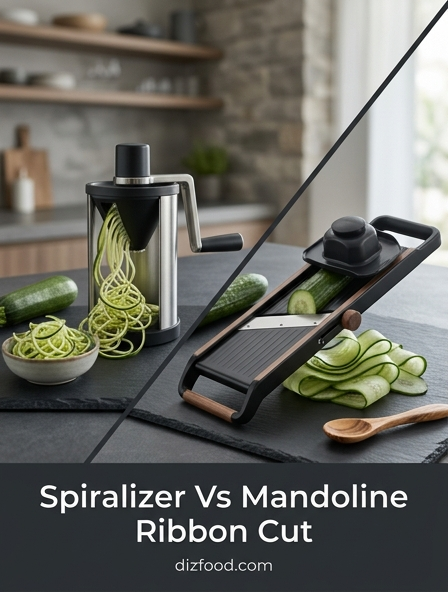
The mandoline is a quintessential tool for any kitchen demanding high-speed precision that manual knife work rarely replicates. These devices utilize a fixed, razor-sharp blade that allows the user to slide produce across a flat plane, yielding shavings that can be translucent or robustly thick depending on the setting. In professional environments, the mandoline is indispensable for creating garnishes like radish rounds or potato crisps where a fraction of a millimeter makes the difference between success and failure.
| Feature | Japanese Mandoline | French Mandoline |
|---|---|---|
| Blade Style | Diagonal / Angled | Straight / Crinkle |
| Material | Lightweight Plastic | Heavy Stainless Steel |
| Adjustability | Screw-based dial | Lever or interchangeable plates |
While extremely efficient, the mandoline requires a high degree of focus. The lack of resistance when slicing through soft vegetables can lead to rapid movement, making the use of safety guards or cut-resistant gloves a mandatory practice for maintaining both slice uniformity and operator safety.
High Volume Efficiency with Electric Slicers
For commercial operations processing dozens of pounds of produce or deli meats daily, electric slicers provide a level of efficiency that manual tools cannot match. These machines utilize a motorized rotating circular blade and a gravity-fed or automatic carriage to move product consistently. The primary advantage of an electric slicer is its ability to maintain a specific gauge under the pressure of continuous operation, ensuring the first slice is identical to the hundredth.
- Calibrate the thickness dial based on the specific density of the product.
- Ensure the carriage is lubricated for smooth, rhythmic movement.
- Lock the product into the hopper to prevent shifting during the rotation.
- Maintain a steady tempo to avoid tearing the fibers of the food.
Electric slicers are particularly effective for dense vegetables like cabbage for slaw or firm proteins. By automating the mechanical action of the cut, the chef reduces physical fatigue, which is often the primary cause of inconsistency in high-volume prep environments. Regular sharpening of the integrated stone ensures the edge remains keen for flawless output.
The Role of Blade Material in Consistency
The metallurgical composition of a blade significantly influences its ability to deliver uniform slices over an extended period. Different materials offer varying levels of hardness, edge retention, and friction, all of which dictate how the blade interacts with the cellular walls of the food. A blade that dulls quickly will begin to "crush" rather than "cut," leading to uneven thickness and jagged edges that ruin the visual presentation.
- High-Carbon Steel: Offers extreme sharpness and easy honing but requires meticulous maintenance.
- Stainless Steel: Highly resistant to corrosion and acidic foods, though it may require more frequent sharpening.
- Ceramic: Holds an edge significantly longer than metal but is brittle and susceptible to chipping.
- Damascus Cladding: Provides a balance of core hardness and outer flexibility for specialized precision.
Choosing the right material involves balancing the volume of work with the type of produce being handled. For instance, ceramic blades excel at thin, repetitive tasks with soft produce, while high-carbon steel is preferred by professionals for its tactile feedback and ability to be polished to a mirror-like, low-friction edge.
Mastering Adjustable Thickness Control
Precision in the kitchen is often measured in increments of millimeters. Modern slicing tools feature sophisticated adjustment mechanisms that allow chefs to pivot between "paper-thin" for carpaccio and "thick-cut" for hearty gratins. Understanding how to manipulate these controls is vital for maintaining a standardized output across different shifts and different operators. Consistency is the hallmark of a disciplined kitchen, and adjustable gauges provide the roadmap for that success.
- Identify the zero-point of the equipment to ensure accurate scaling.
- Perform a "test cut" to verify the thickness against a reference standard.
- Secure the locking nut or dial to prevent "drift" caused by vibration.
- Document the specific setting for each recipe to ensure repeatability.
Beyond simple thickness, these controls often allow for the introduction of julienne or waffle blades. Mastery over these settings means the chef can produce complex textures with the same level of uniformity as a basic flat slice, elevating the visual and sensory complexity of the final dish without sacrificing speed.
Why Ultra Sharp Edges Matter for Uniformity
The sharpness of a blade is the most critical factor in achieving true slice uniformity. A dull blade requires the user to apply more downward pressure, which compresses the food item before the cutting edge actually engages. This compression results in a "wedge" effect, where the slice is thicker at the bottom than at the top. Conversely, an ultra-sharp edge glides through the product with minimal resistance, preserving the natural shape and dimensions of the ingredient.
- Reduces the "smearing" of fats in meats and cheeses.
- Prevents the release of sulfuric enzymes in onions, reducing eye irritation.
- Ensures clean entry and exit points, eliminating frayed edges.
- Allows for thinner slices that maintain their structural integrity.
Maintaining an ultra-sharp edge is a continuous process involving honing with a steel and periodic sharpening on whetstones. In a professional setting, a blade's sharpness is checked multiple times during a shift. When the edge is maintained, the chef can rely on light, fluid motions that naturally produce symmetrical results with every stroke.
Ergonomic Tools for Repeatable Results
Repetitive slicing tasks can lead to hand fatigue and joint strain, which are the hidden enemies of uniformity. When a cook's hand tires, their grip falters and the angle of the blade shifts, leading to "slanted" cuts and inconsistent sizing. Ergonomically designed tools address this by distributing pressure across the palm and aligning the wrist in a neutral position. This allows for longer periods of precision work without the degradation of technique that occurs with standard handles.
| Ergonomic Feature | Benefit to Uniformity |
|---|---|
| Non-slip Bolster | Prevents finger slippage during wet prep tasks. |
| Contoured Handle | Reduces grip force required to stabilize the tool. |
| Weighted Balance | Utilizes the tool's mass to assist in the cutting motion. |
| Angled Blade Plane | Promotes a natural "rocking" or "sliding" cadence. |
Investing in tools that fit the user's hand size and style of movement is not just about comfort; it is a strategic choice to ensure that the quality of work remains high from the start of the prep list to the very end.
Safety Protocols for High Speed Slicing
The pursuit of uniformity often involves high-speed, repetitive motions that increase the risk of injury. A single slip not only causes harm but also interrupts the workflow and contaminates the workspace. Safety and precision are two sides of the same coin; a controlled environment is a precise environment. Implementing strict safety protocols ensures that the focus remains on the quality of the slice rather than the danger of the tool.
- Always utilize the provided food guard or "pusher" when using a mandoline.
- Wear a stainless steel mesh or Level 5 cut-resistant glove on the lead hand.
- Establish a "no-go zone" around the slicer to prevent accidental bumps.
- Never attempt to slice the final "nub" of a vegetable; discard or hand-cut it.
Proper stance is also vital. Standing with feet shoulder-width apart and maintaining a clear line of sight to the blade allows the operator to apply even pressure. When the operator feels safe and stable, their movements become more fluid, which directly translates to a more consistent and symmetrical product.
Comparing Manual Versus Automatic Slicing Tools
The choice between manual and automatic slicing tools depends on the specific needs of the kitchen, including volume, space, and the desired level of artisanal control. Manual tools, such as knives and hand-held mandolines, offer a tactile connection to the food that allows for "on-the-fly" adjustments. However, automatic tools are the undisputed kings of throughput and relentless consistency, making them vital for large-scale production.
- Manual Tools: Best for small batches, delicate herbs, and varied shapes. They require high skill levels.
- Automatic Tools: Ideal for repetitive tasks, heavy-duty vegetables, and cured meats. They require less skill but more maintenance.
- Portability: Manual tools are easily moved and cleaned, whereas automatic slicers are often stationary.
- Cost: Automatic equipment involves a higher initial investment and energy costs.
Most high-end kitchens utilize a hybrid approach. They may use a manual Japanese mandoline for precision garnishes during service while relying on a heavy-duty electric slicer for morning prep work. Understanding the strengths of each ensures that the kitchen operates at peak efficiency while maintaining uncompromising standards of symmetry.
Achieving Restaurant Quality Presentation Standards
In the world of fine dining, the visual impact of a dish is the guest's first experience of the chef's skill. Slice uniformity is the foundation of this presentation. Whether it is a perfectly shingled apple tart or a precisely stacked beet carpaccio, the mathematical regularity of the slices signals a high level of care and professionalism. Irregularity suggests a lack of attention to detail, whereas symmetry creates a sense of harmony and intentionality on the plate.
| Presentation Style | Key Uniformity Requirement |
|---|---|
| Shingling (Overlap) | Identical thickness for a flat, even slope. |
| Julienne Nest | Matching width and length for a light, airy volume. |
| Brunoise (Dice) | Perfect squares derived from uniform planks. |
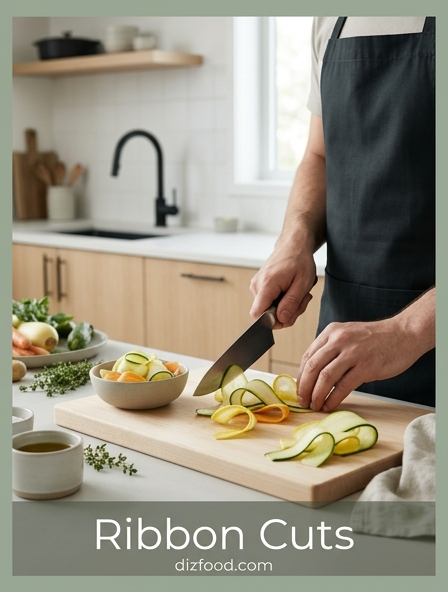
| Ribbons | Continuous width to allow for elegant curling. |
By treating every slice as a component of a larger architectural structure, the cook transforms simple ingredients into a sophisticated culinary work. Presentation standards are not just about beauty; they are about demonstrating a mastery over the tools and techniques that define professional gastronomy.

Comments