
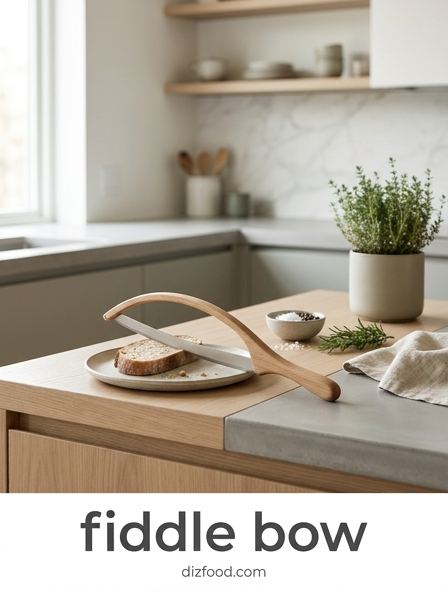
History of the Fiddle Bow Bread Knife
The fiddle bow bread knife, often referred to as an Appalachian bread saw, traces its lineage back to the early settlers of the American frontier. In these isolated mountain communities, resources were scarce, but the need for durable, efficient kitchen tools was constant. Craftsmen utilized local hardwoods like cherry, walnut, and maple to construct a frame that mimicked the shape of a violin or fiddle bow. This design allowed them to stretch a thin piece of high-carbon steel-often repurposed from old hacksaw blades-under extreme tension.
Unlike European bread knives that featured heavy, thick blades, the fiddle bow design emphasized lightweight precision. Over the decades, this tool transitioned from a rural necessity to a beloved piece of functional folk art. Its enduring popularity stems from a design that has remained largely unchanged for over a century, proving that the synergy between a simple wooden frame and a narrow, tensioned blade is unmatched for slicing through crusty, homemade loaves without tearing the soft interior.
Anatomy of a Tensioned Steel Blade
The structural integrity of a fiddle bow knife relies on the precise balance between its frame and its tensioned blade. While standard knives depend on the thickness of the metal for strength, the bow knife uses physics to achieve rigidity. By mounting a very thin, serrated steel strip within a rigid frame, the blade is kept under constant tension, preventing it from bowing or flexing during use. This allows the blade to be significantly thinner than a traditional serrated knife, resulting in less friction and cleaner cuts.
| Component | Material/Purpose |
|---|---|
| Frame | Hardwood; provides structural tension. |
| Blade | High-carbon steel; aggressive serrations. |
| Tension Pins | Metal hardware used to lock the blade. |
| Throat | The open space for loaf clearance. |
Mastering the Rhythmic Sawing Motion
To use a fiddle bow knife effectively, one must adopt a rhythmic sawing motion that differs significantly from the downward pressure used with standard cutlery. Because the blade is under high tension, it requires very little vertical force to penetrate even the toughest crusts. The user should hold the handle firmly but comfortably, allowing the weight of the frame to do the work. The movement should be long, fluid strokes that utilize the entire length of the serrated edge.
- Place the loaf on a stable cutting board.
- Align the blade's guide against the side of the bread.
- Begin with a light forward stroke to score the crust.
- Maintain a steady back-and-forth cadence without pushing down.
- Allow the tensioned steel to melt through the crumb until complete.
Achieving Perfectly Uniform Loaf Slices
One of the most frustrating aspects of slicing fresh bread is the tendency for slices to end up wedge-shaped or uneven. The fiddle bow knife addresses this issue through its unique geometry. The wooden frame acts as an integrated guide, keeping the blade perfectly vertical throughout the entire cut. This design is particularly beneficial for those who bake large batches of sandwich bread or artisan boules where consistency is key for even toasting and presentation.
By resting the side of the wooden frame against the cut face of the loaf, the baker can ensure that each subsequent slice is the exact same thickness. This eliminates the guesswork associated with standard knives, where the hand must manually maintain the angle. Whether you prefer thin, delicate shavings for afternoon tea or thick, hearty slabs for French toast, the bow knife provides a level of mechanical precision that transforms a chore into a satisfyingly uniform process, ensuring every piece of bread is a perfect canvas for toppings.
Ergonomics of the Traditional Wooden Handle
The design of the traditional wooden handle in a fiddle bow knife is a masterclass in ergonomic functionalism. Unlike the vertical handles of standard knives that can strain the wrist during repetitive slicing, the bow knife features a horizontal or slightly angled grip that aligns with the natural position of the arm. This orientation allows the large muscle groups of the shoulder and forearm to power the sawing motion, rather than relying on the smaller, more vulnerable joints of the wrist and hand.
Benefits of hardwood construction include:
- Natural warmth and comfort during extended use.
- Textured grain provides a non-slip surface even with floury hands.
- Superior balance compared to plastic or heavy metal handles.
- Organic absorption of vibrations during the cutting process.
The use of hardwoods like black walnut or Appalachian cherry ensures longevity and allows the tool to develop a unique patina over time, becoming more comfortable with every loaf sliced.
Slicing Sourdough Without Crushing the Crumb
Sourdough bread presents a unique challenge: a thick, caramelized crust surrounding a highly aerated, delicate crumb. Using a traditional serrated knife often requires significant downward pressure, which can compress the "holes" or open crumb structure, turning a masterpiece of fermentation into a flattened mass. The fiddle bow knife excels here because its ultra-thin blade creates minimal displacement.
The tensioned steel acts like a fine saw, vibrating through the tough outer crust with surgical precision. Because the blade is so narrow, there is very little surface area to create friction or "drag" against the sticky interior of a high-hydration sourdough. This results in a clean, professional-looking slice that preserves the internal architecture of the bread. Bakers spend days perfecting their sourdough starters and proofing times; the bow knife ensures that the final presentation honors that effort, delivering slices that are as airy and beautiful on the plate as they were inside the oven.
The Science Behind Rhythmic Cutting Precision
The precision of a fiddle bow knife is rooted in the physics of mechanical tension and kerf width. In woodworking, "kerf" refers to the width of the cut made by a saw blade. A traditional bread knife has a thick blade to prevent bending, which results in a wide kerf and high friction. In contrast, the bow knife uses a frame to pull a thin blade taut. This high tension increases the blade's effective stiffness, allowing it to remain straight while being thin enough to produce a microscopic kerf.
- Tension vs. Thickness: High tension compensates for low material thickness.
- Friction Reduction: A thinner blade encounters less resistance from moisture.
- Oscillation Control: The frame dampens vibrations, focusing energy into the serrations.
This combination of factors means that the energy applied by the user is converted more efficiently into cutting force, allowing for extreme precision even when dealing with varied internal textures.
Safety Benefits of the Integrated Guide
Kitchen safety is often overlooked, yet the fiddle bow knife is inherently safer than many of its counterparts. The primary safety feature is the integrated guide system created by the frame. Because the frame partially encloses the blade and dictates the path of the cut, the risk of the knife "slipping" off a rounded crust and toward the user's fingers is significantly reduced.
Key safety features include:
- Enclosed Edge: The blade is recessed within the wooden architecture.
- Stable Grip: The horizontal handle provides better control than vertical grips.
- Low Pressure: Less downward force means less chance of an uncontrolled slip.
- Directional Control: The frame keeps the blade moving in a straight line.
By providing a stable platform and a guided cutting path, the fiddle bow knife protects the user while delivering superior results, making it an excellent choice for both novice bakers and those with limited hand dexterity.
Essential Maintenance for Long Lasting Sharpness
To ensure a fiddle bow bread knife lasts for generations, a simple but consistent maintenance routine is essential. The two primary components-the wooden frame and the steel blade-require different types of care. The wood should never be submerged in water or placed in a dishwasher, as high heat and moisture will cause the grain to swell and the frame to warp, potentially loosening the blade tension.
Maintenance Checklist:
- Cleaning: Wipe the blade and frame with a damp cloth after each use.
- Oiling: Apply food-grade mineral oil to the wood every few months.
- Tension Check: Periodically ensure the mounting pins are tight and the blade is taut.
- Storage: Hang the knife or store it in a dry drawer away from other metal.
While the serrated blades stay sharp for a very long time, they can eventually be replaced or carefully honed with a round diamond file, ensuring the knife remains a functional heirloom.
Comparing Bow Knives to Standard Serrated Blades
Choosing between a fiddle bow knife and a standard serrated blade often comes down to the specific needs of the kitchen. While standard knives offer more versatility for tasks like slicing tomatoes or citrus, the bow knife is a specialized tool designed for peak performance with bread.
| Feature | Fiddle Bow Knife | Standard Serrated |
|---|---|---|
| Blade Thickness | Ultra-thin | Thick |
| Slice Consistency | Automatic via Frame | Manual Skill |
| Ease of Use | High (Guided) | Moderate |
| Crumb Protection | Excellent | Moderate |
The fiddle bow knife is the superior choice for artisan loaves and soft breads where maintaining the internal structure is paramount, whereas a standard serrated knife remains a jack-of-all-trades for various kitchen duties.


Comments