
If you're managing a busy kitchen, mastering high-volume mincing is essential for maintaining peak efficiency and consistency. Using a mezzaluna or professional rocker tool can transform your food prep routine, allowing you to breeze through mountains of herbs, nuts, and aromatics with minimal effort. These specialized curved blades utilize a rhythmic rocking motion that significantly reduces wrist strain while delivering precise, uniform results every time. Whether you are a professional chef or a home cook looking to level up your knife skills, investing in ergonomic equipment is key to streamlining your culinary workflow. To find the perfect fit for your specific chopping style, it's worth exploring the distinct differences between a Mezzaluna Vs Rocking Herb Knife.
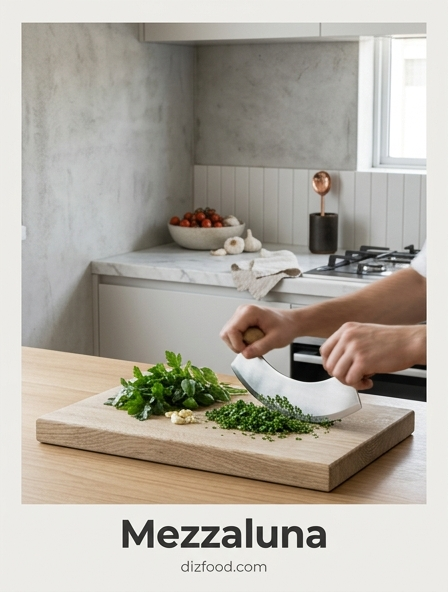
Benefits of Mezzaluna Rocker Knives
The mezzaluna, named after the Italian word for "half-moon," provides a unique set of advantages that traditional straight-edged chef knives cannot replicate. The primary benefit lies in its ergonomic design, which utilizes a curved blade to facilitate a continuous rocking motion. This motion significantly reduces the physical strain on the wrist and forearm, making it an excellent choice for individuals who suffer from repetitive strain injuries or arthritis. By distributing the cutting force across the entire arc of the blade, the tool allows for greater leverage with minimal effort.
- Enhanced safety by keeping fingers away from the cutting edge via top-mounted handles.
- Uniformity in mincing herbs and spices that results in more consistent flavor release.
- Increased speed when processing large volumes of leafy greens or aromatics.
- Versatility in cutting everything from delicate parsley to thick-crust pizzas.
Furthermore, the mezzaluna is inherently more stable than a standard knife. Because it remains in contact with the cutting surface throughout the stroke, there is a lower risk of the blade slipping or catching on tough stems. This stability ensures a safer kitchen environment while promoting a more rhythmic and efficient workflow during intensive food preparation tasks.
Professional Rocker Tool Anatomy Basics
Understanding the anatomy of a professional mezzaluna is crucial for selecting the right tool for specific culinary tasks. The most prominent feature is the blade, typically forged from high-carbon stainless steel to ensure edge retention and corrosion resistance. The degree of the arc determines the rocking range; a deeper curve allows for more aggressive rocking, while a shallower curve provides more control for precision slicing. Handles are usually positioned at either end of the blade or along a single top bar, depending on the intended use.
| Component | Description | Material Options |
|---|---|---|
| Blade Arc | The curved cutting edge that facilitates the rocking motion. | Stainless Steel, Ceramic |
| Grips/Handles | Dual knobs or a single bridge handle for hand placement. | Wood, Polypropylene, Steel |
| Tang | The portion of the blade that extends into the handles for stability. | Full or Partial Tang |
Professional models often feature a full tang construction, where the metal extends completely through the handles, providing superior balance and durability. The weight of the tool also plays a significant role in its anatomy; a heavier mezzaluna uses gravity to assist the cut, whereas a lighter model requires more manual downward pressure but offers increased agility for fine tasks.
High Volume Herb Mincing Techniques
To achieve professional results when mincing high volumes of herbs like cilantro, parsley, or basil, one must master the "pivot and sweep" technique. Start by gathering the washed and dried herbs into a tight, dense pile in the center of the cutting board. Position the mezzaluna over the pile and begin a steady, rhythmic rocking motion. Instead of moving the knife randomly, use one handle as a temporary pivot point while sweeping the other end of the blade in a semi-circle across the herbs.
- Gather the herbs into a centralized mound to maximize blade contact.
- Apply even downward pressure while rocking the blade from tip to tip.
- Rotate the cutting board or use the blade to scrape herbs back into a pile every few strokes.
- Gradually increase the speed as the herbs break down into smaller fragments.
Crucially, the herbs should be completely dry before mincing to prevent them from bruising or turning into a paste. As the mincing progresses, the texture will shift from coarse leaves to a fine, uniform confetti. This technique ensures that the essential oils are retained within the herb rather than being squeezed out onto the cutting board, resulting in a more aromatic and flavorful end product.
Choosing Single Versus Double Blades
When selecting a mezzaluna, the choice between a single or double blade configuration depends largely on the user's specific needs for speed versus precision. A single-blade mezzaluna is the standard for most kitchen tasks, offering exceptional control and ease of sharpening. It is the preferred tool for precision slicing and for those who want a versatile instrument that can handle larger vegetables or even meat. Because there is only one edge to manage, cleaning and maintenance are straightforward and less time-consuming.
- Single Blade: Best for precision, dicing larger items, and easy cleaning.
- Double Blade: Designed for maximum speed and ultra-fine mincing of herbs.
- Maintenance: Single blades are easier to hone; double blades require specialized tools or care.
- Clogging: Double blades can trap food between the surfaces, requiring frequent clearing.
Double-blade models are engineered for efficiency in mincing. With every rocking motion, the user completes twice the work. However, this efficiency comes with the drawback of food becoming lodged between the two blades. This can be frustrating when working with moist ingredients like garlic or damp herbs. Consequently, double blades are most effectively utilized in high-speed environments where the primary goal is a very fine mince in the shortest amount of time possible.
Ergonomic Hand Placement for Safety
Safety is the most significant advantage of the mezzaluna, provided that the user employs the correct ergonomic hand placement. Most rocker knives are designed with handles positioned well above the cutting edge, naturally keeping fingers away from the danger zone. For dual-knob models, the palms should rest firmly on top of the knobs with fingers wrapped securely around the sides. This "top-down" grip allows the weight of the upper body to assist in the cutting process, reducing the reliance on wrist strength.
- Ensure hands are dry and free of oil to maintain a secure grip on the handles.
- Position the handles so that the wrists remain in a neutral, straight alignment.
- Use a "push-pull" rocking motion rather than a lifting motion to keep the blade in contact with the board.
- Keep the non-cutting hand completely away from the board or behind the back when the blade is in motion.
By maintaining a neutral wrist position, users can prevent the onset of fatigue during long prep sessions. For single-bridge handles, the grip should be centered to maintain balance. It is vital to avoid reaching under the blade to move food while the knife is in motion. Instead, stop the rocking action and use the flat side of the blade as a scraper only when the handles are securely held and the motion has ceased.
Surface Selection for Optimal Rocking
The performance of a mezzaluna is heavily influenced by the surface it interacts with. Unlike standard knives that perform well on flat surfaces, the mezzaluna is often paired with a specialized cutting board that features a concave indentation or "well." This bowl-like curvature matches the arc of the blade, ensuring that the entire cutting edge makes contact with the surface simultaneously. This maximizes the efficiency of every stroke and prevents "dead spots" where herbs might remain uncut.
- End-Grain Wood: Provides a self-healing surface that preserves blade sharpness.
- Concave Boards: Specifically designed to keep ingredients centered and improve blade contact.
- Avoid Glass/Stone: These surfaces will instantly dull the curved blade and may cause slipping.
- Plastic/Composite: Suitable for sanitation but lacks the grip and "give" of natural wood.
If a specialized concave board is not available, a large, heavy wooden block is the next best option. The weight of the board is important; because the mezzaluna involves a repetitive rocking motion, a light board may slide across the counter. Placing a damp towel under the cutting board can provide additional stability, ensuring that the focus remains entirely on the rhythmic motion of the rocker knife rather than stabilizing the workspace.
Precision Garlic and Vegetable Slicing
While the mezzaluna is famous for herbs, it is an underutilized tool for precision vegetable prep. For garlic, the rocker knife can transition from a coarse chop to a fine paste with ease. Start by using the wide flat of the blade to gently crush the cloves, loosening the skins. Once peeled, the rocking motion quickly reduces the cloves to a fine mince. By adding a pinch of salt to the garlic, the mezzaluna can be used to grind the mixture into a smooth paste using the center of the arc.
- Slice vegetables like celery or carrots into long strips first.
- Align the strips horizontally across the cutting path of the mezzaluna.
- Rock the blade forward and backward, moving across the strips to create uniform dice.
- Use the curvature to scoop and toss the ingredients for even distribution.
Small vegetables like radishes, cherry tomatoes, and scallions are also ideal candidates for the mezzaluna. The key to precision is controlling the lateral movement of the knife. By slowly shifting the blade sideways between each rock, you can achieve incredibly thin slices that are difficult to replicate with a traditional knife without significant practice. This makes the mezzaluna a valuable tool for garnishes and salads.
Streamlining Commercial Kitchen Prep Speed
In a high-pressure commercial environment, the mezzaluna is a "force multiplier" for mise en place. Chefs often face the task of mincing gallons of herbs or dozens of onions, and the mezzaluna can cut the time required for these tasks in half. The efficiency stems from the tool's ability to cover more surface area with each movement and the reduction in "reset time" between cuts. In a professional setting, the double-bladed mezzaluna is frequently the tool of choice for preparing large batches of pesto, chimichurri, or salsa.
| Task | Standard Knife Time | Mezzaluna Time |
|---|---|---|
| 1 Bunch Parsley | 120 Seconds | 45 Seconds |
| Large Pizza Slice | 10 Seconds | 2 Seconds |
| 6 Garlic Cloves | 60 Seconds | 20 Seconds |
To further streamline speed, commercial kitchens often use oversized mezzalunas, sometimes reaching lengths of 20 inches or more. These larger tools allow chefs to process entire heads of lettuce or large pizzas in a single motion. By integrating the mezzaluna into the standard workflow, a kitchen can maintain higher consistency in their prep work while significantly lowering the labor cost associated with manual knife tasks.
Sharpening and Maintaining Rocker Blades
Maintaining a mezzaluna requires a different approach than a standard kitchen knife due to its curved geometry. A sharp edge is vital for a clean cut; a dull mezzaluna will bruise herbs rather than slicing them, leading to rapid oxidation and loss of flavor. For routine maintenance, a ceramic honing rod can be used. The rod should follow the curve of the blade in a smooth, sweeping motion from one end to the other, ensuring that the angle remains consistent throughout the stroke.
- Hand wash only with mild soap to prevent handle damage and blade corrosion.
- Dry immediately after washing to avoid water spots and rust on high-carbon steel.
- Use a specialized pull-through sharpener designed for curved blades if manual honing is difficult.
- Store in a dedicated sheath or on a magnetic rack to protect the edge from contact.
For deep sharpening, a flexible diamond stone or a series of whetstones is recommended. Because the blade is curved, you must rotate the knife as you move it across the stone to ensure the entire edge is treated equally. Over-sharpening one area can flatten the arc, which ruins the rocking motion. Proper storage is equally important; because of its awkward shape, a mezzaluna should never be left loose in a drawer where the edge can be nicked or cause injury.
Advanced Rhythmic Mincing Coordination
The pinnacle of mezzaluna mastery is the development of a rhythmic, almost musical, mincing coordination. Advanced users don't just rock the knife; they use the sound and vibration of the blade hitting the board to gauge the fineness of the cut. This level of coordination involves synchronizing the downward pressure with a subtle lateral movement, allowing the knife to "walk" across the cutting board. This allows for continuous processing without the need to stop and regroup the ingredients as frequently.
- Establish a steady beat, ensuring the blade makes full contact from end to end.
- Incorporate a slight twisting motion in the handles to change the direction of the cut mid-rock.
- Use the momentum of the heavy blade to carry the motion, reducing muscle effort.
- Coordinate breath with the rhythm to maintain focus during long sessions.
As coordination improves, the user can achieve a "blur" of motion where the herbs are processed with incredible speed. This advanced technique relies heavily on muscle memory. By keeping the elbows tucked in and using the core for stability, the chef becomes an extension of the tool. This rhythmic approach not only increases productivity but also turns a mundane prep task into a meditative and highly skillful aspect of culinary art.

Comments