
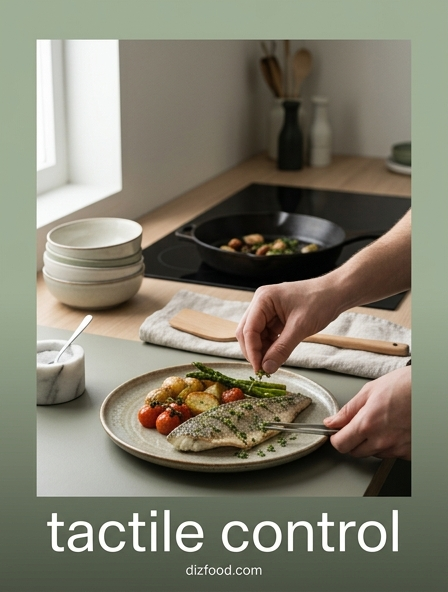
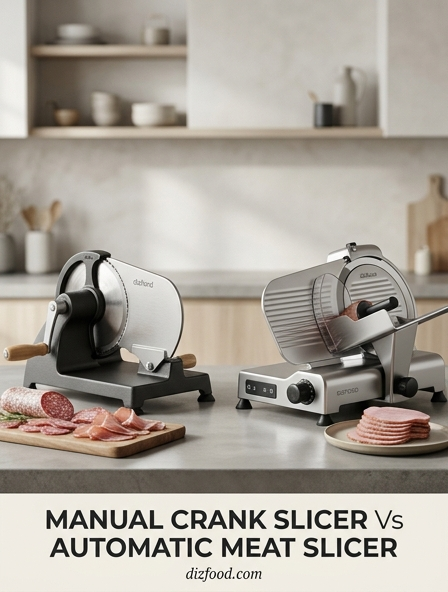
When you're aiming for those paper-thin, melt-in-your-mouth artisanal cuts, nothing beats the precision of true tactile control. Unlike high-speed machinery, a hands-on approach allows you to feel the unique resistance of the meat, enabling subtle adjustments that preserve the integrity of delicate fats and fibers. This sensory connection is the secret to achieving consistent, professional-grade transparency in your charcuterie without compromising the protein's texture. By mastering the rhythm of the blade, you transform a simple preparation task into a craft that honors the quality of your ingredients. To find the right tool for your kitchen, it helps to weigh the benefits of a manual crank slicer vs automatic meat slicer.
The Role of Sensory Feedback in Precision Slicing
Sensory feedback serves as the primary communication channel between a chef's neurological system and the ingredients on the cutting board. When a blade engages with organic matter, it generates specific micro-vibrations and resistance levels that travel through the steel into the hand. This tactile information allows for instantaneous adjustments in downward pressure and lateral movement, ensuring that every slice is executed with mathematical precision. Without this feedback, the user relies solely on visual cues, which are often too slow to correct for the subtle variations in food density or internal structures like seeds and fibers.
The ability to interpret these signals differentiates a master technician from a novice. High-quality cutlery is designed to enhance these vibrations rather than dampen them, providing a clear "read" of the surface. This connection is vital when performing high-speed tasks where the margin for error is measured in millimeters. By focusing on the haptic response, a cook can navigate through varying textures-from the crisp skin of a bell pepper to the soft interior of a ripe tomato-without crushing the cellular structure of the ingredient.
- Vibrational clarity: The transmission of resonance through the tang.
- Resistance mapping: Detecting changes in density during the stroke.
- Edge engagement: Feeling the exact moment the bevel bites into the surface.
Mastering the Pinch Grip for Enhanced Stability
The pinch grip is the quintessential technique for maximizing tactile control in the kitchen. By placing the thumb and the side of the index finger directly on the blade's bolster or the base of the spine, the cook effectively shortens the lever arm of the tool. This positioning shifts the center of gravity to the palm, transforming the knife from an external object into a literal extension of the arm. The skin-on-metal contact provides a superior level of sensitivity that a standard handle grip cannot replicate, as it bypasses the dampening effect of most handle materials.
Furthermore, this grip provides immense lateral stability, preventing the blade from wobbling or "rolling" during heavy-duty tasks or delicate work. Because the fingers are physically squeezing the blade, the user can feel the precise angle of the edge in relation to the cutting board. This heightened awareness is crucial for maintaining a consistent bias or verticality throughout a long production shift, reducing hand fatigue and increasing overall output quality.
- Place the thumb on one side of the blade near the bolster.
- Curl the index finger to grip the opposite side of the steel.
- Wrap the remaining three fingers comfortably around the handle for support.
- Relax the wrist to allow for fluid, rhythmic movement.
How Blade Material Affects Tactile Responsiveness
The molecular composition of a knife's blade plays a definitive role in how information is transmitted to the user's hand. Different alloys and forging methods produce varying levels of rigidity and acoustic resonance. For instance, high-carbon steel is renowned among enthusiasts for its "talkative" nature; it is a stiff material that transfers every minute vibration with high fidelity. Conversely, softer stainless steel alloys may feel slightly "mushy," absorbing some of the tactile data that a chef uses to gauge the progress of a cut.
Ceramic blades represent another extreme, offering a very different haptic profile. While they are incredibly hard, they lack the weight and resonance of metal, often making them feel "numb" during use. The thickness of the blade, or its geometry, also influences this responsiveness. A thin, laser-like grind allows the user to feel the texture of the food more intimately, whereas a thick, heavy cleaver prioritizes momentum and force over subtle tactile feedback.
| Material Type | Tactile Profile | Vibration Transfer |
|---|---|---|
| High-Carbon Steel | Crisp and Sharp | Excellent |
| Stainless Steel | Damped and Smooth | Moderate |
| Ceramic | Light and Rigid | Low |
The Science of Finger Placement and Control
The science of control in culinary arts extends beyond the hand holding the tool; it heavily involves the "guiding hand." Proper finger placement on the ingredient itself provides a physical reference point for the blade, known as the "claw grip." This technique involves tucking the fingertips inward and using the knuckles as a vertical guide for the flat of the knife. This creates a closed-loop feedback system where the chef can feel the exact position of the blade relative to their fingers without needing to look directly at the point of contact.
Proprioception, the body's ability to sense its own position in space, is highly active during this process. The nerves in the knuckles provide constant data regarding the blade's height and angle. This allows for high-speed chopping with a level of safety and consistency that is physically impossible through visual monitoring alone. As the guiding hand retreats, the spacing between each cut is determined by the tactile sensation of the fingers moving across the ingredient's surface.
- Knuckle Guidance: Providing a vertical plane for the blade to follow.
- Finger Tucking: Protecting the tips from the cutting edge.
- Thumb Placement: Acting as a rear anchor to push the ingredient forward.
Achieving Paper Thin Consistency Through Touch
Producing translucent slices of radishes, carpaccio, or onions requires a level of touch that borders on the artistic. At this level of precision, the chef is not merely cutting; they are navigating the tension between the blade and the material's cellular integrity. Achieving paper-thin consistency depends on the ability to sense the "bite" of the edge. If the pressure is too great, the slice will be uneven or thick; if too light, the blade may skid across the surface without engaging. Tactile control allows the cook to maintain a perfectly horizontal or vertical path through the entire stroke.
This process is often rhythmic. The chef feels the release of the slice as it falls away, providing a tactile "click" or drop in resistance that signals the completion of the movement. By focusing on the vibration of the steel, one can detect if the blade is beginning to deviate by even a fraction of a millimeter. This allows for mid-stroke corrections that ensure every piece is identical, which is essential for even cooking and professional presentation.
- Apply minimal downward force, letting the edge do the work.
- Use a long, sweeping draw-cut to maximize the cutting surface.
- Monitor the resistance felt in the palm to gauge thickness.
- Adjust the guiding hand in micro-increments after each stroke.
The Connection Between Knife Balance and Hand Feel
The balance point of a knife-the location where the blade and handle weight are equal-determines how the tool "feels" during extended periods of use. A perfectly balanced knife usually has its fulcrum at the bolster. This neutral balance allows the knife to pivot effortlessly, making it feel lighter and more responsive to subtle wrist movements. If a knife is blade-heavy, it naturally wants to fall forward, which is beneficial for heavy chopping but detrimental to delicate tasks that require upward finesse. Conversely, a handle-heavy knife can feel sluggish and disconnected from the tip.
The "hand feel" is a subjective but critical metric. It encompasses the texture of the handle, the thickness of the spine, and the overall weight distribution. When a knife is properly balanced for a specific user's hand, it reduces the amount of muscular effort required to keep the blade steady. This lack of tension in the hand allows the nerves to remain more sensitive to the tactile feedback coming from the cutting edge, as they are not preoccupied with gripping the tool tightly to prevent it from slipping or tipping.
- Center Balance: Ideal for general utility and multi-purpose slicing.
- Blade-Forward: Best for heavy-duty tasks like butchery or root vegetables.
- Handle-Heavy: Often found in smaller paring knives for intricate detail work.
Developing Muscle Memory for Artisanal Techniques
Muscle memory in the kitchen is the result of thousands of hours of tactile repetition. It is the process by which complex motor tasks are transferred from the conscious mind to the subconscious, allowing a chef to perform intricate techniques like chiffonade or brunoise with autonomic ease. This development starts with slow, deliberate movements where the brain focuses intensely on the feel of the knife and the resistance of the food. Over time, these sensations become ingrained patterns that the nervous system can execute without active thought.
This artisanal mastery is what allows professional kitchens to operate at extreme speeds. A chef with well-developed muscle memory doesn't just know where the knife is; they "feel" the rhythm of the kitchen. This frees up cognitive resources to monitor other sensory inputs, such as the smell of a reduction or the sound of a searing protein. The tactile connection becomes a reliable baseline, a steady pulse that guides the hand through the repetitive motions of prep work while maintaining high standards of uniformity.
- Start with slow, rhythmic repetitions to build neurological paths.
- Focus on the "feel" of the correct movement rather than the speed.
- Gradually increase tempo while maintaining the same tactile pressure.
- Periodically reset form to ensure no bad habits are being "memorized."
Why Texture Matters for Fine Culinary Preparation
Texture is a primary component of the culinary experience, and it is largely determined by the quality of the cut. A sharp knife with high tactile feedback allows the cook to slice through the fibers of meat or vegetables without tearing or bruising them. When a blade is dull or the user lacks control, the cells are crushed, leading to a loss of moisture and a degradation of the ingredient's natural texture. For example, in Japanese cuisine, the "mouthfeel" of sashimi is directly linked to the smoothness of the cut, which is only achievable through superior tactile manipulation.
The interaction between the blade and the ingredient also affects flavor. Herbs that are chopped with precision retain their essential oils, whereas those that are crushed turn bitter and oxidize quickly. By feeling the resistance of the herb against the board, a chef can ensure a clean "shear" rather than a "smash." This attention to tactile detail ensures that the structural integrity of every component is preserved from the cutting board to the final plate.
| Technique | Texture Outcome | Tactile Focus |
|---|---|---|
| Clean Slicing | Silky/Smooth | Consistent Draw |
| Dicing | Uniform/Crisp | Vertical Accuracy |
| Mincing | Fine/Integrated | Rhythmic Pressure |
Choosing Ergonomic Tools for Superior Tactile Input
Selecting the right tools is a prerequisite for achieving high-level tactile control. Ergonomics is the study of how tools can be designed to work in harmony with human physiology. In the kitchen, an ergonomic knife handle should fill the palm without creating pressure points that cause numbness. When the hand is comfortable, the sensory receptors in the skin are more capable of detecting subtle vibrations. Handles made from materials like Micarta, wood, or textured polymers provide a "grippy" surface that ensures the knife doesn't slide when wet, maintaining a constant flow of information.
The shape of the handle also influences the user's ability to "index" the blade. An oval or octagonal handle allows the chef to feel the orientation of the edge without looking at it. This is a critical aspect of tactile input, as it allows for intuitive adjustments. When a tool is poorly designed, the hand must work harder to maintain a grip, which creates tension in the forearm and dulls the sensitivity of the fingertips, essentially "blinding" the chef to the feedback the blade is trying to provide.
- Handle Contour: Should match the natural curve of a closed fist.
- Surface Texture: Prevents slippage and maintains tactile connection.
- Bolster Design: Allows for a comfortable and seamless pinch grip transition.
Safety Benefits of Heightened Knife Sensitivity
Heightened sensitivity is one of the most effective safety features a cook can possess. When a chef is intimately connected to the tactile response of their knife, they can detect potential hazards before they result in an injury. For instance, a dull blade requires more force to penetrate the surface of an ingredient; a sensitive hand will "feel" this lack of bite and recognize that the blade is prone to slipping. This allows the user to stop and sharpen the tool rather than pushing through and risking a loss of control.
Furthermore, tactile awareness helps in identifying "foreign objects" or structural anomalies within an ingredient, such as a hidden bone or a stone in a piece of fruit. The immediate feedback of the blade hitting a hard surface allows for a split-second reaction to stop the motion. By prioritizing sensitivity over raw power, the cook maintains a much higher degree of environmental awareness, ensuring that the knife remains a controlled instrument rather than a dangerous liability in a fast-paced kitchen environment.
- Immediate detection of edge dullness or "skating."
- Early warning of hidden obstructions within food.
- Reduced reliance on excessive force, which causes slips.
- Greater awareness of hand positioning via knuckle contact.

Comments