
Understanding the Rondelle Cut Basics
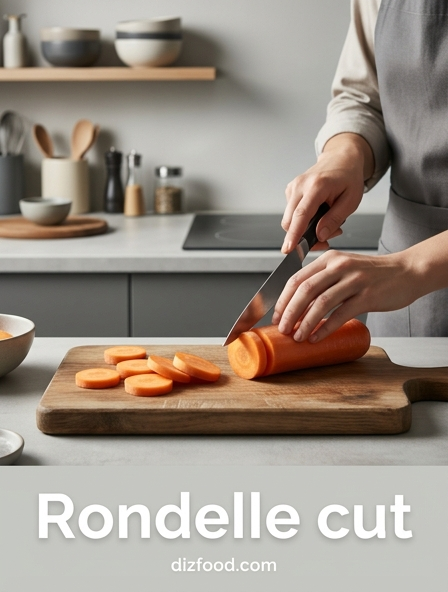
The rondelle cut, a fundamental technique in classical French cuisine, refers to the process of slicing cylindrical vegetables into simple, coin-shaped disks. The term "rondelle" translates literally to "round" or "little wheel," which perfectly describes the aesthetic of the final product. While it appears simple, the rondelle is the foundation for many more complex cuts and serves as a vital skill for any home cook or professional chef. Mastering this cut ensures that vegetables cook at a consistent rate, which is essential for achieving the desired texture in a finished dish.
Beyond functionality, the rondelle cut provides a clean, professional look to stir-fries, soups, and salads. It is primarily used for naturally long, narrow vegetables. Because the thickness can vary depending on the recipe-ranging from paper-thin translucent slices to thick, hearty chunks-the versatility of the rondelle is unmatched. By focusing on the rhythm of the knife and the placement of the vegetable, a cook can transform a humble carrot or zucchini into uniform pieces that elevate the visual appeal of a plate while ensuring a balanced bite in every spoonful.
Essential Tools for Precision Slicing
To achieve the perfect rondelle, having the right equipment is just as important as the technique itself. A high-quality knife is the centerpiece of this operation. While several styles can do the job, specific blades offer better control and cleaner edges. A stable working environment is also necessary to prevent accidents and ensure that every slice is identical to the last. Using a dull blade or a warped cutting board can result in jagged edges or uneven thickness, ruining the professional look of the cut.
- Chef's Knife: An 8-inch blade provides the necessary length and weight for smooth, rhythmic slicing.
- Santoku Knife: The flat edge and "sheep's foot" tip make it ideal for the up-and-down motion often used for rondelles.
- Wooden Cutting Board: A heavy, end-grain board provides a non-slip surface and protects the knife's edge.
- Honing Steel: Regular use keeps the blade perfectly straight and sharp between professional sharpenings.
- Mandoline Slicer: For high-volume tasks requiring paper-thin consistency, this tool offers unmatched precision.
Best Vegetables for Round Disks
The rondelle cut is specifically designed for vegetables that possess a naturally cylindrical or conical shape. When these items are sliced crosswise, they naturally form the "little wheels" that give the cut its name. Selecting the right produce is key; the vegetable should be firm enough to withstand the pressure of the knife without collapsing or tearing. While most people immediately think of root vegetables, several other categories of produce are excellent candidates for this technique.
| Vegetable Type | Common Examples | Ideal Thickness |
|---|---|---|
| Root Vegetables | Carrots, Parsnips, Daikon Radish | 1/8 to 1/4 inch |
| Squash & Nightshades | Zucchini, Yellow Squash, Eggplant | 1/4 to 1/2 inch |
| Alliums | Leeks, Green Onions | 1/16 to 1/8 inch |
| Fruits (Cylindrical) | Bananas, Cucumbers, Plantains | 1/4 inch |
In addition to these, peppers can sometimes be sliced into rondelles if they are narrow and straight, such as serrano or jalapeño peppers, providing beautiful rings for garnishes or spicy toppings.
Mastering the Proper Knife Grip
Control is the most critical element when performing a rondelle cut, and that control begins with how you hold the knife. Many beginners make the mistake of holding the handle like a hammer, which limits range of motion and reduces stability. Instead, professional chefs utilize the "pinch grip." By placing the thumb and the side of the index finger directly on the bolster or the base of the blade, the knife becomes an extension of the arm. This allows for micro-adjustments in the angle and pressure applied to the vegetable.
Equally important is the "guiding hand," often referred to as the "claw." The fingertips of the non-cutting hand should be tucked inward, with the knuckles acting as a buffer for the side of the blade. This positioning serves two purposes: it protects the fingertips from injury and acts as a physical gauge for the thickness of each slice. As you slide the guiding hand back along the vegetable, the knife follows, ensuring that every rondelle is cut to the exact same width with minimal effort and maximum safety.
Step by Step Slicing Technique
Performing a rondelle cut requires a rhythmic, repetitive motion that balances speed with accuracy. To begin, ensure your vegetable is washed, peeled if necessary, and placed horizontally on the cutting board. If the vegetable is particularly wobbly, you may need to trim a thin strip off one side to create a flat base, though for standard rondelles, the natural shape is usually maintained. Follow these steps to produce clean, uniform disks every time:
- Position the vegetable perpendicular to the knife blade on a stable cutting board.
- Establish your "claw" grip with the non-dominant hand to hold the vegetable firmly in place.
- Place the tip of the knife on the board and use a rocking motion, or lift the blade for a straight vertical chop.
- Apply steady downward pressure to slice through the vegetable completely.
- Shift your guiding hand back a precise distance to determine the thickness of the next slice.
- Repeat the motion, maintaining a consistent tempo until the entire vegetable is processed.
Consistent practice will eventually allow you to perform these steps without looking directly at the blade, relying instead on the feel of the knuckles against the steel.
Achieving Perfectly Uniform Thickness
The hallmark of a skilled cook is the ability to produce a pile of rondelles that are indistinguishable from one another. Uniformity is not just about aesthetics; it is a functional requirement in the kitchen. If one carrot slice is twice as thick as another, the thinner slice will turn to mush by the time the thicker one is tender. To achieve this level of precision, you must focus on the distance your guiding hand travels between each cut. This distance should be identical every time.
Visual markers can help when you are first learning. Some chefs use the width of their knife blade or the markings on a cutting board as a guide. It is better to start slowly and prioritize accuracy over speed. As your muscle memory develops, your pace will naturally increase. If you find that your slices are becoming wedge-shaped-thicker on the top than the bottom-it usually indicates that your knife is not staying perfectly vertical. Periodically check your progress by stacking the disks; if the stack is straight and even, your technique is correct.
Safety Tips for Sharp Blades
Working with sharp knives always carries a degree of risk, but the repetitive nature of the rondelle cut can lead to complacency. Most kitchen accidents occur when the cook loses focus or uses improper form. Maintaining a sharp edge is actually safer than using a dull one, as a sharp knife requires less force and is less likely to slip off the skin of a vegetable. However, even with a sharp tool, certain protocols must be followed to ensure the safety of your fingers and the stability of your workspace.
- The Damp Towel Trick: Place a damp paper towel or a non-slip mat under your cutting board to prevent it from sliding during use.
- Tuck the Thumb: Ensure the thumb of your guiding hand is tucked behind your fingers to avoid catching the blade.
- Clear the Zone: Keep your cutting area organized; push completed rondelles to the side so they don't clutter the workspace.
- Never Catch a Falling Knife: If the knife slips from the board, step back and let it hit the floor; do not attempt to grab it.
- Focus on the Task: Avoid distractions or looking away from the cutting board while the blade is in motion.
Common Rondelle Cutting Mistakes
Even seasoned cooks can fall into bad habits that compromise the quality of their rondelle cuts. One of the most frequent errors is "tapering," where the slices gradually become thicker or thinner as the cook moves down the length of the vegetable. This usually happens because the angle of the knife shifts or the guiding hand moves inconsistently. Another common issue is the "half-moon" effect, which occurs when the vegetable rolls during the cut, resulting in asymmetrical disks rather than perfect circles.
Using the wrong part of the blade can also lead to problems. For example, using the very tip of a chef's knife for thick root vegetables can cause the blade to wander. It is better to use the center or the heel of the knife where you have the most leverage. Additionally, many people fail to trim the ends of the vegetable properly before starting. Removing the root and stem ends provides a clean starting point and ensures that every slice you produce is usable. Avoiding these pitfalls will immediately improve the professional appearance of your prep work.
Creative Culinary Uses for Disks
Once you have mastered the rondelle cut, you can apply it to a wide variety of dishes. Because of their flat surfaces, rondelles are ideal for techniques that involve browning or caramelization. In a classic Ratatouille, for example, zucchini and eggplant rondelles are layered to create a stunning visual pattern. In Asian cuisine, thinly sliced ginger or radish rondelles are used to infuse broths with flavor. The uniform surface area also makes them perfect for pickling, as the brine can penetrate the vegetable evenly from both sides.
Rondelles are also excellent for roasted vegetable medleys. When tossed in oil and seasonings, the flat sides of the disks make maximum contact with the roasting pan, resulting in a delicious golden-brown crust. For garnishing, very thin rondelles of cucumber or radish can be floated on top of chilled soups or arranged on salads for a delicate, refined touch. Even in desserts, rondelle-cut bananas or poached pears add a structured, elegant look to tarts and fruit platters, proving that this simple cut is a workhorse in both savory and sweet applications.
Advanced Diagonal Slicing Variations
While the standard rondelle is cut perpendicular to the vegetable, the "diagonal" or "bias" cut is a popular variation that offers a different aesthetic and functional profile. By angling the knife-typically at a 45-degree angle-you create elongated ovals instead of circles. This technique is frequently used in stir-fries because it increases the surface area of the vegetable. A larger surface area allows for faster cooking and more space for sauces to cling to the ingredient, which is vital in high-heat, fast-paced cooking environments.
Diagonal cuts are also favored for presentation. An elongated slice of carrot or asparagus looks more sophisticated on a plate than a simple circle. When performing a bias cut, it is important to maintain the same angle throughout the entire process to ensure the pieces remain uniform. This requires more focus than the standard rondelle, as the tilted angle of the knife can be harder to stabilize. Mastering the diagonal variation is the next logical step for anyone who has perfected the basic rondelle, adding a touch of flair to their culinary repertoire.

Comments