
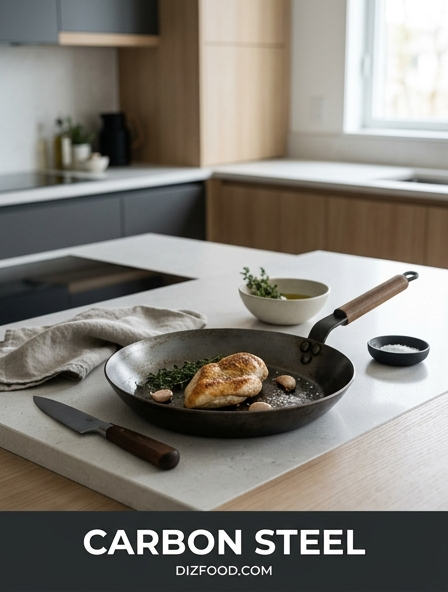
The Science of Carbon Steel Sharpness
The exceptional sharpness of carbon steel is rooted in its fundamental molecular composition. Unlike stainless steel, which contains high levels of chromium to prevent corrosion, carbon steel prioritizes a refined grain structure. This lack of large chromium carbides allows the iron and carbon to form a denser, more uniform matrix known as martensite. When forged and heat-treated correctly, this structure enables the blade to be ground to a significantly more acute angle without the edge collapsing under pressure.
The physics of the cutting edge rely on the concentration of force over a microscopic surface area. Because carbon steel can support a finer apex, it reduces the amount of cellular damage to the food being prepared. This scientific advantage translates to cleaner cuts and less friction during the slicing process. The following factors contribute to this mechanical superiority:
- High carbon concentration facilitates extreme hardening during the quenching process.
- A fine-grained microstructure allows for a smoother, toothier edge at the microscopic level.
- Minimal alloying elements prevent the formation of "clumpy" carbides that hinder sharpening.
- Enhanced elasticity within the metal prevents the edge from rolling easily during high-impact tasks.
Precision Slicing and Culinary Control
In a high-pressure kitchen environment, the relationship between the chef and their tool is defined by precision. Carbon steel knives provide a level of control that is often missing in softer, mass-produced cutlery. The inherent stiffness of high-carbon alloys ensures that the blade does not flex unexpectedly when navigating through dense root vegetables or carving through proteins. This rigidity allows for surgical accuracy, enabling chefs to produce consistent cuts that ensure even cooking times across all ingredients.
Culinary control also extends to the weight and balance of the tool. Many traditional carbon steel knives are forged with a distal taper, meaning the blade thins toward the tip. This design feature moves the balance point closer to the bolster, providing a nimble feel that reduces wrist fatigue. Whether performing a delicate chiffonade or a rapid-fire dice, the responsive nature of the steel allows for effortless transitions between different cutting techniques. The result is a more fluid workflow where the knife acts as a natural extension of the hand, rather than a heavy or cumbersome obstacle.
Achieving a Razor Sharp Edge
The process of sharpening carbon steel is distinct from maintaining other materials. Due to its high hardness and lack of gummy alloying elements, carbon steel responds rapidly to abrasive whetstones. A skilled sharpener can feel the metal being removed, a sensation often described as "biting" into the stone. This feedback is crucial for maintaining a consistent angle, typically between 10 and 15 degrees per side, which is necessary for achieving a true razor edge.
Because the steel is so receptive, the burr-a thin strip of metal that forms at the apex-is easy to identify and subsequently remove. This ease of maintenance ensures that the knife can be returned to peak performance in a matter of minutes. To achieve the ultimate finish, many professionals follow a specific grit progression:
- Coarse grit (400-800) for repairing nicks or resetting the primary bevel.
- Medium grit (1000-3000) for refining the edge and establishing the bite.
- Fine grit (5000-8000) for polishing the edge to a mirror-like finish.
- Leather stropping to remove microscopic remnants and align the apex.
Carbon Steel Versus Stainless Performance
Choosing between carbon steel and stainless steel involves a trade-off between convenience and raw performance. While stainless steel offers the benefit of being rust-resistant and low-maintenance, it often lacks the edge geometry and ease of sharpening found in carbon steel. The chromium in stainless steel creates a "softer" feel on the stones and can lead to a more rounded edge over time. In contrast, carbon steel demands respect and care but rewards the user with a level of sharpness that stainless struggles to replicate.
| Feature | Carbon Steel | Stainless Steel |
|---|---|---|
| Edge Retention | Excellent | Moderate |
| Ease of Sharpening | Very High | Low to Moderate |
| Corrosion Resistance | Low (requires oil) | Very High |
| Typical Hardness (HRC) | 60-65 | 54-59 |
While carbon steel will develop a patina and requires immediate drying after use, the culinary output is often superior due to the reduced force required for each slice.
The Professional Chef's Primary Choice
Professional chefs frequently gravitate toward carbon steel because of its reliability during long shifts. In a commercial setting, where hundreds of pounds of produce are processed daily, a knife that stays sharp longer is an essential asset. Carbon steel provides the stamina needed for repetitive tasks, allowing the chef to maintain a high speed without constantly stopping to hone. Furthermore, the development of a patina-a protective oxidation layer-is seen as a badge of honor, telling the story of the knife's history and the various acids it has encountered.
The preference for carbon steel is also a matter of tradition and craftsmanship. Many of the world's finest bladesmiths, particularly in Japan and France, specialize in high-carbon alloys because they allow for the expression of complex forging techniques like "San Mai" or "Honyaki." For a professional, using a hand-forged carbon steel tool is not just about utility; it is about utilizing a piece of culinary heritage that offers unparalleled feedback and soul during the creative process of cooking.
Edge Retention and Blade Integrity
Edge retention refers to a blade's ability to remain sharp during use, and it is here that carbon steel truly shines. The hardness of the steel, often measured on the Rockwell C scale (HRC), typically ranges from 60 to 65 for high-end carbon knives. This high rating means the microscopic apex of the knife is less likely to deform or "roll" when it strikes the cutting board. Instead of bending, the steel holds its shape, maintaining a clean cutting path through the toughest of ingredients.
However, high hardness must be balanced with blade integrity. If a knife is too hard, it becomes brittle and prone to chipping. Expert bladesmiths solve this by using specific tempering cycles that retain toughness while maximizing hardness. This creates a blade that is resilient enough to handle the impact of a rocking chop while being hard enough to slice through a ripe tomato without any downward pressure. Maintaining this balance is what separates a high-quality carbon steel knife from a standard kitchen tool, ensuring the blade lasts for generations.
Mastering Intricate Knife Work
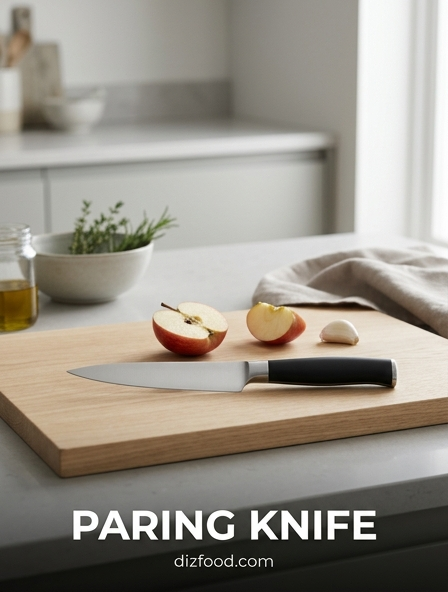
Intricate knife work, such as tournéing vegetables or creating complex garnishes, requires a tool that responds to the slightest movement of the fingers. Carbon steel is the ideal medium for these tasks because of its thinness and high "bite." When performing delicate work, the chef needs to know exactly where the edge is at all times. The thin profile of a carbon steel petty or paring knife allows for a clear line of sight, which is essential for decorative cuts and precision peeling.
Moreover, the reactive nature of the edge allows it to "grip" the surface of the food. Where a dull or thick stainless knife might slip off the skin of a pepper or a grape, a well-maintained carbon steel blade engages immediately. This safety and precision allow for faster work with less waste. For those mastering the art of Japanese vegetable carving (Mukimono) or classical French techniques, the agility of carbon steel provides the necessary finesse to transform humble ingredients into edible art.
Honing Efficiency for Busy Kitchens
During a busy service, a chef does not always have the time to return to a whetstone. Carbon steel offers a distinct advantage in these moments due to its responsiveness to a honing rod or a strop. A few quick passes on a ceramic rod can realign the edge and restore its "screaming sharp" quality in seconds. This efficiency is vital when the kitchen is at peak capacity and every second counts. Because the steel is less stubborn than stainless, it requires less pressure to bring the edge back to life.
Effective honing for carbon steel should follow these principles:
- Use a ceramic rod rather than a coarse steel rod to avoid micro-chipping the hard edge.
- Maintain the exact angle used during the sharpening process to avoid rounding the apex.
- Use light, sweeping strokes; carbon steel does not require heavy force to realign.
- Utilize a leather strop loaded with fine polishing compound for a final touch of refinement between tasks.
Superior Geometry for Clean Cuts
The geometry of a knife refers to the shape of the blade in cross-section, and carbon steel allows for the most sophisticated geometries in the culinary world. Because the material is so strong, smiths can grind the blade extremely thin behind the edge. This "behind-the-edge" thinness is what allows a knife to pass through food with almost zero resistance. A thicker blade, even if sharp at the very tip, will wedge or crack hard vegetables like carrots or potatoes. A thin carbon steel blade, however, glides through effortlessly.
Many high-end carbon steel knives feature a convex grind, where the blade tapers in a slight arc toward the edge. This geometry serves two purposes: it provides strength to the thin edge and helps with food release. The slight curve creates a pocket of air between the steel and the food, preventing slices from sticking to the side of the knife. This combination of a fine apex and intelligent cross-sectional geometry ensures that every cut is clean, preserving the texture and aesthetic of the ingredients.
Tactile Feedback and Slicing Accuracy
Tactile feedback is the sensory information transmitted from the blade through the handle to the chef's hand. Carbon steel is renowned for being "communicative." Because of its density and hardness, it vibrates differently than stainless steel when it makes contact with various textures. A chef can literally feel the difference between cutting through a soft mushroom versus a fibrous celery stalk. This sensory connection allows for real-time adjustments in pressure and angle, leading to superior slicing accuracy.
Accuracy is further enhanced by the predictable nature of the steel. When a chef knows exactly how much force is required to break the skin of an ingredient, they can operate with greater confidence and speed. This "feel" is often what converts casual cooks into carbon steel enthusiasts. The knife ceases to be a blunt instrument and becomes a sophisticated sensor, providing constant data about the state of the produce and the sharpness of the tool itself. This synergy between the user and the steel is the ultimate goal of high-end kitchen cutlery.


Comments