
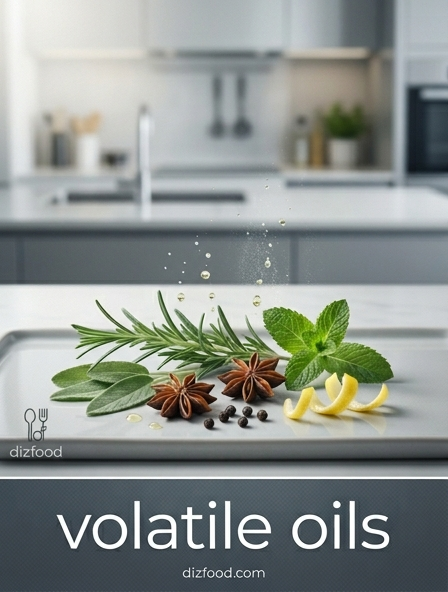
Understanding Volatile Spice Oils
Volatile oils, often referred to as essential oils, are the concentrated organic compounds found within the cellular structures of spices and herbs. In the kitchen, these oils are the primary drivers of aroma and flavor, determining the sensory profile of a dish. Unlike fixed oils, such as olive or canola oil, volatile oils evaporate rapidly at room temperature or when exposed to heat, releasing the complex aromatic molecules that we perceive through olfaction. These compounds include a variety of chemical groups such as terpenes, phenols, and aldehydes.
- Terpenes: Found in citrus peels and black pepper, providing bright and woody notes.
- Phenols: Present in cloves and star anise, responsible for pungent and sweet heat.
- Aldehydes: Common in cinnamon and cilantro, offering distinct herbal or spicy aromas.
Because these oils are highly reactive, they are sensitive to environmental factors like light, oxygen, and temperature. Understanding how to manipulate these oils is essential for any cook looking to maximize the depth and complexity of their culinary creations. When these oils are handled correctly, they transform a bland base into a sophisticated meal.
The Advantage of Whole Spices
Purchasing spices in their whole form is the most effective way to preserve volatile oils until the moment of consumption. A whole spice acts as a natural, protective capsule, shielding the precious oils within a hardened exterior of cellulose and lignin. This structural integrity prevents oxygen from reaching the internal compounds, thereby slowing down the oxidation process that leads to rancidity and flavor loss. Once a spice is ground, its surface area increases exponentially, allowing volatile oils to dissipate into the air almost immediately.
The difference in potency between pre-ground black pepper and freshly cracked peppercorns is a prime example of this phenomenon. While pre-ground versions often taste dusty or one-dimensional, whole peppercorns retain a sharp, multifaceted heat. By maintaining the spices in their whole state, a cook ensures that the chemical integrity of the volatile oils remains intact. This approach not only enhances the flavor profile of the food but also provides a more economical solution, as whole spices have a significantly longer shelf life than their ground counterparts.
Toasting for Maximum Flavor Release
Dry toasting is a transformative technique used to mobilize and enhance volatile oils within whole spices. When heat is applied to a dry pan, the internal temperature of the spice rises, causing the volatile oils to expand and migrate toward the surface. This process does more than just release aroma; it initiates the Maillard reaction, a chemical interaction between amino acids and reducing sugars that creates new, complex flavor compounds. The result is a deeper, nuttier, and more rounded profile that cannot be achieved through raw application.
- Place a heavy-bottomed skillet over medium heat.
- Add whole spices in a single layer to ensure even heat distribution.
- Agitate the pan constantly to prevent localized scorching of the delicate oils.
- Remove the spices immediately once they become fragrant and slightly darkened.
It is crucial to monitor the process closely, as the line between toasted and burnt is thin. Overheating can cause the volatile oils to polymerize or evaporate entirely, leaving behind a bitter, acrid residue that will ruin the final dish.
Mechanical Grinding and Oil Extraction
Mechanical grinding serves as the catalyst for flavor release by physically rupturing the oil glands and cell walls of the spice. The method of grinding chosen can significantly impact the final texture and aromatic intensity of the ingredient. While electric grinders offer speed and convenience, they generate friction heat which can prematurely cook or dissipate the most delicate volatile oils. Conversely, manual methods like the mortar and pestle allow for greater control over the particle size and oil expression.
| Method | Effect on Volatile Oils | Best Use Case |
|---|---|---|
| Mortar and Pestle | Crushes cells, expressing oils into a paste. | Wet rubs, garlic, and fibrous seeds. |
| Blade Grinder | Cuts spices quickly; high heat friction. | Hard spices like cinnamon or nutmeg. |
| Burr Mill | Uniform particle size; low heat transfer. | Consistent dry spice blends and rubs. |
By breaking the spice into smaller fragments, the surface area is maximized, ensuring that when the spice hits the cooking medium, the oils are ready to bond with other ingredients.
The Chemistry of Blooming Spices
Blooming is the culinary practice of heating ground or whole spices in a fat medium, such as oil, butter, or ghee, before adding other ingredients. This technique leverages the fact that many volatile aromatic compounds are hydrophobic, meaning they are more soluble in fats than in water. When spices are introduced to hot oil, the fat acts as a solvent, efficiently extracting the essential oils and suspending them throughout the medium. This ensures that the flavor is evenly distributed across the entire dish rather than remaining trapped in localized spice particles.
In many cuisines, this process is known as "tempering" or "tadka." The fat reaches temperatures higher than the boiling point of water, which allows for a rapid and intense extraction of aromatics. However, timing is essential. Because ground spices have a high surface area, they can burn in seconds. By blooming spices at the start of the cooking process, you create a flavor foundation that permeates every subsequent layer of the meal, resulting in a more cohesive and professional-tasting result.
Optimal Temperature for Aromatic Activation
Temperature control is the most critical variable when working with volatile spice oils. Different compounds have different activation points and thermal thresholds. If the heat is too low, the oils remain trapped within the spice structure, resulting in a dull flavor. If the heat is too high, the molecular structure of the oils breaks down, leading to the loss of top notes and the development of unpleasant bitter flavors. Generally, a temperature range between 300°F and 350°F is ideal for rapid oil release without immediate degradation.
- Low Heat (200°F - 250°F): Suitable for long infusions in oil or butter to gently draw out subtle notes.
- Medium Heat (300°F - 350°F): Perfect for blooming and toasting most whole spices.
- High Heat (Over 400°F): Risky; only suitable for very brief flashes of whole seeds like mustard or cumin.
A cook must develop an intuition for these temperatures by observing the visual changes in the spice and, more importantly, the shift in aroma. When the scent becomes "perky" and fills the room, the oils have reached their peak activation and should be integrated with other ingredients to stop the heating process.
Essential Tools for Spice Prepping
To properly manage volatile oils, a kitchen must be equipped with tools that facilitate the release of flavor while minimizing waste. The goal is to maximize the physical breakdown of the spice while keeping the temperature under control. Different spices require different approaches; for instance, the hard bark of a cinnamon stick requires more aggressive mechanical force than the delicate seeds of a cardamom pod. High-quality tools ensure that the oils are expressed efficiently and consistently.
- Microplane Grater: Ideal for hard spices like nutmeg and ginger, creating a fine fluff that releases oils instantly.
- Suribachi: A Japanese ceramic mortar with ridges that help grip and grind seeds into a fine paste.
- Cast Iron Skillet: Provides the even heat retention necessary for consistent dry toasting.
- Airtight Glass Jars: Essential for holding spices immediately after grinding to prevent oil evaporation.
Investing in these tools allows for the "just-in-time" preparation of spices. By grinding only what is needed for a specific recipe, a cook ensures that none of the volatile compounds are lost to the atmosphere before they reach the plate.
Freshness and the Volatile Lifecycle
The lifecycle of a spice begins at harvest and ends when its volatile oils have completely dissipated or oxidized. Understanding this timeline is vital for maintaining a high-quality pantry. While whole spices are resilient, they are not immortal. Over time, even the most well-protected oils will eventually seep through the outer layers and evaporate. The quality of a spice can be judged by its color, but the olfactory test is the most reliable method for determining if the volatile oils are still present and potent.
| Spice Form | Estimated Shelf Life | Primary Degradation Factor |
|---|---|---|
| Whole Spices | 2-4 Years | Internal moisture loss and slow oxidation. |
| Ground Spices | 6-12 Months | Rapid evaporation and light exposure. |
| Leafy Herbs | 1-3 Years | Extreme sensitivity to humidity and light. |
To test for freshness, crush a small amount of the spice between your fingers. If the aroma is weak or smells like hay, the volatile oils have likely vanished, and the spice will contribute little to your cooking.
Infusing Fats with Aromatic Compounds
Infusion is a sophisticated method of capturing volatile oils within a stable fat base for later use. By steeping spices in oils like grapeseed, avocado, or clarified butter, you create a flavored lipid that can be used to finish dishes, dress salads, or sear proteins. This method is particularly effective for spices with very delicate top notes that might be destroyed by direct, high-heat cooking. The fat acts as a preservative, encasing the volatile molecules and protecting them from the air.
The process can be done through cold infusion or warm infusion. Cold infusion takes several days and is best for fresh herbs or citrus peels. Warm infusion is faster, involving heating the oil to around 150°F and letting the spices steep for several hours. Once the oil has reached the desired flavor intensity, it should be strained to remove the solids. The resulting liquid is a concentrated essence of the spice's volatile profile, providing a clean, vibrant flavor that integrates seamlessly into emulsions and sauces.
Proper Storage to Retain Potency
Effective storage is the final defense against the loss of volatile oils. The four primary enemies of spice potency are light, heat, air, and moisture. Each of these factors accelerates the breakdown of chemical bonds within the oils. Light, specifically UV rays, causes photodegradation, while heat encourages the oils to vaporize and escape. Moisture can lead to clumping and, in worse cases, the growth of mold which destroys the aromatic profile entirely. To keep your kitchen spices in peak condition, follow strict storage protocols.
- Use airtight containers, preferably glass, to prevent air exchange.
- Store spices in a cool, dark place, such as a drawer or pantry, away from the stove.
- Avoid storing spices in clear plastic, which can be gas-permeable and reactive.
- Never shake spice jars directly over a steaming pot, as moisture will enter the container.
By treating spices as delicate chemical compounds rather than inert powders, you preserve the volatile oils that are responsible for the culinary magic of your dishes. Proper storage ensures that every pinch of spice delivers its maximum aromatic potential.

Comments