
Mechanical vs Manual Shredding Impact
The choice between mechanical and manual shredding dictates the final mouthfeel and structural integrity of ingredients. Manual shredding, typically performed with a box grater, offers a level of tactile feedback that allows the cook to adjust pressure based on the resistance of the food. This results in uniform strands with relatively clean edges, preserving the natural juices within the fibers. In contrast, mechanical shredding via a food processor utilizes high-speed centrifugal force. While efficient, the rapid rotation often tears the ingredient rather than slicing it, leading to a jagged surface texture.
- Manual: Slower processing reduces friction-induced heat, maintaining the crispness of cold vegetables.
- Mechanical: High RPMs can lead to "bruising" of delicate tissues, often resulting in a softer, more hydrated pile of produce.
- Consistency: Manual methods allow for directional shredding (with the grain), whereas mechanical blades hit the produce at multiple angles.
Ultimately, manual shredding is preferred for garnishes and salads where visual definition is paramount. Mechanical methods excel in high-volume environments or when the ingredient will be cooked down into a base, such as for carrot cake or potato latkes, where individual strand definition is secondary to volume and speed.
The Science of Cell Wall Rupture
At the microscopic level, shredding is an act of controlled destruction. Plant cells are held together by cellulose and pectin, forming rigid walls that provide "crunch." When a blade passes through a vegetable, it ruptures these walls, releasing vacuole contents such as water, enzymes, and sugars. The precision of the cut determines how many cells are destroyed versus how many remain intact. A clean cut leaves the surrounding cells functional, while a crush-heavy shred causes a cascade of cellular collapse.
This rupture triggers enzymatic reactions that can immediately alter the texture. For example, in cruciferous vegetables, cell wall damage activates myrosinase, which changes the chemical profile and can soften the tissue over time. The release of intracellular fluid also creates a film on the surface of the shreds, which can lead to a "slimy" texture if not used immediately. Controlling cell wall rupture is essential for maintaining the turgor pressure that gives raw shredded vegetables their characteristic snap. Minimizing the time between shredding and consumption ensures that the structural pectin does not degrade significantly before the dish is served.
Surface Area and Moisture Evaporation
Shredding exponentially increases the surface area of an ingredient relative to its original volume. This physical change accelerates the rate of moisture evaporation and gas exchange. In a culinary context, this can be both a benefit and a drawback depending on the desired outcome. For ingredients like potatoes intended for frying, the increased surface area allows for rapid moisture loss, which is a prerequisite for achieving a crispy exterior. However, for moisture-rich items like cucumbers, high surface area leads to rapid weeping via osmosis.
| Ingredient State | Surface Area Ratio | Evaporation Rate | Texture Result |
|---|---|---|---|
| Whole Root | Low | Negligible | Retains Crispness |
| Coarse Shred | Moderate | Moderate | Balanced Bite |
| Fine Shred | High | Rapid | Soft/Dehydrated |
When the surface area is maximized, the ingredient becomes highly sensitive to its environment. If left uncovered, shredded produce will wilt within minutes as the internal water stores are lost to the air. Conversely, this high surface area makes shredded ingredients ideal for marinating, as the increased exposure allows salt and acids to penetrate the tissue much faster than in larger cuts.
Grating Coarseness and Texture Integrity
The gauge of the grater determines the structural "backbone" of the shredded food. Grating coarseness is typically categorized into fine, medium, and coarse, each serving a specific textural purpose. Fine grating is often used to pulverize hard solids into a paste-like consistency, which is ideal for incorporating flavors into batters without adding significant mass. Coarse grating, however, maintains the longitudinal fibers of the food, providing a distinct "chew" that survives the cooking process.
- Fine Grate: Best for hard cheeses or aromatics like ginger; creates a melt-in-the-mouth texture.
- Medium Grate: The standard for coleslaw and soft cheeses; provides a balance between juice release and structure.
- Coarse Grate: Essential for hash browns and fritters; prevents the ingredient from turning into a slurry when heat is applied.
The integrity of the texture is heavily dependent on the width of the strand. Thin strands have less structural resistance and will collapse under the weight of dressings or heat. Thicker strands retain a central core of unruptured cells, allowing them to remain firm even when the exterior has been softened by cooking or acidity. Choosing the right coarseness is the primary factor in preventing a dish from becoming mushy.
Oxidation Rates in Shredded Produce
Oxidation is the chemical reaction that occurs when oxygen interacts with the exposed surfaces of produce, often facilitated by the enzyme polyphenol oxidase. Because shredding creates a vast amount of new surface area, it acts as a catalyst for rapid browning and flavor degradation. This is most visible in apples, potatoes, and artichokes. The moment the cell walls are breached, the internal phenols are exposed to air, turning the bright white or green tissues into shades of brown or gray.
Texture is secondary to color in oxidation, but the two are linked; as the tissue oxidizes, it often loses its crispness as well. The chemical breakdown of the cells softens the structure, leading to a limp appearance. To combat this, chefs often use acidulated water or vacuum sealing to limit oxygen exposure. However, the most effective method remains minimizing the time between shredding and cooking. The faster the shredded produce is subjected to heat-which denatures the enzymes-or coated in a protective layer of oil or acid, the better the texture and color integrity will be preserved for the final presentation.
Impact on Cooking and Caramelization
The physical dimensions of shredded food radically alter its thermal properties. Because the pieces are small and have high surface-to-volume ratios, they conduct heat to their centers almost instantaneously. This makes shredded ingredients ideal for rapid cooking methods like sautéing or stir-frying. In the context of caramelization, shredded onions or carrots reach the Maillard reaction threshold much faster than diced versions. The thinness of the strands allows for a high density of browned edges, which translates to a more intense flavor profile throughout the dish.
However, this rapid heat transfer requires precise timing. Shredded vegetables can transition from caramelized to burnt in a matter of seconds. In wet cooking methods, such as soups, shredded ingredients lose their texture quickly, often dissolving into the liquid to act as a natural thickener. This is a common technique in European "potage" style soups where shredded potatoes provide body without the need for flour. When browning is the goal, ensuring the shreds are dry is critical; any residual moisture on the high surface area will create steam, preventing the temperature from rising high enough for effective caramelization.
Food Processor Heat and Ingredient Wilting
One of the most overlooked aspects of mechanical shredding is the role of kinetic energy converted into heat. As the food processor blade spins at high velocities, friction is generated at the point of contact with the ingredient. For temperature-sensitive items like butter, hard fats, or leafy greens, this slight rise in temperature can be catastrophic for the intended texture. In pastry making, using a food processor to "cut in" fat can accidentally melt the butter, resulting in a mealy crust rather than a flaky one.
- Friction: Rapid blade movement can raise the surface temperature of the produce by several degrees.
- Wilting: Leafy herbs or soft vegetables may lose their turgor pressure due to this localized heat.
- Fat Stability: Cold fats may soften, losing their ability to create steam pockets during baking.
To mitigate these effects, professional kitchens often chill the food processor bowl and blades in the freezer before use. For ingredients like cabbage for kraut, the mechanical heat might actually be beneficial to start the wilting process for fermentation, but for a crisp summer salad, manual shredding remains superior to avoid the dulling effects of friction-induced warmth.
Blade Sharpness and Fluid Retention
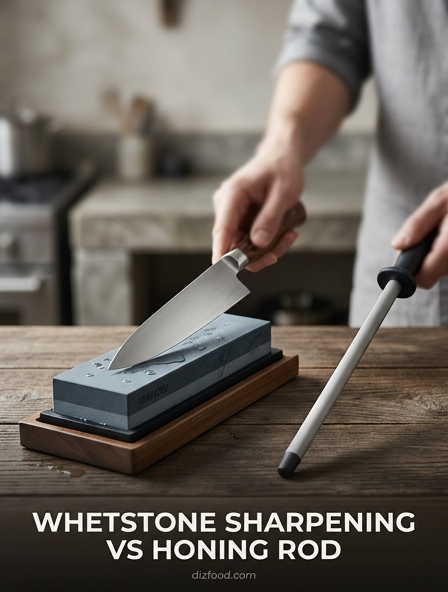
The sharpness of the shredding tool is the single most important factor in fluid retention. A dull blade does not cut; it crushes. When an ingredient is crushed, the internal pressure forces juices out of the cells and onto the cutting surface. This results in a "wet" shred that is prone to clumping and rapid spoilage. A sharp blade, however, severs the cellular matrix with minimal collateral damage, keeping the moisture trapped within the individual strands.
Fluid retention is vital for the mouthfeel of the finished product. If a carrot is shredded with a sharp blade, it remains succulent and sweet. If shredded with a dull blade, the juice ends up on the cutting board, leaving behind a fibrous, woody strand that lacks flavor. Furthermore, excess surface moisture caused by dull blades interferes with the ability of dressings to adhere to the food. Instead of coating the shreds, the dressing becomes diluted by the escaping juices, leading to a watery and unappealing pool at the bottom of the bowl. Maintaining a sharp edge on graters and processor discs is therefore a requirement for high-quality texture.
Structure Changes in Soft vs Hard Solids
The physical response to shredding varies significantly between soft solids, like semi-soft cheeses, and hard solids, like root vegetables. Hard solids have a crystalline or fibrous structure that tends to break cleanly under stress. Soft solids, however, are prone to deformation. When shredding mozzarella or cheddar, the material can "smear" against the grater if it is not sufficiently cold. This deformation destroys the intended shape and creates a gummy mass rather than distinct shreds.
| Material Type | Structural Response | Recommended Prep |
|---|---|---|
| Hard (Carrot, Radish) | Brittle Fracture | Room Temp or Cold |
| Semi-Hard (Parmesan) | Granular Shear | Dry / Room Temp |
| Soft (High-Moisture Cheese) | Plastic Deformation | Partial Freeze |
For hard solids, the goal of shredding is to reduce size while maintaining the "crunch" of the fiber. For soft solids, the goal is often to increase surface area for even melting. Because soft solids lack a rigid cell wall, they rely on temperature to maintain their shape during the shredding process. Cooling these items increases their shear strength, allowing the blade to pass through without causing the product to compress or clump together.
Optimizing Shred Styles for Dish Performance
Optimizing the shred style requires aligning the physical characteristics of the shred with the cooking method and the desired final bite. In a raw application like a slaw, a mixture of shred gauges can provide a complex texture; fine shreds provide immediate flavor release, while coarse shreds provide the necessary structural crunch. For cooked applications, the shred must be robust enough to withstand heat without disintegrating into a puree.
- Deep Frying: Use long, thin shreds (matchsticks) to maximize the surface area for a crispy exterior while keeping the interior moist.
- Baking: Use fine shreds to ensure the ingredient distributes evenly through the batter and cooks at the same rate as the flour.
- Salads: Use a medium-coarse manual grate to preserve turgor pressure and prevent the vegetable from weeping too much water into the dressing.
Dish performance is ultimately measured by how well the texture holds up from the kitchen to the table. By selecting the appropriate tool-manual or mechanical-and the correct gauge, the cook can manipulate the ingredient's surface area and moisture retention to perfectly suit the recipe's requirements. Understanding these variables transforms shredding from a prep task into a deliberate culinary technique.

Comments