
The Science of Surface Moisture
Surface moisture on leafy greens is governed by the principles of adhesion and surface tension. When greens are washed, water molecules form a strong bond with the intricate, often waxy surface of the leaves. This occurs because water is a polar molecule, and the irregular topography of the leaf provides numerous micro-crevices where droplets can lodge themselves securely. Gravity alone is rarely sufficient to overcome these capillary forces, which is why a simple colander often leaves vegetables dripping.
The presence of this film is problematic; it acts as a barrier and increases the weight of the leaf. Without an external force to disrupt the hydrogen bonding between the water and the plant tissue, the moisture remains trapped. This phenomenon is particularly evident in crinkled varieties like kale or savoy cabbage, where the surface area is vast relative to the weight of the leaf. Understanding this adhesive quality is the first step in realizing why mechanical intervention is necessary for a truly dry salad. Only by applying a greater force can we break the tension holding these molecules in place.
Understanding Centrifugal Force in the Kitchen
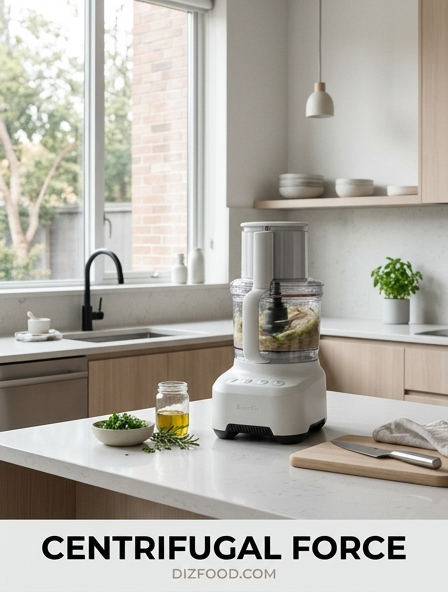
Centrifugal force is not a "true" force in the Newtonian sense, but rather the result of inertia. In the kitchen, this principle is most famously utilized in the salad spinner. When you rotate a circular basket, the objects inside want to continue traveling in a straight line according to Newton's First Law. However, the walls of the basket provide a centripetal force that keeps the leaves moving in a circle. The water droplets, being fluid and less constrained, are pushed through the perforations in the basket.
- Inertia: The tendency of water to maintain its forward momentum.
- Acceleration: The change in velocity that forces moisture outward.
- Perforation: The exit points that allow water to escape the internal system.
As the rotation speed increases, the apparent force pushing the water outward grows stronger. This mechanical separation effectively pulls moisture away from the leaf surface far more efficiently than hand-shaking or towel-drying could ever achieve, utilizing basic physics to solve a common culinary problem.
Why Residual Water Ruins Salad Texture
Residual water is the primary enemy of a high-quality salad. When leaves are left damp, several physical and chemical processes begin to degrade the dining experience. First, excess moisture creates a "swampy" environment at the bottom of the bowl, leading to rapid softening of the greens. The weight of the water can cause delicate leaves, such as arugula or mache, to collapse under their own mass, destroying the structural integrity of the dish.
Furthermore, moisture dilutes the flavors of the ingredients. A salad that is not properly dried will taste watery and bland, as the natural juices of the vegetables are drowned out. From a sensory perspective, the "crunch" that diners expect is replaced by a limp, slippery texture. This is because the water film masks the crisp edges of the leaves and prevents the teeth from making a clean break through the plant's cellular walls. Achieving a dry surface is essential for maintaining the architectural "loft" that makes a salad appear voluminous and appetizing on the plate.
The Mechanics of the Salad Spinner
The salad spinner is a masterpiece of simple mechanical engineering, consisting of three primary components: an outer bowl, an inner strainer basket, and a lid equipped with a drive mechanism. The drive mechanism-whether it be a pump, a pull-cord, or a hand crank-converts vertical or linear motion into high-velocity rotational energy. This gear system allows the user to achieve several hundred revolutions per minute with minimal physical effort.
| Component | Function |
|---|---|
| Inner Basket | Holds the produce while allowing water to pass through gaps. |
| Outer Bowl | Collects the expelled water and prevents splashing. |
| Drive Gear | Multiplies the input force to increase rotational speed. |
| Brake Button | Quickly halts rotation to prevent bruising the greens. |
The gap between the inner basket and the outer bowl is crucial; it ensures that once the water is expelled, it cannot be re-absorbed by the greens, effectively isolating the waste from the product.
Maximizing Crispness Through High Speed Rotation
The relationship between rotational speed and moisture removal is exponential. To maximize crispness, one must understand that higher speeds generate greater centrifugal force, which is necessary to overcome the surface tension of the water. However, there is a balance to be struck. If the rotation is too slow, the water simply clings to the leaves; if it is too violent, the greens can be bruised against the sides of the basket, leading to enzymatic browning.
The key to perfect results lies in the steady build-up of speed. By gradually accelerating the spinner, you allow the water to migrate to the edges of the leaves before being ejected. High-speed rotation effectively "vacuums" the water from the crevices of the greens. This process leaves the leaves feeling almost "paper-dry" to the touch. This level of dryness is the secret behind the crisp, refreshing bite associated with professional-grade salads. It ensures that the cellular structure of the leaf remains the star of the show, unburdened by external liquid weight.
How Drying Enhances Dressing Adhesion
From a culinary standpoint, the most critical reason to dry greens is to ensure dressing adhesion. Most salad dressings are emulsions of oil and acid. Because oil is hydrophobic, it naturally repels water. If a leaf is coated in a thin film of moisture, the dressing will literally slide off the surface and collect in a puddle at the bottom of the bowl. This results in some bites being flavorless while others are over-saturated.
- Surface Interaction: Dry leaves allow the oil in the dressing to bond directly with the leaf's cuticle.
- Emulsion Stability: Excess water can break the emulsion of a vinaigrette, causing it to separate.
- Uniformity: A dry surface ensures every square inch of the leaf is coated evenly.
When the greens are thoroughly dried using centrifugal force, the dressing can cling to the topography of the leaf. This creates a much more cohesive flavor profile, where the seasoning stays where it is intended: on the vegetables rather than the ceramic.
Preventing Wilting with Effective Water Removal
Wilting is the result of cellular collapse and the degradation of the plant's structural tissues. While many believe wilting is caused by dryness, in a post-wash environment, it is often accelerated by excess moisture. Water left on the surface of the leaves can promote the growth of bacteria and fungi, which secrete enzymes that break down pectin and cellulose. This leads to the "slimy" texture often found in pre-packaged salads.
By using centrifugal force to remove this water, you significantly slow down the rate of decay. When leaves are stored dry, the respiratory rate of the plant remains stable. Excess water also blocks the stomata, or small pores, on the leaf surface, which can interfere with the plant's ability to "breathe" during storage. Removing this water helps maintain the internal pressure of the cells, keeping the leaves upright and turgid for a longer period. This mechanical drying step is essentially a preservation technique that extends the life of the produce from hours to days.
The Physics of Cellular Turgor and Crunch
The "crunch" of a salad leaf is a physical manifestation of turgor pressure. Turgor pressure is the force exerted by the fluid inside the plant cell against the cell wall. When a leaf is healthy and hydrated internally, it is stiff and crisp. Paradoxically, external water can compromise this internal pressure through osmosis or by encouraging tissue rot. When we use a salad spinner, we are focusing on removing the external "free water" while leaving the internal "bound water" intact.
The physics of the crunch involves the sudden release of energy when the cell wall is fractured by the teeth. If the leaf is surrounded by external moisture, the structural integrity is softened, and the fracture is less clean. By removing every trace of surface liquid, we ensure that the physical interaction between the tooth and the leaf is direct. This maximizes the acoustic and tactile sensation of the crunch. Centrifugal force is the tool that prepares the leaf for this mechanical failure, ensuring the highest possible turgor-to-surface-moisture ratio.
Optimizing Leafy Green Storage Life
Properly storing greens begins the moment the salad spinner stops. Once the centrifugal force has done its work and the water has been collected in the outer bowl, the environment inside the spinner becomes an ideal short-term storage chamber. For long-term freshness, however, the greens should be transferred to a container that balances humidity and airflow. Even after spinning, a small amount of residual moisture remains, which is actually beneficial if managed correctly.
- Air Circulation: Prevent packing greens too tightly to avoid heat buildup.
- Absorbent Barriers: Placing a paper towel in the container helps manage any remaining droplets.
- Temperature Control: Store in the crisper drawer to maintain low metabolic activity.
The goal is to keep the surface of the leaf dry while preventing the interior of the leaf from dehydrating. By starting with "spun-dry" greens, you are beginning the storage process at the optimal baseline, preventing the rot associated with dampness while preserving the internal moisture that keeps the leaves alive and vibrant.
Achieving Restaurant Quality Greens at Home
The difference between a home-cooked meal and a restaurant-quality dish often lies in the details of preparation. Professional chefs prioritize the drying of greens because they know that a wet salad is a failed salad. To replicate this at home, the salad spinner should be viewed as an essential tool rather than a luxury. The process begins with a cold-water soak to "shock" the leaves into a high-turgor state, followed by a vigorous spin to remove every gram of surface moisture.
Repeat the spinning cycle if necessary, discarding the water between turns. Restaurants often spin their greens multiple times and then store them in perforated bins within walk-in coolers. By adopting the same rigorous standards-using centrifugal force to ensure a bone-dry surface-you provide the perfect canvas for your seasonings and oils. This simple application of physics transforms a pile of wet leaves into a structured, flavorful, and professional-grade component of your meal. The result is a salad that maintains its volume, texture, and taste from the first bite to the last.

Comments