
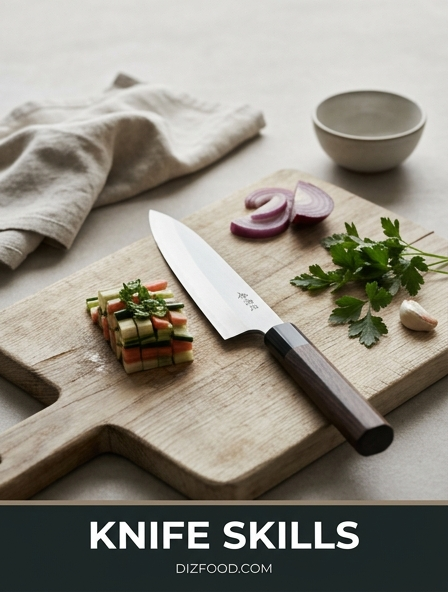
Mastering Blade Control Fundamentals
Mastering the fundamental mechanics of a chef's knife is the first step toward culinary proficiency. Blade control begins with understanding the specific anatomy of the tool, from the tip used for delicate work to the heel used for heavy-duty tasks. A chef must learn to synchronize the movement of the knife with the rhythm of their breathing and the placement of their guide hand. The goal is to move the blade in a fluid, circular motion rather than a jagged, vertical chop. This rocking motion ensures that the edge remains in contact with the cutting board, providing stability and leverage.
- The Tip: Ideal for intricate work like scoring or mincing garlic.
- The Belly: The curved middle section used for the standard rocking motion.
- The Heel: The strongest part of the blade, perfect for cutting through tough root vegetables.
- The Spine: The top edge that should never be used for scraping the board.
Refining these movements requires repetitive practice to build muscle memory. By focusing on the point of contact between the steel and the ingredient, a cook can achieve a level of precision that feels like an extension of their own hand.
Achieving Uniformity for Consistent Cooking
Uniformity in knife work is not merely about visual appeal; it is a critical factor in the science of cooking. When ingredients are cut into identical dimensions, they respond to heat at the same rate. If a mirepoix contains vastly different sizes of carrots and onions, the smaller pieces will disintegrate into mush before the larger chunks have finished softening. This discrepancy can ruin the texture and balance of a dish. Standardized cuts allow the cook to predict exactly when a pan is ready for the next stage of the recipe.
| Cut Name | Dimensions | Common Use |
|---|---|---|
| Brunoise | 1/8" x 1/8" x 1/8" | Garnishes, fine sauces |
| Small Dice | 1/4" x 1/4" x 1/4" | Soups, stews |
| Batonnet | 1/4" x 1/4" x 2-2.5" | French fries, crudité |
| Julienne | 1/8" x 1/8" x 2" | Salads, stir-fry |
By adhering to these specific dimensions, the chef ensures that every bite provides a consistent mouthfeel and that no ingredient is overcooked or underdone relative to the others in the pot.
Boosting Speed and Prep Efficiency
In a high-volume kitchen environment, speed is an essential asset that can only be developed after mastering accuracy. Efficiency comes from minimizing unnecessary movements and organizing the workspace to facilitate a continuous flow. This process often starts with the "claw" grip, which allows the guide hand to move backward at a steady pace, acting as a physical gauge for the thickness of each slice. The more confident a cook becomes with their hand placement, the less they need to pause and readjust.
- Clear the workspace of any clutter to avoid obstructing the blade's path.
- Group similar vegetables together to maintain a consistent cutting rhythm.
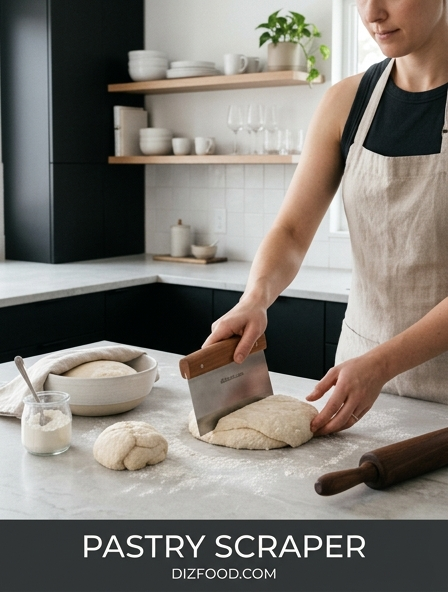
- Use a bench scraper to move prepped items quickly to containers.
- Maintain a "scrap" bowl to keep the cutting board clean and free of debris.
As the cook's confidence grows, the transition between different types of cuts becomes seamless. Speed should never come at the expense of safety, but rather as a natural byproduct of refined technique and a disciplined mise en place strategy.
Elevating Plate Presentation and Aesthetics
The visual impact of a dish is the diner's first experience with the meal, and precise knife skills are the primary tool for creating a professional aesthetic. Clean, sharp lines suggest a level of care and expertise that enhances the perceived value of the food. For instance, a perfectly executed chiffonade of basil provides a delicate, airy garnish that looks far more sophisticated than roughly chopped leaves. Similarly, turning vegetables-a classic French technique-transforms humble ingredients into uniform, jewel-like shapes that elevate the overall composition of the plate.
- Symmetry: Using identical cuts creates a sense of order and balance.
- Color Contrast: Clean cuts prevent bleeding of colors in salads and salsas.
- Texture: Varied cuts like julienne versus coins add visual layers to a dish.
- Definition: Sharp edges reflect light better, making ingredients look fresher.
Attention to detail in the preparation phase translates directly to the final plating. When every component is treated with precision, the resulting dish moves from a simple home-cooked meal to a culinary work of art.
Minimizing Waste with Accurate Cuts
High-level knife skills are a vital component of kitchen economy and food cost management. An unskilled cook might leave a significant amount of usable flesh on a pepper or a fish bone, leading to unnecessary waste. Precise cuts allow the chef to maximize the yield of every ingredient. For example, when dicing an onion, a skilled hand can cut extremely close to the root without including the tough, inedible parts. This efficiency is particularly important when working with expensive proteins or seasonal produce where every gram counts toward the bottom line.
- Square off round vegetables only as much as necessary to create a stable base.
- Repurpose trimmings for stocks, sauces, or purees rather than discarding them.
- Follow the natural contours of meat and poultry to ensure clean separation.
- Use specialized blades, like a flexible boning knife, for intricate tasks to reduce "shredding."
By viewing every ingredient as a valuable resource, a cook can use their knife to ensure that the maximum amount of food makes it to the plate. This disciplined approach not only saves money but also honors the source of the food.
Essential Safety and Injury Prevention
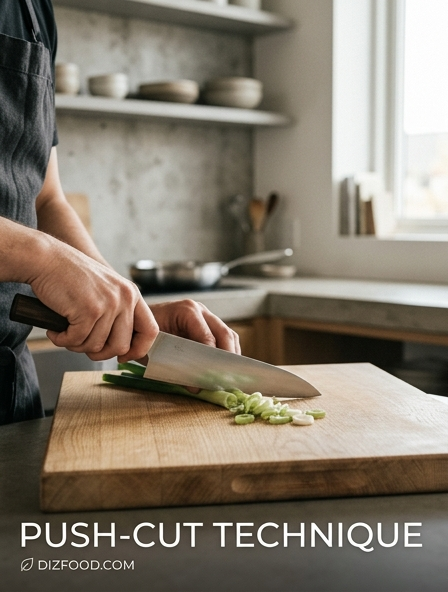
The most important rule of knife skills is the preservation of safety. A sharp knife is actually safer than a dull one because it requires less force to pass through food, reducing the likelihood of the blade slipping. However, even with a sharp tool, proper hand positioning is non-negotiable. The "claw grip" is the industry standard, where fingertips are tucked inward and the knuckles act as a guide for the blade. This ensures that the sharp edge never comes into direct contact with the skin. Furthermore, maintaining a stable environment is crucial to preventing accidents.
- Always use a damp paper towel or non-slip mat under the cutting board.
- Never attempt to catch a falling knife; step back and let it land.
- Keep the knife blade pointed away from the body when moving through the kitchen.
- Store knives in a block, magnetic strip, or sheath to protect the edges and fingers.
By integrating these safety protocols into every task, the cook creates a secure environment where they can focus on their craft without the constant fear of injury. Discipline in safety is the hallmark of a professional.
Impact of Sharpness on Precision
A knife's edge is the interface between the chef's intent and the ingredient's reality. The difference between a sharp blade and a dull one is the difference between slicing through cells and crushing them. When a dull knife is used on a tomato, it tears the skin and squeezes out the juice, resulting in a bruised, messy product. A sharp knife, however, glides through the skin, leaving the internal structure intact and the juices inside the fruit. This precision is essential for delicate herbs and soft vegetables that lose their vibrancy when handled roughly.
| Attribute | Sharp Blade | Dull Blade |
|---|---|---|
| Pressure Required | Minimal / Effortless | High / Dangerous |
| Cell Damage | Low (stays fresh) | High (oxidizes quickly) |
| Cutting Accuracy | High (exact lines) | Low (blade wanders) |
| Surface Finish | Smooth and glossy | Rough and jagged |
Regular maintenance, including daily honing and periodic sharpening, ensures that the blade remains a precision instrument capable of the most demanding culinary tasks.
Flavor Optimization Through Texture Control
The way an ingredient is cut significantly impacts its flavor profile and how it interacts with other components in a dish. Texture is a major component of flavor perception; for instance, finely minced garlic releases more pungent oils and integrates more thoroughly into a sauce than sliced garlic, which provides a milder, more localized flavor. By controlling the surface area of ingredients, a chef can manipulate the intensity of the seasoning and the speed at which aromatics release their essence into the cooking medium.
- Increased Surface Area: Grating or fine dicing accelerates flavor extraction.
- Cellular Integrity: Clean cuts prevent "bleeding," keeping flavors distinct.
- Mouthfeel: Thinly shaved radishes provide a crisp snap without overwhelming the palate.
- Sauce Adhesion: Rougher cuts like a rustic chop can help sauces cling to vegetables.
Understanding the relationship between physical shape and chemical release allows a cook to fine-tune the taste of a dish simply by changing their knife technique. This level of control is what separates basic cooking from professional gastronomy.
Proper Grip and Ergonomic Stance
Culinary work often involves hours of repetitive motion, making ergonomics a vital consideration for long-term health and efficiency. The "pinch grip"-where the thumb and forefinger grip the bolster of the knife while the other fingers wrap around the handle-provides the maximum amount of control and balance. This grip shifts the center of gravity closer to the hand, making the knife feel lighter and more responsive. Beyond the hand, the cook's entire body must be positioned to support the movement without causing strain.
- Stand with feet shoulder-width apart to provide a stable base of support.
- Keep the shoulders relaxed and the elbows close to the body.
- Position the cutting board at a height that allows the arms to maintain a 90-degree angle.
- Avoid leaning over the board; let the eyes and hands do the work.
By adopting a proper stance and grip, a chef can prevent common issues like carpal tunnel syndrome or chronic back pain. Ergonomics ensure that the cook remains productive and comfortable throughout a demanding shift.
Cultivating a Professional Kitchen Mindset
Excellent knife skills are rooted as much in psychology as they are in physical technique. A professional mindset involves a deep respect for the tools, the ingredients, and the process of preparation. This begins with "mise en place," the French philosophy of "everything in its place." A focused cook enters the kitchen with a clear plan, ensuring their station is organized and their knives are sharpened before the first cut is made. This mental clarity allows for total concentration on the task at hand, which is essential for both speed and safety.
- Focus: Eliminate distractions to maintain precision and avoid accidents.
- Respect: Treat every ingredient with care, regardless of its cost.
- Consistency: Strive for the same high standard in every slice, every time.
- Continuous Learning: Seek to refine techniques and learn new cuts constantly.
Cultivating this mindset transforms cooking from a chore into a disciplined craft. When a chef approaches the cutting board with intention and respect, the quality of their work naturally rises to meet that standard, resulting in superior food and a more rewarding kitchen experience.

Comments